Showing posts with label #embryos. Show all posts

Tuesday, April 21, 2026

Designer Babies


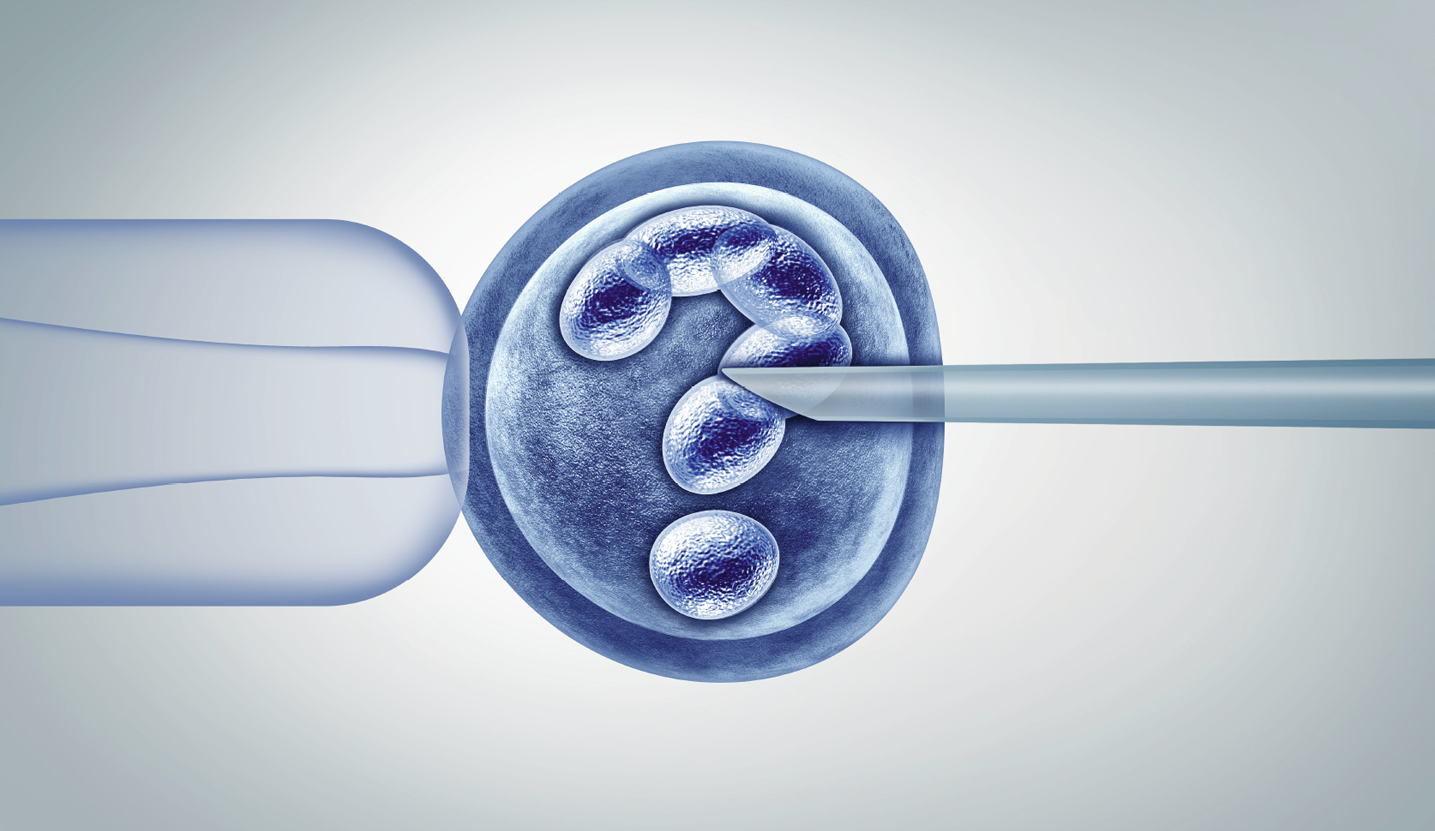
“Designer babies” are based on a simple principle: if scientists have the ability to prevent diseases before a child is born, that is a strong and valid reason to genetically edit embryos. Tools such as CRISPR make it possible to reduce or even eliminate severe diseases. Conditions like cystic fibrosis, Huntington’s disease, and sickle cell disease can already be screened for before pregnancy. In the long term, this means a child can be born free of diseases that would otherwise require lifelong treatment if left unedited.

Genetic technology can also allow scientists to build natural disease resistance into embryos. Some people have genetic mutations that make them resistant to infections such as HIV. Scientists also point out that families with sick children can use embryo selection to help save the child. For example, a “savior sibling’s” stem cells from umbilical cord blood can be used for life-saving treatments.

There are also strong economic arguments in favor of gene editing for embryos. Treating genetic diseases through gene editing can not only prevent these conditions but also save money and reduce the physical and emotional burden on patients and their families. While concerns about misuse and the idea of creating “perfect” humans are often raised, scientists argue that the primary goal is to reduce suffering and improve quality of life.


Source: Why Designer Babies Are Good: The Case for Gene Editing - ScienceInsights

Extra Source: What Are Designer Babies?


Monday, December 8, 2025

Polygenic Embryo Screening: Is it Ethical?

 A recent article discusses a medical and ethical debate in the UK. With the evolution of advanced technology and genetic techniques, a couple's embryos can be predicted for their “quality”- assessing traits like IQ score, height, health, etc. This technique of scoring embryos based on DNA is prohibited in UK fertility clinics- due to both scientific and ethical concerns. However, couples have found legal loopholes that allow them to send samples of their embryos to sites in the US, where polygenic screening is legal. UK clinics are left facing both “legal and ethical confusion” (Delvin 2025). Another article, published in the National Library of Medicine, expresses concern about the recent use of polygenic embryo screening in private companies. The article explains that this technology is and should be used to determine if an embryo can develop severe diseases such as Tay-Sachs and cystic fibrosis. With developing technology, it has also become possible to test embryos for psychiatric disorders and an array of polygenic traits. Based on these predictions, a parent may select the embryos they wish to implant. However, this article urges society that “polygenic embryo screening raises many ethical, legal, and social issues that can potentially lead to harm and have not yet been studied or addressed” (Lencz, 2023).

The idea of Polygenic Embryo screening is both fascinating and alarming. Advancements in technology have allowed science to expand and do what was once deemed impossible. This technology is powerful and can be used to detect serious diseases that may form in a fetus, making it vital to the field of genetics and IVF. However, there are serious ethical concerns behind the way private companies choose to use these advancements. Is it ethically correct for couples to choose which embryo to implant based on the embryo's scores? I struggle with this idea, as it goes against the randomness of life.


Monday, November 17, 2025

Golden apple snail may give insight on human eye regeneration

    Researchers studied the Golden apple snail which has eyes similar to cameras. It has structures like lens, retina and cornea similar to human eyes. These snails are resilient and very invasive in lots of parts of the world. Its regeneration ability is important to research because their eyes are so similar to human eyes. They found that when the snails' eye is removed it takes about a month to fully regenerate. This includes reconnecting to the brain and restoring vision, that part takes a little longer than a few months. 

    The regeneration process happens in phases. Wound healing, which is the first 24 hours, then unspecialized cells migrate, proliferate, and specialize into eye tissues. Over a few weeks the new eyes mature and then become useable. 

      In relation to humans the PAX6 gene, which is crucial for eye development is also essential in these snails, Using CRISPR-Cas9 the PAX6 gene was disabled in snail embryos. When both copies were inactive snails developed without eyes to show how important this gene is. 

    These snails are important to study and do research on because they share key genes with humans. They could be used as a model organism to study eye regeneration. The next steps in research they're taking are to test whether PAX6 also plays a role in regenerating the eye not just in the eye's initial development. The goal is to map out the snail's regeneration program then relates it to human eyes to see if regeneration is at all possible.

    Sources: 
Saey, T. H. (2025, August 6). This snail may hold a secret to human eye regeneration. Science Newshttps://www.sciencenews.org/article/snail-human-eye-regeneration

This Snail’s Eyes Grow Back: Could They Help Humans do the Same? (2025, August 14). UC Davis. https://www.ucdavis.edu/news/snails-eyes-grow-back-could-they-help-humans-do-same


Thursday, November 21, 2024

Zebrafish Embryo Deformity Discovered from Gene


     Genes can encode for a lot of things but can it code for an embryo to properly develop? Researchers at Osaka Metropolitan University have recently discovered it is the case for zebra fish. By targeting Par axial protocadherin (PAPC), which when excluded naturally during the process of cell migration allows for proper formation of embryo notochord, they experimented with the idea of including it to see what exactly it does in helping with formation. When included they found that the cells don't move to their appropriate location causing a deformity in the notochord. Researchers made the inference that a similar gene must react the same way in mammals as it does for the zebrafish.

    By discovering this breakthrough the researchers believe it may open a new door into novel tumor therapies. And this research might prove very helpful in understanding how life is brought up deep within its roots of the cells and genetics. The gene that was discovered to react this way having the properties that might prove very useful in the future of enhancing tumor therapies could create a brighter future for those affected with all forms of cancer. And understanding all processes of the upbringing of life can help in other areas of science.


Sources:

https://www.omu.ac.jp/en/info/research-news/entry-67125.html

https://www.sciencedaily.com/releases/2024/11/241121120632.htm 

Thursday, December 7, 2023

Chickens as a Model Organism


The chicken fits the usual criteria of a model organism with it being cost effective, easily manipulated genetics, and a fast reproductive cycle. However chickens have an extra trait due to it being a member of the avian species, the ability to lay eggs. The egg allows scientists to conduct experiments during the embryo phase of the unborn chick without harming the mother. The egg shell can also be removed without damaging the chick embryo inside. The chicken embryo can be utilized to further understand the embryo stages of other animals with fewer ethical concerns. The chicken egg has been mainly used to create vaccines by growing and inactivating bacteria within the fertilized embryos while some of the chicken eggs have been used to research caner. Recently, after obtaining a genomic sequence of a chicken, it was observed that there are some functional proteins that are similar between chickens and humans. Researchers now believe that chickens could be used to study the non-coding regions in mammals.  

I believe it is amazing that the chicken genome could give humans more information of the mammalian genetics. I didn't expect that chickens and humans could be so similar, but this also allows us to study mammalian genetics with lower ethical concerns. The egg makes it so that the mother hen isn't harmed during research, compared to a mouse carrying an unborn that is used for the same study. The study of the chicken genome could also give insight in how to better prevent more outbreaks of diseases within the domesticated chickens.

Sources:

Monday, November 20, 2023

Embryo genetics

 To counteract infertility, which affects 15% of couples of reproductive age attempting to conceive, In vitro fertilization (IVF) is increasingly popular. It contributes to nearly 5 % of births in countries, such as Denmark. This technology led to preimplantation genetic testing (PGT),

 where embryos are screened for conditions such as an X-linked disorder. This testing allowed for the identification of the embryos, with the affected alleles, and implant only the embryos that were unaffected (homozygous unaffected or heterozygous unaffected dominant) and avoid all affected embryos (homozygous affected). This allowed for the extension of the concept to PGT for monogenic diseases (PGT-M). This includes Mendelian single-gene defects (autosomal dominant/recessive and X-linked dominant/recessive), severe childhood lethality or early-onset disease, cancer predisposition, and Human Leukocyte Antigen (HLA), typing for histocompatible cord blood stem cell transplantation. This article summarizes the research on PGT, in several different articles, as it pertains to the screening of the genome for more complex genetic diseases. It concludes with the notion that the research on this topic will only continue to evolve and expand in the future.

This article is more of a summary of the findings of many other research articles so specific details and specifics about each research method are minimal. It is very likely that PGT will become more integral, as the technology advances. This article brings together several compelling experimental designs that can be further explained in the article that they originate.


Link to article “Embryo Genetics”:  https://doi.org/10.3390%2Fgenes12010118

 https://doi.org/10.3390/genes11080871


Saturday, August 5, 2023

Lab Grown Human Embryo Replicas


 Scientists are now starting to develop lab grown human embryos past the 10 week fertilization period. These human embryo models are being made from stem cells that mimic the development of human embryos. The scientific goal is to be able to study human development past the first week or so which is usually when the embryo would need to be implanted in a human to continue its development. These models have caused both excitement and concern as they may be used to mimic babies. This raises the issue on whether or not to to regulate what scientists can and cannot do with the embryos. For years scientists have been able to study donated embryos which helped with learning about the blastocyst which is needed to form the placenta inside of the uterus, but the most interesting part of the embryo is from day 7-35 when the actual development occurs which is usually after implantation. These embryo replicas contain most cells needed but not the trophectoderm which would be needed to develop the placenta which would then be needed for further development of the embryo. Since embryos can only be implanted if they have from 1-64 cells, these embryos would never successfully implant as they are late stage which have well beyond the 64 cells. 


Thursday, July 4, 2019

Genetic Mutation in “CRISPR” Babies May shorten Lifespan


With new research into the effects of editing the genes of embryos prior to birth using CRISPR, results show this technology may be life threatening. A Chinese scientist used CRISPR to remove the genes that would have given twin girls HIV- their father tested positive- later causing AIDS. This specific gene he chose to edit may decrease the lifespan of these girls by two years. If the mutation causing HIV is passed down by both the mother and the father, then editing the mutation will prevent HIV. However, if the mutation is simply passed down by only one of the parents, then the editing will not allow for the same strength protection. 

Scientists are currently trying to understand why there is less protection with only one mutation. When editing genes, if the patient is an adult the edited genes will not be passed to the child but if CRISPR is used on an embryo, the edits will be passed on. This is due to the fact that an edit on an embryo will change its genetic code in most of its cells. 

Further, the double mutation has been “associated with improvements in mental ability in mice and recovery from stroke in humans.” This has lead researchers to want to understand why this specific gene has such an effect on many diseases.

Most scientists argue their opinions on the use of gene editing with the pros being that they “prevent an otherwise unavoidable disease.” The opposing argument is often that the technology is too premature and not ready for everyday use. 

The Chinese scientists did not properly go about this procedure and therefore, the rest of the science community is extremely against him. He has now been fired yet many other countries are begging to buy his products. 

I think that CRISPR technology is fascinating and needs to be put to use when researchers are better able to understand the impact that gene editing will have. For instance, certain diseases like Cystic Fibrosis are live threatening from the day a child is born and therefore should be able to be fixed. While in this case of HIV mutations, this is not as life threatening as it once was and should not be of the utmost concern.  


Thursday, May 2, 2019

Embryo cells from skin cells

An article at ScienceDaily summarizes the findings of a research conducted at the Hebrew University of Jerusalem (HU). With this study, researchers have found a way of transforming skin cells into the three major stem cell types that comprise early-stage embryos, (embryo, placenta and extra-embryonic tissue), using mouse cells. This was achieved by using retroviruses to insert a series of genes into the skin cells.
In a different article, the author notes that human skin cells have already been tested, and were successfully transformed using the same techniques used in mouse cells. Although successful, the technique with retroviruses could cause tumors in the tissue. The next step is finding a way of altering or switching genes existing in the cells, instead of inserting new copies.

Scientists say that in the future, it could be possible to create whole human embryos out of skin cells. The findings are significant since embryonic cells can be used to model and study embryonic diseases and placental dysfunctions as well as other complications without using "real embryos" or oocytes; therefore escaping some of the ethical debates that surround the field. With this I think that humans are getting closer to find a way of creating life without even the need of sex cells.  

4-cell stage mouse embryos

Sunday, March 31, 2019

Genomic Prediction

The Genomic Prediction has developed genetic screening tests that can identify low IQ in IVF embryos. These tests have not been used on any embryos yet. To limit ethical concerns, the Genomic Prediction stated that they will only be using this testing to screen for embryos that may have mental disabilities. In the future, researchers believe that they will be able to scan for embryos with high IQs. While it has been possible to screen for IVF embryos for certain things such as cystic fibrosis or Down’s Syndrome, it is difficult to screen for conditions that are influenced by hundreds of genes such as intelligence. These tests cannot predict the IQ of each embryo, but they can identify the outliers. 
I support the Genomic Prediction’s decision to not help prospective parents select for their embryos based on high-IQ. While these tests are groundbreaking, I do not think that they should be used in every circumstance. I’m sure that another country will create a similar technology and actually allow their citizens to select their IVF embryos based on IQ. However, I think more testing needs to be done before countries even begin to think about allowing any parent to use this technology. For example, not enough information is known yet to fully understand the consequences of selecting for the IVF embryos with the highest IQs.