Showing posts with label #IVF. Show all posts

Wednesday, November 26, 2025

New In Vitro Strategies to Improve Healthy Baby Delivery Rate


    Studies using new IVF techniques performed by expert scientists at Britain's Newcastle University and and Monash University of Australia resulted in eight healthy babies being born. This new strategy combines the DNA from the mother, father, and an additional donor to lessen the risk of inheriting rare mitochondrial diseases. 

    The procedure is called pronuclear transfer, where the nuclear DNA from the mother and father is transferred into a donor egg that acquires healthy mitochondria, yet lacks the nuclear DNA. This results in the child having over 99% of their genetic material derived from the original parents, while allowing just enough DNA from the donor to replace disease-causing mitochondria. 
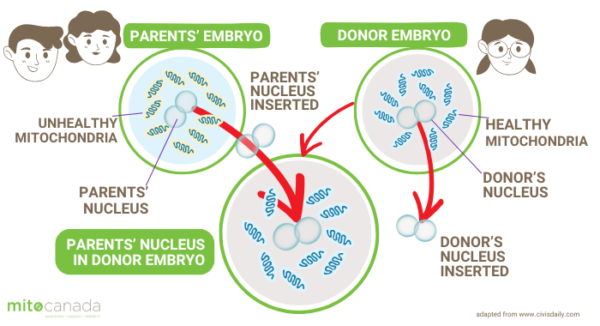
Figure I: chart demonstrating pronuclear transfer

    The outcome was a success, where all 8 babies (four girls and four boys) demonstrate on track development while presenting low non-disease causing and even undetectable levels of mitochondrial mutations.

    The downsides to this research is that long-term monitoring is required before this is an everyday practice. Additionally, it is also an ethical debate being that this technique involves gene alterations to humans. However, it is important to note that this is an incredible opportunity for families affected by mitochondrial diseases to be able to have children without passing down that unforgiving variant and it is a major stepping stone for other hereditary diseases as well. 

Sources:

https://mitocanada.org/what-is-mitochondrial-replacement-therapy/


https://www.scrippsnews.com/health/healthy-babies-born-in-britain-after-scientists-used-dna-from-three-people-to-avoid-genetic-disease 

 https://www.nejm.org/doi/full/10.1056/NEJMoa2415539 

Monday, November 20, 2023

Embryo genetics

 To counteract infertility, which affects 15% of couples of reproductive age attempting to conceive, In vitro fertilization (IVF) is increasingly popular. It contributes to nearly 5 % of births in countries, such as Denmark. This technology led to preimplantation genetic testing (PGT),

 where embryos are screened for conditions such as an X-linked disorder. This testing allowed for the identification of the embryos, with the affected alleles, and implant only the embryos that were unaffected (homozygous unaffected or heterozygous unaffected dominant) and avoid all affected embryos (homozygous affected). This allowed for the extension of the concept to PGT for monogenic diseases (PGT-M). This includes Mendelian single-gene defects (autosomal dominant/recessive and X-linked dominant/recessive), severe childhood lethality or early-onset disease, cancer predisposition, and Human Leukocyte Antigen (HLA), typing for histocompatible cord blood stem cell transplantation. This article summarizes the research on PGT, in several different articles, as it pertains to the screening of the genome for more complex genetic diseases. It concludes with the notion that the research on this topic will only continue to evolve and expand in the future.

This article is more of a summary of the findings of many other research articles so specific details and specifics about each research method are minimal. It is very likely that PGT will become more integral, as the technology advances. This article brings together several compelling experimental designs that can be further explained in the article that they originate.


Link to article “Embryo Genetics”:  https://doi.org/10.3390%2Fgenes12010118

 https://doi.org/10.3390/genes11080871


Tuesday, July 2, 2019

A Baby Was Born With DNA From 3 People


After several failed in vitro fertilization attempts for an Australian couple, researchers suggested a process called maternal spindle transfer. They found that her previous methods did not work because of a malfunction in the egg “Preventing a viable embryo from forming when it was fertilized.” This new technique involved removing the DNA from the mother’s egg, and replacing it with the DNA inside of a donor’s egg. The mother’s DNA in this egg will then be fertilized by the father’s sperm. The woman gave birth to a healthy baby boy which lead researchers to believe this method could help many families who struggle with IVF treatments. 

Multiple other factors likely contribute to the failing IVF one of which being mitochondrial diseases and malformations. When the mother’s DNA is transferred into a new egg, the embryo is able to healthily develop with the donor’s healthy mitochondria. We previously thought that mitochondria did not have a large role in reproduction, however, new research from Dr. Jonathan Tilly proves otherwise. After studying early embryo development, he has found that “Mitochondria may be playing an important role in helping eggs especially those from older women, to get fertilized and grow into healthy embryos and eventually newborns.” Interestingly enough, as others look at similar studies, many show evidence that when IVF fails, there is often a mitochondrial deficiency.

Researchers do not think the maternal spindle transfer will appear in fertility clinics anytime soon, as there is a lot more testing that must be done. They also joke about this process in the sense that there are three parent figures since the mother’s DNA is in another woman's egg. Dr. Tilly believes that this research will lead to a change in the way the US goes about fertility treatments as we are not allowed to alter genetic material during embryonic development. 

I think that this technique should be used in all countries. I was created via in vitro fertilization after several attempts. Luckily, after the third try the egg was fertilized and embryonic development began. However, thousands of couples every year spent countless times trying IVF only for it to also fail them. This new treatment would give husbands and wives the opportunity to have a biological family. I find it quite fascinating that DNA is able to be extracted and implanted into another woman's egg. With more research and clinical trials, I believe this method will give many families the ability to have a child. 


Sunday, March 31, 2019

Genomic Prediction

The Genomic Prediction has developed genetic screening tests that can identify low IQ in IVF embryos. These tests have not been used on any embryos yet. To limit ethical concerns, the Genomic Prediction stated that they will only be using this testing to screen for embryos that may have mental disabilities. In the future, researchers believe that they will be able to scan for embryos with high IQs. While it has been possible to screen for IVF embryos for certain things such as cystic fibrosis or Down’s Syndrome, it is difficult to screen for conditions that are influenced by hundreds of genes such as intelligence. These tests cannot predict the IQ of each embryo, but they can identify the outliers. 
I support the Genomic Prediction’s decision to not help prospective parents select for their embryos based on high-IQ. While these tests are groundbreaking, I do not think that they should be used in every circumstance. I’m sure that another country will create a similar technology and actually allow their citizens to select their IVF embryos based on IQ. However, I think more testing needs to be done before countries even begin to think about allowing any parent to use this technology. For example, not enough information is known yet to fully understand the consequences of selecting for the IVF embryos with the highest IQs.