Showing posts with label newborn. Show all posts

Wednesday, November 26, 2025

New In Vitro Strategies to Improve Healthy Baby Delivery Rate


    Studies using new IVF techniques performed by expert scientists at Britain's Newcastle University and and Monash University of Australia resulted in eight healthy babies being born. This new strategy combines the DNA from the mother, father, and an additional donor to lessen the risk of inheriting rare mitochondrial diseases. 

    The procedure is called pronuclear transfer, where the nuclear DNA from the mother and father is transferred into a donor egg that acquires healthy mitochondria, yet lacks the nuclear DNA. This results in the child having over 99% of their genetic material derived from the original parents, while allowing just enough DNA from the donor to replace disease-causing mitochondria. 
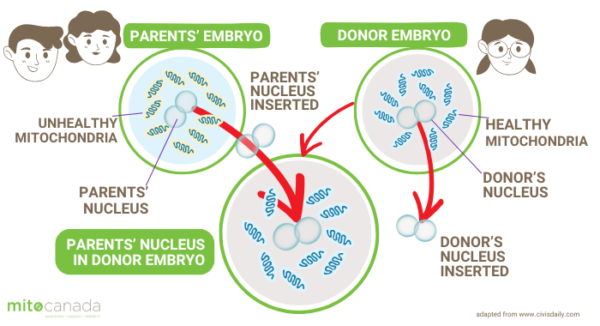
Figure I: chart demonstrating pronuclear transfer

    The outcome was a success, where all 8 babies (four girls and four boys) demonstrate on track development while presenting low non-disease causing and even undetectable levels of mitochondrial mutations.

    The downsides to this research is that long-term monitoring is required before this is an everyday practice. Additionally, it is also an ethical debate being that this technique involves gene alterations to humans. However, it is important to note that this is an incredible opportunity for families affected by mitochondrial diseases to be able to have children without passing down that unforgiving variant and it is a major stepping stone for other hereditary diseases as well. 

Sources:

https://mitocanada.org/what-is-mitochondrial-replacement-therapy/


https://www.scrippsnews.com/health/healthy-babies-born-in-britain-after-scientists-used-dna-from-three-people-to-avoid-genetic-disease 

 https://www.nejm.org/doi/full/10.1056/NEJMoa2415539 

Saturday, November 15, 2025

Maternal type 1 Diabetes may protection children through epigenetic changes

    Children born to mothers with type 1 diabetes are less likely to develop type one diabetes than people who have an affected father, brother or sister. Researchers did an epigenome-wide study on over 1,000 children and compared it with 790 children found with type one diabetes. They found differential DNA methylation at many sites.

    Epigenetic mechanisms such as DNA methylation determine which genes are read and expressed. By changing DNA methylation patterns and environmental influences in the womb have huge effects on an infant's health. The biggest environmental factors that affected the baby in the womb was the mother's diet, if she smoked, stress levels and medical conditions. These changes suggest that what the fetus is exposed to when the mother has type one diabetes may reprogram the child's immune system in a way that lowers the risk of autoimmunity.  This helps influence how a Childs long term disease risk can be affected by other factors than genetics.


Sources:

Helmholtz Munich. (2025, November 6). Maternal type 1 diabetes may protect children through epigenetic changes. Helmholtz Munich. https://www.helmholtz-munich.de/en/newsroom/news-all/artikel/maternal-type-1-diabetes-may-protect-children-through-epigenetic-changes

Maternal type 1 diabetes might protect offspring through epigenetic modifications. (2025). Nature Metabolism. https://doi.org/10.1038/s42255-025-01406-7


Monday, October 20, 2025

Two of her children were diagnosed with rare genetic disorder, with son dying months after birth

 In an article written by Judith Tan for The Straits Times, it highlighted the rare diseases that are passed down genetically. The story follows a family in Singapore, a baby that was born in 2020. When Rania was born she barely cried and had a significantly floppy airway. Through various surgeries, they were able to readjust the excess tissue and gave her a tracheostomy. After genetic testing, they found out that she has a rare genetic disorder called Kaufman oculocerebrofacial syndrome. 

There have been less than 100 cases recorded worldwide and only 36 of them have been properly diagnosed. This disorder is known to have unusual craniofacial features, intellectual disabilities and several congenital anomalies. “Affected children are predisposed to having things like abnormally shaped eyes; visual impairment; hearing loss; floppy airways, which affect breathing and feeding; structural heart malformation; developmental delay; among other physical differences, Prof Chin said” (Tan, 2025). It is usually different for each individual. 

The diagnosis of KOS is usually determined through a biallelic UBE3B pathogenic variant. “Molecular genetic testing approaches can include a combination of gene-targeted testing (single-gene testing, multigene panel) and comprehensive genomic testing (exome sequencing, genome sequencing) depending on the phenotype” (NIH: Kaufman Oculocerebrofacial Syndrome, 2022).


Brabbing-Goldstein, D. (2022, July 28). Kaufman oculocerebrofacial syndrome. GeneReviews® [Internet]. https://www.ncbi.nlm.nih.gov/books/NBK390670/ 

Tan, J. (2025, October 12). Two of her children were diagnosed with rare genetic disorder, with son dying months after birth. The Straits Times. https://www.straitstimes.com/singapore/health/two-of-her-children-were-diagnosed-with-rare-genetic-disorder-with-son-dying-months-after-birth 


Friday, December 8, 2023

Rare Diseases in Newborns: Should Preventative Measures be Taken with Genomic Screening?

Imagine, being able to halt the progress of or at least minimize the negative effects of a disease in a newborn before it's even started. Sounds great right? If we have this technology, we should implement it right away, correct? Well, let's not get ahead of ourselves considering there are many questions that need to be answered first. As stated in the article, screening newborns for rare genetic diseases is not new (first occurring in the 1960's) and has become much easier with the ability to sequence the human genome. Yet, this is where the questions come into play. Which rare disorders should be screened? How much will it cost? Will parents even want to do so (as stated in the article, they may feel overwhelmed)?


Obviously, with something so incredibly useful, we want it to be used in a manner that both is efficient and makes the most sense. Attempting to ensure newborns don't die early or suffer from one of these diseases is important. This is why it is crucial for this screening to be used (which may take about ten years to be implemented fully in the U.S.) once an effective approach is figured out by researchers. Another factor of importance is making people aware of this which may make it easier for them that just because it's new, doesn't mean they have to fear it. It may take time to perfect the use of this manner of screening, but it will eventually help millions of people.

Links:

Saturday, November 19, 2016

Cytomegalovirus: Lesser Known But More Dangerous than Zika


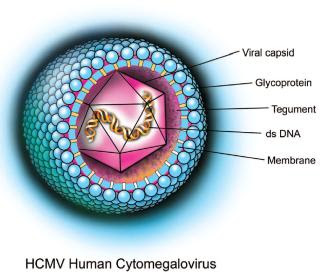
Practically everyone today is well-informed in regards to the Zika epidemic that had originated from Africa. When the Zika virus finally spread to America, it has left more than 2,000 infants with brain damage. However, there is a virus that is far more dangerous than Zika, especially to pregnant women and their infants. Cytomegalovirus, or CMV, is the most common viral infection that is present in birth and the leading non-genetic cause of deafness in children. Annually 20,000-40,000 infants are born with CMV, with at least 20% of the infants developing permanent disabilities such as deafness, microcephaly, deficits and abnormalities in intellect and vision. However for such a dangerous disease, why is there no known vaccine for it?  

According to Dr. Mark R. Schleiss, the director of pediatric infectious diseases at the University of Minnesota Medical School, "Everyone and their brother knows about Zika, but it's very rare in the U.S." In fact, only 900 pregnant women in the US have contracted the Zika virus in comparison to CMV. He argues that CMV is just as dangerous as Zika and a vaccine should have been made a long ago. However, there isn't one due to the lack of public awareness about CMV. Less than half of gynecologists tell pregnant patients how to avoid CMV, yet in contrast, doctors have advised every precaution available for the Zika virus. 

CMV is a member of the herpes family and is often transmitted by contact with saliva and urine, often between children and adult. According to the statistics for CMV, nearly 1 in 3 children are infected by age 5 and more than 50% of adults by age 40. Like Zika, it can remain in the body permanently and can cause mild flu-like symptoms but can be detrimental to pregnant women. 

Luckily, it has been discovered that antiviral drugs can reduce the effects of CMV symptoms upon being detected early on. However, there is still no known cure for CMV. Experts however are pushing for routine screening of newborns for CMV and developing guidelines to advise pregnant woman in preventing CMV. Despite being lesser known than Zika, CMV still should not be taken lightly and more public awareness should be made in hopes of developing a vaccine for such a lethal viral infection in pregnant women and newborns.


Saturday, November 28, 2015

The Case of the Vanishing Twin


A couple in Washington state used a fertility clinic to have their youngest son.  When they had a blood test run on their newborn child, the child’s blood type did not coincide with that of his parents.  A paternity test was then run and the results were grim, the child was not the man’s son.  The couple immediately blamed the clinic, because the only reasonable explanation was a mistake on their part.  

In reality, the explanation was a lot more complicated than just mistakenly using the wrong sperm cells.  The son’s DNA was not completely foreign, there was significant resemblance between the son and father’s DNA, approximately 25% similarity.  The genetic testing company 23andme determined the true father of the child was the man’s fraternal twin, making the man the child’s uncle.  However, the man had no twin brother.  So who was the actual father of this child?

The genetic phenomenon, chimerism or often referred to as the “vanishing twin” phenomenon, explains what happened in this very interesting situation.  This phenomenon refers to one fetus not surviving through the entire pregnancy, and the other fetus absorbing its genetic material.  The man had a twin in the womb, but the two zygotes fused into one, producing solely the man and not both offspring.  However, this man still had his twin’s DNA and this is the DNA that went on to produce his child.  

This is extremely interesting.  A genetic study found that one in every eight single births, begin as two or more zygotes at conception.  This is a high ratio for something that seems so rare, which means many people whose DNA have been affected by this, most likely do not even know.  It is interesting to think that you may only have around 25% of one of your parent’s DNA, and the other 25% from an unborn uncle or aunt.  It sounds more like a science fiction novel than reality, making it quite shocking.