Showing posts with label herpes. Show all posts

Thursday, December 12, 2019

Herpes' Achilles' Heel

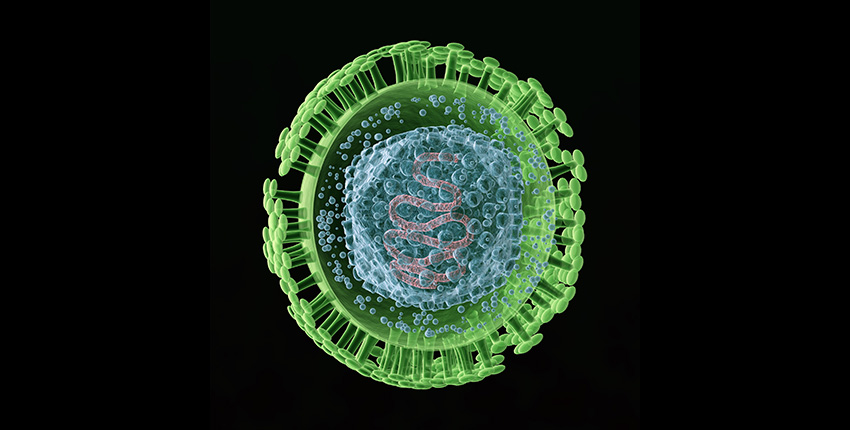
microscopy image of herpes simplex virus

https://www.sciencedaily.com/releases/2019/12/191212104636.htm

Supporting Article:
https://hms.harvard.edu/news/herpes-achilles-heel

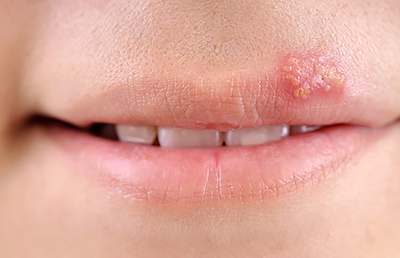
The herpes simplex virus (more commonly known as herpes), is a cold sore virus that can enter the body through the mouth, nose, and genitals. The virus stays dormant after initial infection only to be regularly reawakened to cause outbreaks such as cold sores or blisters. Antiviral drugs can prevent repeated outbreaks, but they do not always work. Using human fibroblast cells infected with HSV, Harvard Medical School scientists have successfully used CRISPR-Cas9 gene editing to disrupt not only the actively replicating virus, but also the much harder to reach latent reservoirs. The experiments also show that the DNA of the rapidly replicating virus is more exposed to the Cas9 enzyme — molecular scissors in the CRISPR-Cas9 gene-editing system.

I thought that this article was really interesting because this could be the solution to curing herpes. This article made me hopeful for the future of medicine because people will no longer have to take medication to prevent the virus from spreading.

Monday, April 24, 2017

Cold sores? Blame your genes!


Herpes simplex virus type 1 (HSV-1) is most commonly known for cold sores. At the University of Edinburgh in Scotland, HSV-1 was studied to find which genes were responsible for producing the protein that prevents the virus from becoming active. After determining the protein, a study was conducted with twenty blood samples of people with cold sores. It was found that IL28B was mutating more frequently in people with cold sores. The disadvantage of IL28B is that it leaves the body’s immune system vulnerable to fight sores. IL28B contributes to 20% of people who regularly get cold sores, they can treat the sore with “acyclovir.”  If herpes simplex type 1 goes untreated it can cause severe conditions like infections in the eyes, brain and the genital tract. This is were further treatment involving IL28B might be used to help the minority, whose genes are more susceptible to HSV-1.

Monday, April 17, 2017

Understanding of herpesvirus infection advanced by new research


The herpe virus can last a lifetime. Once a person is infected, the virus can remain in someones system for years before reactivating to cause the disease to show up. National Institutes of Health (NIH) scientists have identified a set of protein complexes that are recruited to viral genes and stimulate both initial infection and reactivation from latency. Environmental stresses known to regulate these proteins also induce reactivation. The World Health Organization estimates that one-half billion people are infected with HSV-2 while two-thirds of the population are infected with HSV-1. This virus can cause a range from oral cold sores to genital lesions to serious eye conditions that can lead to blindness. In infants, HSV can cause neurological and developmental problems. Scientists found they could reactivate latent HSV in a mouse model using compounds that turn on components of these HCF-1 protein complexes. The scientists are still continuing their work  to investigate the protein complexes involved in promoting HSV gene expression. Once they do more work, it could lead to new therapeutics that can help people that live with this virus. 
Original article here
More information on the gene

New Discovery In HSV Research

Herpes simplex virus (HSV) is an infectious disease that lasts forever if you get it. Like chicken pox, it is a virus that an extremely significant population of the world (two thirds of the world are infected with HSV1) gets at some point in their life. Again, like chickenpox, when you are initially infected with the virus that causes HSV, you normally get symptoms (like cold sores, lesions, serious eye conditions). However, after the initial symptoms subside, you are still infected with the virus, it just remains dormant in your body- meaning you still have the virus in your body, but you show no symptoms of it.

HSV has been much of a mystery to scientists since its’ discovery, however, there has been recent progress by NIH and Princeton scientists with this virus. They have identified a new HCF-1 protein complex that plays an additional role in initiating viral infection and reactivation. They found that- in mice- they could reactivate latent HSV by using compounds of these HCF-1 protein complexes. This is important because this research means that we can potentially reveal additional targets for the development of new therapeutics. In other words, with these new and continuing discoveries, we can hopefully minimize the spread of not only HSV itself, but also figure out better ways to keep the virus dormant (so that symptoms don’t ever occur if you are infected) since that would also help decrease the spread of the virus.

Tuesday, December 6, 2016

Cold Sores

Have you ever wondered whether cold sores are really contagious or is it something that is genetic. Many people think that cold sores are something you get from other people but in reality your genes are to blame. Cold sores are also not as common as people think. 20 percent of the population gets cold sores. The virus that causes cold sores and things similar to it is herpes simplex virus type 1 (HSV-1), is found in as many as 9 out of 10 people. Herpes simplex type 1 is in a lot of the population so researchers started to wonder why only 20 percent of people get cold sores regularly. Researchers started doing research because something else had to be causing sores since only a small percentage of people with HSV-1 get cold sores. Researchers from the University of Edinburgh in Scotland did studies on thousands of genes to see which gene is responsible for the protein that makes the virus not active. Researchers studied 20 peoples blood that have cold sores. They found that the IL28B gene, was consistently mutated in people who got sores. There is a treatment for herpes but there in not a treatment for other virus that are more serious that are caused by  HSV-1 or a mutation in the IL28B gene.  I found this all very interesting because for a long time I thought cold sores were contagious but it is genes after all. 


Saturday, November 19, 2016

Cytomegalovirus: Lesser Known But More Dangerous than Zika


Practically everyone today is well-informed in regards to the Zika epidemic that had originated from Africa. When the Zika virus finally spread to America, it has left more than 2,000 infants with brain damage. However, there is a virus that is far more dangerous than Zika, especially to pregnant women and their infants. Cytomegalovirus, or CMV, is the most common viral infection that is present in birth and the leading non-genetic cause of deafness in children. Annually 20,000-40,000 infants are born with CMV, with at least 20% of the infants developing permanent disabilities such as deafness, microcephaly, deficits and abnormalities in intellect and vision. However for such a dangerous disease, why is there no known vaccine for it?  
According to Dr. Mark R. Schleiss, the director of pediatric infectious diseases at the University of Minnesota Medical School, "Everyone and their brother knows about Zika, but it's very rare in the U.S." In fact, only 900 pregnant women in the US have contracted the Zika virus in comparison to CMV. He argues that CMV is just as dangerous as Zika and a vaccine should have been made a long ago. However, there isn't one due to the lack of public awareness about CMV. Less than half of gynecologists tell pregnant patients how to avoid CMV, yet in contrast, doctors have advised every precaution available for the Zika virus. 

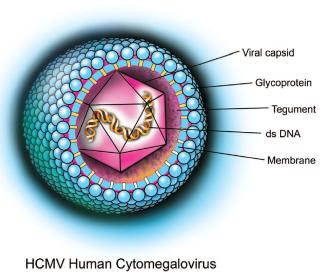
CMV is a member of the herpes family and is often transmitted by contact with saliva and urine, often between children and adult. According to the statistics for CMV, nearly 1 in 3 children are infected by age 5 and more than 50% of adults by age 40. Like Zika, it can remain in the body permanently and can cause mild flu-like symptoms but can be detrimental to pregnant women. 

Luckily, it has been discovered that antiviral drugs can reduce the effects of CMV symptoms upon being detected early on. However, there is still no known cure for CMV. Experts however are pushing for routine screening of newborns for CMV and developing guidelines to advise pregnant woman in preventing CMV. Despite being lesser known than Zika, CMV still should not be taken lightly and more public awareness should be made in hopes of developing a vaccine for such a lethal viral infection in pregnant women and newborns.