Showing posts with label Cas9. Show all posts

Friday, December 8, 2023

DNA Typewriters

 DNA typewriter prime editing-based DNA recorder that can capture the order of large numbers of distinct events in mammalian cells the DNA typewriter records events on a DNA tape consisting of a tandem array of CRISPR cas-9 Target sites all but the first of which are communicated at the 5’end and therefore inactive a prime editing guide RNA at the first Target site inserts a variable PegRNA specific barcode as well as a constant 3-bp key and activates the subsequent Target site by completing its 5’end To see whether the DNA typewriter can cover Complex event histories the authors established five transfection programs in HEK293T cells with integrated 5xTAPE-1 using 16 pegRNAs. Using these DNA typewriters could study the growth of a cancerous tumor and the development of tissues under normal conditions. There is currently a Company called Seattle hub that is purchasing synthetic biology to transform the cells into tiny recording devices for $75M


https://www.nature.com/articles/s41576-022-00523-3

https://www.geekwire.com/2023/seattle-hub-for-synthetic-biology-recording-cells/

https://techcrunch.com/2023/12/07/seattle-biotech-hub-pursues-dna-typewriter-tech-with-75m-from-tech-billionaires/#:~:text=A%20new%20Seattle%20biotech%20organization,upend%20our%20understanding%20of%20biology.


Tuesday, November 23, 2021

CRISPR potential cure for Transthyretin Amyloidosis


A trial done by Intellia Therapeutics demonstrated that CRISPR (Cas9) can be administered into the body and target the liver to treat a disease called transthyretin amyloidosis. This would be done by Cas9 editing the gene that expresses the mutated protein (ATTR). This gene is the mutated form of the normal gene that expresses TTR. The mutated protein builds up in the heart and kidneys. A patient with this disease has the inability to control basic body functions. 

Some drugs that were utilized were small interfering RNAs and antisense oligonucleotides. Small interfering RNAs are RNAs that affect the transcription of a certain gene. This would prevent the gene from being transcribed and then translated into a mutated protein.  Antisense oligonucleotides are small pieces of RNA or DNA that bind to a specific mRNA, which would block it from being translated. These drugs had to be administered monthly which also had side effects. Cas9 provides a safer alternative by splicing the genome and preventing the expression from happening. 

In Phase I of the trials, 3 out of the 6 patients with transthyretin amyloidosis look a low dose of Cas9 (drug name NTLA-2001), and the other half took a higher dose. The results showed that TTR levels dropped by 50% and 96% for the higher dose group. If these trials continue, then this can be used in 2 hours in the nearest outpatient clinic. 

Thursday, December 12, 2019

Herpes' Achilles' Heel

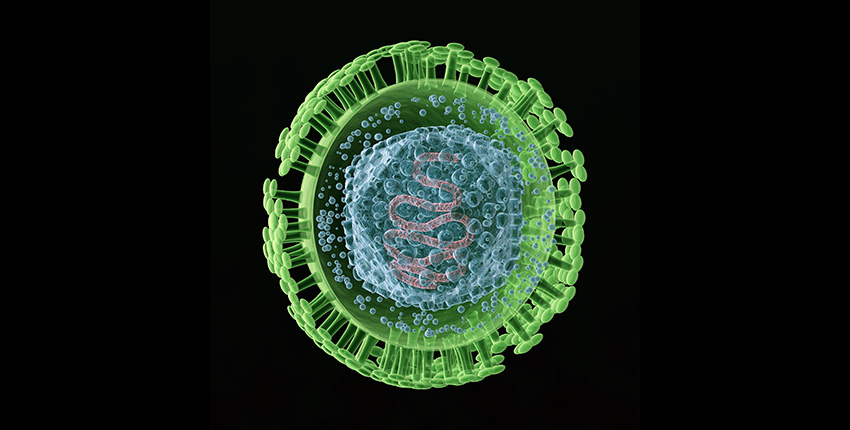
microscopy image of herpes simplex virus

https://www.sciencedaily.com/releases/2019/12/191212104636.htm

Supporting Article:
https://hms.harvard.edu/news/herpes-achilles-heel

The herpes simplex virus (more commonly known as herpes), is a cold sore virus that can enter the body through the mouth, nose, and genitals. The virus stays dormant after initial infection only to be regularly reawakened to cause outbreaks such as cold sores or blisters. Antiviral drugs can prevent repeated outbreaks, but they do not always work. Using human fibroblast cells infected with HSV, Harvard Medical School scientists have successfully used CRISPR-Cas9 gene editing to disrupt not only the actively replicating virus, but also the much harder to reach latent reservoirs. The experiments also show that the DNA of the rapidly replicating virus is more exposed to the Cas9 enzyme — molecular scissors in the CRISPR-Cas9 gene-editing system.

I thought that this article was really interesting because this could be the solution to curing herpes. This article made me hopeful for the future of medicine because people will no longer have to take medication to prevent the virus from spreading.

Sunday, November 24, 2019

Stanley Qi's Alteration of CRISPR is Leading to A Revolution in Genetic Engineering

Stanley Qi is a bioengineer who attended Stanford University and worked on the CRISPR enzyme for most of his graduate years. CRISPR is composed of RNA and guides the DNA cutting enzyme known as Cas9. What Qi did was make Cas9 unable to cut DNA, making it dead (dCas9). Attaching enzymes or other structures allowed scientists to use dCas9 as a gene regulator. Qi hopes to use this invention to cure genetic diseases. Qi has also developed versions of the Cas9 gene that can move around large chunks of the DNA genome. He says this can be used particularly in studying cancers. It can also be used to study how stem cells mature.
CRISPR-GO moving genes in nucleus
I think this is an important discovery in bioengineering because its applications can be limitless. Right now, scientists are figuring out practical uses for this technology. They say that it can be used to cure genetic diseases and learn more about cancer and stem cells. I feel this tech is a cornerstone in human development. There are so many people with genetic diseases that are incurable. With this technology, those people might finally get a cure. In addition, with extensive cancer understanding, the survival rate of cancers might skyrocket or we might even find a cure. The possibilities really are endless.
https://www.sciencenews.org/article/stanley-qi-sn-10-scientists-to-watch
https://www.yourgenome.org/facts/what-is-crispr-cas9

Sunday, April 15, 2018

Gene Editing a close reality for patient applications

Gene editing is not a new concept or reality, but the application for wide use in humans for therapeutic needs is not. At the University of Alberta Faculty of Medicine and Dentistry has been conducting research on a new method for Gene editing that is more accurate. CRISPR/Cas9 was a huge breakthrough back in 2015, that paved the way. CRISPR/Cas9 created from strep bacteria, it is an old defense for bacteria that once the information of a bacteriophage has been stored, it uses it to find and put an end to the new invaders by snipping its DNA (Hubbard). This is only as accurate as 1 percent and that when coupled with more then a trillion cells in humans is a lot that is roughly minimally about ten million errors that CRISPR can create. Now instead of using a natural guide molecule and replacing it with a synthetic one (BNA) bridged nucleic acid, Basil Hubbard from Canada Research Chair in Molecular Therapeutics and an assistant professor in the University of Alberta department of Pharmacology, who led the study used that technique. This technique acts as a guide for Cas9 and can improve the specificity by over 10,000 times, said Hubbard. Gene therapy has ways to go but some day in the future will be able to treat and cure many different kinds of genetic diseases.

References:
https://gizmodo.com/everything-you-need-to-know-about-crispr-the-new-tool-1702114381
https://www.sciencedaily.com/releases/2018/04/180413144558.htm
http://www.nature.com/articles/s41467-018-03927-0

Wednesday, November 22, 2017

CRISPR: The Invasive Species


CRISPR is a relatively new technique for genome engineering that targets certain parts of genes and edits DNA in very precise locations. CRISPR uses RNA molecules (crRNAs) and enzymes (specifically Cas9) that bind to DNA and "cuts" it at a precise location in order to turn off the gene that was once activated. Scientists have been in the works of trying to figure out how to use CRISPR for curing diseases and for creating better crops, however there has not been much luck with it. While trialing the effects of CRISPR on an invasive species, it ended up completely wiping out other species. According to the article, scientists are calling CRISPR an invasive species, because it turns out that the altered genes were spreading from the invasive species to other parts of the ecosystem. Since this has become an issue, scientists are looking for other ways to help endangered species, that are not as risky. With that being said, scientists have determined that CRISPR is not safe to use within the environment as of today. Despite this, it is possible for CRISPR to become a way to eradicate diseases such as malaria, because it might be possible to cause genes to "self destruct" on themselves after they are genetically engineered with CRISPR. These self-destructed genes would then die off after several generations, but it would spread very quickly, and the genes that cause malaria would not be there anymore.
I am very interested in genetic engineering and how it is quickly evolving. I think that this field of study is very important because there is a possibility that we will be able to cure or eradicate diseases that have been a problem for our species for generations. CRISPR is a brand new technique for genetic engineering, and it is going to take a long time for it to become a proper technique that can be used within the environment and regularly for humans. Like how the article suggests, I think that we should come up with safer techniques that are not as likely to cause massive problems within the genomes of species including our own. I think that this is a great step in the right direction for scientists to figure out a way to wipe out diseases, but I think that within time we will be able to find an even better technique.

Tuesday, November 14, 2017

Scientists use gene editing to control mosquito population

In an article written by Sciencedaily.com, researchers have been able to successfully disrupt the expression of genes associated with cuticle pigment as well as eye pigment.  The effects of this editing has changed the mosquitos cuticle pigment to yellow, eye color to yellow, lack of wings, and the addition of a third eye.  While this does not seem to mean much, they were able to disrupt those genes expressions by editing the mosquito's DNA to stably express the Cas9 enzyme.  By having the mosquitos express this enzyme, this opens the door for the researcher's long term goal of using the gene editing tool CRISPR in an attempt to suppress the growing mosquito population while avoiding resistance that evolution would favor.  This article was interesting because it showed how researchers are attempting to edit the genetic code of the mosquitos to alter their feeding method which would decrease the rate they spread disease.  This is the first big step in fully understanding the genomic code and how it can be changed or altered to prevent the spread of disease.

Monday, May 1, 2017

First US Success of Nonhuman Primate Gene Editing


CRISPR has allowed scientists to move forward with great advances in gene editing in various species other than the commonly used mice. Such is the case of a study led by Michigan State University who have shown the effectiveness of gene editing in Rhesus monkey embryos using CRISPR/Cas9 technology. This is the first time this has been demonstrated in the U.S. This work is so important because mice are the usual model but they are not as ideal because their anatomy and physiology are so different from ours. However, a monkey would react more similarly to humans in regards to improved health and symptoms. Nonhuman primates are perfect models for diseases such as dementia, Alzheimer's or autism and would be favorable for looking at outcomes of surgical procedures, and implants. A big problem presented by the study is the cost of raising nonhuman primates because it can cost around $15,000 which of course is an enormous difference compared to rats. Nonetheless, the high-efficiency of gene editing they are now able to preform makes it worth it. I think this is a great step forward for gene editing and it's efficiency but I try not think about what is done to the monkey's for these scientific advances.

https://www.neb.com/tools-and-resources/feature-articles/crispr-cas9-and-targeted-genome-editing-a-new-era-in-molecular-biology  : For more information on CRISPR/Cas9 and genome editing.

https://www.sciencedaily.com/releases/2017/05/170501112525.htm :Article

Friday, April 7, 2017

Simple CRISPR deletion leads to fungal resistance in tomato

Using CRISPR (clustered regularly interspaced short palindromic repeats) technology, new research has created a non-transgenic tomato plant that is resistant to powdery mildew fungal patheogens. Using sequence specific nucleases such as crispr/cas9 technology, it is possible to change genetic code with insertions, substitutions, or deletions. The deletion of a specific gene from wildtype allows the label non-transgenic. Powdery mildew fungal resistance already exists in certain tomato varieties, but this process allows any desired variety to be altered very quickly to show resistance to fungal infection. The importance of this research is great and its application has potential to increase food production, which is something necessary due to the unwavering proliferation of humanity. 


Powdery mildew fungus


Article:

CRISPR info:

Powdery mildew fungus:


Thursday, November 24, 2016

DNA Editing and the Responsibility it May Hold


A recent study has brought forth a new technology that may be able to hold lots of control over editing one's DNA sequence. This technique, that enables gene editing, is potentially a very useful tool in the nature of eventually finding causes of disease and syndromes that are caused by mutations in DNA sequences. This technology would also help us learn more about cells and how they function, ever adding to the information that we already have, and helping us to understand the biology of our bodies more extensively.

The new technology, CRISPR, may sound innovative and helpful; however it also raises concerns. One primary concern is that future parents could potentially attempt to almost 'design' their babies, or at least their DNA sequencing. Another concern that has been brought to researchers' attention is the possibility of premature use of this technology, that may lead to detrimental results in patients that may qualify for it. However, there is so much still to learn about this editing technique and the power it holds, that hopefully we can avoid any dangers that may lie ahead. Researchers have also put a halt on some of the more extensive research this technique entails in terms of ethical use; therefore, the future use of this gene technique will presumably be received better by the public and potential patients.

Image result for gene editing

Most diseases or syndromes caused by DNA mutations do not focus on correcting the mutation itself, but rather a way to minimize the symptoms of the mutation and make it more feasible to live with. For example, cystic fibrosis, a disease that fills the lungs with excess mucus, which is caused by only a single DNA mutation, is most commonly treated by symptoms, attempting to reduce the pent up mucus in a person who suffers from cystic fibrosis' lungs. The practice of treating the symptoms and not correcting the mutation stems from further issues in that it is extremely challenging to attempt to 'fix' an extremely long DNA sequence, and it is unprecedented in the DNA sequence of living humans.

However, in 2012, this technology referred to as CRISPR/Cas was determined to have the ability to operate on human DNA. CRISPR/Cas is used a pair of scissors, that 'cut' the DNA strand where a specific strand of RNA is used, in order to commence DNA repairing that would, if done properly, instead fix the mutation that was causing disease. For some diseases this technique would be used on, it may even be possible to extract blood stem cells from the body, alter them using CRISPR, and put them back into the body. Although, it will likely still be quite some time before this technology and technique is tested on people.

I am very curious to see where this new technology takes us, and how well it can potentially work. It is very interesting to see how the researchers may test all of the possible outcomes in order to ensure there will be no ethic capabilities while testing the use of CRISPR on people. If this technique along with the technology really works, it will be the start of many positive biological impacts on those who suffer from diseases from DNA mutations.

Tuesday, November 15, 2016

Gene Editing, Changing the Way Animals Look

Changing the way animals look is starting to take it too far.  For years scientists have been using animals to test many scientific ideas, including medications, cancer, or genetic variations. I understand that certain animals such as mice and flies are easy to manipulate, along with having a quick reproductive cycle. Along with that, they ironically have very similar reactions to these tests like humans would. It is understandable that things cannot just be tested on the human population but things are going too far.

In this article, geneticists and scientists are using a gene editing system that affects a genome so the enzyme Cas9 can actually slice DNA and add brand new genes into the sequence. This idea is still being twisted and turned to come out perfectly, but it is in production. It is beginning to change the way animals look. One scientist stated that this allows them to change or manipulate anything they want without even knowing the DNA sequence. This is going way too far.

I do not think new animals should just be made up. This is no longer testing animals to benefit and help humans or other animals, its beginning to mess up and disturb the natural world. I do not think this is fair to do this to animals, they do not have a voice and they cannot say "please don't do this to me". Its very disturbing to me. If we have the technology today to do something like this, then we have the technology to make fake animals to test on, similar to the dummies they have in hospitals and medical schools to help students learn. There is no need to continue testing like this and completely change animals.


Friday, September 30, 2016

CRISPR and New Tricks

         One of the biggest and most controversial tools to come out of the scientific world, and more specifically the genetics field is, CRISPR; otherwise known as Clustered Regularly Interspaced Short Palindromic Repeats. CRISPR, hailed as a “miracle” to some scientists, is a gene editing tool where the CRISPR acts as a homing device to lock onto specific areas of DNA in which the enzyme CAS9 is used to “cut “the targeted section. Depending on what you want to do, the CRISPR/CAS9 can turn off, on, or replace segments of DNA. Although this genetic tool may seem appealing, there are some shortcomings. For example, the CRISPR/CAS9 has been known to cut more genes than expected which leads to unwanted mutations in DNA. Although first introduced nearly 3 and a half years ago, CRISPR/CAS9 is still seeing many new innovations to counter such issues.
            For example, Gene Yeo and other researchers at the University of California, at San Diego discovered a way to “dull” the blade of the CAS9 enzyme by adding other proteins in order to turn the CRISPR/CAS9 tool from a “Swiss army knife” into more of a multifunctional tool. Another way in which genetic engineers have been able to tinker with CRISPR is through turning off the CAS9 enzyme’s ability to cut genes leaving only the ability to latch onto genes functional. Chemical biologist Dr. David Liu of Harvard University was at the forefront in manipulating the Cas9 enzyme to do away with deletion and insertion. In turn a hitch-hiking enzyme is introduced to proceed through a series of single base nucleotide switches without any insertion or deletion.

            Today, there are many additions still being made today in relation to the CRISPR/CAS9 tool. Molecular biologist Feng Zhang of MIT has discovered many new enzymes located in bacteria which are able to replace the CAS9 cutting tool of CRISPR. Some examples include the Cpf1 and the C2c2 enzymes. The Cpf1 enzyme is crucial in allowing the process of multiple “guides” allowing the enzyme to edit in multiple locations on the DNA at once. It is also able to cut DNA strands so that one DNA strand is longer than the other which allows for easier insertion of new genes. In regards to the C2c2, this enzyme not only works in the same way as CAS9, but instead of cutting DNA, it can cut RNA. Ever since the advent of CRISPR/CAS9, many advances have been made to bring us closer to not only the manipulation of genes, but also advances in determining the root causes of diseases such as cancer, diabetes, or Alzheimer’s.
           I think that although something as controversial as designer children is possibly from all of these advances in CRISPR/CAS9, I still believe that its advances in the medical community are unfathomable. The ability to manipulate genes to prevent future diseases would be a miracle in it of itself and could definitely play a role is increasing the life span of human beings.