Showing posts with label hsv. Show all posts

Thursday, December 12, 2019

Herpes' Achilles' Heel

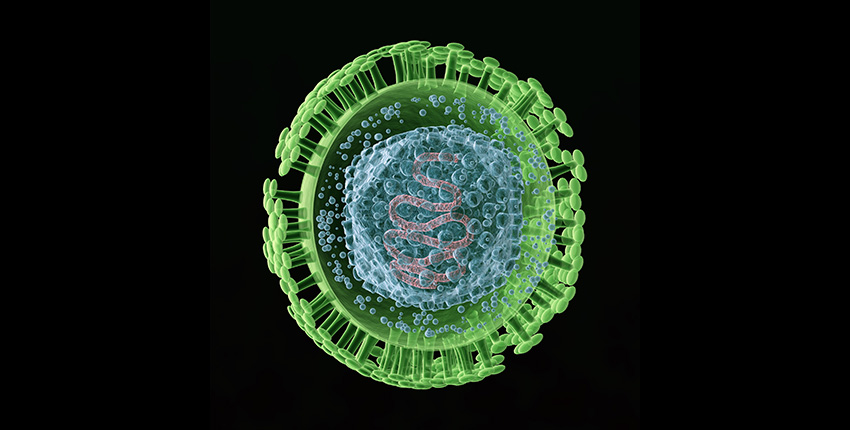
microscopy image of herpes simplex virus

https://www.sciencedaily.com/releases/2019/12/191212104636.htm

Supporting Article:
https://hms.harvard.edu/news/herpes-achilles-heel

The herpes simplex virus (more commonly known as herpes), is a cold sore virus that can enter the body through the mouth, nose, and genitals. The virus stays dormant after initial infection only to be regularly reawakened to cause outbreaks such as cold sores or blisters. Antiviral drugs can prevent repeated outbreaks, but they do not always work. Using human fibroblast cells infected with HSV, Harvard Medical School scientists have successfully used CRISPR-Cas9 gene editing to disrupt not only the actively replicating virus, but also the much harder to reach latent reservoirs. The experiments also show that the DNA of the rapidly replicating virus is more exposed to the Cas9 enzyme — molecular scissors in the CRISPR-Cas9 gene-editing system.

I thought that this article was really interesting because this could be the solution to curing herpes. This article made me hopeful for the future of medicine because people will no longer have to take medication to prevent the virus from spreading.

Monday, April 17, 2017

New Discovery In HSV Research

Herpes simplex virus (HSV) is an infectious disease that lasts forever if you get it. Like chicken pox, it is a virus that an extremely significant population of the world (two thirds of the world are infected with HSV1) gets at some point in their life. Again, like chickenpox, when you are initially infected with the virus that causes HSV, you normally get symptoms (like cold sores, lesions, serious eye conditions). However, after the initial symptoms subside, you are still infected with the virus, it just remains dormant in your body- meaning you still have the virus in your body, but you show no symptoms of it.

HSV has been much of a mystery to scientists since its’ discovery, however, there has been recent progress by NIH and Princeton scientists with this virus. They have identified a new HCF-1 protein complex that plays an additional role in initiating viral infection and reactivation. They found that- in mice- they could reactivate latent HSV by using compounds of these HCF-1 protein complexes. This is important because this research means that we can potentially reveal additional targets for the development of new therapeutics. In other words, with these new and continuing discoveries, we can hopefully minimize the spread of not only HSV itself, but also figure out better ways to keep the virus dormant (so that symptoms don’t ever occur if you are infected) since that would also help decrease the spread of the virus.