Showing posts with label gene editing. Show all posts

Wednesday, November 26, 2025

Personalized Gene Editing

 Zaneyah Hughes

November 26, 2025

Genetics

Dr. Barbato

Personalized Gene Editing

    The Children’s Hospital of Philadelphia (CHOP) made history by being the first in the world to personalize the CRISPR gene-editing technology in order to save an infant’s life. The infant, named KJ, had a rare metabolic disease called severe carbamoyl phosphate synthetase 1 (CPS1) deficiency. Thanks to Ahrens-Nicklas and Kiran Musunuru, MD, PhD.'s years of preclinical research studying similar variants to KJ’s disease, they were able to target KJ’s variant soon after birth. 


    Not only is this use of CRISPR technology groundbreaking, but as it proved in KJ’s case, it's also life-changing. If KJ hadn’t have been treated with the gene editing therapy by the CHOP and Penn Medicine team, he would’ve been stuck with the general solution for patients with CPS1 deficiency. The problem with that is that he would have required a liver transplant, which requires the patient to be medically stable and old enough for it. Sadly, KJ was neither before the gene-editing therapy. Even though the CHOP and Penn Medicine team personalized KJ’s gene-editing therapy doesn’t mean that this was a solution unique only to him. I feel like Dr. Ahrens-Nicklas and Musunuru’s technique to save KJ can be applied not just to other patients with similar diseases, but many of people who have genetic diseases.


Source: https://www.chop.edu/news/worlds-first-patient-treated-personalized-crispr-gene-editing-therapy-childrens-hospital

Extra Source: https://innovativegenomics.org/news/first-patient-treated-with-on-demand-crispr-therapy/

Wednesday, November 19, 2025

Extinction Solution for Thousands of Species Thanks to Gene Editing


       Ethical genome engineering has been making exceptional progress in the stride to rehabilitate endangered species and their compromised ecosystems.  Professor Cock Van Oosterhout and Dr. Stephen Turner's team of geneticists and bio-technologists claim recovery of lost genetic diversity in endangered species can be restored with the help of historic DNA samples. Van Oosterhout states "Gene engineering provides a way to restore that variation, whether it's reintroducing DNA variation that has been lost from immune-system genes that we can retrieve from museum specimens or borrowing climate-tolerance genes from closely related species". This statement suggests that by figuring out what gene is compromising a species, such as lack of climate change tolerance, scientists can extract a wanted gene from a relative species and introduce this to the compromised species. 
    One example of this successful application is the restoration of the once critically endangered pink pigeon (pictured below). This species was down to 10 known birds and brought back up to over 600, thanks to three key methods: restoration of variation that was once lost, facilitating adaptation, and reducing the passing of harmful mutations to following generations. 
    

Figure 1: newborn genetically altered pink pigeon 

    Some risks factors of this method include unintentional genetic modifications and reductions, therefore until percent error is mitigated, this approach remains experimental. 
    This method of attempting to help endangered species seems simple, yet practical. By introducing new technologies with what scientists already know about the species and their ancestors,  solutions can be suggested and practical applications can be made. Although gene alteration is not a replacement to species protection,  this is a hopeful positive step in the rehabilitation of many organisms, and perhaps one day the term "extinction" will be endangered. 


Sources

https://phys.org/news/2025-07-gene-solution-endangered-species.html
https://www.sciencedaily.com/releases/2025/07/250720034017.htm 

Wednesday, March 12, 2025

Tomatoes Could be Growing Bigger

A Johns Hopkins website called the Hub shared a new study that discovered genes in tomatoes that are responsible for how large the plant grows. The gene was found as part of a project to map the genomes of 22 organisms in the nightshade genus. Using techniques and tools such as CRISPR-Cas9, one copy of the gene CLV3 can be edited and result in much larger fruit. This growth of the tomato fruit is different from the cause of other fruits growing larger. For example, the Genetic Literacy Project explains that current strawberries are much larger than strawberries from the past because they are polyploid. However, the new research into tomatoes and eggplants reviews gene editing that can be passed from parent to offspring. The researchers are exploring real-world applications of their findings including shipping a single edited fruit to places like Africa to create new agricultural markets. The article mentions that the gene was discovered by studying multiple species together. Decades worth of research on tomatoes was easily transferred to eggplant genetics and one of the genes that leads to larger fruit was discovered in eggplants. The researchers urge “pan-genetics” to be more common as it could have endless possibilities for food around the world. 

    I find it interesting that more researchers do not use pan-genetics as it seems to have promising results at least in the case of crop yield. I think that editing the tomato genes to produce larger fruit could have major beneficial effects if it is allowed. However, with so many regulations on gene editing in food sources, I wonder whether it is possible to send edited parent crops to other countries. Even though the results look promising, the tomatoes would be genetically modified and some individuals may be hesitant to eat them if other options are considered not genetically modified.

Links
https://hub.jhu.edu/2025/03/05/engineering-genes-to-grow-bigger-tomatoes-and-eggplants/
https://geneticliteracyproject.org/2018/11/30/why-are-strawberries-so-big-the-genetics-behind-up-sizing-fruits-and-vegetables/

Tuesday, November 26, 2024

The Fight Against Disease: A Strike Against Malaria

Malaria is an Epidemic

Malaria has been a growing problem in many third world countries, with mosquitos infecting an estimated 682,191 people a day in 2022. That is an increase of 5 million year over year from 2021. With the growing concern of how to stop this epidemic, researchers are looking at using a second-generation genetically attenuated parasite to create a "favorable immune induction profile and protective efficacy" response in humans infected with the virus. The trials show favorable results and it appears that the research is moving forward. This is great news, and to subdue any concerns, although the parasite does invade hepatocytes, it never reaches a blood stage infection due to the limitations placed on it via genetic modification. 


This is a great example of how genetic research can impact medicine and help save lives where other methods fall short. I'm excited to see where this goes, and if we can apply this to other parasite originated diseases. The next problem to work on in this case is a solution for those who have been previously infected, as this performs best in first infection cases, and sub optimally otherwise. Below is an important infographic relating to the study, easily digestible by those unfamiliar with the subject matter

.


Links:

https://www.nejm.org/doi/full/10.1056/NEJMoa2313892

https://www.nature.com/articles/s41541-024-00975-0

Friday, November 22, 2024

Rice embryos formed by two specific genes

Despite rice being one of the most produced crops for the world's population, it is not grown often in high yields because obtaining or reproducing seeds on your own is expensive. A new solution has come to light in two genes in rice egg cells that activate embryo development without any fertilization. This was discovered by researchers from University of California's Davis and Berkely campuses and the solution would create highly efficient and high yielding clonal strains of rice and potentially other crops.

The researchers had known that activating a gene called BBM1 in rice egg cells activates the ability of a fertilized egg to form an embryo, but alone this only worked around 30% of the time. What they now discovered is the second gene WOX9A which when simultaneously activated can boost success rates to about 90%. This new discovery can allow for an easy cloning method which can increase rice production rates and lower costs.

I am hopeful for this discovery because it is potentially an inexpensive method for mass production of one of the most popular crops in history. Rice is a staple of agriculture already but with this new discovery it is possible that the amount of food in the world will increase and allow for struggling populations to get easy access to food.


Links:

https://www.britannica.com/plant/rice

https://phys.org/news/2024-11-biologists-genes-trigger-embryo-formation.html

Wednesday, November 20, 2024

Rice, rice, and more rice, a sustainable future ahead of us.

 Researchers from UC Davis in 2019 found that, by activating the gene BBM1 in rice egg cells, it could switch on the ability of a fertilized egg o form an embryo, basically, creating a clonal hybrid without the need for fertilization that provide a high yield of the crop consistently. This method only worked about 30% of the time. That is until collaborators from UC Berkeley’s innovative genomics institute discovered that, by activating the WOX9A gene, the success rate increases to around 90%. It is a remarkable discovery that provides us the great benefits of hybrid rice strains without the need for creating the hybrid and buying an extra seed of seed every year. “In a world where resources are increasingly limited it provides a path forward for sustainable agriculture for rice farmers, and in the future, for other crops as well”.

According to the original research from the UC Davis staff, there are about 400 species of wil plants that can produce viable seeds without fertilization. They are called apomixis, but this process did not seem to have evolved in commercial crops. The gene BBM1, that belongs to a family of plant genes called “Baby Boom” or BBM, is expressed in sperm cells but not in eggs. They argue that BBM1 switches on the ability of a fertilized egg to form an embryo. The researchers first used gene editing to cut the ability of the plants to go through meiosis, meaning that the egg cells formed by mitosis, inheriting a full set of diploid chromosomes from the mother, then they caused these egg cells to express BBM1, which would not happen without fertilization. “so, we have a diploid egg cell with the ability to make an embryo, and that grows into a clonal seed”.

I fall short of words to express how much I enjoy the continuous development of this research. As a fellow rice enthusiast, and as someone with a conscience that can understand the need for sustainable agriculture in a world that likes to overproduce, methods like these can provide affordable sustenance options for folks all over the world. Rice has kept many different cultures alive and thriving for hundreds of years, and I am so glad that the trend does not seem to stop.


https://phys.org/news/2018-12-rice-clones-seed.html

https://phys.org/news/2024-11-biologists-genes-trigger-embryo-formation.html


Friday, December 8, 2023

Gene editing can make chickens resistant to bird flu

Gene editing can make chickens resistant to bird flu

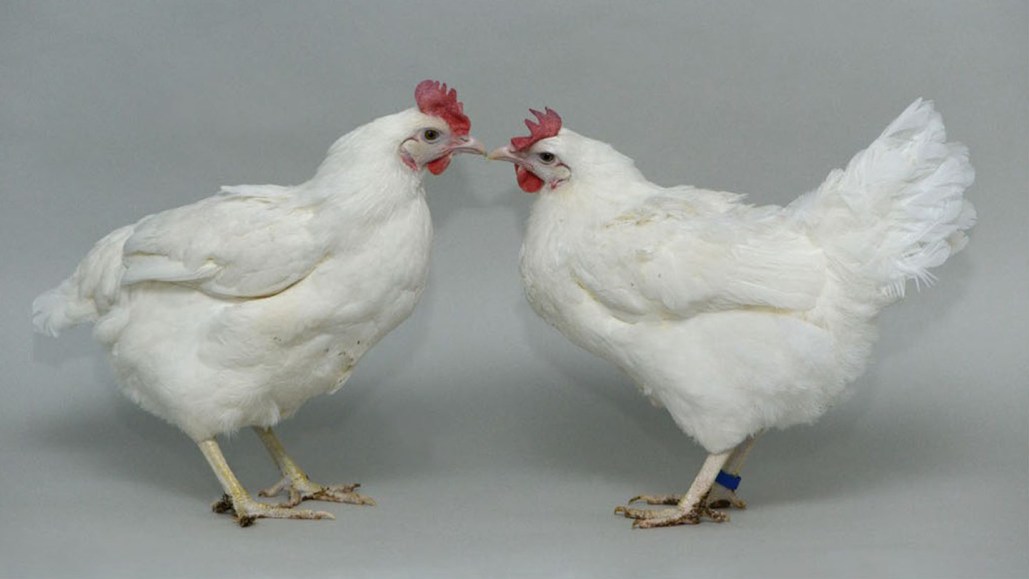
In a revolutionary study published on October 10 in Nature Communications, researchers achieved substantial strides in the fight against avian influenza by genetically altering hens to be virus resistant. The research was carried out by specialists from multiple institutions and concentrated on modifying a particular gene known as ANP32A, which is essential for the reproduction of avian flu viruses.

Avian flu outbreaks pose a significant threat to poultry farms worldwide, often leading to devastating consequences, such as mass culling of birds. While the study isn't yet 100 percent effective in preventing infections, it represents a crucial step forward in developing chickens that are resistant to avian flu. Traditional vaccines exist to protect poultry from flu, but they are expensive, and the virus can quickly adapt to evade the protection they offer. Genetic editing, on the other hand, provides a promising avenue for creating permanent changes that render animals resistant to specific diseases.

A photo of two similar-looking white chickens looking at each other.

This study is very crucial to helping fight against the avian flu to help prevent the death of more chickens. Altering the genes to help become virus resistant is a very important discovery and it could even lead to more ways we can fight diseases through genetic altering


Links:  https://www.sciencenews.org/article/gene-editing-chicken-resistant-bird-flu

https://www.nature.com/articles/s41467-023-41476-3


Tuesday, November 14, 2023

Silkworms Have Been Genetically Modified to Produce Pure Spider Silk

Spider silk has been sought after for many applications, from surgical sutures to protective gear. However, the challenge of mass-producing this material has kept scientists stuck for years due to the territorial and cannibalistic nature of spiders. In a study, researchers from China have achieved a major milestone by coaxing pure spider silk out of genetically modified silkworms.

Using the CRISPR/Cas9 gene-editing tool, the scientists successfully inserted the complete genetic blueprint for spider silk production into silkworms. This breakthrough enabled the worm's silk-making glands to produce spider silk protein.


Despite these obstacles, silkworms emerge as prime candidates for genetic engineering due to their ability to produce silk and the limitations other modified organisms face in generating usable fiber. In the future, the research team aims to enhance the silk's strength and flexibility by incorporating artificial amino acids into the spider silk protein, potentially surpassing the natural fiber's inherent limits.

The success in modifying silkworms to manufacture spider silk opens the door to a whole new world in biomaterial engineering. As this innovative technology advances, it holds the potential to revolutionize various fields.

Links:

More information about Spidersilk

Silkworms Being Genetically Modified

m

MoreMor

Sunday, April 24, 2022


     An article written by Elizabeth Gamillo for the Smithsonian Magazine discusses CRISPER gene editing technology and cats. Researchers are using CRISER to engineer hypoallergenic felines. They way this is possible is by blocking genes responsible for a major cat allergen. 

    InBio, a United States biotech company is removing sections of DNA in cats at specific locations in the genome. After analyzing DNA in 50 domestic cats researchers identified regions along the two genes that the team could cut and edit with CRISPR. This is the first step in being able to breed the resulting hypoallergenic cats to produce offspring that are not genetically modified.

    Removing the allergen causing gene is anticipated to not cause any health risks to the cat. And the protein is believed to be not essential for survival. There are ways to reduce the amount of the allergen causing gene without the use of CRISPER, but not totally remove it. 

Friday, April 30, 2021

Using CRISPR to make Brown fat cells as a potential treatment for obesity and diabetes


In this article, they talk about how scientists have been able to synthesize brown fat cells in the lab and were successfully able to transfer it into mice, resulting in less buildup of bad fats in the mice. This study was conducted by a molecular biologist at Harvard Medical School, Yu-Hua Tseng. The study utilized gene editing technology known as CRISPR to convert white fat into brown fat by altering the gene called UCP1.  The goal of this research is to hopefully apply these findings to treat individuals that are obese and suffer from diabetes.

The body stores two main types of fat; white fat and brown fat. While white fat is typically referred to as "bad fat", the brown fat is actually "good fat" because it helps us burn energy and stay lean. It's commonly known that brown fat is useful for hibernating animals and even infants for his thermogenic qualities. When the UCP1 gene is altered, it converts the fat to brown fat, which causes mitochondria to generate more energy, released in the form of heat. 

Thursday, April 15, 2021

Genetic Treatment to Malaria Growth in Mosquitoes


    Malaria is a parasitic disease, mainly transported into humans by over 30 species of mosquitoes. In 2019, 229 million people were infected with malaria and 409 thousand died. There are many antimalarial drugs on the market that can build up your immunity or fight the parasite itself. Children under 5 pose the greatest risk of dying to malaria, as 67% (274,000 deaths in 2019) of malaria deaths happen to them. Malaria has killed roughly 4-5% of anyone who has ever lived, making malaria one of the deadliest diseases ever. 

    Recently researchers from the Imperial College of London published a journal about their findings on genetically editing Anopheles gambiae mosquitoes' genes to inhibit the development of the malaria parasite within them. The researchers were able to make healthy mosquitoes that couldn't infect others with malaria. They then bred the mosquitoes and their spawn also were healthy without the malaria parasite developing within them. The researchers are currently looking to test the gene edited mosquitoes in the field as a way to prevent malaria, but that may be a long ways away. I think if we can conclude there are no dangers to the environment, mosquitoes or the people getting bit, this could be the end of malaria, and prevent millions of more deaths to malaria.


Links:


https://www.genengnews.com/news/curbing-malarias-spread-by-genetic-engineering/


https://elifesciences.org/articles/58791


https://www.who.int/news-room/fact-sheets/detail/malaria

Wednesday, March 17, 2021

CRISPR may Solve Certain Climate Change Problems


    Climate change has become one of the biggest issues facing our life on this world. According to many scientists severe changes in our weather and climate will lead to significantly less agricultural yield. Floods and droughts can destroy existing agricultural land. Even if the land being affected by climate change isn't agricultural land, the Animalia that once existed there, could be driven to rural land and become an invasive species on our crops. 

    CRISPR is a gene editing tool that uses the Cas-9 enzyme to cut out specific genes in our DNA sequence and can insert new genetic code. In 2019 CRISPR was used to cure patients with the hemophilic mutation diseases sickle cell and Î²-Thalassemia; which usually are treated either by regular blood transfusions, or a bone marrow transplant.

    Dr. Karen Massel of the University of Queensland Centre for Crop Science recently published a review article about using CRISPR for agricultural benefits. CRISPR can benefit our crops by changing its anatomical design to be more water efficient, letting more crops be grown with less recourses. CRISPR can also edit the the ability of proteins to be digested, making crops have more nutritional value. To know what genes to edit in farmed crops the team at UQ find wild variants of the crops and find genes that could make the farmed crops more useful. "These kinds of changes can be so subtle that they are indistinguishable from the naturally occurring variants that inspired them." said Massel. I think the CRISPR modified crops are going to be able to curb the amount of land we will need to feed the world population with climate change.


Links Below


Sunday, November 22, 2020

How genetics plays a role in the fish farming industry

A fishery pen based off the coast of Chile. Used from this article

    According to an article published in science magazine, to date, there is currently only one genetically modified species of fish that is mass produced in the industry: a transgenic salmon. However, scientists have looked into new modes of fish farming to include gene altering in order to make fish more marketable and easier to farm. This article talks about different methods scientists are in the process of studying when it comes to fish farming. Fish consumption is on the rise and is raising a big issue when it comes to commercial fishing and aquaculture. They need to be able to produce mass quantities of fish without destroying the ecosystem of the ocean and raise and breed fish that are still palatable towards the consumers. 

    This article specifically talks about the process of "genomic selection". In the past, fish farmers went through great lengths to be able to obtain the fish with the desired "traits" or genetics. This would raise issues during breeding different generations to try and identify which fish they wanted to selectively breed. Instead of struggling trying to select the fish with the desired traits, scientists are now able to use single nucleotide polymorphisms (SNP's) to identify siblings of a generation with the genetic trait of interest. By doing this, they are able to obtain the fish that they want to continue to breed quickly and efficiently without having to kill the fish to determine its genetics. This technology has been used in other areas of farming and is just beginning in aquaculture. To improve the growth rate of fish, scientists have been looking into using gene transfer technology. However, when it comes to genetically modifying food, consumers a weary when it comes to genetically altered food and have not responded well to food that's been genetically altered in the past. Observation of genetic markers allows scientists to understand and observe a fishes ability to resist specific diseases and illnesses. Understanding resistance can help scientists prevent diseases and increase a farmed fishes survival rate. The article continues on with other various explantations of how specific genetic testing and well as SNP's are ultimately helping the fish farming and aquaculture industry. 

    This article is very important especially as the fish industry is growing at an exponential rate. I had the opportunity to take a fisheries class at Stockton so to be able to see how genetics is tackling some of the most prevalent problems in the fishery industry is truly amazing. The fishery industry as been in high demand as people are now consuming more fish than ever before. Many of the fish that are in high demand are not the easiest to raise in an aquaculture setting and some take a very long time to reach full maturity. All over the world there is an issue where in mass produced products like frozen fish fillets or even fish that is being served at a restaurant, it is not actually the fish that is placed on the label. Some of this is due to the price of the actual fish that is in demand and there is a cheaper "look-a-like" or the fish that is in demand is so overfished it is hard to obtain. By using SNP's to identify a fish or a fish sample, this will be able to help stop mislabeling in the fishery industry. This genetic technology explained in the article has the ability to change fisheries and aquaculture for the better and save the industry as well as multiple fish populations.


Articles used: Article #1 and Article #2

Friday, November 20, 2020

The Genetic Potential of Mitochondria

Subject: Mitochondrial Gene tool 

Article: ¨A bacterial toxin enables the first mitochondrial gene editor¨ 


The mitochondria is the powerhouse of any living organism. It not only functions as an organelle that produces energy (ATP) but it also helps facilitate other functions within the cell to keep it alive. In a human the mitochondria is prone to mutations because it does not have the repair mechanisms that nuclear DNA possess. In the article ¨A bacterial toxin enables the first mitochondrial gene editor¨  researches had worked on how the mitochondria could be a potential and safe tool to solve for genetic diseases through gene editing that would normally use the technique of CRISPR/Cas9. CRISPR and Cas9 solve for a mutation by chemically changing DNA bases in the nuclei, normally by cutting into DNA before deleting any defective strands. Upon the discovery of how toxin released from Burkholderia cenocepacia attached itself to DNA and allowed for there to be a base change of C (cytosine) and T (thymine). It was vital to acknowledge that because the correction could be made on a double stranded DNA without breaking apart the DNA strand Cas9 was no longer needed. However, this method is dangerous to mammalian mitochondria because it uses bacteria as its prey to make the base corrections. The question remains, if it is dangerous to mammals whose mitochondrial DNA was tested? Is it possible to use CRISPR Cas9 to assist in mammalian mitochondrial bases editing? 


Article Link: https://www.sciencenews.org/article/mitochondria-gene-editing-bacterial-toxin-crispr 

Supporting Link(s): https://www.britannica.com/science/mitochondrion 


Sunday, October 4, 2020

A New Tomato Ideal For Urban Gardens and Even Outer Space


Scientists have discovered a new form of planting crops. The Urban Agriculture Tomato prove to be efficient and beneficial to our environment. The gene-editing of the tomato has allowed it to bunch up closer together rather than in vine like fashion. The whole point of this new idea was to be able to grow plants in Urban areas that would likely not be able to produce the plants. This way more plants can be grown almost anywhere. They are even talking about growing them in space! This new advancement has made it possible for the tomatoes as well as other plants to be produced faster, easier, more efficiently and taste better. More people will be able to be fed as well. This also allows us to save land as well as decrease the amount of fertilizer used to aid crops from entering the soil and rivers. This ultimately proves to be beneficial to everyone and everything! The gene responsible for it all is SIER. This gene was modified with the CRISPR gene which led to the amazing, tasty tomatoes. 

https://www.agritechtomorrow.com/story/2019/12/a-new-tomato-ideal-for-urban-gardens-and-even-outer-space/11907/

https://www.frontiersin.org/articles/10.3389/fgeed.2020.00005/full

Wednesday, September 23, 2020

Gene Editing: Pros, Cons, Side Effects (In Humans)


       First of all, what is gene editing? In 2018, a request was approved to modify the genetic sequence of human embryos. The gene editing technique was give the name CRISPR-Cas9. This means that it can modify and "fix' disease causing genes in the embryo, and therefore have it be gone for future descendants as well. This was a huge breakthrough, but it is very controversial. Let's begin with the pros of gene editing. CRISPR can locate and kill cancer cells. It is also very helpful in drug research, and researchers are using it to speed up the drug discovery process. It can also stop diseases from getting passed down to the offspring. Overall, with gene editing, life can be expanded. It is also used in crops and food production, but that would be a whole other blog post. Now let's get into the cons. Many people see gene editing as unethical. It gives humans almost too much power. People have even called it "playing God". The claim is that diseases are natural, and natural is better. The earth is also already overpopulated, so it would create even more social issues if everyone was kept alive longer. Eventually, there just would not be enough food and resources. Also, it is still not completely safe to do. Gene editing at the cellular level could lead to unexpected results and even miscarriage and stillbirth. And lastly, genetically engineering a species would lead to no diversity, which is a major key to evolution on earth. I think that with proper restrictions, gene editing could be a beautiful gift to humans, as long as it is not taken advantage of. 

Thursday, September 17, 2020

Strict New Guidelines Lay Out A Path To Heritable Human Gene Editing


    Human gene editing has proved to be a big controversial issue of today, as well as an ethical debate. Scientists are working to perfect gene editing in the ability of producing desired babies. By essentially changing one gene on an individual, you are able to change the traits they will express such as athletic ability, intelligence, or musical talent, etc. Some scientist agree that "designer babies" are a possibility, but the ethical views against it are still too strong to even begin work. More importantly, gene editing can be used to remove diseases or disorders that normally would cause hardship and damage to an individual. One disease in particular they are working to remove is sickle cell-disease. With gene editing, scientists say that it could be corrected. This fix would help many people with this disease to become healthier and overall, live a better life. The steps toward sickle cell-disease and others are being made carefully to benefit society, however it will take some time before it is perfected and accepted by society as a whole.

https://www.sciencenews.org/article/human-germline-gene-editing-crispr-strict-new-guidelines

https://www.nature.com/articles/d41586-019-00673-1


Wednesday, April 3, 2019

it's a nice day for a white lizard

There is a lot of research and studies currently going on involving the genome editor CRISPR. However, until now there hasn't been any success with editing lizards and snakes. In, Science Magazine, Jon Cohen briefly describes how researchers were able to successfully edit the pigmentation in lizards. Usually CRISPR is injected into a fertilized egg but with these 21 lizards it was injected into 146 immature eggs. This was done because when a lizard egg is fertilized a shell is formed around it making it difficult to inject CRISPR through it without causing any harm to the embryo. Another complication is that lizards can store sperm in their ovum for an undefined amount of time. Four albino offspring were reported from these brown lizards.


Although this is a new technique, researchers do believe this will work with other lizards and snakes. It's still a little odd to think of researchers editing genes before the egg is even fertilized. The purpose of this research is for developmental genetics. Until now, lizards and snakes were left out of the research.

Monday, December 3, 2018

Implications of Jiankui's Genetically Modified Babies


The latest news in genetics comes out of Shenzhen, China where an associate professor of bioengineering at the Southern University of Science and Technology, He Jiankui, claims that two little girls are the world’s first genetically edited newborn babies. Using CRISPR, Jiankui has modified the babies’ genes to make them resistant to infection from HIV. The father of the babies is said to be positive for HIV. As of November 27th (the date of the article), there was no data to demonstrate how this experiment took place but is said to speak on more on the topic. The University has condemned the topic and even issued a statement saying that they had no idea that the project was going on.


How HIV infects cells via CCR5


In a Youtube video, Jiankui claimed that he used CRISPR to disable CCR5, a protein receptor that allows HIV to infect blood cells. On specific mutation, Delta32, disables HIV from locking onto the cell. In theory, if all individuals carried this mutant allele, then nobody would be able to get AIDs from HIV. CRISPR has been used in the laboratory for many situations, like eliminating diseases and improving the health of different crops. This technique, though, has never been used on human embryos, and therefore the results are unknown. One major problem is that CRISPR can cause off-target mutations to genes away from the target genes, and therefore can have many other implications.

Many companies are already looking to gene therapies in adults to edit the CCR5 cells in adults. In theory, scientists would remove blood from HIV positive patients, delete the CCR5 protein and return the cell back to the patient. It seems like every action has a reaction, and in this sense, getting rid of the CCR5 protein would increase susceptibility to West Nile virus, which is already seen in the real world when individuals are born without the CCR5 protein. Overall, Jiankui wrote a piece that discussed the core principles in the genetic editing of human embryos.

I am very interested in ethics in relation to science, and especially in relation to genetic editing. I believe that it should be interesting to see the effects of this experiment over time. I do not feel strongly for or against human genome editing or the idea of “designer babies”. If this experiment works and is able to basically eliminate HIV and AIDs ability to infect humans, think of what other uses human genome editing could have. Genetic cancers could be cured, and other genetic diseases could be edited. I think the use of genome editing for superficial purposes is unethical at this point in time. I think that the world has a ways to go in terms of being able to accept genetic editing and there will always be disagreement for it. Overall, the effects of this experiment will be interesting to see how it changes genetics forever, and it is so cool to see this monumental moment in scientific history.

Thursday, October 11, 2018

This Mouse Had Two Dads


lots of animals have reproductive strategies that seem almost alien to us. From penis fencing hermaphrodite flatworms to all female parthenogenic lizards.  But why is it that mammals always seem to need a male and female? Scientists in China decided to see if other strategies can work, with a little help form science.

They were able to create mouse pups with two moms that even survived to adulthood. They did however have some abnormalities due to a process called imprinting, in which molecules with methyl groups attach at a location close to an affected gene in the DNA. These can be removed using CRISPR, and then the DNA of stem cells taken from the parents can be used to create embryos.  Embryos created from females in this way have a 13% chance to produce viable offspring that are even able to reproduce at maturity.

These scientists even achieved something new, the first androgenesis ever in a mammal. It required some more work than using females. They had to cut out 6 imprinted regions to create embryos from the stem cells of two males, as opposed to 3 from the females. Only 1.2% of the embryos resulted in births (from a surrogate mom). None of those who were born lived for very long, and never to adulthood. They were also much larger than normal. The scientists learned that taking out a seventh imprinted gene made the offspring a normal size, though they still died.

This research might help us better understand birth defects caused by imprinted genes. It could also help with conservation of nearly extinct animals in which not enough individuals exist to revive the species through normal breeding, such as the northern white rhino which only has two female members left.

source