Friday, December 8, 2023

Sunday, November 19, 2023
Bird Flu Resistance due to Gene Editing

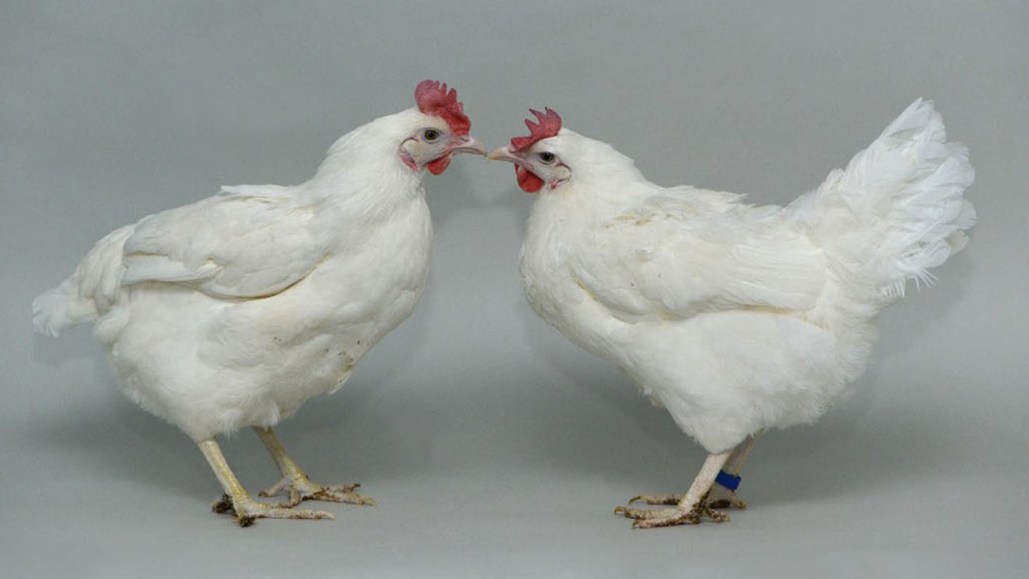
One of the reasons bird flu spreads is. due to farm animals. Chickens in chicken farms are very susceptible to disease and they are the reason why it spreads. With this being said, scientists have found a way to modify their genes to make them resistant to catching the virus. They made corrections to a gene called ANP32A. This gene gives cells the instructions to make protein that the bird flu likes to rely on, to take over. ANP32A was modified so that way it will stop making the protein that the virus likes to attach to. Even though it did turn out to work, there were still some chickens that got infected, so it is not 100% effective and it requires more studies. The average avian flu is not that dangerous as it only makes birds mildly sick. But there are more strains of this virus, some of which are lethal and make it very dangerous, not just for the birds, but for people as well. Even though there are already alternatives to protect poultry from getting this virus, the cost of continuously treating the birds is a lot, and the virus tends to make changes within itself to counteract the vaccines protection border. This is why genetic editing is something researchers and scientists are working on, as this can offer a more permanent resistance against this virus. An experiment was made with two groups of chicks. One group had chicks that were not genetically modified and one group that was. Researchers got a group of unedited sentinels to go with the unedited chicks and another group of edited sentinels to go with the group of edited chicks. Each group was exposed to the virus. The unmodified chicks that got exposed to the virus contracted it but only one of the modified chicks contracted the virus. Even though the one modified chick got the virus, it didn’t pass down the virus to any other chick in the same incubator. This experiment was tested again, however, there was a change in the dose that the birds were exposed to as well as the separation. Every bird was mixed. The results were that all unmodified chicks and the sentinels got the virus. Half of the modified chicks got the virus but no modified sentinels got the virus. This proves that even though genetically modified chicks contracted the virus, there seemed to be minimal spread of the virus. In order for the birds to be fully resistant to the virus, there needs to be more than just one change to the ANP32A gene and the end result is far from complete.
Scientists modifying genes is not that old. The bird flu is something dangerous which is being dealt with so that this virus becomes resistant in these animals. If scientists are doing this, just imagine what else they might be capable of doing. Modifying genes is complicated but, with these skills, the possibilities of modifying genes to not only animals, but humans, are endless. That is why this article was very interesting to me and captivated my attention because of this incredible study.
Sources:
https://www.sciencenews.org/article/gene-editing-chicken-resistant-bird-flu
https://www.nature.com/articles/s41467-023-41476-3
Tuesday, November 14, 2023
Gene Editing Can Make Chickens Resistant to Bird Flu

However, just recently after making some adjustments to a singular gene it was discovered that chickens became resistant to an avian influenza infection. With this knowledge, genetic modification could help in stopping viruses from replicating inside animals and stop them from transmitting different diseases and flus to other animals and people.


A gene called ANP32A directs chicken cells what they need to do in order to make a protein which the flu viruses rely on so that they can take over those cells. After doing a study with chicken cells grown in a lab it was found that when you eliminate the three ANP32 genes from the chicken cells the virus stopped replicating completely. More testing is being done for other genes due to the fact that could cause problems with chicken developments.
Main Source:
Gene editing can make chickens resistant to bird flu (sciencenews.org)
Extra Links:
Monday, September 13, 2021
Gut microbes of chickens independent from genetics in regulation of fat deposits.
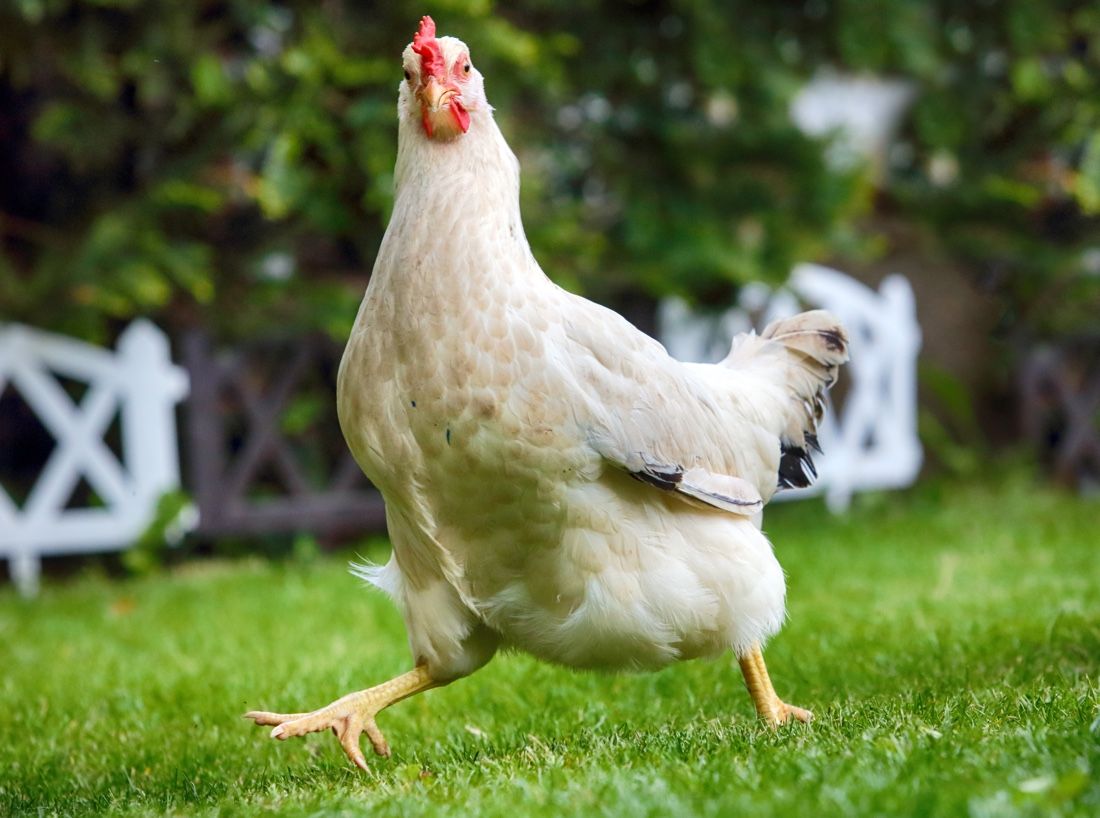
A recent study of the gut microbes of yellow broiler chickens has yielded unique results regarding their fat regulation and body distribution. As found in the data of Chaoliang Wen, Wei Yan, Congjiao Sun, and their colleagues, the heritable genetics of the birds had little correlation to the fat deposits in the chickens, and rather the microbial health of the birds (from feces, found in the duodenum and jejunum, as well as other locations) was correlated with the health of the animal in question. This is a departure from previous ideas that fat and health in animals is more majorly dependent on genetics and heritage, rather than gut health.
This is in direct contrast with an earlier claim by Sylwester Świątkiewicz, who regarded the genetic breeding program to have direct influence on the health and fat deposits on chickens.
I am not well versed in genetics, but I am interested in both zoology and farming. I was a farmhand for a short time for a family friend's farm. In terms of the gut health having influence on body mass and fat, it's fairly straight forward. However, I don't believe either argument (made by Wen et al, or by Świątkiewicz ) are completely cut and dry. There is much still mysterious to us about the minor influences that habits, diet, gut biotics, and other things have on animal metabolisms.
I personally would be very interested in a more layman's terms translation of that data, showing the correlation much more graphically digestible. It was with no small amount of trail and error that I had to go through to even comprehend this concept, as well as some minor confusion as to what parts of the bird's anatomy was being referred to.
Tuesday, November 17, 2020
Chronic stress causing genetic changes

Chronic stress in animals causes lower quality of animal products
which means larger quantity having to be discarded. In this article, it mentions
researchers from Sweden and Brazil being looking for signs of how chronic
stress can affect genes of red blood cells. In the study, one group of male chickens
were raised in a normal commercial environment while the other group was
exposed to factors that are known to induce stress. After this they took blood samples
and the analyzed the methylation of red blood cells. The way the methyl groups
had bound to the DNA was different in the control and stressed. In my opinion I
believe stress can physically change the body of any animal, so for scientist
to be able to isolate and find the change is interesting. This would be useful
to be able to keep track of stress of animals in order for farmers to get
quality products. I think this study was helpful because it could reduce the
use of antibiotics in meats in the future. If farmers are able to give animals
non-stressed lives or be able to test the blood and find out which are the
stressed ones, it might help the farmers greatly.
Monday, November 25, 2019
The Cause of Chewy Chicken Meat!
The Cause of Chewy Chicken Meat!
Almost everyone eats chickens, and ever wonder why some chicken meat is soft and some hard and chewy? Recently published, the University of Delaware researchers have discovered that lipoprotein lipase in chicken may contribute to wooden breast syndrome. Lipoprotein lipase is an enzyme that is important for fat metabolism. For decades, researchers have been studying wooden breast syndrome in broiler chickens that involved with analyzed genes in the disease and the identified biomarker for the disorder. The researchers also explain the hardened breast tissue from these chickens.

How did these researchers find that lipoprotein lipase is the answer? The researchers know that breast muscle fibers in chicken reply on sugar, which is a glucose molecule for fuel and not fat molecules in this case. They use RNA sequencing to determine which genes expressed, and finally, they found evidence of lipoprotein lipase expressed in endothelial cells. Since fat oxidized for energy in the breast, it causes another excess release of the free radical molecule that modifies the terrible fats and protein, which then causes a problem for the chicken’s immune system. This eventually leads to hard and chewy chickens.
This is a useful finding that researchers were able to discover. This would help growers manage to be more cautious about what they feed or look over how the conditions of the chicken are before actually going into the market, processed for meat, or breeds that may result in economic losses or disease spreading.
https://www.sciencedaily.com/releases/2019/11/191120175613.htm
https://eurekalert.org/pub_releases/2019-11/uod-tco112019.php
Sunday, November 24, 2019
Black meat, bones, and organs in Chickens
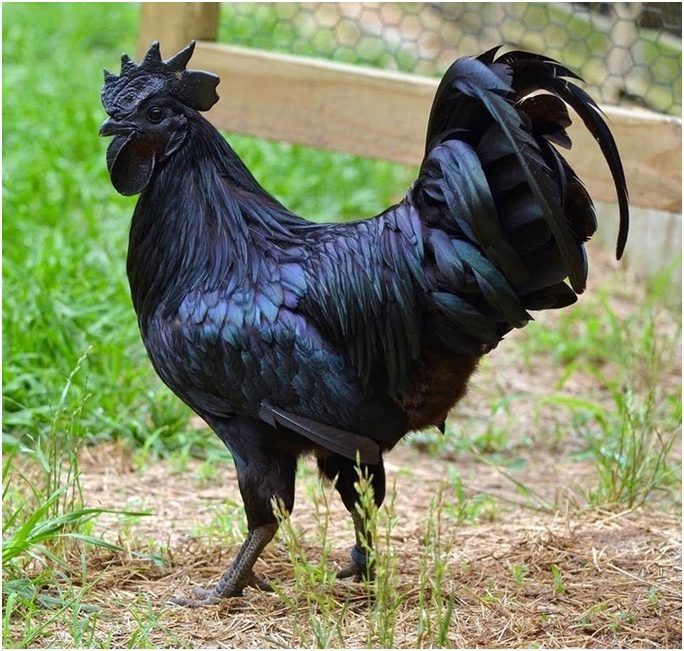
In my opinion, this mutation is actually really cool. I figured bones weren't all white, grayish, etc. but it took me by surprise that the bones and organs of an animal could be black as well as I've never really seen that before. I also find it interesting that the reason that these breeds have continued to spread around the world is because people liked the coloring of the chickens, and they would be bred as they were taken around.
https://www.nationalgeographic.com/animals/2019/09/why-black-chickens-fibromelanosis/
https://www.motherearthnews.com/homesteading-and-livestock/ayam-cemani-chickens-zbcz1910
Tuesday, April 11, 2017
Some Chickens Cross Roads, Others Cross Stripes

 for more information on chickens here
Wednesday, February 3, 2016
Chickens going Feral, must be Jungle Fever
 Red Junglefowl (Gallus gallus) are considered to be the ancestors of our cock-a-doodling feathery friends. In Kauai chickens that were raised on farms have occasionally been swept away during major storm systems and found themselves amid their ancestral partners, and they seem to have diligently contributed to what is now a hybridized population. These birds went on for decades without human dependence for their growth. What we see now is the expression of wild genes that we as consumers do not select for in our farm-raised variety of chickens. The feral variety make shorter versions of the kinds of calls that we hear on our farms at those ungodly hours, the males tend to have larger crowns, and their plumage is often speckled with various reds, greens and browns throughout. Another thing we breed chickens for is neglecting to brood their eggs so that we can go and collect them when needed. These feral chickens on the other hand don't like that at all, and it has been found that the gene for brooding is among a large number of genes that made the Red Junglefowl much more likely to survive in the wild.
The people of Kauai for the most part accept them as part of the local culture. It certainly gives scientists a reminder of how we consider the way species evolved. And also raises the question, is feralization the opposite of domestication?
I've read through these articles with a pretty open mind. I can agree with Dr. Gering and the research his team made, especially for bringing up that idea. The next step after feralization should be to become a wild species, a unique species that has evolved and is well established in the environment. In my opinion the answer cannot be a clear yes or no because if left alone they will no longer be the species that we domesticated. In the research they conducted it points out that this is what is going on. These birds aren't becoming Red Junglefowl, and they definitely aren't growing up to be featured in a sandwich at McDonald's® like their cousins in poultry farms. The genes they share right now make them something in between, and while they continue to live in the wild they will eventually be considered to be a new species. I think this is what makes life and evolution so interesting to study. Distinctions between what is known and what is new in a species can be blurred by altering a few genes and their will to survive.