Showing posts with label #GeneEditing. Show all posts

Saturday, November 22, 2025

A New Breakthrough in Gene Editing

 A New Breakthrough in Gene Editing

    A new gene-editing strategy developed by researchers at the Broad Institute and Harvard could make treatments for many rare genetic diseases faster and cheaper to create. Published in Nature, the study focuses on diseases caused by nonsense mutations. These mutations cause genetic errors that insert a premature stop signal and prevent a full protein from being produced (National Cancer Institute, 2019). Instead of fixing each individual mutation, the team developed a suppressor tRNA that helps cells read through these stop signals and restore proper protein production. Using a technique called prime editing, they inserted this molecule into cells, creating a method named PERT (HealthDay, 2025). Tests in human cell models of several rare diseases, including cystic fibrosis, Tay-Sachs, and in mice with Hurler syndrome, showed restored protein function at levels expected to ease symptoms, without toxicity. Experts say the approach could treat a wide range of conditions and reach millions of patients, though major challenges remain, especially delivering gene-editing tools to all needed cells and ensuring long-term safety. Scientists emphasize that while promising, this strategy will require years of further testing before it can be used in people.

    Instead of fixing one mutation at a time, this new approach could help millions of people with rare diseases who currently have limited or no treatment options in which I believe is important. It also shows how using suppressor tRNAs can open doors to solutions that didn’t seem possible before. Even though more testing is needed, this research gives hope for a future where advanced genetic therapies are faster, cheaper, and available to far more patients.


References:

HealthDay. (2025). New Approach Could Make Gene-Editing Treatments Faster and Cheaper. US News & World Report; U.S. News & World Report. https://www.usnews.com/news/health-news/articles/2025-11-21/new-approach-could-make-gene-editing-treatments-faster-and-cheaper

National Cancer Institute. (2019). Definition of nonsense mutation - NCI Dictionary of Cancer Terms. National Cancer Institute; Cancer.gov. https://www.cancer.gov/publications/dictionaries/genetics-dictionary/def/nonsense-mutation


Friday, November 14, 2025

Researchers Test New Gene-Editing Approach for Multiple Mutations

 Researchers Test New Gene-Editing Approach for Multiple Mutations

    Genome editing is a group of methods that allow scientists to add, remove, or alter genetic material at specific locations in the genome to change an organism's DNA (MedlinePlus, 2022). Scientists at the University of Texas have created a gene editing method that uses bacterial retrons that can potentially correct multiple disease-causing mutations at the same time. The retron method can replace longer sections of damaged DNA with healthy sequences, allowing researchers to fix several mutations within the same region, rather than targeting them one by one. This is better for scientists because, before, they could only focus on correcting one or two mutations at a time with gene editing (University of Texas at Austin, 2025). 

(University of Texas at Austin, 2025)

    The team tested this approach in mammalian cells and zebrafish embryos, which reached about 30% editing efficiency, which is higher than earlier retron methods (University of Texas at Austin, 2025). Researchers are now studying whether this technique could be used to treat genetic disorders such as cystic fibrosis, which includes over a thousand different mutations in the CFTR gene. By repairing a broader section of DNA at once, this method could potentially help more patients who do not benefit from current gene therapies.

I believe this research is useful because it shows a possible approach for treating genetic disorders that have many different mutations, which could help more patients. Using retrons to replace larger sections of DNA could make gene editing more flexible than just looking at one or two mutations as well as it can help more patients in the future.

References

MedlinePlus. (2022, March 22). What Are Genome Editing and CRISPR-Cas9? Medlineplus; National Library of Medicine. https://medlineplus.gov/genetics/understanding/genomicresearch/genomeediting/

University of Texas at Austin. (2025). Scientists just made gene editing far more powerful. ScienceDaily. https://www.sciencedaily.com/releases/2025/10/251025084545.htm


Tuesday, November 19, 2024

How Gene Editing Could Solve the Organ Shortage


Gene editing offers a revolutionary solution to the ongoing shortage of human organs for transplantation by creating genetically modified animals, whose organs could be more compatible with human recipients. This process involves altering the DNA of animals (mainly pigs) to reduce the risk of immune rejection when their organs are transplanted into humans. For instance, researchers are using CRISPR and other gene editing tools to disable certain genes in pigs that cause immune rejection and to insert human genes that help the body accept the organ as its own. These gene-edited animals could provide a continuous, renewable source of organs, potentially saving thousands of lives each year.

However, there are significant concerns. Ethical issues surrounding animal modification, the welfare of genetically altered animals, and the long-term safety of these organs in humans are major challenges. Additionally, there are risks of animal borne diseases where these might transfer from animals to humans demanding strict safety measures. Another issue is the potential for a few large biotech companies to dominate the market, possibly making these organs too expensive for many who need them. Despite these challenges, with careful research, regulation, and ethical oversight, gene edited animal organs could become a vital solution to the global organ transplant crisis.

Monday, November 18, 2024

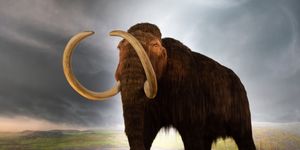
Resurection of the Mammoths

woolly mammoth from royal victoria museum, victoria, british columbia, canada, 2018 


    The potential of using genetics to splice together the genome sequence of extinct has long been questioned by those of science and science fiction. Colossal ,a biotech company, has made it their life's work to bring back the long extinct woolly mammoth. They believe that with the help of closely related ancestors like the Asian elephant which shares 99.1 match with the mammoth. They are working to splice the DNA's together in an almost Jurassic Park esque. They then will create a viable embryo of a woolly mammoth to then implant into an Asian elephant which hopefully will successfully carry the first woolly mammoth back into the world. 

    If brought back they plan reintroduce the woolly mammoth into Siberia which closely represents their original habitats 4,000 years ago. They had once walked Siberian lands in a way that broke up the soil to allow for local fauna to emerge and thrive in the frigid climates. This is a somewhat strange but effective solution that may potentially give some relief to the ever growing climate change issue increasingly growing all over the world. If completely successful we may see the revival of both an extinct species and our climate. It also may pose new research towards the revival of other extinct species.


Sources:

https://www.msn.com/en-us/news/technology/extinct-for-over-4000-years-scientists-are-inching-closer-to-bringing-back-the-woolly-mammoth/ar-AA1ukMnA

https://www.popularmechanics.com/science/animals/a42708517/scientists-reincarnating-woolly-mammoth/ 

Friday, November 15, 2024

Gene Therapy Breakthrough Restoring Sight and Changing Lives

Scientists are making big strides in genetic medicine, bringing hope to people with vision loss. A recent breakthrough focuses on Leber hereditary optic neuropathy (LHON), a rare condition that leads to blindness. According to an article from U.S. News & World Report, researchers used gene therapy to inject healthy copies of the MT-ND4 gene into the eye. This treatment improved vision in patients, offering a life-changing solution for those who once had no options.

Another exciting development, reported by Science Daily, explores how gene therapy is helping people with Leber congenital amaurosis (LCA), a condition that causes severe vision loss in childhood. In a trial by the University of Pennsylvania, patients treated for a mutation in the GUCY2D gene experienced massive improvements in their ability to see in low light, some up to 10,000 times better! These breakthroughs highlight how genetic therapy is quickly becoming a game-changer for treating vision problems.

These discoveries show how powerful gene therapy can be. Fixing faulty genes could improve the lives of people with genetic conditions, restoring not just vision but also independence and confidence. Of course, there are still hurdles, like making sure these treatments are safe, accessible, and affordable for everyone who needs them.

To me, this research is incredible. It shows how science can solve problems that seemed impossible just a few years ago. Restoring vision is more than a medical achievement, it’s giving people their lives back. I’m excited to see what’s next for gene therapy and how it might help with even more genetic conditions.

SITES USED

https://www.usnews.com/news/health-news/articles/2024-09-06/gene-therapy-reverses-a-rare-cause-of-vision-loss    

https://www.sciencedaily.com/releases/2024/09/240906141608.htm


Monday, April 8, 2024

Bringing Back the Woolly Mammoth?

 Scientists are studying ways and reasons they will create a giant de-extinction project that will bring back the Wooly Mammoth. It is important to preface that many people have mixed opinions about “playing with nature's course” Will the Wooly Mammoth experiment succeed and if it does will it be allowed into nature is another topic in question at the moment. As mentioned in the Colossal Laboratories & Biosciences article there are 5 core goals. 

  1. Increase resilience of habitats to climate change and environmental upheaval.

  2. Develop new tools and techniques that will contribute to the global effort to save modern elephants from extinction.

  3. Understand the genetic basis traits of cold adaptation in animals.

  4. Drive advancements in multiplex genome editing.

  5. Demonstrate that it is possible to bring back an extinct megafauna species.

Scientists will carry out this process by comparing the DNA of current day elephants and well preserved Wooly Mammoth DNA. They will have to also take into consideration the specific genes that give the Wooly Mammoth the ability to perfectly adapt to cold temperatures. They must then create a cell line and test it multiple times in order to make sure the cells can reproduce properly. Once that is done they then must perform a nuclear transfusion and fertilization. The embryo will then be inserted into a surrogate which is currently the Asian elephant.


Sources:


Sunday, November 19, 2023

Bird Flu Resistance due to Gene Editing


One of the reasons bird flu spreads is. due to farm animals. Chickens in chicken farms are very susceptible to disease and they are the reason why it spreads. With this being said, scientists have found a way to modify their genes to make them resistant to catching the virus. They made corrections to a gene called ANP32A. This gene gives cells the instructions to make protein that the bird flu likes to rely on, to take over. ANP32A was modified so that way it will stop making the protein that the virus likes to attach to. Even though it did turn out to work, there were still some chickens that got infected, so it is not 100% effective and it requires more studies. The average avian flu is not that dangerous as it only makes birds mildly sick. But there are more strains of this virus, some of which are lethal and make it very dangerous, not just for the birds, but for people as well. Even though there are already alternatives to protect poultry from getting this virus, the cost of continuously treating the birds is a lot, and the virus tends to make changes within itself to counteract the vaccines protection border. This is why genetic editing is something researchers and scientists are working on, as this can offer a more permanent resistance against this virus. An experiment was made with two groups of chicks. One group had chicks that were not genetically modified and one group that was. Researchers got a group of unedited sentinels to go with the unedited chicks and another group of edited sentinels to go with the group of edited chicks. Each group was exposed to the virus. The unmodified chicks that got exposed to the virus contracted it but only one of the modified chicks contracted the virus. Even though the one modified chick got the virus, it didn’t pass down the virus to any other chick in the same incubator. This experiment was tested again, however, there was a change in the dose that the birds were exposed to as well as the separation. Every bird was mixed. The results were that all unmodified chicks and the sentinels got the virus. Half of the modified chicks got the virus but no modified sentinels got the virus. This proves that even though genetically modified chicks contracted the virus, there seemed to be minimal spread of the virus. In order for the birds to be fully resistant to the virus, there needs to be more than just one change to the ANP32A gene and the end result is far from complete.

Scientists modifying genes is not that old. The bird flu is something dangerous which is being dealt with so that this virus becomes resistant in these animals. If scientists are doing this, just imagine what else they might be capable of doing. Modifying genes is complicated but, with these skills, the possibilities of modifying genes to not only animals, but humans, are endless. That is why this article was very interesting to me and captivated my attention because of this incredible study.

Sources:

https://www.sciencenews.org/article/gene-editing-chicken-resistant-bird-flu

https://www.nature.com/articles/s41467-023-41476-3

Sunday, October 2, 2022

Resurrection of the Tasmanian Tiger


The Tasmanian tiger, or thylacine has been extinct for almost 100 years. Scientists look to bring back the thylacine through the use of gene editing. To accomplish this scientists will look to create a Tasmanian tiger cell by editing the DNA of a cell from its closest relative, the fat-tailed dunnart. This cell will then be nurtured back to a living animal. Segments of the genome are still known, so this new thylacine will not be an exact replica, rather it will be a hybrid species. There is speculation this new species could even survive on its own. This raises the question whether this whole process is worth all the effort, time and money?

This study raises many more concerns that needs to be addressed. There are ethical concerns about the resurrection of a species, environmental concerns about the addition of a new species into an environment. But the potential that this study as well as the study of the resurrection of the woolly mammoth posses are incredible. It is fascinating that the DNA sequence can not only be obtained from a skeleton almost 100 years ago, but also can be encoded into another living cell. I believe this study is completely worth all the resources dedicated to it because it represents an advancement in the study of genetics and life. 


Thursday, November 21, 2019

Can DNA Editing Save Endangered Species?

kiwi bird


Kiwi birds are an example of an endangered species and they are native to New Zealand. These kiwis are in trouble due to non-native species (otherwise known as invasive species) including rats and other animals that prey on kiwis. This is because kiwis are a flightless bird. As a result of this, kiwis are starting to become extinct, and this makes New Zealand's leaders want to get rid of the non-native species that attack these birds. A new technology can help with this, but scientists are doubting whether or not this is actually a good idea. This "solution" may very well end up being a problem in another ecosystem. The technology they are considering using is a sort of gene editing tool called a gene drive. This tool would copy and paste itself into the genome of the invasive species, and the species would die off. They would use this gene drive in the certain areas where they are threatening the loves of endangered species, however, the gene drive runs the risk of spreading into and killing off this invasive species in areas where they are not even invasive. This would kill off the species in the whole entire geographic region. Though this technology is very interesting and a remarkable discovery, it runs too high of a risk at the moment and would have to be worked on more.

Saturday, December 1, 2018

How to make the gene-editing tool CRISPR work even better

          Recently, in the advancement of scientific technology, CRISPR, a genetic modifier, has been a significant advancement in the past few years.  CRISPR allows living things the ability to change it's original DNA, by adding or removing specific genetic material from a specific location in the genome.  CRISPR is already being used to modify plants and animals to learn more about how to edit human genomes.  Scientists are working hard to find a way CRISPR can treat life-threatening diseases, and ways to improve our environment and economy.  After years of experimentation and research, scientist discovered a way to improve CRISPR that is affordable, easy, and safe for humans that can lead to more precise gene editing.
          Molecular biologists worked hard to find that Cas9, which is an enzyme used in CRISPR, is not as effective and precise as the protein Cas12a.  There was a study done that determined Cas9 was not accurate and edited inaccurate parts of the genome, disturbing normal healthy functions.  If scientists continued using Cas9 it has the ability to turn healthy cells into cancerous cells, ruining all of the progress they have made.  Cas12a is a safer and clear-cut route because "it binds like Velcro to a genomic target, whereas Cas9 binds to its target more like super glue." (University of Texas at Austin, 2018)  Cas9 is more like super glue because it only pays close attention to the first few letters of a genomic target, and slowly dismisses the rest of the process, allowing for mismatches and editing of the wrong part of the genome.  While, Cas12a is like Velcro because even though the bonds are slightly weaker than Cas9, it has precise matching throughout the entire genome strip holding it together the entire way, instead of only in the beginning.  Cas12a allows for the edit accurately through the entire genome, checking each base pair for accuracy as it proceeds on to the next one, instead of stopping after the first few letters.  


          In conclusion, even though Cas9 and Cas12a, are no where near perfect, Cas12a has room for improvements.  With further testing and experiments regarding Cas12a scientists will be able to provide the best form of CRISPR to people in need.  

https://www.sciencedaily.com/releases/2018/08/180802141744.htm

https://www.researchgate.net/blog/post/new-crispr-gene-editing-tool-could-overcome-problems