Showing posts with label #blindness. Show all posts

Wednesday, April 29, 2026

Genetic Links to Hereditary Blindness Shared by People and Monkeys


https://www.ucdavis.edu/news/identifying-genetic-causes-blindness-people-and-macaques 

https://www.nei.nih.gov/research-and-training/research-news/discovery-monkeys-could-lead-treatment-blindness-causing-syndrome 


Researchers at UC Davis have located a genetic mutation in rhesus macaques, a species of monkey primarily found in Asia, that is identical to a form of blindness found in humans.  The condition found in humans is called Autosomal Dominant Optic Atrophy pr ADOA for short.  Researchers discovered that the OPA1 gene in some macaques had mutated.  This mutation causes these monkeys to suffer from progressive vision loss and eye abnormalities that mirror ADOA symptoms.  Due to primates close relation to humans, these macaques can be used as a biological model to test treatments and therapies.  Finding a cure for these monkeys could lead humanity to a permanent cure for blindness through gene therapies and other medical treatments.  

Tuesday, December 9, 2025

The Potential Cure for Rare Childhood Blindness


Cassidy DeMasi 

12/9/2025

Dr/ Barbato


   The Potential Cure for Rare Childhood Blindness

Leber Congenital Amaurosis, also known as LCA inherited genetic eye malfunction causing blindness at birth. It is mostly autosomal recessive.  It's the most common cause of childhood blindness. This is caused by the failure of photoreceptors to develop and function appropriately in the retina. Symptoms of LCA include rapid eye movements, poor response to light, and occasionally eye poking. 

LCA1 is rare and only affects under 5,000 people across Europe and the US. So the attention level on this problem is not as high as that of other issues, such as cancer. However, it is the largest reason for childhood blindness, and by continuing to do research on this issue, we give those with this mutation a voice. The University of Florida did a small clinical study on this that involved a surgical injection into the retina of an eye, which prohibited the LCA gene from being activated. The text states, "The study enrolled 15 subjects for treatment at the University of Pennsylvania or Oregon Health and Science University. Subjects received one of three different doses of the therapy to identify the safest and most effective dose for future trials. All patients received the treatment in one eye, which involved a surgical injection in the retina. Researchers followed the patients for a year to test their vision in the treated eye compared to the untreated eye. Subjects who received higher doses saw greater improvements in their vision, " (Gene Therapy Restores Vision in First-Ever Trial for Rare, Inherited Blindness, 2019). This is such an important understanding because this research could potentially lead to more research on eyesight, allowing other methods of science to understand a potential cure to blindness

Resources

What is Leber Congenital Amaurosis? (2017). Foundation Fighting Blindness. https://www.fightingblindness.org/diseases/leber-congenital-amaurosis-lca?gad_source=1&gad_campaignid=3569935&gbraid=0AAAAAD_ZajGYKCJ44UPHG3rPLEPJz67ZW&gclid=Cj0KCQiA9OnJBhD-ARIsAPV51xOO6O1OSZZhVI1XK09nuYpaMXfU9b2uET6-Aq7iURw5_kXNBUWmNwcaAkT9EALw_wc

Gene therapy 

restores vision in first-ever trial for rare, inherited blindness. (2019). Ufl.edu. https://news.ufl.edu/2024/09/blindness-gene-therapy/


Monday, November 17, 2025

Golden apple snail may give insight on human eye regeneration

    Researchers studied the Golden apple snail which has eyes similar to cameras. It has structures like lens, retina and cornea similar to human eyes. These snails are resilient and very invasive in lots of parts of the world. Its regeneration ability is important to research because their eyes are so similar to human eyes. They found that when the snails' eye is removed it takes about a month to fully regenerate. This includes reconnecting to the brain and restoring vision, that part takes a little longer than a few months. 

    The regeneration process happens in phases. Wound healing, which is the first 24 hours, then unspecialized cells migrate, proliferate, and specialize into eye tissues. Over a few weeks the new eyes mature and then become useable. 

      In relation to humans the PAX6 gene, which is crucial for eye development is also essential in these snails, Using CRISPR-Cas9 the PAX6 gene was disabled in snail embryos. When both copies were inactive snails developed without eyes to show how important this gene is. 

    These snails are important to study and do research on because they share key genes with humans. They could be used as a model organism to study eye regeneration. The next steps in research they're taking are to test whether PAX6 also plays a role in regenerating the eye not just in the eye's initial development. The goal is to map out the snail's regeneration program then relates it to human eyes to see if regeneration is at all possible.

    Sources: 
Saey, T. H. (2025, August 6). This snail may hold a secret to human eye regeneration. Science Newshttps://www.sciencenews.org/article/snail-human-eye-regeneration

This Snail’s Eyes Grow Back: Could They Help Humans do the Same? (2025, August 14). UC Davis. https://www.ucdavis.edu/news/snails-eyes-grow-back-could-they-help-humans-do-same


Friday, November 22, 2024

Scientists May Have Stopped a Form of Inherited Blindness in Dogs


A recent study conducted at the University of Cambridge, has shined a new light and possible new way of prevention to Progressive Retinal Atrophy also known as PRA in dogs. Once effected dogs will become completely blind over time. With the help of a genetic test, dogs who carry the gene for PRA can be tested early on and allow for breeders to know not to breed that dog and prevent the passing along to future puppies. 

The study conducted consisted of 6 English Shepherd's who have PRA and 20 English Shepherds who do not have it. They looked for genes that were linked to PRA. It was discovered that the problematic gene is recessive, so in order for the offspring to be effected both parents must be carriers. Now the issues still present is many dogs are inbred increasing the possibility of breeding's resulting in the disease being passed on. 

With the information from this study a swap which you use to swab the inside of the dogs mouth has been created so owners can test there dogs to see if they carry this DNA before breeding. There is no cure for this type of blindness however the hope is to identify and prevent further spreading of these genes to offspring, potentially one day eliminating it all together. 

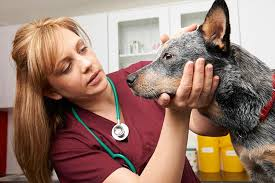
I think this is a great concept. Being proactive with testing dogs before breeding is key into producing healthy offspring. Working in the veterinary medicine field, it is always heart breaking to see dogs come in and owners learn that there dog is going blind. It changes a lot for both pet and owner. Helping prevent the possible spread of PRA is great, it a simple swap test it accessible to all. 

Links:

https://www.usnews.com/news/health-news/articles/2024-07-22/scientists-may-have-stopped-a-form-of-inherited-blindness-in-dogs

https://www.vet.cornell.edu/departments-centers-and-institutes/riney-canine-health-center/canine-health-information/progressive-retinal-atrophy#:~:text=PRA%20is%20a%20non%2Dpainful,a%20good%20quality%20of%20life.

Friday, November 15, 2024

Gene Therapy Breakthrough Restoring Sight and Changing Lives

Scientists are making big strides in genetic medicine, bringing hope to people with vision loss. A recent breakthrough focuses on Leber hereditary optic neuropathy (LHON), a rare condition that leads to blindness. According to an article from U.S. News & World Report, researchers used gene therapy to inject healthy copies of the MT-ND4 gene into the eye. This treatment improved vision in patients, offering a life-changing solution for those who once had no options.

Another exciting development, reported by Science Daily, explores how gene therapy is helping people with Leber congenital amaurosis (LCA), a condition that causes severe vision loss in childhood. In a trial by the University of Pennsylvania, patients treated for a mutation in the GUCY2D gene experienced massive improvements in their ability to see in low light, some up to 10,000 times better! These breakthroughs highlight how genetic therapy is quickly becoming a game-changer for treating vision problems.

These discoveries show how powerful gene therapy can be. Fixing faulty genes could improve the lives of people with genetic conditions, restoring not just vision but also independence and confidence. Of course, there are still hurdles, like making sure these treatments are safe, accessible, and affordable for everyone who needs them.

To me, this research is incredible. It shows how science can solve problems that seemed impossible just a few years ago. Restoring vision is more than a medical achievement, it’s giving people their lives back. I’m excited to see what’s next for gene therapy and how it might help with even more genetic conditions.

SITES USED

https://www.usnews.com/news/health-news/articles/2024-09-06/gene-therapy-reverses-a-rare-cause-of-vision-loss    

https://www.sciencedaily.com/releases/2024/09/240906141608.htm


Monday, October 7, 2024

Gene Editing Restoring Sight in Blind Children

A clinical trial which used CRISPR-Cas9 gene editing, named BRILLIANCE, treated patients with Leber Congenital Amaurosis (LCA). LCA is a genetic blindness that is caused by CEP290 gene mutations. In this experiment, fourteen patients, which included two under 17 years old, received surgical injections of a gene editing agent. According to the study published in the New England Journal of Medicine almost half of the participants noted having a significant increase in their visual quality.


Visual improvement was tested in a variety of ways, such as testing how bright a light needed to shine to be detected. Another test was navigating a physical maze to test how easily patients could find their way around. Out of the fourteen patients, eleven of them displayed improvement in at least one of the many tests, and six improved in two or more. More importantly, six of the participants reported experiencing better vision related to seeing color, also called cone-mediated vision. Cones are the type of visual receptors responsible for processing color.


So far the injection of the gene editing agent has shown no significant side effects that would prove this treatment to be harmful. The study's success provides hope for those with genetic forms of blindness as more effective gene editing agent injections could lead to a potential restoration of vision. However, this method of gene editing injections could be used in many other genetic disorders, which makes understanding its methods so much more important for the development of genetic medicine. This study could be a foundational pillar for the medical treatment of genetic disorders as a whole, not just in the field of ophthalmology.


https://www.pennmedicine.org/news/news-releases/2024/may/gene-editing-improves-sight-in-children-treated-for-blindness

https://medlineplus.gov/genetics/understanding/genomicresearch/genomeediting/#:~:text=CRISPR%2DCas9%20was%20adapted%20from,segments%20known%20as%20CRISPR%20arrays.

https://medlineplus.gov/genetics/condition/leber-congenital-amaurosis/

https://medlineplus.gov/genetics/gene/cep290/

Tuesday, November 22, 2016

Bat 1K Project

One of the main focuses, the mystery of how bats teach other bats how to whistle or make any of their standard sounds. Young bats use these sounds later on during courtship, mating, when they retrieve food, and defense. So far, only 50 bat species have been studied and all that was found so far is that the adult male bats teach the young bats how to speak just as children learn to speak from their parents. One gene, FOXP2, was identified to be linked to speech and language in bats because it is the same gene that has a role in how humans speak and learn sounds/language.


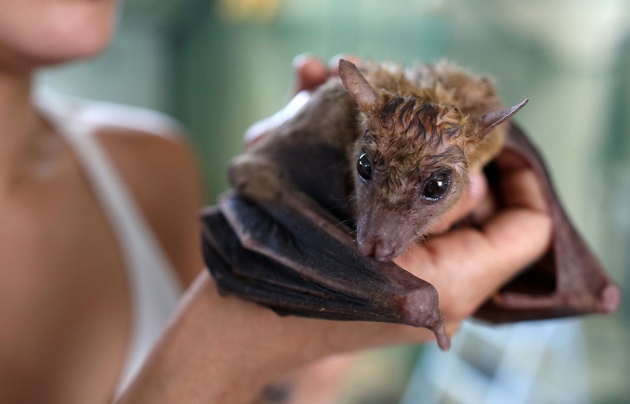
Some animals can communicate by singing or calling. Most people think of birds right away, however, four bat species also make vocal sounds. Scientists are interested in how bats are able to teach this melodies or sounds to their young. In efforts to uncover this mystery, the project called Bat 1K is now underway as of November 4. Not only are they studying the ability of bats to sing but they are also investigating how they are able to fly int he dark (echolocation), how their immune systems are so strong, and how their lifespans are considerably long. The oldest bat known to live was 39 years old which is equivalent to over a hundred years in a human due to their size. Bats are the longest-lived mammals for their size. In order to find out all this information, scientists are going to try and sequence the genomes of more than 1,000 bat species. 
After the genome is sequenced for these animals I would think that it would be fairly easy to identify the genes that allow them to communicate considering the one gene is that of a human. The study of bats was a wise choice when it comes to animals that use communication because they are relatively small in comparison to other communicating mammals like elephants and whales. Hopefully the discover of the gene in bats leads to the genes in these other mammals as well.

Source: 
http://www.nature.com/news/geneticists-hope-to-unlock-secrets-of-bats-complex-sounds-1.20997
(Other sources are linked in the text)


Wednesday, November 16, 2016

New Gene Editing

Back in the early 90's, a gene editing technique involved CRISPR. This technique of gene editing removes, adds, or edits the DNA of a dividing cells through the use of an enzyme and a piece of RNA (gRNA). The RNA binds to the desired DNA sequence and then the enzyme Cas9 cuts at that position.  The natural repair system in the cells repairs the cut which causes a mutation. Similarly, a new technique designed by Salk Institute allowed a gene editing technique in non-diving cells.
The DNA repair pathway targeted was the NHEJ, also known as the "non-homologous end-joining", that repairs routine DNA breaks by rejoining strand ends. The old technique involved an enzyme and piece of RNA while the new technique is a custom made insertion complex known as HITI. The complex is made up of a mass of nucleic acid. The nucleic acids in HITI are delivered using an immobile virus. The first time this was used, it was delivered to neurons which indicated that this method could deliver information to non-dividing cells. The picture below is a picture of the neurons of the mouse brain. The blue neurons are the original ones while the green ones are the gene-edited neurons.

The next challenge was testing other non-diving cells like the retinal cells. The study was performed in rats that suffered from reunites pigmentosa, which causes blindness. A functional copy of one of the genes responsible for the condition, Mertk, was inserted into the eyes of a mouse with the condition. The study found that the rats were able to respond to light and passed tests that indicated improved vision.

The new technique brings light to the number of possibilities that our science community as a whole has created. One of the ideas mentioned, blindness, started in mice but could hopefully work its way up to humans. I would like to see what this new gene editing technique can bring to many different non-dividing cells. I could not imagine how much happiness this could bring to those that struggle with conditions affecting non-diving cells.


Sources:
https://www.sciencedaily.com/releases/2016/11/161116144134.htm
http://www.yourgenome.org/facts/what-is-crispr-cas9