Showing posts with label #Ethics. Show all posts

Tuesday, November 19, 2024

How Gene Editing Could Solve the Organ Shortage


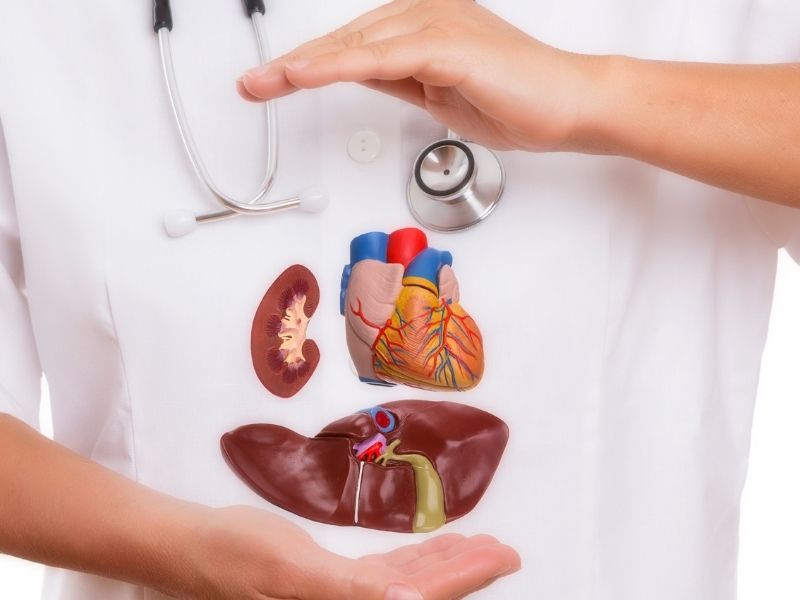
Gene editing offers a revolutionary solution to the ongoing shortage of human organs for transplantation by creating genetically modified animals, whose organs could be more compatible with human recipients. This process involves altering the DNA of animals (mainly pigs) to reduce the risk of immune rejection when their organs are transplanted into humans. For instance, researchers are using CRISPR and other gene editing tools to disable certain genes in pigs that cause immune rejection and to insert human genes that help the body accept the organ as its own. These gene-edited animals could provide a continuous, renewable source of organs, potentially saving thousands of lives each year.

However, there are significant concerns. Ethical issues surrounding animal modification, the welfare of genetically altered animals, and the long-term safety of these organs in humans are major challenges. Additionally, there are risks of animal borne diseases where these might transfer from animals to humans demanding strict safety measures. Another issue is the potential for a few large biotech companies to dominate the market, possibly making these organs too expensive for many who need them. Despite these challenges, with careful research, regulation, and ethical oversight, gene edited animal organs could become a vital solution to the global organ transplant crisis.

Friday, November 22, 2019

The Debate of Testing Newborns for Adult Onset Diseases

The rise of genome sequencing has allowed for risk analysis of development of certain diseases.  There are now debates going on about whether or not parents of a child should be able to sequence their child's genome for diseases that occur in adulthood. Lainie Ross, a Chicago Medical ethicist, argues against testing for adult diseases stating that creating “patients in waiting” is unethical as they may not have to be concerned about the condition for decades.
One example of a case involving this issue occurred during the BabySeq Project which sought to screen newborn genomes for childhood onset diseases. However, in one individual a BRCA2 mutation was discovered which is tied to an increased risk of breast cancer. Due to the fact that this is an adult onset condition, they had to ask the review board for permission to tell the parents arguing that the information could be beneficial to the child by showing there is a mutation visible in the family line which could cause the parents to get tested. Therefore, if the parents are positive for the mutation this information could have the potential to keep the child's parent alive. However, this argument does not keep the child's best interests in mind and rather uses the infant genome as a way to get information for the parents. Therefore, the question becomes one of the parents right to know their child's genomic data. Now, patients can opt out of the sequencing, and when it is done there is usually no testing for adult onset disease.
Image result for babyseq project


This debate is relevant to genetics because it is an example of the limitations that ethics put on science. Even though we have the technology to sequence children for adult onset diseases it does not mean that we should do so. I agree with this in the sense that it could cause unneeded anxiety for years before the first symptoms even occur. However, I could also see the possible usefulness in knowing about a disease that early in development. 


Sunday, March 31, 2019

Genomic Prediction

The Genomic Prediction has developed genetic screening tests that can identify low IQ in IVF embryos. These tests have not been used on any embryos yet. To limit ethical concerns, the Genomic Prediction stated that they will only be using this testing to screen for embryos that may have mental disabilities. In the future, researchers believe that they will be able to scan for embryos with high IQs. While it has been possible to screen for IVF embryos for certain things such as cystic fibrosis or Down’s Syndrome, it is difficult to screen for conditions that are influenced by hundreds of genes such as intelligence. These tests cannot predict the IQ of each embryo, but they can identify the outliers. 
I support the Genomic Prediction’s decision to not help prospective parents select for their embryos based on high-IQ. While these tests are groundbreaking, I do not think that they should be used in every circumstance. I’m sure that another country will create a similar technology and actually allow their citizens to select their IVF embryos based on IQ. However, I think more testing needs to be done before countries even begin to think about allowing any parent to use this technology. For example, not enough information is known yet to fully understand the consequences of selecting for the IVF embryos with the highest IQs.


Tuesday, November 6, 2018

CRISPR for Plastic and Reconstructive Surgeries


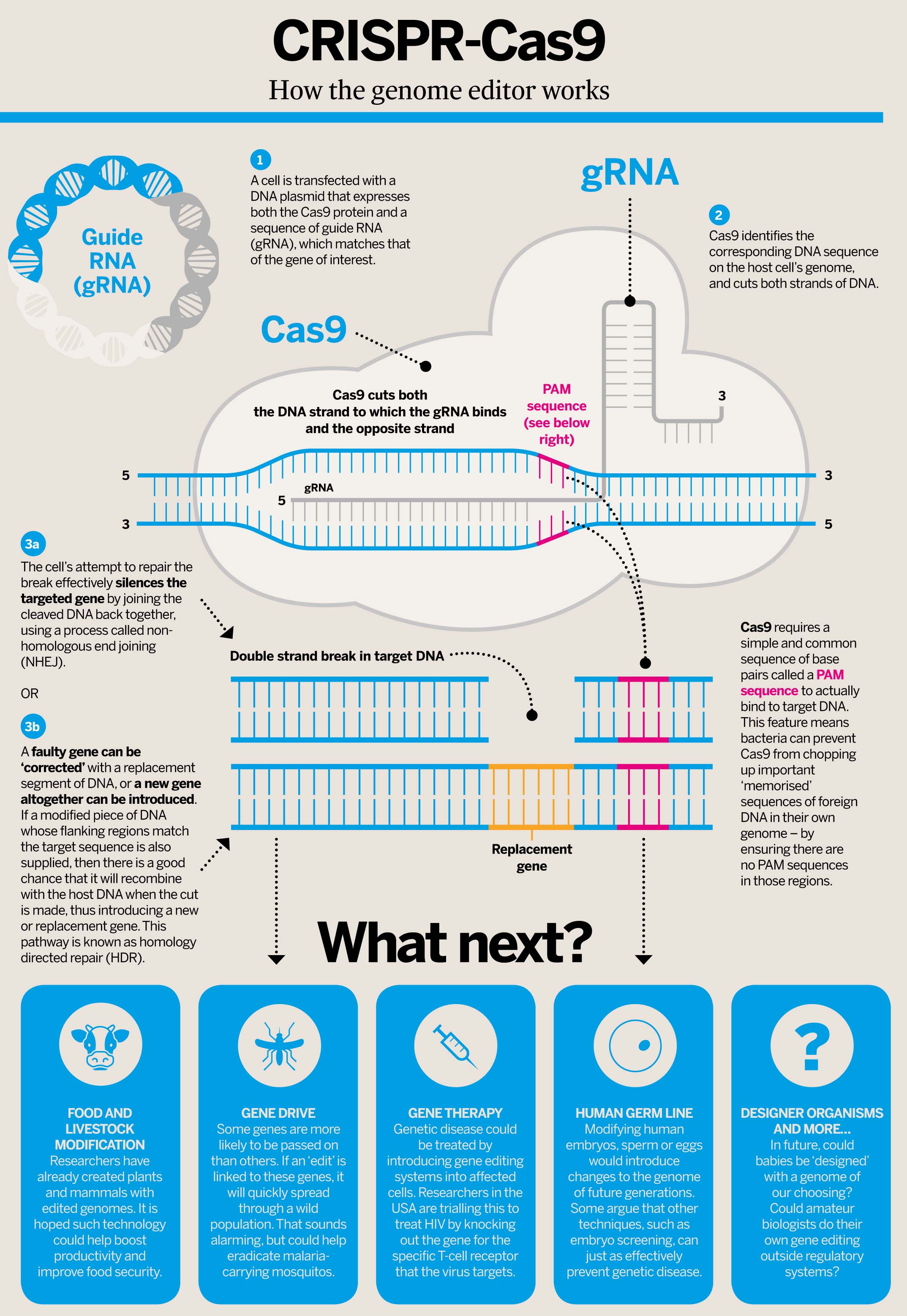
CRISPR technology may seem like an advanced technique now, but it has yet to reach its full potential. Although CRISPR's initial purpose was primarily used as a form of natural defense in bacteria and archaea, it can now be used for reasons such as mapping genomes or developing foods. Additionally, the use of CRISPR technology is relatively inexpensive, efficient and simple to perform (1). Currently, scientists are now trying to find ways to use it to help with plastic and reconstructive surgeries. Below are some areas that CRISPR has the potential to have a large impact and ultimately augment surgical treatments.
  • CRISPR may have the capabilities to identify gene mutations and possibly correct such mishaps. This would be quite useful to prevent malformations such as cleft lip. 
  • It has been propose that CRISPR could possibly accelerate healing of wounds and help to repair bone, cartilage, nerves and muscles (1). Clearly, discovering how CRISPR could do any of these processes would be a great advancement in the field of medicine, especially for conditions such as muscular dystrophy. 
  • It may be possible that CRISPR could be used to help patients repair damaged tissues and to help them with immune functions. Similarly, there may be a way to prevent the body from rejecting transplants and attacking itself.
These applications could be applied in the near future if all goes to plan. However, some doctors have concerns whether these procedures would be unethical. There are many complications when it comes to targeting specific cells and there is the possibility that any cell could be damaged in the process that was not meant to be targeted. If scientists could bypass this hurdle, more ethical problems arise when it comes to enhancing someone's genes. Specifically, people may abuse this kind of procedure and use it for non-medicinal purposes such as enhancing muscle growth or other perks. Another area of concern is the use of CRISPR for those with reproductive problems. Again, scientist worry about this practice because it would involve germline therapy, essentially modifying babies which in turn gets continuously passed down to each generation. It may be possible to augment one's family to the point where their genes give them some kind of advantage. Ultimately, CRISPR has a great breadth of applications, but to what point does it interfere with normal developmental growth and natural life processes.