Showing posts with label " "Genes". Show all posts

Tuesday, February 20, 2024

Does Depression Result From Genetics?

 Article Link: https://fherehab.com/learning/factors-increase-genetic-predisposition-mental-health/ 

Additional Link: https://www.verywellmind.com/common-causes-of-depression-1066772 

Have you ever heard the phrase, “depression runs in the family?” The 2021 article posted on FHE Health states that Mental illness is a biopsychosocial disease that has a strong genetic component. Even though the exact set of causes have yet to be determined, if a parent, sibling or grandparent is diagnosed with a mental illness, the likelihood of developing the same or similar kind of mental illness does increase. Genetic disorders appear when abnormalities happen in the person’s genome. These genetic disorders are inherited when a defective gene from both parents is passed to their children and then affect the child’s DNA. 

A study posted in 2018 determined that genetic mental health disorders such as autism, schizophrenia, ADHD, bipolar disorder and depression are traceable to certain inherited gene variations. Functional magnetic resonance imaging scans showed that people with the genetic variation occurring in the serotonin transporter gene demonstrated hyperactivity in a brain area that processes anxiety and fear. This genetic variation is involved in brain cell signaling and communication. However, for depression the association to having this mental illness and its traces of heritability are still unclear. There’s ongoing research which supports the theory that the interaction between genetic and environmental factors increase a person’s chance of developing depression. 

It is very interesting to hear about the science of mental illness and how some mental disorders can be traced back to the individual's inherited genes. I am wondering what further research can be done to further understand the correlation between genetics and mental health. 


Tuesday, April 12, 2022

Study Reveals a Genetic Overlap Between Childhood and Adult Mental Health Disorders


An article posted by Medical News explains that a new study carried out by the University of Queensland found that hereditary factors are partly responsible for childhood anxiety and depression that persists into adulthood. This study was the largest of its kind (involving data from 64,641 children between the ages of 3 to 18 years) to examine the role of genetics in repeated measures of anxiety and depression in children.


Professor Christel Middeldorp, associated with the UQ Child Health Research Centre and Children’s Health Queensland, stated that children who had similar levels of anxiety and depression tended to be alike genetically. The study also revealed a genetic overlap between childhood and adult mental health disorders when comparing the results in this childhood study with the results of previous adult studies. These findings can help mental health and medical professionals identify people most at risk of symptoms continuing across the lifespan and can help these individuals find suitable treatment(s) and resources.


Genetic variants need to be further investigated because they increase the risk of recurrence and co-occurrence with other disorders. According to Middledorp, “Mental health symptoms often come together, so those who experience anxiety or depression have a greater risk of disorders such as ADHD or aggressive behavior.” As substantiated by the National Center for Biotechnology Information (NCBI), genetics account for around 40% of a person’s risk of suffering anxiety and depression, with environmental factors accounting for the rest. There is a difference in how people respond to stressors and part of that difference is genetic.


Future research will analyze how genetics and environmental variables, such as school and family life, impact each other and how, together, they influence childhood anxiety and depression.


Related article: https://bmcpsychology.biomedcentral.com/articles/10.1186/s40359-019-0326-8

Tuesday, July 28, 2020

Genetics could help protect coral reefs from global warming

See the source image

Global warming, pollution, and human activities are all causes for the ocean water temperatures rising. This ultimately leads to the death of coral reefs. A study from Columbia University provides evidence that genetic sequencing can reveal evolutionary differences in reef-building corals. This could help scientists identify which strains could adapt to warmer seas. This provides a window into the genetic process that allows some corals to resist dramatic climate shifts. Using genomics can help identify which corals have the capacity to lice at higher temperatures and reveal genetic variants associated with climate resilience.
     Mass bleaching of reefs first occurred in the late 1990's when high water temperature destroyed the symbiotic relation with colorful algae, causing corals to turn white. Reefs can recover from this, but prolonged periods of environmental stress can ultimately kill them. Genetic differences could influence survival and bleaching tolerance. In a study, 237 samples were collected at 12 locations in the Great Barrier Reef. This generated the highest quality sequences. This sequencing allowed researchers to look across the genome for signatures where adaptation occurred and to find genetically distinct variations associated with bleaching tolerance. No gene was responsible for response to bleaching, but many genetic variants influence the trait.

https://www.sciencedaily.com/releases/2020/07/200716144731.htm
https://news.columbia.edu/news/genetics-could-protect-coral-reefs-global-warming

Wednesday, November 27, 2019

DNA Surrounding EGFR Aids Cancer

Teams at the University of California San Diego 
See the source imageSchool of Medicine and Case Western Reserve University 
School of Medicine found that extra DNA allows cancer 
cell's to live. They also found that if two tumor types are 
caused by the same gene, the extra DNA could be different. 
These teams used the cancer causing gene EGFR,  which
is part in glioblastoma (brain and other cancers). Mass 
amounts of this gene make circular DNA. The extra DNA 
around the EGFR samples which found "20 to 50 enhancers 
and other regulatory elements (Science Daily)." After testing
the elements by turning them off, they found that almost all 
of them helped the tumor grow in size. After finding this
information, they looked into other cancer types, and 
found similar results.

I believe that research and experiments like this are extremely important. I think cancer is way more common than it should be, and information such as these will be able to aid in the fight against cancer.


Sunday, November 24, 2019

Black meat, bones, and organs in Chickens

See the source image
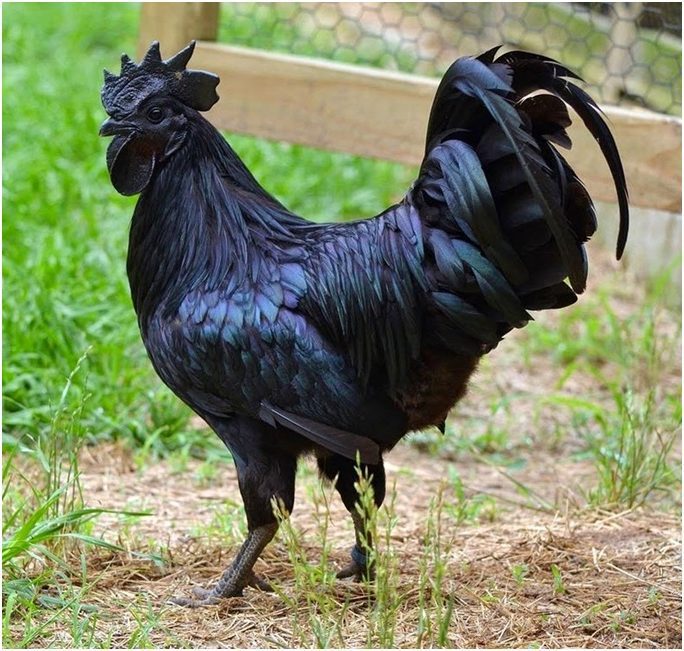
There are a few breeds of chickens in which they are completely black. These chickens have "fibromelanosis" which is due to a mutation, and happen to be very rare. An expressed gene, which controls skin color, known as EDN3, is expressed more than the normal chicken. This causes the the bones and organs to be black. This mutation luckily does not affect the chickens, and merely causes the dark color.

In my opinion, this mutation is actually really cool. I figured bones weren't all white, grayish, etc. but it took me by surprise that the bones and organs of an animal could be black as well as I've never really seen that before. I also find it interesting that the reason that these breeds have continued to spread around the world is because people liked the coloring of the chickens, and they would be bred as they were taken around.

https://www.nationalgeographic.com/animals/2019/09/why-black-chickens-fibromelanosis/

https://www.motherearthnews.com/homesteading-and-livestock/ayam-cemani-chickens-zbcz1910

Friday, November 22, 2019

The Debate of Testing Newborns for Adult Onset Diseases

The rise of genome sequencing has allowed for risk analysis of development of certain diseases.  There are now debates going on about whether or not parents of a child should be able to sequence their child's genome for diseases that occur in adulthood. Lainie Ross, a Chicago Medical ethicist, argues against testing for adult diseases stating that creating “patients in waiting” is unethical as they may not have to be concerned about the condition for decades.
One example of a case involving this issue occurred during the BabySeq Project which sought to screen newborn genomes for childhood onset diseases. However, in one individual a BRCA2 mutation was discovered which is tied to an increased risk of breast cancer. Due to the fact that this is an adult onset condition, they had to ask the review board for permission to tell the parents arguing that the information could be beneficial to the child by showing there is a mutation visible in the family line which could cause the parents to get tested. Therefore, if the parents are positive for the mutation this information could have the potential to keep the child's parent alive. However, this argument does not keep the child's best interests in mind and rather uses the infant genome as a way to get information for the parents. Therefore, the question becomes one of the parents right to know their child's genomic data. Now, patients can opt out of the sequencing, and when it is done there is usually no testing for adult onset disease.
Image result for babyseq project


This debate is relevant to genetics because it is an example of the limitations that ethics put on science. Even though we have the technology to sequence children for adult onset diseases it does not mean that we should do so. I agree with this in the sense that it could cause unneeded anxiety for years before the first symptoms even occur. However, I could also see the possible usefulness in knowing about a disease that early in development. 


Tuesday, October 15, 2019

Genetics of Human Height

Many people assume that height is brought down through genetics, although, that is not always true. Studies show that "about 60 to 80 percent of the difference in height between individuals is determined by genetic factors, whereas 20 to 40 percent can be attributed to environmental effects, mainly nutrition"(Lai 2006). Therefore, one main factor that goes into a person's ability to grow to max potential is the nutrition that is fed to the person to fuel the body. As Jef Akst, from The Scientist, states, "Hundreds of genetics variants have been linked to height, but none appear to have very strong effects"(Akst 2017).Over the years, researchers have been dedicated to finding a way to find all variants of height. One research project conducted in 2017 involved 700,000 volunteers, and discovered 83 new variants and 24 of those variants affected height by more than one centimeter(Akst 2017).

According to the press release, "The discovery of these variants means that researchers can now explain 27.4 percent of the heritability of human height"(Akst 2017). Going forward, and analyzing more genomes Joel Hirschhorn, a geneticist at Boston Children’s Hospital and the Broad Institute hopes to discover more variants. Hirschhorn spoke to The Verge, stating, "We have another study we just launched where we’re hoping to get up to 2 million people’s worth of data"(Akst 2017). Overall, there will probably never be an explanation to explain all of the genetic factors, but Hirschhorn thinks its important to use genetics to be able to understand biology to it's fullest extent.

Wednesday, May 1, 2019

Scientists added human brain genes in monkeys

 Scientists in China have been studying what the effects of adding human brain genes to monkeys would be.  In a recent article, it is mentioned that the scientists took the MCPH1 gene and introduced it into monkey embryos.  The five macaque monkeys were then tested and they performed better on short-term memory tests than the control group of monkeys did.  The tests also showed that their brains developed over a longer time period, which is similar to human brains.  The question they are after an answer to is how did humans develop our unique intelligence.  The scientists have already started to do more testing, this time adding the SRGAP2C gene but they do not have any results yet.  They also want to start implanting the FOXP2 gene, which is believed to be responsible for humans having the ability to speak. 

Tuesday, April 30, 2019

CRISPR


Imagine, curing a fatal disease before birth. In an article form Science Daily a research shows that the gene editing tool CRISPR is helping make this possible. Using an animal model, a team at the Children’s Hospital of Philadelphia has managed to out play a lethal lung disease which causes death hours after birth. The team is hoping to solve congenital diseases like cystic fibrosis. Using precisely timed in utero delivery of the CRISPR reagents into the amniotic fluid during the fetal development they were able to target changes in the lungs of mice. They introduced the gene editors four days before birth, which would be the third trimester for humans. In a second experiment they were able to reduce the severity of a lung disease known as surfactant protein C deficiency or SFTPC, which has a common disease causing mutation in the human SFTPC gene. 100% of the untreated mice died of respiratory failure within hours of birth. However, the treated mice showed a 22% survival rate. When I think of genetics the progress we’ve made is barely scratching the surface of the possibilities that lie ahead. Imagine a world where we don’t have to fear for the health of our unborn children. Through genetics, a disease free world doesn’t seem like such a far fetched idea.

Saturday, April 20, 2019

Human Evolutionary Changes Behind Mental Disorders


The Discover: Sciencefor the Curious journal asks the question of, “Could human evolutionary changes be behind mental disorders?" For a long period of time, scientists have supposed that the human family tree still obtains many similarities. One connection they made is about that seventy percent of human adults have impacted wisdom teeth and the evolutionary decrease of the size of the jaw in the human lineage and modern changes in diet. To further investigate, the geneticist, David Kingsley at Stanford University and his collogues experimented on the gene for a protein called CACNA1C. This gene helps to send the flow of calcium in and out of cells. In order to investigate, the researchers used the non-coding components of the gene. They later compared the typical human genome with the diverse range of human genomes form the 1000 genomes project, they noticed a large amount of variation in only one specific region of the gene. They now suggest that the variation in this region could possibly be either decreasing or increasing the actions of the CACNA1C. This might cause the risk for mental disorders. Kingsley believes that this may help to better match a patient’s DNA risk factors with the drugs that are more likely to be beneficial in the future.


Sunday, April 14, 2019

Human Brain Genes Introduced to Macaques


Researches in China believed it would be a good idea to give monkeys human brain genes. Human copies of the MCPH1 gene were introduced into 11 macaque embryos. This gene is known to have an important role in the development of the brain in humans. This gene was introduced to embryos with a virus that carried the gene. Out of the 11 monkeys, only five survived. These five monkeys were tested, including MRI brain scans as well as memory tests. A controlled group was part of the experiment so they could make comparisons. The results showed that the tested macaques did not have bigger brains compared to the control group. One of the differences was that the tested macaques showed better results in short term memory tasks. Also, just like human brains, their brain developed over a long period of time. The main objective of this experiment, according to the researchers was to question the genetic basis of human brain. How the human brain have its own unique intelligence, which other primates do not have. The experiment was extended by using other genes such as SRGAP2C which is related to intelligence and FOXP2 related to speech and language.


This picture released by the Chinese Academy of Sciences Institute of Neuroscience shows five cloned macaques at a research institution in Shanghai. 
This picture shows five cloned macaques 


If the monkeys being experimented end up being more smart like humans, then where are these monkeys going to end up? most likely locked up. The will not have a normal life or might not even like the same things that regular monkeys like including food. Overall, this is probably only causing harm to the macaques. Of course it would be interesting to learn and research on how evolution happened but what is the cost? very unfair to all the innocent animals.

Wednesday, April 10, 2019

Gene Editing Could Save Coral Reefs

A recent report has shown that using CRISPR-Cas9 scientists have been modifying genes in corals.  The research has been taking place in Australia using the Great Barrier Reef.  A research group led by Phillip Cleves used CRISPR to change three genes in the early life of coral just after fertilization.  Two of the genes were responsible for coloring for red and green fluorescent proteins and the last gene is involved with regulating how coral grows and settles in a reef.  The research is difficult to conduct because the coral only spawn once or twice a year for a very short period of time.  Getting the timing right was important because changing the genes in an early stage will make it easier for them to see how their changes affected the corals.  Scientists are hoping that this research could eventually lead them to make corals more resilient to bleaching caused by pollution and climate change.  Another hope is that they could eventually use this technology on existing coral and not just use it in the embryonic stage.

Monday, April 1, 2019

Can't Sleep? Blame Your Genes

A recent article published in "Medical News Today" claims that insomnia may run in the family. According to the article, a person's genetics have a strong influence over whether or not they will suffer from insomnia. A 2015 study conducted on both identical and nonidentical twins at VCU discovered that, usually, if one twin has insomnia, the other twin is more likely to suffer from insomnia as well. Because identical twins share the same DNA, this suggests that there likely is one or more genes that cause or can be linked to insomnia. With this information, the next step has become identifying what specific genes have a correlation with insomnia. Multiple studies have been able to isolate a few of the genes that lead to insomnia. The data also suggests that there are genes that are exclusive to men and women that can affect one's sleep habits. One large study of the genome of over one million insomniacs has found about 956 genes across 202 locations on various chromosomes that possess some kind of link to insomnia, while a second, smaller study found 57 locations. Most of these genes affect the development of various parts of the brain associated with processing external stimuli. This may be contributing to the restlessness associated to the inability to fall asleep. However, this article also clarifies that genetics alone does not lead to insomnia, as stress levels and different lifestyles can contribute toward insomnia as well.

I found the relationship between genetics and insomnia somewhat surprising. In the past, I thought of insomnia as a symptom rather than a disorder. I thought that if you had one night where you could not fall asleep, than that night you suffered from insomnia. I did not view insomnia as a persistent disorder or disease, which it technically is. While insomnia can be broken down into acute or chronic, I believe the fact that it can be genetic makes me view insomnia more as a disease. Despite the fact that treatments such as sleeping pills already exist, I believe that this increased knowledge about insomnia and how it can be caused will lead to better, healthier solutions to the long, sleepless nights that many humans find themselves afflicted with.


Wednesday, February 6, 2019

How do genetic differences affect the risks of Bipolar Disorder

A recent study conducted by the Picower Institute of Learning and Memory at MIT could possibly help improve diagnosis and future treatment of Bipolar Disorder for many people. In the article posted by Medical News, Today explains how the study identified and observed genetic differences in a gene called CPG2 which can be tied to an increased risk of developing Bipolar Disorder. The study in no way says that this mutation is the direct cause of Bipolar Disorder but, they found that lower levels of CPG2 were found in patients with this mental disorder. 
I found this article really interesting to read because there is a common misconception/stigma that surrounds mental illness. A lot of people tend to believe that mental illness does not really exist and that it really is just in peoples heads. Especially when it comes to specific disorders such as Bipolar disorder, where it's thought to be mood swings you can't control. However, this finding could help educate people so they can see that it, in fact, has to do with specific genes in your body.

Thursday, January 31, 2019

Tempted to Hibernate This Winter? Think again...

A recent article written by Catharine Paddock PhD was published by Medical News Today describing the connection between an extended lifespan and exposure to certain temperatures. The research for the study must be credited to the Marine Biological Laboratory in Woods Hole, MA. The MBL is affiliated with The University of Chicago.  The full report can be found in the journal Experimental Gerontology.  Fruit flies are commonly used in genetic testing, however in this particular study, rotifers were examined. Rotifers have many characteristics that make them more practical than fruit flies. One of those beneficial features are their transparent bodies which allow scientists to observe their inner parts with ease. The health benefits of cold temperatures have been known for some time in the biohacking world. These benefits include fat loss, reduced inflammation, improved quality of sleep, increased lifespan and much more. This study concentrated on the claim that cold exposure increased a person's lifespan. It is thought that cold increases ones lifespan by way of slowing the metabolic rate which in turn produces less byproducts such as reactive oxidative species (ROS). This claim was put to the test in 11 different strains of rotifers. The results of this test was surprisingly wide ranged. It was concluded that exposure to cold temperatures may improve the quality of ones life for a longer period of time. However the effect on the longevity of ones lifespan may be varied depending on the genetic makeup of each individual.

Personally, I strongly dislike the cold. I prefer hot sunny days so much so that I fully intend to move to Arizona when I complete school. However, I do enjoy learning and implementing new health "hacks" into my life. I have always considered attempting the cold shower tactic but could never muster up the courage. When I came across this article, I was hoping it would prove that some people are just not "built" for the cold. To my dismay, the study proved that whether or not it expands the length of your life it will definitely improve the quality. I supposed it's time to take a deep breath and go in for the plunge.

Thursday, November 29, 2018

China has Halted Work of Scientist that Claimed to use Gene Editing on Human Embryo


Following the recent summit involving the presentation of the first claimed genetically modified human babies, China has announced it would suspend He Jiankui, the researcher who claimed these results. Jiankui has claimed earlier this week that he had used the CRISPR technique to edit gene sequences in embryos DNA before planting them inside of a woman to be carried to term. Although there has been little to no evidence nor data to back up said claims, the ministry of science and technology in china has suspended his work and collected his data for further investigation. However it was brought up that gene editing of human embryos is permitted in China as long as the experiment on each embryo does not last more than 14 days, thus the reason Jiankui was not discovered and stopped prior to the insemination into the donor womb. He went on to state that he was not performing these experiments in secrecy claiming he had presented his proposed experiment to his universities boards as well as consulted a scientists in the US prior to performing these experiments. One of the most important aspects to come out of this investigation so far has been evidence of a possible second experiment which involved the same process of gene editing and insemination.

I feel that research like this would be helpful for the possible future use of gene editing in humans for the benefit of the human race, however this is not a case where it is better to ask for forgiveness over permission. The experiment should have gone through previous trials with lab animals prior to its use on human embryos. I understand that such experiments have probably been done already but this is a line that cannot be crossed in secrecy. I feel that this is very similar to the Nazi human experiments during WWII, yes there could be results that would further research along ten to twenty times faster than non-human experiments but the ethics of such cases cannot be understated or overlooked. There will be a time and place for gene editing on humans to produce more advanced humans that are taller, stronger, and healthier but I believe we will achieve this at a point in time when we are ready, but today is not that time.


References

Wee, S. (2018, November 29). China Halts Work by Scientist Who Says He Edited Babies' Genes. Retrieved from https://www.nytimes.com/2018/11/29/science/gene-editing-babies-china.html?rref=collection/sectioncollection/science&action=click&contentCollection=science&region=rank&module=package&version=highlights&contentPlacement=1&pgtype=sectionfront

Hurlbut, J. B., Jasanoff, S., & Saha, K. (2018, November 29). The Chinese gene-editing experiment was an outrage. The scientific community shares blame. Retrieved from https://www.washingtonpost.com/outlook/2018/11/29/chinese-gene-editing-experiment-was-an-outrage-broader-scientific-community-shares-some-blame/?noredirect=on&utm_term=.077c9972271b

Monday, August 6, 2018

The Fast and the Furless: Explaining Newly Recognized Dog Breeds

Two recently discovered dog breeds are being introduced to the American Kennel Club as a newly recognized breed. The first one is the American Hairless Terrier. Just as it name suggests, most of these dogs are bald. This is the result of the recessive gene found in rat terriers. These animals have smooth skin and are usually spotted or brown. Due to this, they are good for those who suffer from allergies. There are some instances where you can have a coated American Hairless Terrier. That happens when one dominant hair gene comes into play. Additionally, there is the Sloughi, similar to a greyhound. It is believed that this breed has been around for thousands of years but was introduced to the United States in 1973. They are born to chase prey for long distances. It is recommended for this reason to keep them in a fenced area. 

I personally am looking for a hypoallergenic dog due to my allergies. When learning about the American Hairless Terrier I cam across this article and figured it would be perfect to learn about and discuss the genetics behind this new breed. I think it is great that allergy suffers can still have a friendly companion.  
Image result for american hairless terrier

Monday, July 23, 2018

Cancer Cells Engineered With CRISPR Slay Their Own Kin

Scientists have figured out a way to trick tumor cells into killing their own kin through gene editing. Researchers have engineered tumor cells to secrete a protein that results in a death switch in resident tumor cells. The cancer-fighting cells also have a suicide switch which will cause them to self destruct. CRISPR/Cas9 is a gene-editing approach to give the cells more sophisticated properties such as self destruction. Researchers needed to find a protein that could cause cell death. That is when they found a protein called S-TRAIL. This protein would kill off cancer cells and not affect healthy cells. Scientists took two approaches. The first involved glioblastoma cells that were resistant to S-TRAILS and the use of CRISPR to edit genes in these tumor cells so they could produce an abundance of S-TRAILS and let them attack cancer cells. The second approach involved taking glioblastoma cells which were sensitive to S-TRAIL and cut out genes that impart the sensitivity before giving the cells the genes to produce proteins. Both trials resulted in reduction of tumor size in mice, ultimately leading to a longer life. Using cells that aren't resistant to S-TRAIL could help doctors use their patients' own cancer cells to turn against each other and target that specific cancer. The second approach using cells that are resistant to S-TRAILS could be a quicker solution but those cells would be foreign to the patient, resulting in a greater risk for the body to reject them.

I feel that this discovery, once perfected and further improved, could save many lives and help cancer patients live longer. Both approaches have pros and cons but it is a great step toward advancements in curing cancer. It is interesting how they can make the cancer cells turn against their own kind while preserving the healthy cells. That is the main issue and concern with current cancer treatments- harming the healthy cells.

Link to original article
Link to related article

Friday, April 27, 2018

CRISPR Gene Editing Could Save the Coral Reefs

CRISPR gene editing has been used by scientists to make tweaks in practically any gene in plants and animals. A research study done at Stanford University was able to edit 3 genes in corals growing in The Great Barrier Reef in Australia. Phillip Cleves lead this experiment and he used CRISPR gene edition at the earliest stage of life in corals. Two of these genes used coded for the coloring in corals and the other gene coded for how new corals settle and grow in the reef. The results of this experiment has given scientists a stepping stone to discovering a way to edit the genes of corals to make them resistant to bleaching. Coral bleaching is caused from pollution and the warmer ocean temperatures. This has a major affect on the ocean and the world because bleaching causes the death of corals and all the organisms that depend on coral to live. The study conducted by Phillip Cleves has provided scientists with information to lead them in the direction to change the genes in corals to make them resistant to bleaching. This is a very important study that can hopefully change what pollution is doing to the earth. In my opinion, I think that more people should be aware about how climate change and pollution is affecting our planet. If scientists can figure out what genes are responsible for bleaching and if they are able to insert genes that code of bleaching resistant, a major change can be made in the ocean.

Article: http://time.com/5250927/crispr-gene-editing-coral-reefs/
Additional Article: https://oceanservice.noaa.gov/facts/coral_bleach.html

Sunday, April 15, 2018

Night Owls Have Higher Risk of Early Death Than Larks

Night owls, who are people who are more likely to stay awake late and wake up late, have a 10 percent higher chance of dying sooner than larks, who are people who prefer go to sleep early and start their day early, reports a new study. This is the first study to show that owls have higher risk of mortality. Owls also suffer from more diseases and disorders than morning larks. According to scientists, employers should allow greater flexibility in working hours for owls. Part of why a person is either a night owl or a lark is genetic, however it does not mean that making a change from one lifestyle to the other is impossible. The article states that owls wishing to become more "larkish" can start by simply ensuring that they go to bed early consistently, rather than only on nights where they need to be up early the next day.


As a night owl that has been slowly progressing towards more of a "lark" lifestyle this article is both alarming and inspiring at the same time. I agree that it makes sense that people with a more "normal" sleep schedule would live longer, healthier lives. This kind of lifestyle helps promote a regular diet with plenty of time to have a healthy, unrushed breakfast in the morning and also most likely allows for more time to exercise. Genetically I think it also makes sense that these lifestyles often are passed down. My family is filled with night owls, even those in my lineage who are well organized and rise up early for work are the first person to sleep in on the weekends. The interesting part is that though we may have a genetic disposition to live a certain lifestyle, we as humans still have free will and can overcome that disposition to overcome what in this case could be deadly.


Link: https://www.news-medical.net/news/20180413/Night-owls-have-higher-risk-of-early-death-than-larks.aspx


Additional Link: https://psychcentral.com/news/2018/04/14/night-owls-may-have-higher-risk-of-earlier-death/134618.html