Tuesday, March 17, 2026
Influence of Genetics on Bipolar Disorder
Sunday, October 27, 2024
Heritability of BPD and its Influence on Creativity
It has been known previously that creativity and mental illness have the tendency to link to one another, but the article specifically analyses the links between BPD (borderline personality disorder) and creativity. Because genetics factors are connected to mental illness, including personality disorders, heritability is considered in the study.
Bipolar personality disorder is a mental health condition classified as intense, unstable behaviors that become most prevalent in early adulthood. The condition is centered around intense feelings of anger and impulsiveness, as well as having intense fears of abandonment. Various forms of therapy and medication may be used to treat the condition.
The results of the study are described as follows: creativity and borderline personality disorder were each influenced by genetic factors (heritability = 0.45 for BPD and 0.67 for creativity) and that the traits are genetically correlated rG = 0.17. These results indicate strong genetic influences, and environmental influences’ contribute less to the creative demonstration associated with borderline personality disorder.
Other Article: Borderline personality disorder - Symptoms and causes - Mayo Clinic
Friday, March 1, 2024
Blaming Our Genes: The Heritability of Our Behaviors
This article helps to uncover the question of whether some traits people have are really beyond their control or something they could have picked up throughout their years of development. When it comes to behavior, genetics plays a significant role, as shown by studies on various traits and disorders. Twin studies and family genetic studies help us understand the heritability of behaviors, indicating how much of a trait is influenced by genetics versus the environment, basically nurture vs. nature. Traits like intelligence and addictive behavior (food addiction, alcohol/drug addictions, sex addiction) both have substantial genetic components, with estimates of heritability ranging from 50% to over 90%, indicating that traits like these are more likely than not to get passed down across generations. Disorders like schizophrenia, bipolar disorder, and depression also have strong genetic bases, with heritability estimates ranging from 70% to 85%. Similarly, conditions like familial advanced sleep phase syndrome (FASPS), obsessive-compulsive disorder, and autism have clear genetic components contributing to their development. Understanding the genetic basis of these behaviors and disorders can help destigmatize mental illness, improve diagnosis and treatment, and even lead to the development of new therapies. This article was very interesting to me, but it also freaked me out in a way because of the way that disorders like depression and bipolar disorder can be passed down from generation to generation. I know someone who suffers from depression personally, so I know that the lows are very low and the high can be at times too high. I also know that this person really dislikes the fact that they have this disorder and would be incredibly upset at the fact that will more likely than not pass the trait down. I can't even begin to imagine how it might feel like it's all your fault when your child experiences similar struggles that you face.
Saturday, November 4, 2023
Scientists take next big step in understanding genetics of schizophrenia
Researchers, led by the UNC School of Medicine, have made impressive findings in unraveling the genetic underpinnings of schizophrenia. They initially identified around 5,000 genetic variants associated with schizophrenia through genome-wide association studies (GWAS). To see which of these variants has a direct causal impact on the development of the condition, the team employed a specialized technique known as Massively Parallel Reporter Assay (MPRA). By introducing these variants into human brain cells in a controlled environment, they identified 439 genetic variations that have biological effects, capable of altering gene expression linked to schizophrenia. This study has discovered new genetic variations that could be involved in schizophrenia's genetic basis, helping us understand its complexity better.
Schizophrenia is known for its complicated interplay of genetic and environmental factors, and significant progress has been made in identifying potentially causal variants, but the condition remains versatile. The research emphasizes the need for further investigation into the genetic structure that contributes to an individual's liability for schizophrenia. In the end, what we've learned might help create better treatments or help get close to that step. This is very important because there aren't many good treatments available for this serious mental disorder.
Wednesday, May 4, 2022
We Found a Genetic Link Between Routine Blood Test Results and Mental Health Disorders
Saturday, April 20, 2019
Human Evolutionary Changes Behind Mental Disorders
Wednesday, March 1, 2017
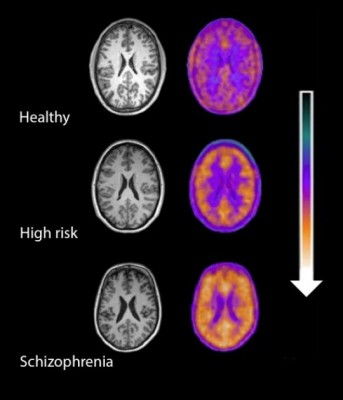
Schizophrenia Development
Thursday, May 5, 2016
In a Novel Theory of Mental Disorders, Parents’ Genes Are in Competition
They propose that it is a battle between the father's sperm and the mom's egg when in effect can cause brain development in one of two ways. If the father's sperm is more effective, it showcases more development along the autistic spectrum, like fascination with objects, patterns, mechanical systems, and the outlay of social development. If the mother's egg is more prominent, it expresses more development in the psychotic spectrum, like hypersensitivity to their own and other people's emotions. And this, in theory, induces a high probability for the child to become diagnoses with schizophrenia or bipolar disorder.
In a general sense, autism and schizophrenia represent complete opposite ends of the spectrum that covers almost all psychological brain disorders. But this theory promotes a new angle of perceiving mental disorders, an angle that in some ways "represent the first environmental influence on the expression of genes."
http://www.nytimes.com/2008/11/11/health/research/11brain.html