Showing posts with label #brain development. Show all posts

Sunday, November 26, 2023

Can gene expression predict if a brain tumor is likely to grow back?


Researchers from UC San Francisco and Northwestern Medicine have discovered a new accurate method to predict the best treatment for individuals with meningioma with the help of 10 other medical centers. The study shows that screening tumors based on gene expression patterns can change the course of treatment for nearly 1 in 3 people with meningioma. Meningioma is a common brain tumor that affects around 42,000 people in America annually. It is more likely to affect groups of females more than males and elderly patients. It is typically treated with either surgery or radiation depending on what number scale it is on and how severe the tumor is. The new gene expression test indicates that only 1 in 5 patients with low-grade tumors may require radiation, while approximately 2 in 5 with higher-grade tumors may benefit more from avoiding radiation. With the help of the test, researchers could see which gene was active and deactivated and discovered a set of 34 genes whose expression patterns could predict the likelihood of tumor recurrence. 


The discoveries made by this study were exciting as they paved the way for new improvements. The second link also provides more information supporting the first study. Medicine is more effective when it is targeted toward a specific individual’s needs. I hope more treatments are made in the future that are targeted towards one’s needs. The studies from this research help eliminate the guesswork in patients' treatment decisions. The studies are still ongoing, and they are trying to gather more data that can help provide more personalized care in the future. 


Links -

Can gene expression predict if a brain tumor is likely to grow back? | ScienceDaily

Can Gene Expression Predict if a Brain Tumor Is Likely to Grow Back? | UC San Francisco (ucsf.edu)


Monday, November 20, 2023

Brain Disorders Are Tied to Genetic Mutations


     New research was found which may lead to better diagnostics and the care and treatment for different types of diseases that occur during the early development of the brain, such as epilepsy. In the study, around 300 children coming with different types of forms of MCD gave in some brain tissue samples. These samples were collected when these children underwent epilepsy surgery to treat this disease. With each tissue sample, there was also a blood and saliva sample along with samples from the parents. Along with the samples given by the patients and their parents, there were also a small number of outside people that had no brain conditions that also donated their brain tissue for comparison. Comprehensive screening happened in three steps. The first step examined genes in the mTOR pathway. These genes regulate metabolism, cell growth, and show a huge amount of signaling in brains with epilepsy. The second step identified new genes through unbiased gene discovery to associated genes that may be tied with MCD. The third step consisted of testing a new sample independently to confirm the genes tested and identified in the first and second steps. The study came back with 69 mutated genes tied with MCD for the first time. Twelve of these mutated genes were mutated repeatedly which means that they were found in two different brain samples. The study confirmed that the mTOR pathway is a very important pathway to our body and the dysregulation of it can cause human diseases. However, the study concluded that there is much more to research, as it has never fully gone in depth. There may be more identifiable genes in the studies to come. To test mutation functions, the researchers put one of two forms of the MCD genes into the brains of mice, mutated or non-mutated. When mutated genes were introduced into the mice body, there were abnormalities in the brain very similar to the findings that were seen in humans with MCD which means that the mutated genes are very likely to contribute to the disease and they are vital to cortical development.

     This study was very remarkable. There are lots of patients who deserve better care and it must be hard for patients with conditions like epilepsy or any neurological disorder to receive it. This study just proved that there needs to be more in depth studies of many disorders, but it also proved that there is an insight to the origin of these disorders. This is a start to the treatment of many conditions. This also brings hope to people who are diagnosed with these disorders. This research opened a new area of focus, and with more in depth studies, the findings will lead closer to better treatment and diagnostics, and hopefully a cure.


Sources:
https://www.nimh.nih.gov/news/science-news/2023/researchers-unlock-genetic-mutations-contributing-to-disorders-in-the-brain
https://medlineplus.gov/geneticbraindisorders.html

Wednesday, November 15, 2023

Early-life stress changes more genes in brain than a head


Researchers at The Ohio State University conducted a study to explore early-life stress and childhood head injuries on later-life health and behavior. In an animal experiment involving rats, the researchers found that early-life stress had a more of significant impact on gene activation in the brain than a traumatic head injury. They stated that stress-induced changes in gene expression were greater than those resulting from a concussion-like injury. They also stated that early-life stress may have a lasting influence on brain development, potentially leading to a lifetime of health consequences. 

The researchers set up an experiment with newborn rats where they were simulated adverse childhood experiences and then later caused head injuries as part of the experiment. The results showed that stress and traumatic brain injury affected pathways associated with neural plasticity and oxytocin signaling. This suggests potential vulnerabilities and changes in the brain's response to stress. When adulthood approaches the rats that have experienced early-life stress exhibited riskier behavior. Which includes entering open spaces more frequently also correlating with patterns seen in humans with conditions like ADHD. The study shows the importance of addressing early-life stressors and instituting supportive measures to alleviate enduring impacts on mental health and behavior.

links

Saturday, November 4, 2023

Scientists take next big step in understanding genetics of schizophrenia


Researchers, led by the UNC School of Medicine, have made impressive findings in unraveling the genetic underpinnings of schizophrenia. They initially identified around 5,000 genetic variants associated with schizophrenia through genome-wide association studies (GWAS). To see which of these variants has a direct causal impact on the development of the condition, the team employed a specialized technique known as Massively Parallel Reporter Assay (MPRA). By introducing these variants into human brain cells in a controlled environment, they identified 439 genetic variations that have biological effects, capable of altering gene expression linked to schizophrenia. This study has discovered new genetic variations that could be involved in schizophrenia's genetic basis, helping us understand its complexity better.

Schizophrenia is known for its complicated interplay of genetic and environmental factors, and significant progress has been made in identifying potentially causal variants, but the condition remains versatile. The research emphasizes the need for further investigation into the genetic structure that contributes to an individual's liability for schizophrenia. In the end, what we've learned might help create better treatments or help get close to that step. This is very important because there aren't many good treatments available for this serious mental disorder.

Monday, September 19, 2022

Gene in Brain Linked to High Human Intelligence


A team of European scientists conducted studies on a gene within the human brain, known to be connected with the high intelligence of humans when compared to other species. The scientists inserted the gene, ARHGAP11B, into organoids of chimpanzees which are the closest living relatives to humans. An organoid is a lab-grown group of cells or tissues that have some of the functions of an organ. Organoids were used for the study since scientific experiments involving altering genes have been banned in Europe out of ethical concerns. The chimpanzee organoids introduced to the ARHGAP11B gene showed an increase in neurons and brain stem cells related to brain growth. The scientists in the study found that the gene could enlarge a primate's brain but say further study is needed to determine the size of a role in human brain evolution. Likewise, they also found that when the gene was removed or inhibited in human organoids, the functioning of the cells decreased to the level of a chimpanzee. 

This study showed just how important the ARHGAP11B gene is to the development of the human brain. I think that this study gave great incites into how the human brain evolved and the genes responsible for its high-functioning. I am glad that we have the technology like organoids to develop experiments that we can use to study genes like this, and I how that more studies on this gene are done in the future. I'm sure there is a lot to learn from this gene and even medical applications it has concerning brain development, functionality, and disorders. 


Wednesday, March 1, 2017

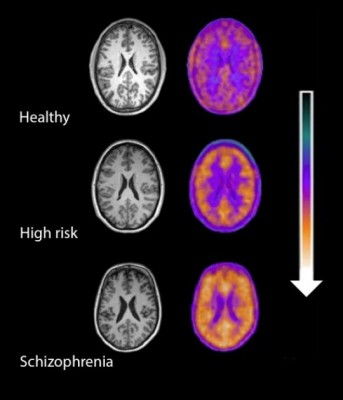
Schizophrenia Development

Since mental illness is a big topic lately, I thought this would be appropriate. This is a type of disorder that is found to be developed in the womb, and although this site was from a few years ago, there is new evidence of the same kind of information. They have new experiments and new ways to find their information, definitely worth a read. 


Thursday, May 5, 2016

In a Novel Theory of Mental Disorders, Parents’ Genes Are in Competition


2 Scientists have developed a ground-breaking theory of brain development that can help a deeper understanding about mental disorders like schizophrenia and autism, deriving in part that other events other than genetic mutation can alter gene behavior.

 They propose that it is a battle between the father's sperm and the mom's egg when in effect can cause brain development in one of two ways. If the father's sperm is more effective, it showcases more development along the autistic spectrum, like fascination with objects, patterns, mechanical systems, and the outlay of social development. If the mother's egg is more prominent, it expresses more development in the psychotic spectrum, like hypersensitivity to their own and other people's emotions. And this, in theory, induces a high probability for the child to become diagnoses with schizophrenia or bipolar disorder.

In a general sense, autism and schizophrenia represent complete opposite ends of the spectrum that covers almost all psychological brain disorders. But this theory promotes a new angle of perceiving mental disorders, an angle that in some ways "represent the first environmental influence on the expression of genes."

http://www.nytimes.com/2008/11/11/health/research/11brain.html