Showing posts with label inherited disease. Show all posts

Thursday, March 7, 2024

Advancements in Gene Therapy

 Advancements in Gene Therapy


Source: https://www.sciencenews.org/article/first-gene-therapy-muscular-dystrophy-kids

Additional Link: https://www.ncbi.nlm.nih.gov/books/NBK482346/#:~:text=Duchenne%20muscular%20dystrophy%20(DMD)%20is%20one%20of%20the%20most%20severe,muscle%20fiber%20degeneration%20and%20weakness.


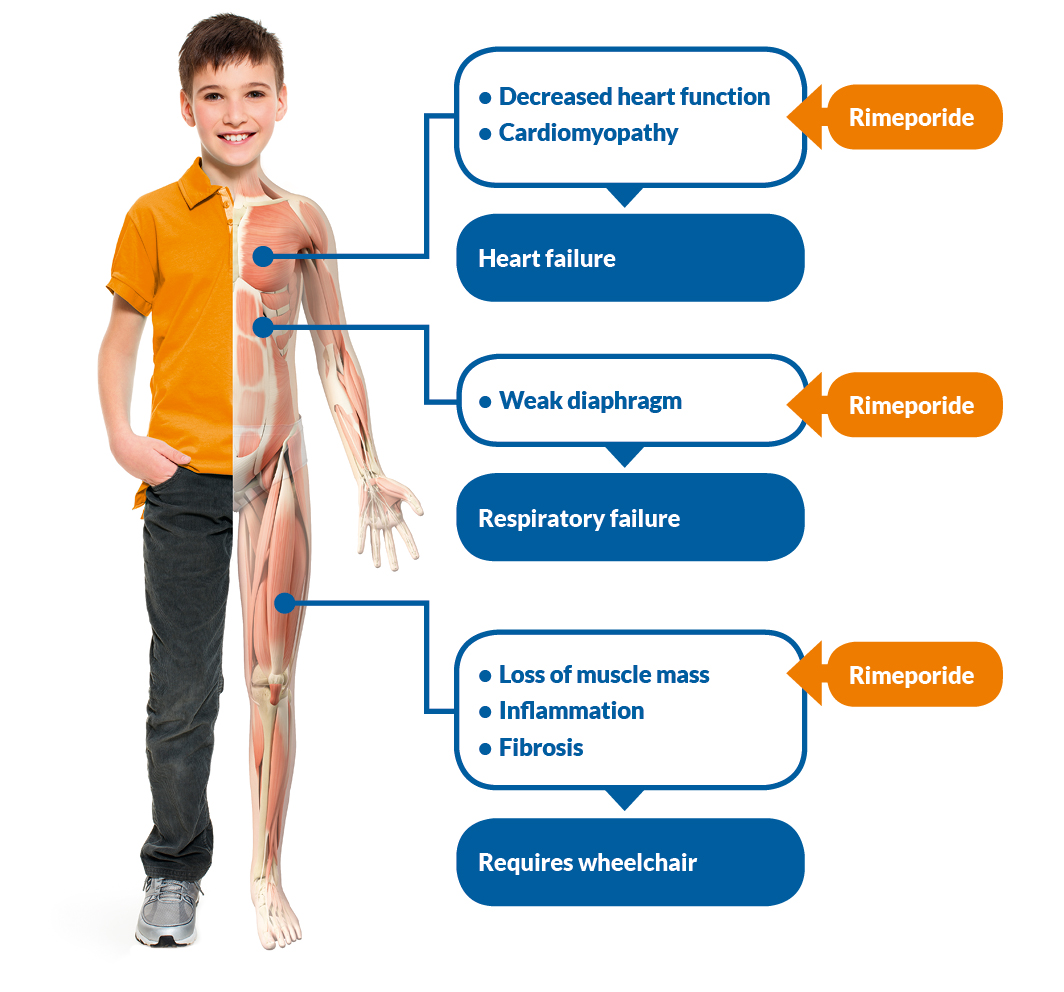
Duchenne muscular dystrophy is a genetic disease that results in progressive muscular weakness that can cause fatality by the age of 25. This is because it is caused by mutations in the dystrophin gene, which normally makes a large protein that acts as a shock absorber to keep muscle cells intact and fatality is caused when heart muscles and the muscles that control breathing deteriorate. As of present day, this disease is incurable. 


The article, “The first gene therapy for muscular dystrophy has been approved for some kids” posted by ScienceNews stated that the first gene therapy for children with this disease was approved for the use of children between the ages of 4-5. The article states that the treatment produces , “A protein about one-third the size of the original protein. The shortened gene is packed into harmless viruses for delivery to muscle cells” (ScienceNews, 2023). This treatment is made to target the underlying source of the disease and prevent it from happening. 


It is very interesting to hear new advancements in medicine! Even though this is just a start for the treatment of this disease, I am excited to hear about the transformations this treatment can result in, and I hope it can help a lot of kids in the future. 


Monday, April 1, 2019

Can't Sleep? Blame Your Genes

A recent article published in "Medical News Today" claims that insomnia may run in the family. According to the article, a person's genetics have a strong influence over whether or not they will suffer from insomnia. A 2015 study conducted on both identical and nonidentical twins at VCU discovered that, usually, if one twin has insomnia, the other twin is more likely to suffer from insomnia as well. Because identical twins share the same DNA, this suggests that there likely is one or more genes that cause or can be linked to insomnia. With this information, the next step has become identifying what specific genes have a correlation with insomnia. Multiple studies have been able to isolate a few of the genes that lead to insomnia. The data also suggests that there are genes that are exclusive to men and women that can affect one's sleep habits. One large study of the genome of over one million insomniacs has found about 956 genes across 202 locations on various chromosomes that possess some kind of link to insomnia, while a second, smaller study found 57 locations. Most of these genes affect the development of various parts of the brain associated with processing external stimuli. This may be contributing to the restlessness associated to the inability to fall asleep. However, this article also clarifies that genetics alone does not lead to insomnia, as stress levels and different lifestyles can contribute toward insomnia as well.

I found the relationship between genetics and insomnia somewhat surprising. In the past, I thought of insomnia as a symptom rather than a disorder. I thought that if you had one night where you could not fall asleep, than that night you suffered from insomnia. I did not view insomnia as a persistent disorder or disease, which it technically is. While insomnia can be broken down into acute or chronic, I believe the fact that it can be genetic makes me view insomnia more as a disease. Despite the fact that treatments such as sleeping pills already exist, I believe that this increased knowledge about insomnia and how it can be caused will lead to better, healthier solutions to the long, sleepless nights that many humans find themselves afflicted with.


Wednesday, October 12, 2016

Neimann Pick Type C-1 Treatment


The Neimann Pick Type C-1 disease is a lethal and inherited disease against the body's metabolism for lipids and cholesterol. There is a new treatment that come out of the National Institutes of Health. There was a long detailed report of using model organisms of mice and then cars and it showed that the drug made of cyclodexetrins can slow the disease, prolong life, and minimize some of the symptoms of the condition. Now there is a competition between which company will be able to make human trials successful from Vtesse to the NIH and CTD Holdings.
"In mouse models of the disease, cyclodextrin administered peripherally delayed disease onset, reduced brain accumulation of fat, and lengthened life significantly, several published studies have found. In presentations this summer, CTD representatives reported anecdotal cases of neurological improvements- such as motor skills and speech- in children treated intravenously with the company's cyclodextrin on a compassionate use basis, including the Hempels' daughters. The company further notes that the IV delivery method may protect other organs affected by NPC."
The reasons why this disease is related to our class are based on two idea. The idea of using a model organism first is along the ethical ideas of genetics practice and medicinal practice of using a non-human organism first to model the possible human reactions and interactions. Along with this idea comes the idea of inheritance through families and all of the forms of Niemann Pick are autosomal recessive inheritance based.
"This means that both parents are carriers each carry 1 copy of the abnormal gene without having any signs of the disease themselves. When both parents are carriers, there is a 25% chance that their child will have the disease and a 50% chance that their child will be a carrier."
I think it is wonderful how medicinal competition and betterment of medicine and technology is pushing for a treatment for this inherited disease, but I am also wondering if there are any pre-zygotic treatments for conception that could prevent a child from being born with this disease. i have always been interested in genetic disease prevention and hopefully technology of current treatment will eventually develop to the pre-conception stage of the disease.

Friday, November 22, 2013

Over 200 Genes can be Attributed to Crohn’s Disease

Scientists at the University College of London have created a new method to identify and map gene locations for complex inherited diseases by utilizing detailed maps of the human genome. Their study specifically highlighted Crohn’s disease, which they found has over 200 genes involved in the complex disease. The number of gene locations for Crohn’s disease is more than have been found for any other disease. The article explains that there are only 66 known gene regions for type two diabetes. With the new method of identifying and mapping gene locations, it is possible that there are many more genetic regions that attribute to such diseases. By narrowing down the genetic component to many diseases, it will be easier for those scientists in the medical field to improve treatment for painful symptoms. In addition to creating better treatments, studying the genetic component of such diseases can provide better understanding as to how they are inherited. 

Crohn's disease is a chronic inflammation that may affect any part of the digestive tract


Crohn’s disease is just the stepping stone into detailed genetic studies of diseases. In the article, a senior author from the University College of London, Dr. Nikolas Maniatis, was interviewed as saying: “The discovery of so many gene locations for Crohn's Disease is an important step forward in understanding the disease, which has a very complicated genetic basis. We hope that the method we have used here can be used to identify the genes involved in other diseases which are similarly complex, for example different cancers and diabetes.” The additional genes attributed to Crohn’s disease were found through the use of incredibly detailed maps of the human genome as well as through the subdivision of patients based on the disease present. This study is incredibly exciting and will lead to great strides in better diagnosis of disease and more personalized treatment plans for those who are suffering from disease. It is especially fascinating that such complex diseases are effectively being broken down and the specific genes that cause such complex illnesses are correctly being identified.