Showing posts with label genetic inheritance. Show all posts

Wednesday, April 14, 2021

Some Neanderthal Genes in People Today May Protect Against Severe COVID-19

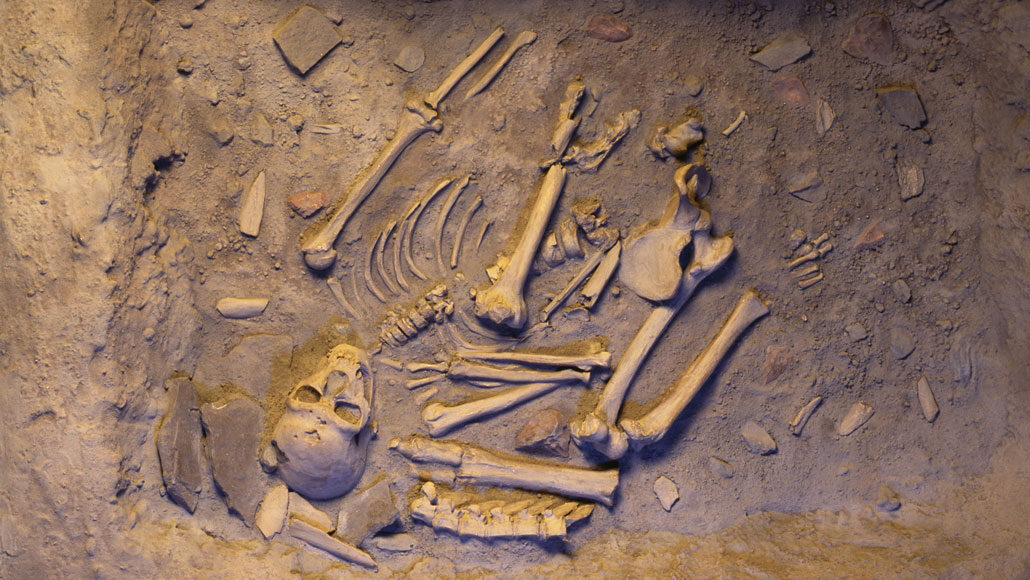
 neandertal skeleton

    The Genes inherited from our ancestors can play varying roles when it comes to our immune response to diseases. A study from the proceedings of the National Academy of Sciences has found genetic variants inherited from the Neandertals that have the possibility of protecting people against developing severe COVID-19. This study looked into a stretch of DNA on chromosome 12 where a haplotype- a cluster of genetic variants that are inherited together- that affects susceptibility to where the coronavirus is located. They noticed that the need for intensive care for Covid-19 fell 22 percent for each copy of the Neandertal haplotype a person inherited. About 25 to 30 percent of present-day people of Asian and European ancestry carry the protective variants. Some Black people in the Americas also inherited the protective haplotype, presumably from Asian, European, or Native American ancestors. I found this article interesting because I recently learned that genetic inheritance is an important factor that can help or hinder the immune response to diseases.

Links:

1.https://www.sciencenews.org/article/coronavirus-some-neandertal-genes-protection-severe-covid-19

2.https://www.news-medical.net/news/20210222/Neanderthal-gene-can-confer-protection-against-severe-COVID-19-finds-study.aspx

Tuesday, April 11, 2017

Shockingly Low Rate of Cancers are Hereditary

Link to Original


As human beings on planet earth, we all understand the detrimental affects cancer has on the population as a whole. New research has been conducted concluding results that the highest percentage of cancer, 66%, is due to random mutations and mistakes. 29% of cancers are were due to environmental factors, and the lowest percentage happens to be 5% due to inherited mutations. Unfortunately, most people think they are at a high risk of the cancer because of their familial lineage but according to research that is an inaccurate statement. Based on the study and research conducted, the chart listed above shows the percentage values for specified cancers and their likelihood for cause. Everything in the charts is an indication of percentage ranges on the attributed mutations as white is the lowest percentage at 0, and red is the highest at 100%. Furthermore reduction of cancerous mutations can be prevented by simple changes in environmental factors, such as cigarette smoke or ultraviolet light. Simple things like this can also help reduce the mutations due to inherited genes such as a woman who knows she is a carrier for the breast cancer gene may decide to have a preventative mastectomy. It is important to understand the implications of lifestyle and the mutations that can cause cancer in order to strategically plan for an elongated life as best as you can. Link to

Cancer Prevention Tips!!

More Tips!!!

Sunday, November 13, 2016

Don't Always Blame it on your Genes

Heart disease is something that is very constantly and easily linked with genetics. Most people tend to blame their genes for it. But a recent study shows that it can't always be the answer. There are several factors that play a role on it including exercising, not smoking and eating a healthy diet. Dr. Sekar Kathiresan states, “DNA is not destiny; it is not deterministic for this disease”. Even if someone’s genetic destiny shows something, they always have some control over it. Dr. Kathiresan and his colleagues did an experiment to test whether an individuals lifestyle can largely effect ones chance of getting heart disease.


Coronary heart disease is one of the biggest killers in the world. It takes the lives of 365,000 people annually in the United States, and 17.3 million worldwide. Dr. Kathiresan’s team found that while genes can double the risk of heart disease, a good healthy lifestyle could cut it in half. In addition, they found that a lifestyle consisting of bad habits erases half of the benefits of good genetics.

Several studies show the positive effects of a healthy lifestyle and how it can significantly reduce the chances of getting heart disease.  In one study, a group of black and white Americans aged 45 to 64 cut their likelihood of getting heart disease from 5.7 percent to 10.7 percent. These individuals had the highest genetic risk to begin with and the study shows the very positive effects of a healthy lifestyle. In another study, 21,222 American women aged 45 and older cut their 10 year risk from 4.6 percent to 2 percent. These women were health professionals and had a healthy lifestyle.


I think this is very important study as it shines a light on factors other than genetic inheritance that can cause heart disease. Dr. Katherisan states, "A poor man's substitute is 'My dad died at 45 of a heart attack. I have a strong family history.'" This study shows that individuals who have a high genetic risk factor of getting heart disease have the power to reduce their chances of getting it with a simple change in lifestyle.

Monday, November 23, 2015

'Gene drive' mosquitoes engineered to fight malaria


         Malaria is the number four leading cause of death in Africa.  Accounting for 6% of deaths in sub-saharan Africa. Scientists however may have recently cracked the case to wipe out the disease in some regions for good.  Malaria is spread almost entirely through mosquitoes.  In Africa the mosquitoes that spread Malaria are infected with a parasite of the Plasmodium genus.  Every time a mosquito bites a human it injects some of the parasite into their blood stream.  Scientist have been studying the mosquito's genome intensely to discover a way to fight Malaria.
           The idea was that if scientists could engineer the mosquito's genome so that it would be resistant to the parasite than the mosquito would no longer spread the disease.  However the problem was that it is nearly impossible to genetically engineer a whole wild population of mosquitos with the same gene.
            Insert the concept of "gene drive".  Gene drive basically is a way to alter the inheritance pattern to favor the inheritance of one particular gene.  This would allow the genetically engineered mosquitos to pass on its resistant genes to all of its offspring rather than just half.  Anthony James a molecular biologist at the University of California Irvine wrote a paper suggesting that this method of gene drive could affectively wipe out malaria.  He recently was contacted by other biologists who successfully engineered a gene drive in fruit flies.  James used their same method a gene editing system called CRSPR-Cas9 in mosquitos and found that 99% of the offspring received the resistant gene.
           In my opinion I am a bit skeptical by engineering entire populations of mosquitos, because we do not know any other side affects of the gene drive or transgenic material in the mosquito.  However I am amazed that there is a method that scientist have come of with that has the capability to completely wipe out a disease in Malaria that has plagued third world countries for centuries.

Original Post

CRSPR-Cas9

Friday, November 20, 2015

More Like Your Dad Than You Think (Genetically Speaking)


Even though genes are thought to be inherited evenly from both your mother and father, scientists have now discovered after years of research and studies, that a higher percentage of genes expressed in offspring are actually from the father. Researchers have ran tests with a group of mice that showed the highest diversity, making it more comparable to humans. This study consisted of interbreeding three strains of DNA to create nine different offspring. The offspring created were then measured on their level of gene expression of heir tissues to examine how much was inherited by the mother/father mouse. The final testing showed that a high of 60% of the mouse's genes were inherited from the father. The main feature examined in the mice was the father's impact on the offspring's brain however. Researchers believe that because humans share a common ancestor with these mice that this inheritance may be true in all mammals.

With this new information known about a larger percentage of inheritance coming from the father's gene, scientists may have an easier time being able to properly diagnose offspring. For example if a mother has a negative mutation it would be less likely that it will be expressed however if a father possesses the gene for this mutation it may be easier to be seen in offspring. I believe that this finding can allow for scientists to predict diseases and mutations in offspring better therefor allowing for better treatment or preparation. If scientists can go further into this research and determine what genes from the father are specifically most likely to be expressed in the offspring diagnosing a child may become easier.

Link to article:
http://blogs.discovermagazine.com/d-brief/2015/03/03/genetically-more-like-dad/#.Vku9enarRD8

Link to supporting article:
http://www.nature.com/articles/ng.3222.epdf?referrer_access_token=Ch4gHO7kcaB_Vz9pd7XO59RgN0jAjWel9jnR3ZoTv0O-unnSP1F34GBgge3SSp-203e0MqRlQDfjLHKaI0gOqWyepxtXYLeUqViSQEMNfk0z9YkzwZZZTMvK_Eg1iSHRrkwNugpKfxYsFM6uCypjpF_OgjOO-Yi9aqxa4aWbJmZpdq29t3uYQ33Y3dBTV0vztNF0xfHGTlK20YAd6Bfvrw%3D%3D&tracking_referrer=blogs.discovermagazine.com

Monday, October 26, 2015

My Genome, Myself: Seeking clues in DNA

The study of the human genome for years has been done by the "elite" scientist in large research lab. This is soon to change because an infant industry is taking advantage of the plummeting cost of genetic testing technology and offering anyone an "inside look" of their own DNA.
With only $1000 and a saliva sample, the customer is able to learn how the billions of bits of their biological code shape who and what they are. About three companies have already announced that they plan to provide the services.
There is some controversy with this service though. Some say that it is beneficial because it explains why people do things. For example, a woman had a pain in her hand, she checked her DNA and realized that she had inherited arthritis. Others completely disagree and say people could become hypochondriacs and constantly believe something is wrong with them.
I personally believe that this testing would greatly benefit the study of the human genome because with more people uncovering their DNA, the more information the scientist who study have.


Original Article

Friday, May 1, 2015

Hope for Fragile X Carriers

In this study, scientists delve head first into finding out more about the often crippling disorder, Fragile X Syndrome. This sickness is a proven cause of autism, and intellectual challenges. There are many different intensities to the genetically inherited disease, and even those individuals who are merely carriers suffer various challenges such as social difficulties, anxiety, and depression disorders.  In people will the maximum expression of the disease, the brain is blocked from manufactuing a key protein, while in those with differnet levels produce significently less of this protein. After studying a large population of both men and women, researchers have found a way to increase the protein production. Knowing little about Fragile X Syndrome, any new information is critical.
Considering the severity of what comes with this disorder, I found this article informative and interesting. It seems that if there is a way to up the lacking protein production, this sickness could one day be eliminated all together. If Autism, being the serious and crippling disease it is, were cured or at least minimized or controlled, this would be a huge breakthrough for sufferers, family, friends, and the world at large.

Wednesday, April 8, 2015

Don't enjoy school? Blame genetics.

A new study at Ohio State University has recently discovered that a lack of motivation in school may be attributed to genetic inheritance from parents. The study took approximately 13,000 twins from six different countries and asked them to rate their enjoyment and their ability in several different school subjects. The study compared the answer between fraternal twins, who share half of their inherited genes, and identical twins, who share all of their inherited genes. The results were similar in all countries and showed that there was more similarity between the answers of identical twins, showing a strong genetic linkage.  Researchers said that ones motivation to learn isn't dependent upon one gene, but instead it is dependent on multiple genes and gene-environment interactions. However environmental factors only account for 3% of the variable for this personality.

I believe this study will help teachers and parents around the world better understand their children and how they are doing in their academics. When a child is failing, many people instantly blame the child or assume that there is no one in the child's life to motivate them. This research shows that it may just be that they are unmotivated due to their genetic predisposition, and therefore will require more attention in the classroom and at home to help cope with their lack of motivation in school.

Thursday, April 2, 2015

DNA Can't Explain All


     Scientists from the University of Edinburgh's School of Biological Sciences, have studied proteins found in cells also known as histones.  They are not part of the genetic code but act as spools which DNA is wound.  Histones are known to control whether the gene is switched on or not.  Researchers have found that naturally occurring changes to proteins, which affect how they control genes can be sustained from one generation to the next.  This influences which traits are passed on.  
     The finding demonstrates that DNA is not solely responsible for how characteristics are inherited.   This can improve research and how and when this method is naturally occurring in nature.  It will aid in understanding particular traits or other health issues.  It may also provide information into the changes of histone proteins caused by environmental conditions like stress or diet.  
     Scientists tested the theory by carrying out experiments in a yeast with similar gene control mechanisms to humans.  They introduced changes to a histone by mimicking those that occur naturally.  This causing it to switch off other nearby genes.  The inheritance patterns were reflected in subsequent generations of the yeast.  I think this is a huge advance to genetics.  We are constantly gaining more knowledge on inheritance.  


Tuesday, March 24, 2015

Paternal Genes Exhibit More Dominance in Mammels


A study on laboratory mice from the University of North Carolina’s School of Medicine finds that mammals tend to exhibit more of their father’s DNA. Even though genes are inherited equally from both the mother and the father, the expression is found to be more dominant in paternal genes.

The study propagated three diverse inbred strains of mice together. The hybrid offspring were then examined to determine the level of gene expression exhibited from each parent. The study observed that genes inherited from the father were expressed in a larger amount than maternal genes.

This finding is important because deleterious mutations will have a much larger effect if inherited from the father than from the mother, as they will be expressed in a much greater amount. In the words of Fernando Pardo-Manuel de Villena, author of the study paper, “This is an exceptional new research finding that opens the door to an entirely new area of exploration in human genetics.”

Secondary Link contains additional information.

Wednesday, March 11, 2015

Sleep Paralysis Linked to Genetics, Anxiety & Stressful Events

Researchers from the University of Sheffield in England, have linked sleep paralysis to genetics and believe the disease may be heritable.Also, the researchers found those who experience anxiety, poor sleep, or had experienced stress were more likely to experience sleep paralysis. The study included 862 twins (identical and nonidentical) and other siblings (non-twins) between the ages of 22 and 32 in England and Wales. Each participant in the study indicated whether they agreed and disagree with the following statement:"Sometimes, when falling asleep or waking up from sleep, I experience a brief period during which I feel I am unable to move, even though I think I am awake and conscious of my surroundings". Next, researchers compared the responses of identical twins to non-identical twins and found that genes were responsible for more than 50 percent of reported occurrences of sleep paralysis. After, genes were individually studied to determine which genes could possibly linked to sleep paralysis by examining a gene called PER2 (linked to circadian rhythms). Researchers found that certain versions of this gene in people had an increase chance of having sleep paralysis. Despite the findings, the study only shows how genetics and stress factors are linked and some of the genes influencing sleep and wake patterns, not how genes or stress factors cause sleep paralysis.
I always thought that sleep paralysis was caused by stressful factors, not how stressful factors can cause one to develop it. Also, I never thought to link the cause of sleep paralysis to genes and how it can be heritable. Through this study, may be people can find out the cause of sleep paralysis

Original Link: http://www.livescience.com/49818-sleep-paralysis-genetic-basis.html
Related Link: http://www.webmd.com/sleep-disorders/guide/sleep-paralysis

Sunday, November 23, 2014

Heart Attacks Not Linked to Genetic DNA


It was always believed that heart attacks could be due to agenetic history of your family, studies now show that this is not a true fact. Researchers at the Intermountain medical center in salt city are discovering that heart attacks are not linked to family history.


Benjamin D Horne and his team studied many patients with different kinds of coronary diseases who did not suffer heart attacks.These patients were picked and identified by the research team by linking 700,000 patientsin a clinical data warehosue where family pedigrees are located. The research team had discovered that yes, coronary heart disease can be family gene associated but heart attacks are not.  Since cornary heart disease and heart attacks are so closely realted to eachother many people automatically believed that this trait would be inherited as well. Since this study began in 2008 it has shown that this is not true. The study was able to find out that only one genetic mutation was associated with heart attacks. This shows that heart attacks are rarely from inheritance of family members.

I think that this could be very helpful for a lot of people because many people believe that if someone in their family has a heart attack they are also likely to have one or be at risk for one. This study is very interesting and could be useful to many families who had a heart attack happen in the family.

Article Link: http://www.newswise.com/articles/new-study-finds-heart-attacks-do-not-have-as-strong-of-a-genetic-link-as-previously-suspected

Supporting Link:http://www.sciencedaily.com/releases/2014/10/141020212300.htm

Friday, November 21, 2014

Is depression genetic?

     Depression is a serious medical illness that is described as feeling sad, blue, and miserable. Most of this feel this for a short period. Clinical depression, or known as major depression disorder affect how one feels, thinks, and behaves that causes emotional and physical issues. Depression requires a long term treatment that can be treated with medicine or psychological counseling. There are a variety of factors that causes depression such as biological differences- people have physical changes in their brain, brain chemistry- neurotransmitters out of control chemicals controls depression, Inherited traits- depression is more common who have relatives with these condition, life events, or hormones. According to health line, “A person with a relative who suffers from depression is almost five times more likely to develop depression as well”.  Research has found a gene in multiple family members with depression. Scientist have found that about 40% of the people who have depression has a genetic link. People with depressed parents are siblings are three times more likely to have the condition. For this reason, it strongly suggest that it is an inherited illness. Studies have also found that women are about 15% more likely for the chance of hereditary depression compared to men. Many researchers have found that a combination of genes leads to the depression disorder. 


            Most of study on genetic depression is based on identical twins since they have the same exact genetic code. It was found that when one identical twin gets depressed, the other twin will 80% most likely get depressed. It is concluded that there’s a strong genetic influence since both twins become depressed at a high rate. Fraternal twins who share 50% of the genes do not have a high connection in depression. When one fraternal twin gets depressed, there’s only a 20% chance the other twin will also get depressed. 

Main Link: http://www.healthline.com/health/depression/genetic#OtherFactors3
Related Link:http://depressiongenetics.stanford.edu/mddandgenes.html

Friday, October 17, 2014

A Women's Ex can Affect her Future Offspring

Did you know that offspring could have traits that resemble a mother’s previous sexual partner rather than the actual father? Yes, this is true- at least in flies.  Recently, Australian researchers have conducted a new study where they manipulated the size of male flies and studied their offspring. Shockingly, it was found that the size of the offspring depended on the male that the mother first mated with rather than the male that actually sired the offspring. Apparently, this effect is due to the molecules in the seminal fluid of the first mate being absorbed by the female’s immature eggs. This goes on to impact the growth of the forthcoming offspring, though the father is different. 
“Our discovery complicates our entire view of how variation is transmitted across generations but also opens up exciting new possibilities and avenues of research. Just as we think we have things figured out, nature throws us a curve ball and show us how much we still have to learn,” says Angela Crean of the University of New South Wales in Australia. During this new study, the researched raised both large and small flies by either giving them diets consisting of either high or low nutrition. From there, the female was mated with either of the two flies, then, once matured, were mated again with either of the two males and their offspring were examined. It was found that the offspring size was determined by what the mother’s earlier mating partner ate as a maggot, rather than being determined by the second male that actually was responsible for the offspring.
I find it very interesting that trait inheritance has been studied for a long time now, the field of genetics has in itself become increasing advanced through the years and it is still not completely clear. It is amazing that though not responsible for the children, a male can still be responsible for the children’s phenotypes. It will certainly be interesting to find out if this can be said for other species.

Article Link                                                                                    Related Article

Sunday, October 12, 2014

The Price of Beauty

The pressure and stress society deems someone as “beautiful” can be quite demanding; for some it may mean taking great risk to achieve that beauty. This risk is also the cause of one million suffering in Britain—either by starvation or suicide, this is known as anorexia disorder. We have seen forms of anorexia from models and demanding parents. However studies have shown that anorexia can be also inherited!

In reality, scientists showed there is not just one social cause that leads to anorexia. In fact, the main drive for this disorder could either be the fear of entering adulthood or of losing parents’ attention. What which gene is the cause for this disorder, compared to schizophrenia—this disorder did not caught enough attention to gene hunters.

 Now, Britain and America teamed up with the rest of the world in order to gather 25,000 DNA samples from those who are anorexic and compare it to the DNA of the unaffected controlled group. Scientists hope that this will allow them to pinpoint the genes and study their function in order to develop a treatment. However the finding cannot be replicated and the project is back at square one.
The scientists hope that if the finding was successful, it can help lessen the guilt to parents of the anorexic child. According to Professor Janet, Treasure director of the Eating Disorders Unit at Bethlem Royal Hospital, the South London and Maudsley NHS Foundation Trust, that parents need to understand that anorexia is caused by both environment and genetics cause. This disorder tends to happen during adolescence, it is a natural response—but it is the emotional reactions that get children sick.

Anorexia happens to 1-2% of teenagers and college students, though it can happen at any age. People who have anorexia sees themselves fat even though they eat the bare minimum amount of food allowing them to survive. They tend to secretly starve themselves and vomit the food they ate. People who tend to have anorexia tend to be: perfectionist, anxious or depressed, and obsessive. This disorder usually happens to more females than males; more specifically the daughter of two professional couples.

The global project for finding the gene responsible for anorexia, led by Professor Cynthia Bulik, an expert in eating disorders at the University of North Carolina in the US, identified the genes to be, AN25k. It is likely as the project continues they find other genes contributing to the cause of this disease. Studies show that of the risk 56% anorexia is contributed by genetic factors. The researchers are now hoping they find one gene that linked the illness altogether so they can develop a treatment.

This article to me was a relief to read, in my high school days my health teacher has shown me some very disturbing pictures of anorexia—we even watched videos about them. I feel so bad for all the girls I've seen, I want to tell them they are beautiful already—that they are harming their body by not eating. This disorder causes so much pain to not only to those who have it, but also to family members as well. 
Wednesday, April 2, 2014

Inherited Stress

On March 7, 2014, New York Times posted an article called “Inheriting Stress.” This article explains how they believe that the stress experienced in a person’s lifetime is correlated with the stress-related problems in that person’s offspring. Scientist tried to prove this by studying the children and grandchildren of the Holocaust survivors. Research showed that the survivors’ children had greater chances of having stress related illnesses. An example of an illness is post traumatic disorder. Researchers also found similar correlations in other populations like in Rwanda, Nigeria, Cambodia, and Armenia. Scientists did a study on female rats. The female rats went through a mild stress procedure for seven days and then mated with non-stressed male rats. The study showed that there were behavioral differences between the adult progeny of the stressed and non-stressed females. The researchers questioned how the stress was transmitted and focused on a gene that encodes a molecule involved in the body’s response to stress. They found larger amounts of the molecular product of this gene in the brains of the previously stressed female rats and also found this gene present in their ova. The researchers believed that the gene was transferred by the ova. Stress can play a major role in a person’s life. This article was very interesting. I have never thought about stress as a molecular product of a gene that can be inherited. Hopefully there will be more research and a result to prove if this is true or not. 

Friday, March 14, 2014

Genetics May Explain Why Autism Is More Common in Boys

Many years of research has shown that males are at a greater risk for neurodevlopental disorders like autism spectrum disorder (ADS) than females. Also, studies have shown that boys on average are five times more likely to have autism than girls. A recently published article by Carl Engelking clarifies why genetics can explain why this is so. According to geneticists in the U.S and in Switzerland, it has something to do with “female protective model.” This means that females have a higher tolerance of harmful genetic mutations causing them to require a larger number of them to reach a diagnostic threshold of a developmental disorder than males do. So, with identical mutations a male could show symptoms of ASD while a female won’t. However, since the female mutation threshold is higher, when they are diagnosed with ASD it tends to be more severe.
shutterstock_109336046

Geneticists analyzed the DNA samples of 16,000 boys and girls who had neurodevelopmental disorders. They found that on average girls with ASD had a 1.3-3 times more harmful genetic alterations than boys. The researchers had suggested that the male brain develops smaller than that of a female so it more subtle genetic changes can trigger ASD. Study author Sebastien Jacuemont of University hospital of Lausanne in Switzerland also studied 800 families in which a family member was affected by ASD. He found that children were more likely to inherit gene mutations from their mothers. The reason for this was because males with autism are less sociable and form less relationships so they are less likely to have children. Whereas females can go unnoticed with the genetic glitches and so in turn are more likely to start a family. 

Although the study did not answer the most profound question, “what causes these disorders,” geneticists are still on the lookout for more insight to answer this question.


Friday, November 22, 2013

Could be more to know about the world of Epigenetics than previously assumed...


As time pushes onward, humans are constantly obtaining more information about how the body works and how our traits are passed from generation to generation. This article gives insight to the world of Epigenetics, which scientists have previously believed to be set in stone. However, as researchers backtrack and take a closer look, epigentics is not as simple as we assumed. This article mentions how we have viewed the DNA sequence as an independent of the epigenetic mechanisms (that which are responsible for controlling the gene expressions and are heritable). Further reading of this article will allow the readers to be able to see just how complex the transcription of the DNA can be. Some of the transcription ways are straightforward, but others occur at different rates or times which can all effect the output of the process. I feel that is is important that researchers keep investigating what controls our traits, that way we can learn how to better ourselves and the future generations to come. 


Below is a link to another article, also giving details about epigentics: 

Genetic consequences of interbreeding between wild and cultured Atlantic Salmon 


             A worldwide issue, that has increased from the use of farm grown salmon, is the mixture of wild and cultured salmon genes. The two separate fish have the chance to interact when the farmed salmon escape from their pens and make their way to the native salmon’s habitats. Once they reach each other, the option to reproduce is available, but would then result in a variety of genetic combinations. The mixture between the two types of salmon is considered a “hybridization.” Typically genetic diversity can be beneficial to the organisms, but not always. In this case, when the wild salmon and the farmed salmon mix the results have shown unexpected patterns within the inheritance of the genes from the parent fish. This creates field of unknown for researches. In addition to unpredicted circumstances, researchers have found that the presence of the farmed salmon in the native territories can greatly increase the chances of the wild salmon’s extinction. 
            The farmed salmon have this negative effect on the wild populations because of a few distinct reasons. First, the cultured salmon could potentially carry diseases over to the wild populations. Second, the basic addition of more than the normal environmentally supported population of salmon can decrease resources for the native fish. And lastly, when the two interbreed, the process alters the regulation of the transcription of the salmon’s genes. 
          Gene transcription is incredibly important to the survival of the salmon, both wild and farmed. Wild salmon have their own set of genes that have been through the necessary adaptations needed to survive in their natural habitats. These genetic components allow the fish to live, to protect itself from the components of the water they live in, and to internally regulate their bodies to be able to live successfully, etc. Their gene transcriptions are their directions to life, and when they are tampered with by an outsider’s genetic instructions, important information can be lost. In the end, the main goal is to do what ever is possible to contain the farmed salmon and prevent the combination of the two fish.

Source: http://fx5ly8ju5l.search.serialssolutions.com

Another source that has further information on the topic: http://www.nature.com/news/transgenic-salmon-nears-approval-1.12903


Over 200 Genes can be Attributed to Crohn’s Disease

Scientists at the University College of London have created a new method to identify and map gene locations for complex inherited diseases by utilizing detailed maps of the human genome. Their study specifically highlighted Crohn’s disease, which they found has over 200 genes involved in the complex disease. The number of gene locations for Crohn’s disease is more than have been found for any other disease. The article explains that there are only 66 known gene regions for type two diabetes. With the new method of identifying and mapping gene locations, it is possible that there are many more genetic regions that attribute to such diseases. By narrowing down the genetic component to many diseases, it will be easier for those scientists in the medical field to improve treatment for painful symptoms. In addition to creating better treatments, studying the genetic component of such diseases can provide better understanding as to how they are inherited. 

Crohn's disease is a chronic inflammation that may affect any part of the digestive tract


Crohn’s disease is just the stepping stone into detailed genetic studies of diseases. In the article, a senior author from the University College of London, Dr. Nikolas Maniatis, was interviewed as saying: “The discovery of so many gene locations for Crohn's Disease is an important step forward in understanding the disease, which has a very complicated genetic basis. We hope that the method we have used here can be used to identify the genes involved in other diseases which are similarly complex, for example different cancers and diabetes.” The additional genes attributed to Crohn’s disease were found through the use of incredibly detailed maps of the human genome as well as through the subdivision of patients based on the disease present. This study is incredibly exciting and will lead to great strides in better diagnosis of disease and more personalized treatment plans for those who are suffering from disease. It is especially fascinating that such complex diseases are effectively being broken down and the specific genes that cause such complex illnesses are correctly being identified.