Showing posts with label Hybrid Animals. Show all posts
Showing posts with label Hybrid Animals. Show all posts
Monday, April 14, 2014
Wolf-Dog Hybridization Common in Caucasus Region
In a recent article, which discusses a study published in the Journal of Heredity, researchers have found that hybridization of wolves with shepherd dogs in the Caucasus Mountains of Georgia is more common than what it was thought to be. Dr. Natia Kopaliani, Dr. David Tarknishvili, and colleagues from the Institute of Ecology at Ilia State University in Georgia and the Tbilisi Zoo have found that recent ancestry in about ten percent of sampled wolves and dogs. From their sampled population, two to three percent were linked as first-generation hybrids. Shepherd dogs studied were local breeds from the area that were used to guard livestock from predators, such as wolves.
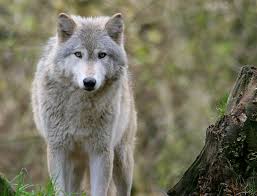 Researchers fear that this hybrid species may lack fear of humans as there has been an increase of attack on humans and cattle since the 2000's. To confirm their results, researchers examined mitochondrial DNA and microsatellite markers. Microsatellite markers are used to study hybridization due to their ability to mutate easily and because of the fact that they are highly variable even within a single population. More about the wolf-dog hybrid species can be read here.

Friday, November 22, 2013
Genetic consequences of interbreeding between wild and cultured Atlantic Salmon

A worldwide issue, that has increased from the use of farm grown salmon, is the mixture of wild and cultured salmon genes. The two separate fish have the chance to interact when the farmed salmon escape from their pens and make their way to the native salmon’s habitats. Once they reach each other, the option to reproduce is available, but would then result in a variety of genetic combinations. The mixture between the two types of salmon is considered a “hybridization.” Typically genetic diversity can be beneficial to the organisms, but not always. In this case, when the wild salmon and the farmed salmon mix the results have shown unexpected patterns within the inheritance of the genes from the parent fish. This creates field of unknown for researches. In addition to unpredicted circumstances, researchers have found that the presence of the farmed salmon in the native territories can greatly increase the chances of the wild salmon’s extinction.
The farmed salmon have this negative effect on the wild populations because of a few distinct reasons. First, the cultured salmon could potentially carry diseases over to the wild populations. Second, the basic addition of more than the normal environmentally supported population of salmon can decrease resources for the native fish. And lastly, when the two interbreed, the process alters the regulation of the transcription of the salmon’s genes.
Gene transcription is incredibly important to the survival of the salmon, both wild and farmed. Wild salmon have their own set of genes that have been through the necessary adaptations needed to survive in their natural habitats. These genetic components allow the fish to live, to protect itself from the components of the water they live in, and to internally regulate their bodies to be able to live successfully, etc. Their gene transcriptions are their directions to life, and when they are tampered with by an outsider’s genetic instructions, important information can be lost. In the end, the main goal is to do what ever is possible to contain the farmed salmon and prevent the combination of the two fish.
Source: http://fx5ly8ju5l.search.serialssolutions.com
Another source that has further information on the topic: http://www.nature.com/news/transgenic-salmon-nears-approval-1.12903
Tuesday, November 19, 2013
Hybrid Animals
Professor Axel Imhof of Ludwig Maximilians-Universitaet in Munich show that differences in the levels of certain key proteins are crucial in the mediating reproductive isolation is the reason why many hybrid animals are sterile. in Imhof's new study, his team has characterized the functions of the Lmr (Lethal male rescue) and Hmr (Hybrid male rescue) genes for fruitflies belonging to the closely related Drosophila species D. melanogaster and D. simulans. Imhof's group has also shown that the proteins encoded by the genes Hmr and Lhr form a molecular complex and these complexes play an important role in chromosome segregation later in cell division. Due to this we see that the hybrids produce both HMR and LHR proteins but in different amounts, thereby making them sterile.
.

The results of this study reveal that it is the relative level of the proteins concerned in reproduction, and there is no difference in their amino acid sequences, that plays a crucial role here.
I like this article because now, with a greater understanding of why hybrid animals are sterile, it can give way to some type of gene therapy that would allow for these hybrids to not be sterile. In future experiments the team plans on analyzeing the complete functions of the proteins.
Subscribe to:
Posts (Atom)