Showing posts with label gene drive. Show all posts

Monday, August 2, 2021

Genetic Engineering Can Suppress Population of Malaria-Transmitting Mosquitoes


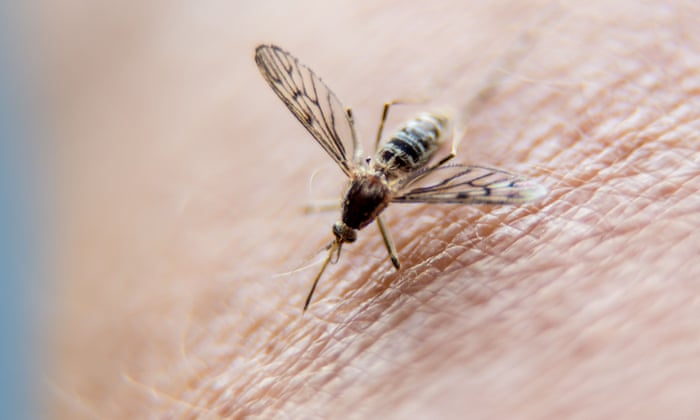
    Recent studies and discoveries have allowed scientists to use genetic engineering in order to make female malaria-transmitting mosquitoes infertile, and therefore suppressing the population of these mosquitoes around the world. The lead researcher for this experiment calls it a “game-changer in bringing about malaria elimination”. This study, conducted at Imperial College London, Italy’s Polo Genomics Genetics and Biology, and the Liverpool School of Tropical Medicine, used “gene drive” technology for this study, which is a self-sustaining and fast-acting technology that can work simultaneously with other tools such as bed nets, vaccines, and insecticides. Using this type of technology, scientists are able to circumvent natural selection by inserting genetic instructions that are passed on through populations of mosquitoes, and in this particular case, that instruction is for infertility. This process is much quicker than if performed through regular selective breeding. This study also maps out the future effects of what can happen within 10 years of these self-destructive mosquitoes being released into the wild. “Gene drive” technology has been explored since 2003, but hit a bump in the road when researchers discovered that their gene drives vanished after a few generations due to mutations. This study identified a crucial sex determination gene, however, that is identical among these mosquitoes that are responsible for most of the malaria transmission in sub-Saharan Africa. The release of this gene drive into the population of malaria-transmitting mosquitoes can suppress the population size and potentially even rid the world of these mosquitoes.


Link to Study: https://www.nature.com/articles/s41467-021-24790-6?utm_medium=affiliate&utm_source=commission_junction&utm_campaign=3_nsn6445_deeplink_PID100093539&utm_content=deeplink

Link to Article: https://nypost.com/2021/07/29/genetic-engineering-may-eradicate-malaria-transmitting-mosquitoes/

Friday, November 24, 2017

Gene Drives Are To Risky for Field Trials, Scientists Say


Back in 2013, a technology called Crispr was developed and provided scientists with a new way to edit genes. Over at Harvard University a scientist named Kevin M. Esvelt suggested that this technology could be used to save endangered wildlife from extinction. In order to do so, they thought they could implant fertility reducing genes in invasive species of the same ecosystem as the endangered species. Implanting these genes is known as a "gene drive". The idea is that when these altered animals were released back into the wild, the gene to reduce fertility would spread and over generations would eventually make the population fall. After three years of research however, Dr. Esvelt feels that the method carried out in this fashion would not work out well simply due to the possible ramifications. A model created to see what would happen after the release of the gene showed that the altered genes might spread to other places where the species isn't actually invasive. The weasel pictured below for example is invasive to New Zealand and has destroyed native bird populations, but if it were given the gene transformation, it could eventually decimate its own native population where it came from. Dr. Esvelt still believes gene drives should be investigated to save threatened species but in a safer manner. Dr. Esvelt has been working on a gene drive that can self-destruct after a few generations. Some other researchers are also looking into building gene drives that are "tailored to invasive populations on islands but can't harm mainland relatives". Dr. Esvelt has also been investigating the use of gene drives to eradicate diseases as well. Projects such as this could be geared towards wiping out malaria carrying mosquitoes in Africa. In all I think this work has a promising future. With this much progress in just four years of the technology being invented, I believe there are so many directions this can be taken.   

https://www.nytimes.com/2017/11/16/science/gene-drives-crispr.html

https://www.the-scientist.com/?articles.view/articleNo/47755/title/Using-Gene-Drives-to-Limit-the-Spread-of-Malaria/

Monday, November 20, 2017

Researchers are generating genetically engineered insects to help prevent the spread of infectious diseases

Researchers are generating genetically engineered insects to help prevent the spread of infectious diseases

                At the University of California, researchers are genetically engineering mosquito DNA in order to disrupt cuticle, wing and eye development.  This has led to the production of completely yellow, three-eyed and wingless mosquitoes.  This will make it harder for them to survive.  They wish to use Cas9- expressing mosquitoes with gene drive to insert and spread genes that suppress them while avoiding them developing a resistance.  This genome editing is very important as scientists want to prevent mosquitoes from spreading pathogens.  It has not worked in the past due to low mutation rates, poor survival of edited mosquitoes and inefficient transmission of disrupted genes to offspring.  Mosquitoes are known carriers of dengue, chikungunya, yellow fever and zika viruses.  They are also continuously becoming resistant to commonly used pesticides. 
                This research is very important as the elimination of mosquitoes would stop the spread of such awful disease.  Mosquitoes are hated for this reason and the fact that they are so irritating.  I would be thrilled if this science works and am excited to see the demise of their species.  I attached another article about the effects of the zika virus which has come to light in recent years. 


Wednesday, December 7, 2016

Gene Janitors: New Project Seeks to Clean up Genes in Nature


The Pentagon is opening a new project in the Defense Advanced Research Project Agency (DARPA) that will focus on methods to clean up genetic spills. But what’s the point, don’t organisms “spill” their genetic material in the form of skin cells or hair follicles all the time? Well of course, but the genes that Safe Genes (the name of the project) will be dealing will are engineered genes that are thought to have a negative impact on the environment. The hope is to produce controlled methods for containing these genes in the wild in order to reduce the amount of disease carrying insects and pests. The ideal timeline would drastically decrease these things in under 20 generations.
With so many tools available to edit genomes, systems are rising to try to control the effects of gene editing. Gene drive technologies (that use genetically enhanced organisms to control harmful phenotypes) are being examined to identify potential methods of control such as tissue specific editing systems or tiny antibodies that genetically arm target organisms to inhibit the spread of undesired or altered genotypes.


Links:

http://www.nytimes.com/2016/06/09/science/national-academies-sciences-gene-drive-technology.html?

Monday, November 23, 2015

'Gene drive' mosquitoes engineered to fight malaria


         Malaria is the number four leading cause of death in Africa.  Accounting for 6% of deaths in sub-saharan Africa. Scientists however may have recently cracked the case to wipe out the disease in some regions for good.  Malaria is spread almost entirely through mosquitoes.  In Africa the mosquitoes that spread Malaria are infected with a parasite of the Plasmodium genus.  Every time a mosquito bites a human it injects some of the parasite into their blood stream.  Scientist have been studying the mosquito's genome intensely to discover a way to fight Malaria.
           The idea was that if scientists could engineer the mosquito's genome so that it would be resistant to the parasite than the mosquito would no longer spread the disease.  However the problem was that it is nearly impossible to genetically engineer a whole wild population of mosquitos with the same gene.
            Insert the concept of "gene drive".  Gene drive basically is a way to alter the inheritance pattern to favor the inheritance of one particular gene.  This would allow the genetically engineered mosquitos to pass on its resistant genes to all of its offspring rather than just half.  Anthony James a molecular biologist at the University of California Irvine wrote a paper suggesting that this method of gene drive could affectively wipe out malaria.  He recently was contacted by other biologists who successfully engineered a gene drive in fruit flies.  James used their same method a gene editing system called CRSPR-Cas9 in mosquitos and found that 99% of the offspring received the resistant gene.
           In my opinion I am a bit skeptical by engineering entire populations of mosquitos, because we do not know any other side affects of the gene drive or transgenic material in the mosquito.  However I am amazed that there is a method that scientist have come of with that has the capability to completely wipe out a disease in Malaria that has plagued third world countries for centuries.

Original Post

CRSPR-Cas9