Showing posts with label genome editing. Show all posts

Friday, October 31, 2025

Teaching AI to Edit Genes: The Next Steps in Genetics

    Recently, researchers at Stanford Medicine announced a fascinating development: a large language model called CRISPR-GPT designed to assist scientists in creating gene-editing experiments.

    One of the biggest hurdles in gene therapy is designing safe and effective edits by choosing the right target sequences, avoiding off-target effects, and ensuring accurate delivery. By introducing AI as a “copilot,” this study suggests that workflows could become faster and more efficient, potentially lowering the barrier for labs that are not experts in every step of the CRISPR process.

    From a genetics perspective, this is a major step forward. Gene editing, especially through CRISPR-Cas9, has progressed from proof-of-concept experiments to clinical trials for various genetic disorders. Adding AI introduces a new layer of precision and accessibility. However, it also raises ethical and regulatory questions: as gene editing becomes easier, how can we ensure it is used safely and responsibly?

Some questions I had while reading:

  • How accurately can the AI anticipate off-target edits or unintended genetic consequences?

  • Could this make human genome editing more common in labs with less supervision?

  • How does this relate to what we have learned about DNA repair and gene regulation. For example, how cells respond to double-strand breaks introduced by CRISPR?

    Overall, this article highlights an exciting intersection between genetics and artificial intelligence. It pushes us to think beyond what we can edit to how we can edit responsibly and efficiently.

Wednesday, November 8, 2023

Gene Editing In Chickens Provide First Steps in Creating Influenza A Virus Resistant Chickens


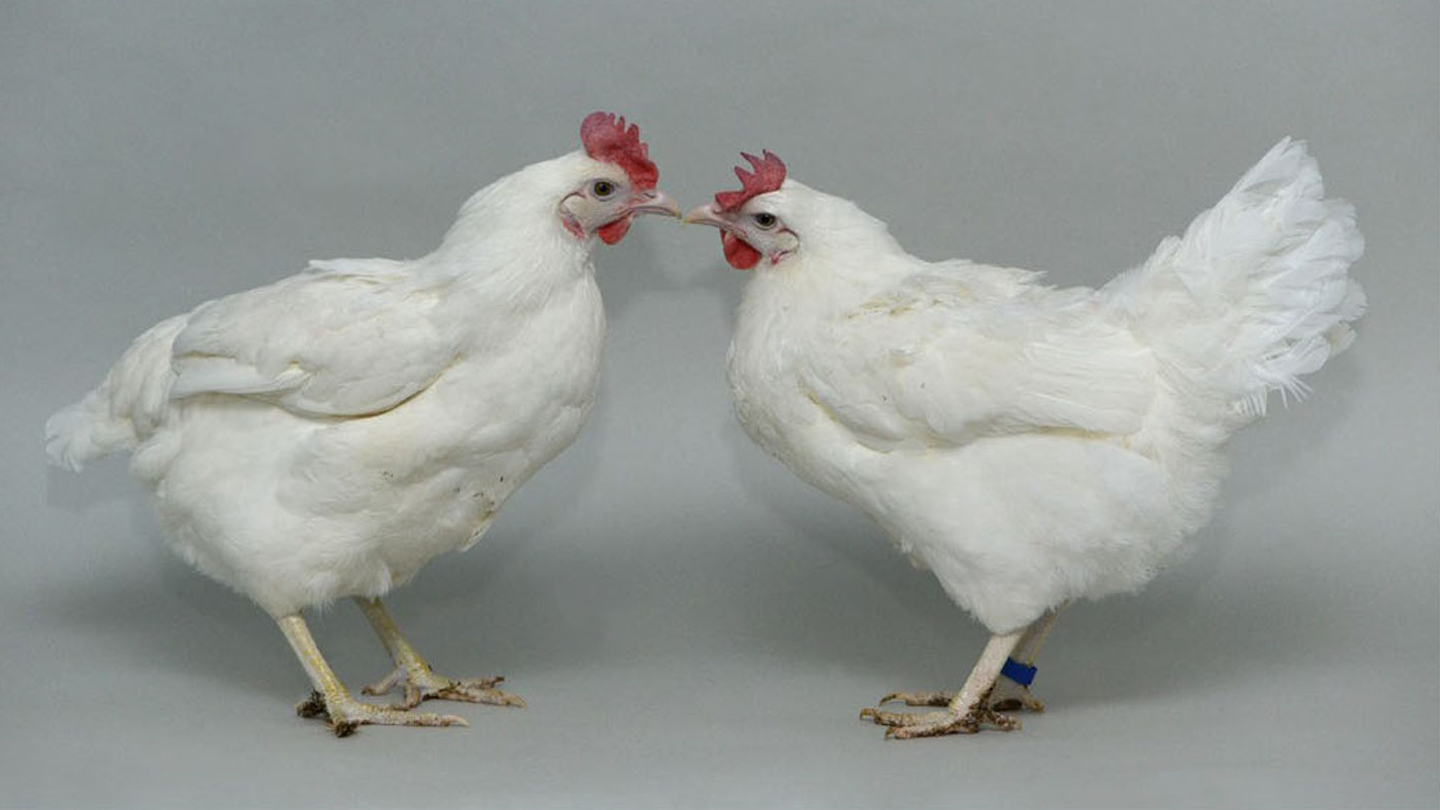
Picture: Genetically edited chicken that is resistant to an avian influenza infection (right) and unedited bird (left).

A group of researchers recently created influenza A virus (IAV) resistant chickens using CRISPR/Cas9 to generate homozygous gene edited chickens containing two ANP32A amino acid substitutions that prevent viral polymerase interaction. The study saw 90% effectiveness in chickens with low exposure; however, higher doses resulted in breakthrough infections where the IAV was able to adapt and work around the one genetically modified gene. Additional genome editing to eliminate other ANP32 protein family members eliminated all viral growth in chicken cells. This data illustrates a proof of concept in the generation of IAV-resistant chickens and shows that multiple genetic modifications will be required in order to stop viral mutations from bypassing the genetic modifications. An issue that other scientists are worried about is that IAV is a quickly mutating virus and the battle of genetic engineering will be constant (I refer to this as "job security"). There is likely not going to be one solution, but numerous that have to be implemented all at once and changed depending on viral variations. This method would also need to be used to modify other genes for other avian flus in order to prevent other dangerous strains. Creating healthier livestock is just one goal of this kind of research, the other is to prevent avian influenza viruses from mutating into a disease that can affect humans. In protecting livestock, human exposure to the virus should decrease. In a similar manner to the low doses in chickens not being able to adapt to create breakthrough infections, if human exposure is low there should be little chance of breakthrough cases. Since the virus is in wild bird populations, the spread of the disease is inevitable; however, by minimizing exposure, and maximizing resistance in chickens, people can ensure a safer future with fewer pandemics and more chicken nuggets.

I personally have no problem with eating genetically modified organisms. They do testing to make sure that the food won't hurt people, and to me genetic modifications are like selective breeding, but with less possibilities of making accidental monstrosities (like the pug) and reducing the time it takes to get the desired result. If GMOs are going to be necessary to ensure the health of livestock and people I welcome this kind of scientific development, though other people may not be as enthusiastic about it. In my personal opinion, I am more concerned with chlorine washes applied to chicken after butchering the bird than a gene changed to protect the organism from a virus.


https://www.nytimes.com/2023/10/10/science/bird-flu-chickens-crispr.html?auth=login-google1tap&login=google1tap

https://www.nature.com/articles/s41467-023-41476-3

https://www.sciencenews.org/article/gene-editing-chicken-resistant-bird-flu

Tuesday, May 4, 2021

CRISPR gene editing could reveal horrific downsides in embryos!

 CRISPR is a new experimental genome editing tool which is used to alter the genomes of embryos. In theory this could be amazing with its ability to predict and treat lifelong genetic defects prior to the child's birth! However due to many factors such as funding, regulation, and unwanted side effects the CRISPR method may be forgone! A preprint done on june 5th showed the accidental deletion of almost 22% of gene coding. Luckily this embryo was not used for the purpose of birth but simply for testing yet the results are outstanding! While the CRISPR genome editing tool has many uses and can provide many cures for diseases it is still far too experimental and is not safe for public usage!


CRISPR Can Create Unwanted Duplications During Knock-ins | The Scientist  Magazine®

Friday, November 27, 2020

GMO Babies

Subject: Human Gene Editing 

Article: ¨Strict new guidelines lay out a path to heritable human gene editing¨


    Scientists have already made gene editing possible, but then in 2018 Chinese scientist Jiankui He had announced he had created two genetically edited babies. Opening the doors to the possibility that the human genome could be edited. However scientists face the issue of having law preventing clinical trials as it's not something that is currently desired by society. If it were, countries would have to meet guidelines and would have to agree to being overseen internationally. Gene editing allows a DNA letter or base to be changed. Genome editing has allowed scientists to investigate inheritable human diseases and could even change physical traits but generally its useful in gene therapy. It is currently undergoing trials to possibly gene edit sickle cell anemia which is a mutation of the blood cell.  


    How gene editing works is by using tools like CRISPR/Cas9 and engineered proteins called TALENs to locate the precise base or area where the change or edit will occur. So far gene editing has been successful in trials with animals such as mice, but when it comes to a human embryo there is still uncertainty. Changing the DNA during the embryonic state or prior to that would allow for such changes to be inheritably passed down. Commissions are arguing that to prevent the craze for a fashionable baby otherwise known as the ¨designer baby¨ which would have desirable tightening of intellect, athleticism etc, it should be considered to help couples produce an offspring without disease causing variants. Things that are being considered is how serious are the illnesses, and what are the chances of producing offspring with the genetically inherited mutation. Until then more research is needed to determine if stem cells could produce egg and sperm dishes in labs that would result in embryos with non carrying diseases. As well as international commissions overseeing clinical tests and technological engineering that could make this possible.


Article Link: https://www.sciencenews.org/article/human-germline-gene-editing-crispr-strict-new-guidelines 

Supporting Link(s): https://www.genome.gov/about-genomics/policy-issues/what-is-Genome-Editing 

https://www.jax.org/personalized-medicine/precision-medicine-and-you/what-is-crispr 

Main Source: https://www.sciencenews.org/topic/genetics

Monday, December 3, 2018

Implications of Jiankui's Genetically Modified Babies


The latest news in genetics comes out of Shenzhen, China where an associate professor of bioengineering at the Southern University of Science and Technology, He Jiankui, claims that two little girls are the world’s first genetically edited newborn babies. Using CRISPR, Jiankui has modified the babies’ genes to make them resistant to infection from HIV. The father of the babies is said to be positive for HIV. As of November 27th (the date of the article), there was no data to demonstrate how this experiment took place but is said to speak on more on the topic. The University has condemned the topic and even issued a statement saying that they had no idea that the project was going on.


How HIV infects cells via CCR5


In a Youtube video, Jiankui claimed that he used CRISPR to disable CCR5, a protein receptor that allows HIV to infect blood cells. On specific mutation, Delta32, disables HIV from locking onto the cell. In theory, if all individuals carried this mutant allele, then nobody would be able to get AIDs from HIV. CRISPR has been used in the laboratory for many situations, like eliminating diseases and improving the health of different crops. This technique, though, has never been used on human embryos, and therefore the results are unknown. One major problem is that CRISPR can cause off-target mutations to genes away from the target genes, and therefore can have many other implications.

Many companies are already looking to gene therapies in adults to edit the CCR5 cells in adults. In theory, scientists would remove blood from HIV positive patients, delete the CCR5 protein and return the cell back to the patient. It seems like every action has a reaction, and in this sense, getting rid of the CCR5 protein would increase susceptibility to West Nile virus, which is already seen in the real world when individuals are born without the CCR5 protein. Overall, Jiankui wrote a piece that discussed the core principles in the genetic editing of human embryos.

I am very interested in ethics in relation to science, and especially in relation to genetic editing. I believe that it should be interesting to see the effects of this experiment over time. I do not feel strongly for or against human genome editing or the idea of “designer babies”. If this experiment works and is able to basically eliminate HIV and AIDs ability to infect humans, think of what other uses human genome editing could have. Genetic cancers could be cured, and other genetic diseases could be edited. I think the use of genome editing for superficial purposes is unethical at this point in time. I think that the world has a ways to go in terms of being able to accept genetic editing and there will always be disagreement for it. Overall, the effects of this experiment will be interesting to see how it changes genetics forever, and it is so cool to see this monumental moment in scientific history.

Monday, November 20, 2017

Researchers are generating genetically engineered insects to help prevent the spread of infectious diseases

Researchers are generating genetically engineered insects to help prevent the spread of infectious diseases

                At the University of California, researchers are genetically engineering mosquito DNA in order to disrupt cuticle, wing and eye development.  This has led to the production of completely yellow, three-eyed and wingless mosquitoes.  This will make it harder for them to survive.  They wish to use Cas9- expressing mosquitoes with gene drive to insert and spread genes that suppress them while avoiding them developing a resistance.  This genome editing is very important as scientists want to prevent mosquitoes from spreading pathogens.  It has not worked in the past due to low mutation rates, poor survival of edited mosquitoes and inefficient transmission of disrupted genes to offspring.  Mosquitoes are known carriers of dengue, chikungunya, yellow fever and zika viruses.  They are also continuously becoming resistant to commonly used pesticides. 
                This research is very important as the elimination of mosquitoes would stop the spread of such awful disease.  Mosquitoes are hated for this reason and the fact that they are so irritating.  I would be thrilled if this science works and am excited to see the demise of their species.  I attached another article about the effects of the zika virus which has come to light in recent years. 


Friday, November 18, 2016

Genome editor CRISPR could put mutant mice in everyone's reach

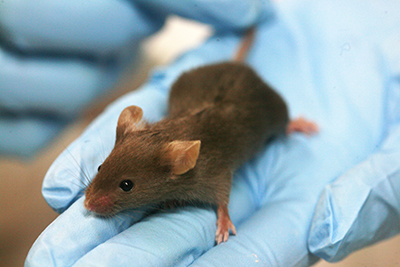
    Jackson Laboratory in Bar Harbor, Maine, genetically engineers model laboratory mice which it sells to researchers under the brand name JAX mice. Conventional development of new and modified mice strains for specific research has long relied on the laborious and multi-step process of small modifications to embryonic stem cells over the course of several generations. This process, which generally takes up to 2 years, is now being replaced by the CRISPR method of modification.
    Using CRISPR, a targeted "genetic surgery" may be conducted on a fertilized egg. The length of time necessary to create a modified strain has been cut down to 6 months. These genetically engineered mice, modified to "knock out" or "knock in" genes are employed as key research models for diseases such as alzheimer's, osteoarthritis, muscular dystrophy, and Parkinson's.
   
   CRISPR has also significantly reduced the cost necessary to modify mice. Tak Mak, of the University of Toronto in Canada, who was also a pioneer in the mouse-mutating business, estimates it's about 30% cheaper to engineer a mouse with CRISPR instead of ES cells. At prices up to $20,000 USD for a custom mouse strain from JAX, this price reduction, as well as the remarkably easy technique, has the potential effect of opening up smaller labs to simply modifying strains themselves. 
    An international consortium consisting of a number of model mice development companies, including JAX, is currently working towards knocking out all 21,000 mouse genes, one by one, in order to reveal their function. The US National Institute of Health is so impressed by CRISPR's cost and ease of use, that it no longer funds consortium investigators to use embryonic stem cells. 
    CRISPR, as well as further developments in genome editing and synthetic biology, are my primary area of interest. I hope to find a career in which I may be able to work with and learn more about these systems. 

Monday, February 15, 2016

Altering The Human Embryo


  As reported in The New York Times, the Human Fertilization and Embryo Authority has approved British developmental biologist, Dr Kathy Niakan’s application to alter human embryos through the use of a genome editing technique called Crispr.  This process involves cutting and pasting operations onto DNA with precision.  Embryos that will be used in this experiment are extra remaining embryos generated from fertility clinics.  This technique has the ability to alter the human germ-line through alterations of the egg, sperm, and embryo.  It is also known in principle that these genes can be inherited by future generations.  However, what side effects or consequences of altering the human germ-line is unknown.  Although Dr. Niakan does not intend to have these embryo's implanted, and only performing these operations for better knowledge of human biology; the possibilities, and consequences are overwhelming.  The variables of uncertainty is dangerous to phantom.
  The research may pave way to understand infertility problems, early miscarriages, or genetic repair of defected genes.  It may also, cause unprecedented changes to the human germ-line that may or may not be a threat or harmful.  Due to these reasons, editing the human embryo research has been restricted in many countries including here in the U.S, Britain, and China.  Many fear ethical issues may arise and would argue that it is unethical to change pick and choose the future of a developing life based on their genetics.  That every life has the right to live in this world regardless of their differences and form.  However, if you knew through genetic testing that your child may suffer from a disease or you that you have a genetic defect that would prevent childbirth; would bringing that child into a world of suffer be a better choice or treat them at development in hope for a better life for them.  
  If editing a gene would cure the defect of miscarriages, consider the lives saved as oppose to no editing occurred and miscarriages continued.  Of course their will always be a risk to any new idea or technique.  However, if risks aren't taken, how will we know if these new ideas or techniques work or not.  If this study improves our knowledge and may possibly provide a breakthrough to major discoveries without taking or harming a life; I feel it is ok.  

Monday, November 2, 2015

Researchers Discover a Way to Produce More Red Blood Cells


As a result of the shortage of blood supply in blood banks, scientists found a way to use stem cell techniques and genomic editing that cause red blood cells to grow rapidly. According to a new TIME article, Dr. Vijay Sankaran and his colleagues took blood stem cells and conducted genetic surgery to find a specific gene that is linked to lower red blood cell production. Then they were able to turn off this gene and allow more cells to be produced. "The process of surgically altering the gene in question and coaxing the stem cells to develop and produce blood cells, resulted in a tripling of the number of red blood cells compared to control stem cells that were simply allowed to grow in a lab dish."

This is a huge discovery in genetics and health because the process could be improved upon to create more blood cells for medical procedures that require transfusions. I know if scientists further this research and continue to perform genetic surgery to alter genes, there will be incredible advances within medical care in curing chronic conditions. If we could alter a gene to produce more cells, it could be possible to alter them to stop producing the cells. Imagine where that could lead us in cancer treatment and could even replace invasive chemotherapy. This is the beginning of major findings in the human genome and the power we have to manipulate it.