Showing posts with label bioinformatics. Show all posts

Friday, October 31, 2025

Teaching AI to Edit Genes: The Next Steps in Genetics

    Recently, researchers at Stanford Medicine announced a fascinating development: a large language model called CRISPR-GPT designed to assist scientists in creating gene-editing experiments.

    One of the biggest hurdles in gene therapy is designing safe and effective edits by choosing the right target sequences, avoiding off-target effects, and ensuring accurate delivery. By introducing AI as a “copilot,” this study suggests that workflows could become faster and more efficient, potentially lowering the barrier for labs that are not experts in every step of the CRISPR process.

    From a genetics perspective, this is a major step forward. Gene editing, especially through CRISPR-Cas9, has progressed from proof-of-concept experiments to clinical trials for various genetic disorders. Adding AI introduces a new layer of precision and accessibility. However, it also raises ethical and regulatory questions: as gene editing becomes easier, how can we ensure it is used safely and responsibly?

Some questions I had while reading:

  • How accurately can the AI anticipate off-target edits or unintended genetic consequences?

  • Could this make human genome editing more common in labs with less supervision?

  • How does this relate to what we have learned about DNA repair and gene regulation. For example, how cells respond to double-strand breaks introduced by CRISPR?

    Overall, this article highlights an exciting intersection between genetics and artificial intelligence. It pushes us to think beyond what we can edit to how we can edit responsibly and efficiently.

Tuesday, April 30, 2019

The Only Bad Thing About Summer

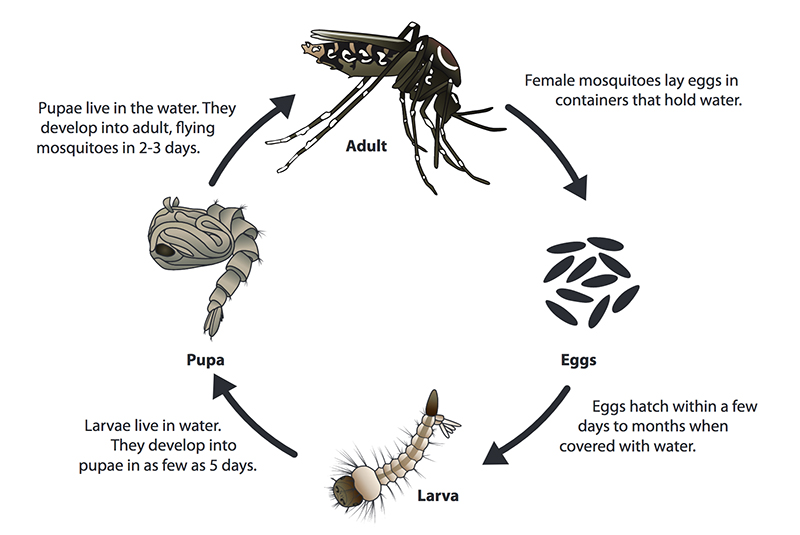
An article was published by Science Daily, which summarizes a research study where a discovery was made which could save thousands of lives. The study was conducted by a team of researchers from the University of Arizona led by Jun Isoe. The report was published in PLoS Biology January 8th 2019. During this study, the researchers searched for genes which were exclusive to mosquitoes. To execute this task they utilized a technique known as bioinformatics. Through this process they discovered proteins which were unique to only mosquitoes. This was a crucial discovery due to the current pesticides on the market being non specific and killing off beneficial insects such as honey bees. 40 proteins were discovered, however only one contained the capability of effecting reproduction. They named this protein Eggshell Organizing Factor 1 (EOF-1). The name stemmed from its function during eggshell synthesis. RNA interference was used as a means of inhibiting this protein function which led to a unsuccessful eggshell formation resulting in death of the embryo. After further testing it was confirmed that the creation of a drug which targets EOF-1, would be an effective pesticide which could prevent the occurrence of diseases spread by mosquitoes.
It is safe to say we all hate mosquitoes. Unlike virtually any other insect, there are no friends lovers of mosquitoes. However, there is information which could pursued one to not wish to completely eradicate them. Although pests and even deadly to humans, certain plants and animals utilize mosquitoes for survival. That being said, I believe funding and research should be increased in this area especially for the purpose of eliminating the mosquitoes which are vectors for disease. 

Sunday, March 24, 2013

DNA may be the future of tech memory storage

Researchers at the European Bioinformatics Institute in England, studying bioinformatics and engineering, have discovered the amazing memory capacity of synthetic DNA. The researchers were able to store 5 files within the DNA that amounted to 750 kb of data. Furthermore, due to DNA's relatively low price, it shows promise in the future for low cost memory storage. To store the DNA, researchers converted the 5 files of choice into bits, and then continued to code them genetically using ACGT; once the files were coded, it was sent to scientists at Agilent Technologies in Santa Clara, California to then be converted into millions of molecules of DNA. The DNA was then able to be translated back into data after it was sent back to England; although it isn't likely that this technology will be used recently, within a decade it will be capable of storing enough memory for approximately 50 years.

I believe that this could also be the future of bio-memory devices; or any type of implantable device into a biological organism that is able to store memory. This could hold endless possibilities for us as a species; with limitless memory storage, many different tasks and memories could be called upon at great efficiency. Furthermore, since the study describes the extreme low cost of this synthetic DNA, memory storage in electronic devices may also be limitless in the future - no more external hard drives, and no more concern of ever-decreasing memory space on computers, phones, and video game consoles. Hopefully this research is funded immensely in the future and we are able to reap its benefits within our lifetime.