Showing posts with label biotechnology. Show all posts

Friday, December 5, 2025

Inside the 2025 Cell & Gene Therapy Inflection Point: Industry, Access, and Innovation

       The 2025 Cell & Gene Therapy Report highlights not only the incredible scientific advances in gene therapy but also the complex challenges that come with them. Beyond breakthroughs in CRISPR and viral vectors, the report emphasizes critical issues such as payer and reimbursement hurdles, patient access, manufacturing scale, and the growing role of oncologists in delivering these therapies (Targeted Oncology). As noted by TechTarget in 2025, systemic gaps (including restrictive prior‑authorization policies, limited infrastructure, and fragmented access pathways) continue to hinder the broad adoption of CGTs. These factors illustrate that the promise of gene therapy is not determined solely by scientific innovation, but it also depends heavily on the systems and infrastructure that bring these treatments to patients.


    From a genetics perspective, much of the classroom focus tends to be on the science itself, like how genes can be edited, replaced, or repaired. However, the real-world translation of these therapies requires attention to the broader system. Manufacturing capabilities, regulatory policies, therapy costs, and access barriers all influence whether a groundbreaking treatment can actually reach those who need it. This emphasizes the importance for scientists and healthcare providers to understand not just the molecular techniques, but the practical and systemic factors that impact patient care.

    For future healthcare professionals and science communicators, this report is a strong reminder that understanding gene therapy involves more than just “what it does.” Equally important is recognizing “who it reaches” and “how it is paid for.” Considering the health-system factors can inform better policy decisions, guide clinical practice, and ultimately improve patient outcomes.

Resources 

Targeted Oncology. “2025 Cell and Gene Therapy Report Looks at Industry Challenges, Access, and Innovation.” Targeted Oncology, 2025, https://www.targetedonc.com/view/2025-cell-and-gene-therapy-report-looks-at-industry-challenges-how-to-expand-nationally

TechTarget. “Systemic Gaps Hinder Cell and Gene Therapy Adoption, Access.” TechTarget, 2025, https://www.techtarget.com/pharmalifesciences/news/366623704/Systemic-gaps-hinder-cell-and-gene-therapy-adoption-access

Friday, October 31, 2025

Teaching AI to Edit Genes: The Next Steps in Genetics

    Recently, researchers at Stanford Medicine announced a fascinating development: a large language model called CRISPR-GPT designed to assist scientists in creating gene-editing experiments.

    One of the biggest hurdles in gene therapy is designing safe and effective edits by choosing the right target sequences, avoiding off-target effects, and ensuring accurate delivery. By introducing AI as a “copilot,” this study suggests that workflows could become faster and more efficient, potentially lowering the barrier for labs that are not experts in every step of the CRISPR process.

    From a genetics perspective, this is a major step forward. Gene editing, especially through CRISPR-Cas9, has progressed from proof-of-concept experiments to clinical trials for various genetic disorders. Adding AI introduces a new layer of precision and accessibility. However, it also raises ethical and regulatory questions: as gene editing becomes easier, how can we ensure it is used safely and responsibly?

Some questions I had while reading:

  • How accurately can the AI anticipate off-target edits or unintended genetic consequences?

  • Could this make human genome editing more common in labs with less supervision?

  • How does this relate to what we have learned about DNA repair and gene regulation. For example, how cells respond to double-strand breaks introduced by CRISPR?

    Overall, this article highlights an exciting intersection between genetics and artificial intelligence. It pushes us to think beyond what we can edit to how we can edit responsibly and efficiently.

Sunday, November 26, 2023

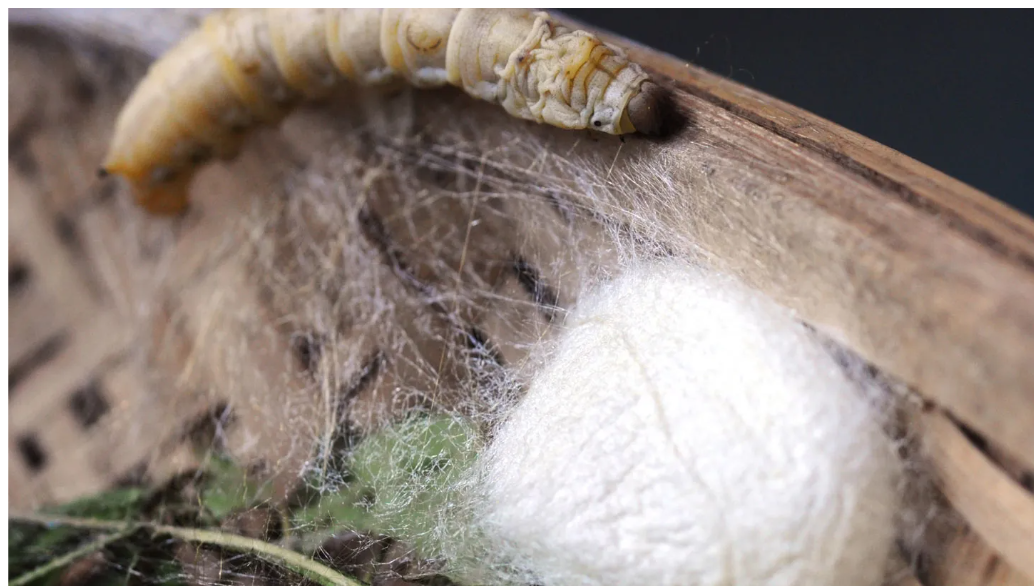
Genetically modified silkworms produced pure spider silk

 Genetically modified silkworms produced pure spider silk

        Researchers from China have successfully used CRISPR/Cas9 gene-editing to modify silkworms to produce spider silk, a material known for its strength and toughness. This breakthrough spider silk, while not as strong or stretchy as natural spider silk, is significantly tougher than Kevlar and could have applications in medical sutures and bulletproof vests. However, challenges remain in mass production, including ensuring the genetic modifications are stable over generations and maintaining the health of the silkworms, which are vulnerable to infection and produce varying quality silk. The second article confirms that the silk of spiders is composed of thousands of nanostrands, each only 20 millionths of a millimeter in diameter, which could lead to advances in creating new materials for medical (such as sutures) and engineering applications.
This article is a remarkable example of how genetic engineering can create materials with enhanced properties for practical applications. The fact that this modified silk is tougher than Kevlar yet potentially suitable for medical use like sutures demonstrates the versatility and potential of biologically engineered materials. However, the challenges in mass production and ensuring consistent quality due to silkworm vulnerability highlight the complexities involved in mass producing spider silk. Modifying the genetic structure of silkworms may result in unexpected health problems or distress since their bodies are not inherently adapted to create such material. In addition, it’s important to remember that silkworms are living organisms and while technologicalmass-producing advancements are important, we should remember the consequences of turning these organisms into such biofactories.


https://www.sciencenews.org/article/first-genetically-modified-silkworms-spider-silk

https://www.science.org/content/article/spider-silk-five-times-stronger-steel-now-scientists-know-why

Monday, October 2, 2023

Gluten-Free Wheat?

Who would've thought gluten-free wheat could become a reality...


    A recent article published in July 2023 by the European Union details plans to utilize genomic techniques to alter the genome of an ingredient found in many of our delicious foods: wheat. Those with Celiac Disease and gluten-intolerance have been struck with the unfortunate loss of eating wheat-containing foods, and at an unfortunate price (almost 200% more than what the average person spends on food/groceries). For reference, gluten is a protein found in wheat, which those who are sensitive to/allergic to gluten cannot consume. Recently scientists in the EU; however, have proposed using cisgenesis -- a method to cross beneficial alleles from one plant to another -- to not only make wheat grown in the EU gluten-free, but also pesticide free as well. This is an immense step forward in the field of economic agriculture and the environmental well-being of citizens everywhere, as food for those who are gluten-free can become more affordable and levels of pesticide toxicity will slowly cease to impact those in the EU, in addition to the rest of the world who consumes their agricultural products. Cisgenesis has greater implications than just gluten-free wheat and pesticide-free plants, and as a matter of fact, this is what humans have been doing for centuries, except it has now become more mainstream due to pertinent implications in our everyday lives. 

    As someone with Celiac Disease and (unfortunately) not living in the EU, I found this article to be really promising and I am secretly hoping the U.S. starts taking some notes. I personally like this approach of utilizing genomic techniques that are not harmful like some GMOs, and don't require the introduction of chemicals into the food we consume on a daily basis. The European Union has clearly thought this decision out, and I appreciate that they have considered the economic burden of this autoimmune disease as it is not really discussed in the media. Having this representation makes those of us with Celiac more inclined to speak up and condone the improvements being made on the agricultural forefront. As I mentioned previously, the United States should truly consider implementing this in our domestic crops, especially considering how expensive gluten-free food is (for reference, try buying a $10 loaf of bread that needs to be frozen, with only 10 slices, and half of which have holes in them so they become useless anyways...doesn't sound so appealing, right?). I also believe this becomes a public health concern due to 1) the prevalence of the disease and 2) the food available and the affordability factor that comes with it. The EU is taking things in the right direction, and I can only hope that the U.S. will consider using similarly effective genomic techniques in our wheat sometime soon! 


To read up more on this topic:

1) https://joint-research-centre.ec.europa.eu/jrc-news-and-updates/new-genomic-techniques-can-help-cut-pesticides-use-or-shield-celiac-disease-2023-07-05_en 

2) https://www.frontiersin.org/articles/10.3389/fpls.2014.00389/full

Friday, July 7, 2023

New Genomic Techniques can make agricultural production more sustainable


NGTs (New Genomic Techniques), are methods for creating targeted mutations in the genome of living organisms. An example is CRISPR/Cas9, which allows for precise editing of DNA on the level of individual units of genetic code. The precise editing by NGTs allows for rapid results over traditional methods, which can be useful considering that plant diseases are spreading due to climate change. The difference between a GMO and an NGT is that the makeup of a GMO has been modified using biotechnology to create a desirable product. NGTs do not have any foreign genetic material, just an edited version of their original genome.

A few examples of plants produced using NGTs are salt-tolerant rice varieties and virus-resistant cassava. NGT crops can increase yield and reduce the need for harmful insecticides, which would increase sustainability in agriculture overall. There is precariousness around the idea of releasing new genetic traits into nature. The unknown effects that NGT has on wild crops. Some may be more welcome to NGTs, because the mutations like this occur naturally, unlike GMOs. Many countries are treating them differently as well when it comes to regulations. In my opinion, with a rapidly growing population, we have to start introducing these biotechnological methods to feed everyone on our planet.


Tuesday, November 17, 2020

CRISPR leading to unwanted genetic effects in embryos


Picture taken from the New York Times: "Scientist working with Crispr-Cas9"


This article brings up a crucial point in researching Crispr-Cas9: "We often hear about the successes, and not the failures". This article explains how in a study that was conducted, Crispr-Cas9 was used to extract the mutation of interest and fix the remaining DNA strand. However, the cell was unable to repair itself the way it was intended and cut out and left out crucial chromosomal DNA. This discovery that Crispr-Cas9 had this effect on manipulating human embryos raises a lot of concern. It continues to urge scientists that being able to use Crispr-Cas9 to alter embryos is far away. Scientists need to take their time in order to fully understand the abilities and defects of Crispr-Cas9 . While there are some scientists that believe that this may not have been a "deletion" but rather a "mutation" it still raises large concern due to the fact that it seems to be an unpredictable outcome at this point. Research on the effectiveness of Crispr-Cas9 is ongoing and scientists believe that it will be a while before we can fully understand its capabilities. 

    Crispr-Cas9 has been a hot topic in the science community and often raises concern. While most people believe that it can be used now for specific treatments, I believe that as scientists we should still err on the side of caution when it comes to manipulating the human genome. While there are very specific treatments that are available where it has a high success rate, we still do not know everything that Crispr-Cas9 has to offer and the effect it may have long term. In this article, it allows people to see that while Crispr-Cas9 can be successful, it can also do permanent and fatal damage. Large deletions or mutations in chromosomal DNA can lead to life threatening alterations and possibly embryonic death. While Crispr-Cas9 is amazing technology, "we have to learn how to walk before we can run". 


Articles: NYT Article and Journal including the study

Sunday, October 6, 2019

China’s First Cloned Kitten, Garlic

Link to article: chinas-first-cloned-kitten--garlic-66400
Supporting article: china-cat-clone.html

This article talks about a man who paid to have his kitten cloned after it passed away. There have been pen cloning operations done at the biotechnology company Sinogenes since 2016 for about $35,000 per cloning. "They used the cells, along with the eggs harvested from other cats, to generate 40 cloned embryos." The scientists used four surrogate cats that resulted in three pregnancies, two of which ended in a miscarriage. After 66 days of the transfer of the embryos to the surrogate cat, a new Garlic was born with almost identical DNA to the original cat with a few fur and eye color dissimilarities. The company aims to use their technology to clone endangered species however they would have to use the somatic cells from the endangered species with the eggs of another species and that can not be successfully accomplished to technological barriers for interspecies cloning. In their future plans, the company is trying to transfer the original species' memories to the clone using artificial intelligence.


I think that the articles are very interesting. The fact that we had movies under the scientific-fiction categories discussing cloning less that 15 years ago is astonishing. The new technological and scientific advances that are used this operation definitely proves that humans have come a long way to understanding how nature works and how to alter it to benefit humanity. However, I disagree with this usage of our knowledge and power. It is absolutely inhuman and cruel to use animals as a tool disregarding their emotional and physical pain from having these operations done. As said by the article, we also don't know the long term affects these cloned genes could have on their specie's gene pool. Individuals are born and then they die and we need to accept that without fighting nature because at some point it will unavoidably backfire.


Tuesday, May 14, 2019

Use of Stem Cells for Surgical Glue

Science Daily recently published an article discussing the research which was originally published in Nature Communications. This research was conducted by scientists at the University of Bristol. Dr. Adam Perriman directed the study which led to the advancement of surgical glue. This new technology involved modifying the membrane of human mesenchymal stem cells (hMSCs) with the enzyme thrombin. When these altered cells were combined with fibrinogen, which is found in the blood, they were observed to fuse together. This fusion occurred through the mechanism of a hydrogel on the surface of the cells. The success of this experiment was the solution to a big problem within cell therapies. It is unfortunately common for cell transplantations to fail, however this new technology equipped cells to grow an artificial extracellular matrix which provided them increased protection.

This amazing technology would decrease the time a wound takes to heal considerably. The use of cell therapies for surgical procedures also has the possibility of reducing post surgical infections from a wound which is not sealed efficiently. Reducing the number of hospital acquired infections would allow doctors and resources to be utilized elsewhere. In addition to being used as a welding technology, this invention could open the door for many other new biotechnologies.

Sunday, April 7, 2019

Scientists Genetically Engineer Yeast to Improve the Understanding of How a Cell Works


  Researchers from the University of Cambridge and the Imperial College London have genetically modified yeast cells to help scientists control how the cells will react in certain environment and make the yeast cells react in a suitable way. Yeast was chosen because it has been shown yeast and human cells are have very important similarities. The most important trait they both have is that they sense their environment using G protein-coupled receptors (GPCRS). GPCRs are receptors that enable a cell to sense chemicals in their environment like hormones or drugs. So scientists believe that if they can understand in detail how the GPCRs mechanism works in the yeast cells they can then understand how the proteins work in humans cells. This will then have a huge impact on medical research because scientist then can in theory modify a human cell that is diseased and make that diseased cell function properly.  


Saturday, November 10, 2018

Advancements in Biotechnology Forward Discoveries of Regeneration in Frogs

Regeneration is a complex topic that truly involves intricate unsolved processes and is way more than just what meets the eye in beloved science fiction novels. Nevertheless, what has once seemed unattainable, has now become a plausible reality for the distant future. Researchers from the Allen Discovery Center at Tufts University had created a device that is responsible for the partial hindlimb regeneration in the species Xenopus laevis. Due to this, this aquatic African frog species may now become one of the prime models for testing newly developed cell-stimulating therapies.
In order to induce tissue repair at the amputation site, a team of scientists used a 3D printer to construct a bioreactor made of silicon. This structure was then filled with a hydrogel that was laced with silk proteins and progesterone. The combination of the three produces a thick substance filled with polymers that promote healing, regeneration, and nerve and bone tissue repair. 
The researches then conducted an experiment where the bioreactor was applied to the experimental group of frogs immediately after amputation. The results of the study allowed them to conclude that frogs from the experimental group resulted in bigger and more structured appendages than those in the control group. Upon further analysis and RNA sequencing, it was reported that the application of the bioreactor at the amputation site resulted in altered gene expression of the cells in that specific area. Additionally, collected observation of the frogs revealed that those from the experimental group had swimming techniques that most closely matched frogs that did not undergo amputation.

From reading this article, it provides one with a bright outlook for the future. As a next step, the researchers plan on implementing this work within mammals as the next. In doing so, I feel as if that will give crucial information as to whether or not this experiment could truly further the path towards a more wholesome regeneration of larger structures such as entire limbs. Unfortunately, as of now many species with regenerative properties are mainly aquatic. However whether successful in mammals or not I feel as if this experiment remains beneficial for it helps forward discoveries in techniques used for cell therapy.

Resources:

Monday, July 30, 2018

As D.I.Y. Gene Editing Gains Popularity, 'Someone Is Going to Get Hurt'

DNA tinkering has become viral now that the technology is cheaper and more accessible. Anyone can perform gene editing in their homes. This, however, has led to misfires. For example, a biotech executive injected himself with a herpes treatment that was supposed to cure him, but it ended up increasing the amount of virus in his system. This is dangerous because of the fact that anyone, especially non-scientists, can gene edit and not know what will happen; things can go drastically wrong. Or, even worse, they can create a bioweapon. The University of Alberta already created horsepox, a relative of smallpox. Experts fear that the more skill amateur biologists acquire, the more they will be a threat because of the increase in today's world abuse.

I believe that everyone should have the right to experiment on genes, but at the same time, I believe that only biologists/experts should because of how dangerous it is to create new DNAs. People might also use it for the wrong reasons.

Monday, May 1, 2017

The elucidation of fungal bioluminescence


Recent work has led to the understanding of the chemical pathway of light production in bioluminescent fungi. Science has uncovered the processes in bioluminescent insects, bacteria, and marine animals but until now, have yet to reveal the pathway in fungal bioluminescence. There are approximately 80 species of fungi that express bioluminescence. This work has detailed the luciferin substrate, the luciferase enzyme, and the light emission by oxidation into oxyluciferin. Because of the scientific importance of bioluminescence application in the study of biology, this work can help to elucidate other biological processes. Fungi play an important role in the biogeochemical processes on earth and investigations such as this may lead to a better understanding with the applied use of possible biotechnology. With genetic sequencing of these fungi, the biochemical pathway may be used for other purposes yet to be revealed.


Article:


Popular News Article:


Video:


Wednesday, April 13, 2016

Changes in Genetically Modified Agriculture

Up until 1996, farmers were steadily increasing their production of genetically modified crops.  However, genetically modified crops have been a highly controversial part of the agricultural industry.  For the first time, in 2015, the amount of land used for genetically modified crops has declined.  Farmers reported low prices on the genetically modified crops, and in turn planted less corn, soybeans, and canola.  These three crops, along with cotton, account for the majority of genetically modified agriculture.  Consumers and environmental groups, however, have taken a strong stand against genetically modified crops.  This has hurt the biotechnology industry that takes care of genetically modified crops.  In 2015, genetically modified seeds were planted across 444 million acres - a 1% decrease from the 448.5 million acres in 2014.  While the decrease is small, it could be the start of a movement for organic crops.  


Genetically modified plants offer a variety or pros and cons.  They are cheaper to produce, and more genetically modified crops can be harvested at a single time.  One type of genetic modification, known as selective breeding, has been employed for ages.  Humans actively selected favorable traits in organisms and bred them together for more "perfect" organisms.  However, gene transfer is a more controversial method.  It involves the cutting of the plant's gene and the insertion of another gene into the plant's genomic sequence.  The modification has caused individuals to have allergic reactions, and it is thought that some of the proteins could be toxic.  

I think moving away from genetically modified foods comes with benefits and downfalls.  Quality organic foods are more expensive, and it would be difficult to move over to organic altogether.  There would be less accessibility to quality food, which would hurt the entire population.  However, without genetic modification, food may actually be safer.  Either way, the 1% decrease in genetically modified acreage is not devastating to the biotechnology industry.  Genetically modified foods look to be here to stay for quite some time.  

Tuesday, April 12, 2016

DNA Data Storage


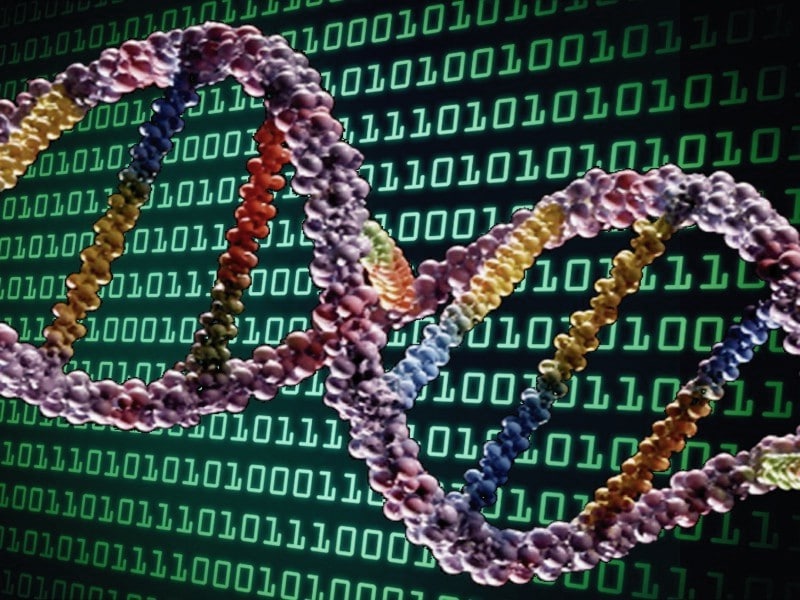
A recently published article in the New York Times discusses new research involving computer data storage.  Two recent experiments involving teams from the University of Washington and Microsoft, as well as a separate group at the University of Illinois, have shown that DNA molecules can be the basis of an archival storage system.  This system could potentially have the capability of storing all the world's digital information in only nine liters of a solution!  This new technology would allow retrieval of specific digital files in an immense amount of data.  This vast amount of information has the potential to last for thousands of years.  This length of time is a huge benefit in comparison to current microelectronic data systems because they can only store data safely for several decades.  This storage capacity will be essential to keep up with the exponential growth of digital storage needs in the technological age.
 The raw data storage capabilities of this technology are incredible and are completely unfeasible even with the most advanced electronic magnetic storage systems. The researchers theorize that DNA could store up to an exabyte of data in the volume of a grain of sand. Douglas M Carmean, a researcher from Microsoft said, "In the last year, it suddenly hit us that this fusion of  computer technology and biology will be where future advances come from." The ingeniousness of DNA data storage is that scientists exploit the self-assembly nature of DNA replication, essential for life in living organisms.
The scientists admit that there are technological advancements that must occur in order to write the information in DNA, but they say that the technology is improving quickly.  A current issue with the technology is that data retrieval is "snaillike" in comparison with magnetic storage.  In addition, the technology is still very expensive but Dr. Leproust says, "The cost of digital information in DNA will soon come down by several orders of magnitude." This new research is an exciting biotechnological advancement and almost sounds like something out of a science fiction movie.  The research is still new and there still needs to be further technological advancements but if Moore's law holds true then DNA data storage will be commonplace in the future.  This type of research is exciting and makes me appreciate how quickly the genetics field has progressed.

Thursday, January 28, 2016

3D-Printed Faces Constructed Using DNA

As mankind advances, so does technology and experimental methods. In New York City an artist named Heather Dewey-Hagborg has been able to created 3D-printed human faces using small traces of DNA collected from crowded public places. Hagborg is able to collect the human DNA from cigarette butts, chewing gum, and strands of human hair. She begins her process by taking the DNA sample she has collected to a biotechnology lab located in Brooklyn where she can then obtain the sequencing information. When this has been done she runs the information through a computer program and creates a 3D-printed model of the face using the DNA she found.

Hagborg with one of her 3D-printed models. 

However, creating the 3D models does have limitations. From the DNA sequence provided it is unclear of the person’s age and each model is not exactly identical to the person who’s DNA it was made from.

Hagborg’s main point in doing her project is that with today’s technology a single strand of hair can reveal someone’s genetic information. She believes that because of this, precautions must be taken regarding genetic surveillance as technology advances. 

From a forensic science viewpoint, I think that what Hagborg is doing could help improve forensic facial reconstruction.  With Hagborg’s method, those performing the facial reconstruction would not require a human skull and instead only need a single piece of DNA. While it is important to remember the 3D-printed face will not look exactly the face of the person the DNA was collected from, it could easily assist in identifying suspects in ongoing cases. In addition to known factors such as the age and height of a suspect, Hagborg’s method could aid in determining more about the facial profile of suspect being pursued.


This video briefly covers how facial reconstruction is currently done.


As far as genetic surveillance is concerned, I find it impossible to entirely protect your own DNA. Just walking down the street the average person sheds both their hair and skin. In addition to this, the average person also does not have 24/7 access to a 3D printer and biotechnology lab. Even if they did and could create models like Hagborg, what would they then do with the inaccurate model you created? If anything I find it disturbing that the Brooklyn biotechnology lab allows Hagborg to bring in the random DNA she has found with the intent to create a 3D model of the person’s face. Maybe if there is to be a movement to increase genetic privacy it should start with biotechnology labs preventing this sort of thing. 

Friday, January 30, 2015

Obama's Interest In Genetics


A recent article in the New York Times discusses President Obama's interest in a genetically modified approach to the entire healthcare system. Since the 1990's researchers have been collecting human tissue and bio logical specimens for research which are stored in biobanks. The intent is to now fill in the blanks are far as the population data is concerned to create health care treatment plans and preventative measures specifically designed (using genomics) to better serve society.

The budget plan is due to be released on Monday. The budget may include significant  financial support to the National Institute of Health, The National Cancer Institute, and the FDA which regulates the technology that analyzes DNA, in order to identify genetic variants that can help treat or diagnose a variety of illnesses.


The JDSupra Buisness Advisor also reported on this topic stating that "The overall goal of the Act was to realize the promise of personalized medicine by expanding and accelerating genomics research, to improve the accuracy of disease diagnosis, and to increase the safety of drugs and to identify novel treatments. "

In my opinion this could potentially open many doors to biological research and advances. My only concern is that our privacy and constitutional rights remain intact....


Tuesday, November 25, 2014

Biocircuits Could Be a Thing of the Future


     Progress on recent studies have shown that it may be possible to create a biological circuit, similar to an electronic circuit, that can deliver inputs and outputs. Researchers at MIT have found ways to reduce the unpredictability of these devices and have made them predictable similar to electronic circuits.  

     A potential use for these circuits would biosensing. Biosensing is when cells detect specific molecules in the environment and from that detection, a response is triggered. Developing something that could detect the presence of cancer cells would be ideal, because then an immune response to kill the cancer could be triggered from these circuits. You can read more on biosensing here.

     I believe the potential of this study is amazing and should definitely be looked into. Circuits haven't currently been designed for specific tasks like that yet, but once they are stable I'm sure bioengineers will find a way to do something useful for medical treatment with these. 

Friday, November 14, 2014

Bacteria the Future of Hard Drives

Engineers at MIT have transformed the genome of E. coli into a storage device.  To make the E. coli bacteria into a storage device, they had to engineer the cells to produce a recombinase enzyme.  This would allow them to insert DNA (or a sequence of DNA), which would only activate during certain circumstances or input.  After the DNA is activated, the bacteria would pass the information down to each generation allowing for long term memory. 

Timothy Lu, electrical, computer science, and biological engineer, explained the engineered bacteria has the potential to advance medical and environmental sensors. It could potentially detect increased carbon dioxide in the ocean, or detect infections/disease in humans.  This type of information could then expedite medical help; instead of wasting type determining the problem, a doctor could go straight to medical procedures.


The idea of using bacteria as storage devices for information is not new.  In fact using bacteria to store information was attempt in 2001 and 2007 with no success.  In 2010, Chinese Biochemistry students developed a way to use bacteria as a way to store electronic data.  They estimated they could use bacteria as a sort of “bio-hard-disk” to store up 900000 gigabytes, or 450 two terabyte (2000 GB) hard drives.  And because they are bacteria, they can reproduce and ensure the data is store permanently.  This could easily advance biotechnology further than it already has been.


Several  traditional  data storage devices. The one with the largest storage capacity in this group ...

Figure 2 The largest storage device has a capacity of 320MG.  Bacteria has more than 2800 times that.


The fact we have come so far as to be able to use bacteria as storage devices, is nothing short of incredible.  I knew were advancing further and further with bioengineering and biotechnology, but to see and read about its fruition excites me.  The advances we could make in the fields of technology, environmental, and medical sciences is amazing.  The two articles (one for technology and one for medical/environmental) show the scientific community is constantly advancing and working to make a better world.

Wednesday, November 12, 2014

U.S.D.A. Approves Modified Potato


     The U.S.D.A has approved a genetically modified potato created by the J. R. Simplot Company for commercial planting as announced on November 7th, 2014.

     A potato was genetically modified to reduce amounts of a potentially harmful ingredient. The Potato’s DNA was altered to reduce the amounts of acrylamide. Acrylamide is a chemical that is suspected of causing cancer when the potato is fried. As well as reducing harmful chemicals, this new potato also resists bruising. For financial reasons, this is a huge breakthrough.


     The company hopes that the new potato will not only benefit farmers but also the consumers. However, with the great discovery comes some negativity and questioning. The company fears that consumers will fear the safety of the GMO. A company well known by many, McDonalds has already rejected them. Many people fear GMOs because of the way they are genetically modified. However, unlike all the other potatoes, this specific kind does not contain the genes of any other species such as bacteria, like other crops do. This potato contains fragments of potato DNA that “silence” four specific potato genes that produce certain enzymes.

     “We are trying to use genes from the potato plant back in the potato plant,” said Haven Baker, who is in charge of the potato development at Simplot. “We believe there’s some more comfort in that.”

     I think this is actually a pretty cool thing. While I was unaware that GMOs contain genes of other species, it’s nice to know these potatoes will not. If the new potato can help farmers and consumers, I say why not. Plenty of crops are already genetically modified and since this specific GMO will do nothing except reduce bruising and reduce a harmful chemical, I think it’s a great idea and I think it’s great that it was approved.

Article: http://www.nytimes.com/2014/11/08/business/genetically-modified-potato-from-simplot-approved-by-usda.html?_r=0

Saturday, November 1, 2014

Ancient DNA Used to Understand Europeans Today

From the beginning of humans venturing out of Africa to different parts of the world changes in genetic composition have occurred. As their environment changed so did their genetic traits, and those who ended up in Europe were no different. Their skin and hair becoming lighter were the most obvious traits to have changed but many other traits also changed and this can be easily observed from looking at living Europeans today.  However, due to the advanced biotechnology which has now recently been harnessed it is possible to extract DNA from bones of Europeans who lived thousands of years ago.

David Reich, a geneticist at Harvard Medical School and his colleagues have analyzed nine genomes of ancient Europeans, eight of which were hunter-gatherers believed to have been living 8,000 years ago, and one farmer who is believed to have lived 7,000 years ago. Comparing the genomes to Europeans living today the researchers revealed Europeans today have genes from three different populations. The oldest population is the first Europeans who were hunters-gatherers, the second being farmers from the near east who expanded into Europe around 8,500 years ago, and the third, surprisingly, from north Eurasia about 7,000 years ago. Most Europeans today carry all three genes. Most exciting of the study is that now there is a timeline created, describing when and how other areas, such as the east, has influenced Europe.
A 7,700-year-old skeleton of a woman found in Hungary has yielded DNA. Scientists have found that she belonged to a wave of early farmers who moved into Europe from the Near East.

This article was particularly interesting to me because I found the results of the European genetics being influenced by the east interesting. Personally I would have thought that it would be the opposite due to Europe’s huge influence on the entire world early in time. I also am always interested in the techniques which can be used to analyze ancient DNA, although this article did not give much information and detail on the process. 
Article: http://www.nytimes.com/2014/10/30/science/from-ancient-dna-a-clearer-picture-of-europeans-today.html?ref=science&_r=0
Related Article: http://www.cam.ac.uk/research/news/ancient-dna-shows-earliest-european-genomes-weathered-the-ice-age-and-shines-new-light-on