Showing posts with label MIT. Show all posts

Friday, April 12, 2024

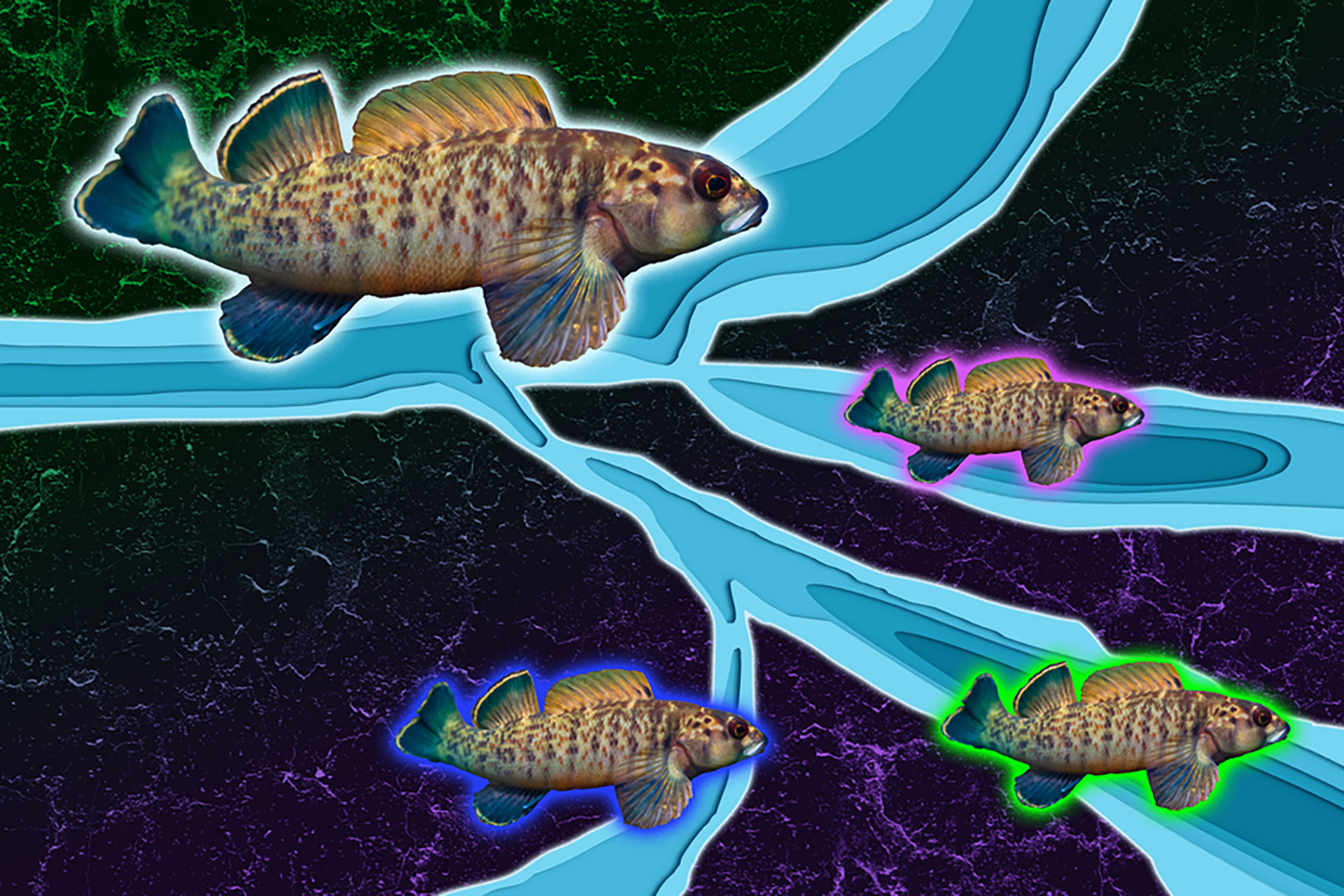
River erosion can shape fish evolution, study suggests


In this article by Jennifer Chu, the author discusses an MIT study which determined that river erosion can be a driver of biodiversity in tectonically inactive regions. They do this by pushing species of fish - in this study, the greenfin darter - into differing tributaries of a river over time. 

Researchers were examining the connection between geomorphology and biology when they discovered DNA sequences showing how and when specific species evolved and diverged in relation to each other. They created a phylogenetic tree with this data. They then developed a model to determine how the metamorphic rock shrank over time, taking note of when erosion blocked fish from passing between tributaries and discovered this timeline matched well with the phylogenetic tree. 

This study was very interesting to read about. As an environmental science major, examining how the environment has shaped evolution is always a pleasure. I find it especially fascinating that even fish that are from neighboring tributaries within the same basin are genetically different enough to nearly be considered different species. I also find it intriguing that fish from areas of differing geology within the stream were also distinct from each other. Nature is so cool!


Article: River erosion can shape fish evolution, study suggests

Additional Information: Study suggests river erosion can shape fish evolution

Sunday, April 10, 2022

An “oracle” for predicting the evolution of gene regulation


Researchers build a mathematical framework for examining the genome and detecting natural selection signs in order to comprehend non-coding DNA's evolutionary past and future. Researchers have been working on mathematical maps that allow them to look at an organism's genome, forecast which genes will be expressed, and estimate how that expression will alter the organism's observable features in order to better comprehend the consequences of such changes. These maps, known as fitness landscapes, were first proposed almost a century ago to better understand how genetic makeup effects one common indicator of organismal fitness: reproductive success. Fitness landscapes in the beginning were frequently relatively simple, focused on a small number of mutations. Researchers still require extra tools to classify and visualize such complicated data, despite the availability of much larger datasets. This capability would not only assist researchers better understand how particular genes have developed through time, but it would also aid in predicting future sequence and expression changes.
A group of scientists developed a framework for studying the fitness landscapes of regulatory DNA in a new study published in Nature on March 9th. They constructed a neural network model that, when trained on hundreds of millions of experimental measurements, was capable of predicting how alterations to these non-coding regions in yeast affected gene expression. They also developed a novel two-dimensional representation of landscapes, making it easier to comprehend the history and predict future development of non-coding sequences in organisms other than yeast, as well as construct specific gene expression patterns for gene treatments and industrial uses.
Many scientists have simply trained their models on known mutations (or modest variants thereof) found in nature prior to this work. However, Aviv Regev, an MIT biology professor, and her colleagues intended to take it a step further by developing their own unbiased models capable of predicting an organism's fitness and gene expression based on any possible DNA sequence, including sequences they'd never seen before. Researchers would be able to utilize such models to manipulate cells for medicinal objectives, such as novel cancer and autoimmune disease treatments.

McElvery , Raleigh. “An ‘Oracle’ for Predicting the Evolution of Gene Regulation.” MIT News | Massachusetts Institute of Technology, https://news.mit.edu/2022/oracle-predicting-evolution-gene-regulation-0311. 

McElvery, Raleigh. “A DNA ‘Oracle’ for Predicting the Future Evolution of Gene Regulation.” SciTechDaily, 13 Mar. 2022, https://scitechdaily.com/a-dna-oracle-for-predicting-the-future-evolution-of-gene-regulation/.

Sunday, July 7, 2019

Translating Proteins into Music

Researchers at MIT have developed a model to convert proteins into sound. After, by making variations into the music and converting it back to proteins, new proteins are made that have never been seen before. Researchers were able to convert the proteins into music by sequencing a protein's amino acid sequence and translating it into a musical score. Specifically, the model converts the twenty types of amino acid into a 20-tone scale. To translate the music back into proteins, the researchers developed an AI system that could introduce variations into the musical sequence and convert it back to a new protein. For example, researchers were able to translate silk protein into music, and then the AI changed the music and presented back a new silk protein never seen before. One major drawback of the system is that it does not allow for direct modifications. The AI does its own thing, so the properties of the new proteins are completely random to the researchers.

What I find most fascinating about the researchers' methods are that the musical tones are based off of the vibrational frequencies of the amino acid sequence. We are used to looking at a textbook and seeing proteins as motionless and flat, but we have to remind ourselves that proteins are vibrant and moving. Another aspect I found interesting in the article is that the researchers were able to hear the melodies and could differentiate what the sequences were. For instance, the researcher could hear a sequence and definitively tell that he was hearing an alpha helix or a beta sheet. The method of translating proteins into music is creative, and I believe it will have major applications in the years to come.
Abstract Image

https://www.sciencedaily.com/releases/2019/06/190626125052.htm
https://pubs.acs.org/doi/10.1021/acsnano.9b02180

Tuesday, February 7, 2017

How Tall Will We BE?!!

      What dark Force makes people different sizes?

Why is Kevin Hart short and Shaq so tall?


As a 5 foot 8 inch man I stand rather short.  For many years I’ve wondered what evil gene could have caused this unfair discrepancy in height.  Turns out scientists just discovered about 83 evil genes that may be responsible for these transgressions against me.  They were identified by scientists who worked at the Broad Institute at MIT and Harvard.  These dedicated scientists examined genetic information from more than 700,000 people.  The data had been taken from the Genetic Investigation of Anthropometric Traits(GIANT).  However these 83 traits are rare markers only found in about 5.5% of the population.  The researchers had already found about 700 other traits responsible for height! I'm too far gone, for this information to help but maybe in the future through genetic information we could manipulate these genes to make the human race taller.  Obviously this would have "ethical implications," but through changing of the school curriculums we can have a generation of children raised without ethical concerns.

DNA The Culprit


This information was taken from the Huffington post
For more information on DNA search here

Wednesday, December 14, 2016

Temperature Dependent Bacteria as a Remedy

A new study conducted at the Massachusetts Institute of Technology shows that temperature dependent bacteria may be used in the future. This treatment will be administered to patients by placing bacteria in them. The bacteria will contain medicine that will be pumped into the body based on the temperature of the bacteria. The bacteria will be changed in temperature by use of ultrasound technology. Furthermore, if the individual has a fever this will cause the bacteria to self-destruct and be expelled from the body through defecation. This treatment may be useful in cancer patients because bacteria tend to gravitate toward tumors. This is due to tumors containing less oxygen.


This is very interesting and informative. I hope to see more information on this topic in the future. This will be very useful in medicinal technology. Doctors should look more into this technology to treat their patients. 

Tuesday, December 15, 2015

Mutation in Shank3 Gene Can Lead to Different Psychiatric Disorders

Diagnosing and treating psychiatric disorders is a complex task, understanding the causes of these diseases is even more intricate and complex.  Neuroscientists at MIT are examining mutations on one gene, Shank3, that has been linked to autism and schizophrenia.  Shank3 encodes for a scaffold protein which organizes hundreds of other proteins found on the post-synaptic cell membrane.  Synapses are structures between neurons that help transmit electrical and chemical signals across the brain and nervous system.  Through ongoing research the scientist found that different mutations on the Shank3 gene, in mice, produce different psychiatric behaviors.  In 2011 scientists found that the absence of the Shank3 protein induced two common behaviors of autism- social avoidance and compulsive, repetitive behavior.  Years earlier, researchers at the University of Montreal found a mutation in the Shank3 gene in patients schizophrenia.


The scientists interested with the current research on Shank3 engineered mice to have the two different mutations of the Shank3 gene; one in which the protein was truncated and caused schizophrenic behavior and the other in which the absence of the Shank3 protein caused autistic behavior.  The mice also shared many common behaviors but also possessed the hallmark behaviors of their respective disorders.  By activating the mutations in different parts of the brain at different stages of development researchers were able to narrow down the brain circuits these mutations effected.  The autism mutation exerted its effects early in development, primarily in the region of the brain known as the striatum, these region is responsible for coordinating motor planning, habitual behavior and motivation.  The schizophrenia mutation exerted its effects later in development, suggesting that the truncated protein can function sufficiently early in development.  However as development continued the truncated proteins interfered with the synapses of the cortex, where executive function occur.

The brain is by far the most complex organ in our bodies, it is remarkable to think that essentially a pile of jelly is responsible for all of the thought, behavior, emotion, and movement that occurs in everyday life.  As if the brain isn't complex enough to understand, psychiatric disorders and the causes of those disorders are equally as complex.  The research being conducted by this group of scientists is aiming to understand the potential cause of these psychiatric orders and to also understand the brain circuits these defective proteins effect in order to tailor treatments for individuals affected by these disorders.  

Monday, February 2, 2015

Who Proof Reads Our Amino Acids ?


In an article released by science daily researchers at the Cold Spring Harbor Laboratory and MIT have found out that there is a sort of role reversal in terms of what we would expect to be the proof reading structure. The building blocks of our amino acids are tRNA they work together with other cellular structures to make sure that all our amino acids are in proper order. So naturally we would think that our tRNA is the molecular structure that is also proof reading our amino acids, but it is just the opposite it is our RNA that is proof reading our amino acids. When an amino acid is done forming the tRNA puts a code CCA at the end, but if it is mutated it will put two CCA codings. This then makes sure that that amino acid structure is not put anywhere. The team then wanted to find out how does the CCA adding enzyme distinguish between a mutated and normal tRNA. They used X-Ray crystalography to find out that the enzyme it self cannot tell the difference between the two, it is the RNA that goes back and proof reads itself.

This article was very interesting because it tackles an issue that not many of us think about. We know how the amino acid sequence works, but we do not always consider what would happen if something were to go wrong in our working theory. In a study like this it was especially important because if the researchers did not do this we may have just assumed tRNA took care of it because it took care of everything else. As we move further in our research it is always very interesting to see how different advancements will affect our future. This could be the next step in ending genetic mutations.

Primary Article
Secondary Article

Tuesday, November 25, 2014

Biocircuits Could Be a Thing of the Future


     Progress on recent studies have shown that it may be possible to create a biological circuit, similar to an electronic circuit, that can deliver inputs and outputs. Researchers at MIT have found ways to reduce the unpredictability of these devices and have made them predictable similar to electronic circuits.  

     A potential use for these circuits would biosensing. Biosensing is when cells detect specific molecules in the environment and from that detection, a response is triggered. Developing something that could detect the presence of cancer cells would be ideal, because then an immune response to kill the cancer could be triggered from these circuits. You can read more on biosensing here.

     I believe the potential of this study is amazing and should definitely be looked into. Circuits haven't currently been designed for specific tasks like that yet, but once they are stable I'm sure bioengineers will find a way to do something useful for medical treatment with these.