Showing posts with label "proteins". Show all posts

Thursday, May 8, 2025

Ancient Jellies, Modern Tricks: How Sea Blobs Beat Us to DNA Mastery

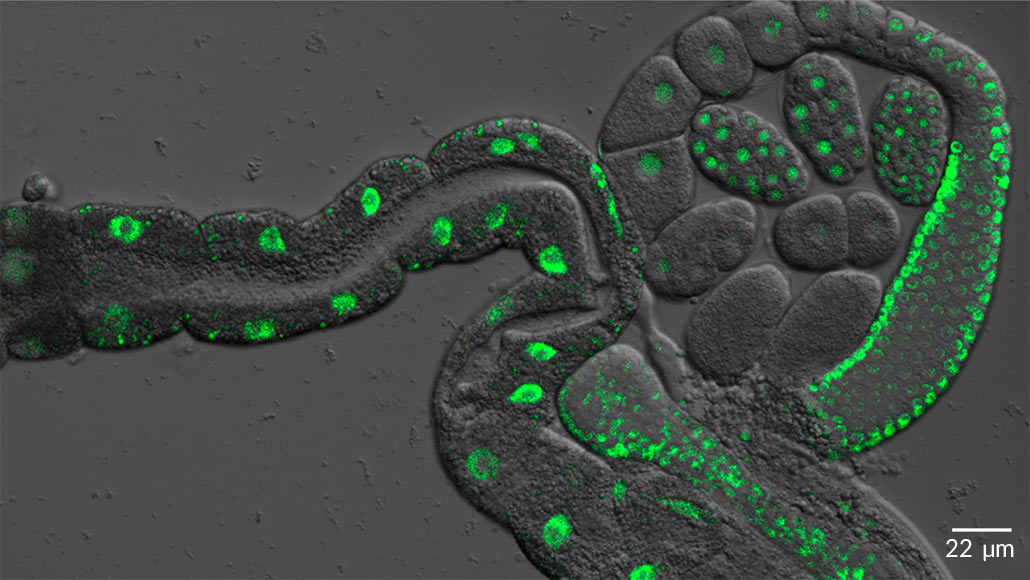
     Scientists recently discovered that even super simple sea creatures called comb jellies have a surprisingly advanced way of controlling their genes. This method, known as distal gene regulation, lets parts of DNA that are far apart loop around and interact, like sending messages across long distances. These loops help control which genes turn on or off, and when. What’s really surprising is that comb jellies don’t use the same proteins humans and other animals use for this process—they’ve got their own unique way of doing it. This means that this complex gene control system evolved way earlier than scientists thought—like over 650 million years ago.


    This discovery is a huge deal because it shows that the ability to tightly control gene activity isn’t just something that showed up in more modern or complex animals. It was already happening way back in early animals, helping them grow different types of cells and body structures. Understanding how these ancient systems work could even help us learn more about our own DNA and how it affects health, development, and disease today.

Friday, May 2, 2025

Protein That Stops Cell Division Could Serve as a Biomarker or Therapeutic Target for Liver Disease


      According to recent research published in The FASEB Journal, a protein that stops the cells from dividing in response to damage or stress could become a new biomarker or therapeutic target for metabolic dysfunction-associated steatotic liver disease (MASLD). This protein is called cyclin-dependent kinase inhibitor 1A (CDKN1A), it was upregulated in patient datasets and models in animals of the disease, and the expression level correlated with the severity of the disease in the study. 

    With current technologies, only liver biopsies or medical imaging methods such as ultrasounds are used to diagnose MALSD, and no medication has been approved to treat the disease yet. To find a diagnostic biomarker or drug target, the researchers used bioinformatics methods to analyze public patient datasets for differentially regulated genes in MASLD patients and compared them with controls. They found that CDKN1A was upregulated in all of the datasets obtained. The study states that: 

"The protein encoded by this gene responds to cell stress and damage by preventing cells from dividing, shifting them to a senescent or inactive state. Further analysis of five patient datasets, including the initial three, demonstrated that CDKN1A transcript levels increased with disease severity."

    The expression of CDKN1A positively correlated with two clinical assessments: the disease's activity score and the fibrosis stage. In the patients' liver tissue, immunofluorescence staining showed the protein's higher expression compared to tissues from the control group. 

    The results from the study are consistent with previous reports, which suggest an association between CDKN1A and MASLD. The researcher said: 

“Functionally, CDKN1A may contribute to MASLD progression by promoting hepatocyte senescence, exacerbating lipid toxicity, and fostering chronic inflammation and fibrosis,”

    These findings will guide the study to a more effective way of using biomarkers for disease diagnosis and therapeutic intervention. 

WORKS CITED

MBT Desk (2025). Protein That Stops Cell Division Could Serve as a Biomarker or Therapeutic Target for Liver Disease. MedBound Times. https://www.medboundtimes.com/biotechnology/cdkn1a-as-biomarker-therapeutic-target-in-masld?utm_source=website&utm_medium=related-stories

Deng, L., Deng, J., Luo, L., et al. (2025). Identification of CDKN1A as a potential key risk factor in MASLD progression. FASEB. https://doi.org/10.1096/fj.202402942R


Wednesday, April 17, 2024

Future of Preventable Lyme Disease

 Lyme disease is a bacterial infection that is transmitted by Ticks. This disease affects half a million people in the United States per year. Although antibiotics are needed to treat the disease, many people still feel the effects after months to even years. Some researchers at MIT have found a protein in sweat that protects against Lyme disease. About 1/3 of the population in the United States have this protein in their genes. It is in the hopes of the researchers that they will be able to use the protein in order to make preventable creams or treatments for those with Lyme disease.  The researchers who found this protein in the genes of people with and without Lyme disease primarily found secretoglobin, SCGB1D2 are a family of proteins found in tissues of organs and play a role in immune responses. The researchers are using the SCGB1D2 in order to test against the disease in mice. 

Personally, I know a lot of people with Lyme disease and some of those people still have affects from the disease after taking the antibiotics. This is a groundbreaking discovery because it has the potential to help many people feel better and increase their health. 


Article Link: https://news.mit.edu/2024/protein-found-human-sweat-may-protect-against-lyme-disease-0319

Additional Link: https://www.cdc.gov/lyme/index.html#:~:text=Lyme%20disease%20is%20the%20most,bite%20of%20infected%20blacklegged%20ticks.

Wednesday, April 10, 2024

Understanding how humans perceive bitter tastes

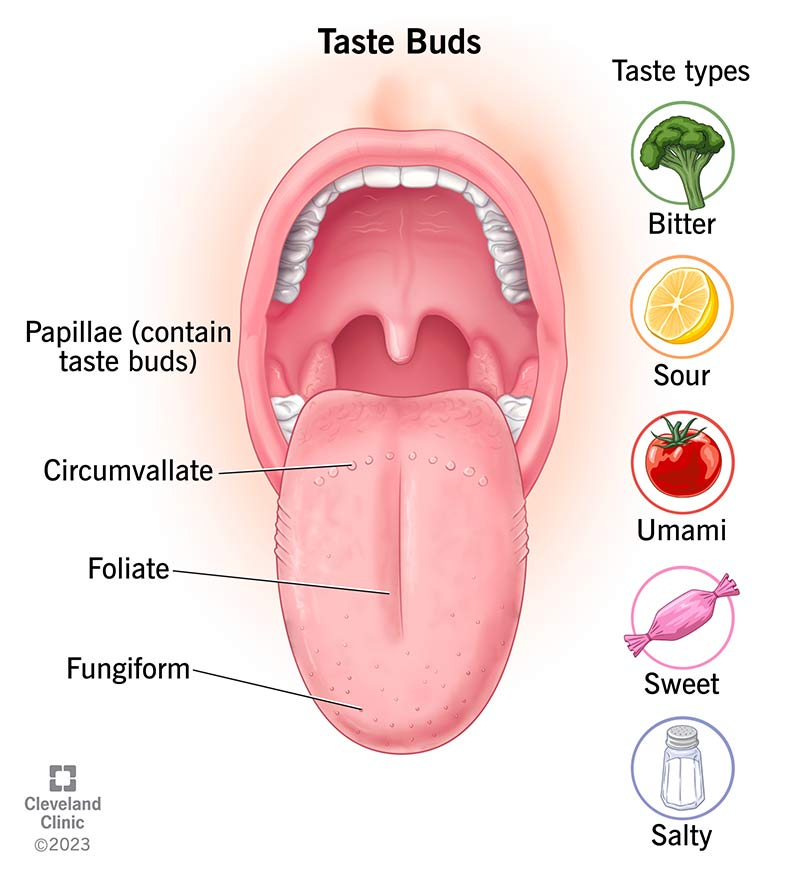
 Scientists from the UNC School of Medicine wanted to understand how humans perceive bitter tastes, starting with understanding the specific taste receptor. TAS2R14 is the bitter taste receptor which is a part of a bigger family of bitter taste receptors, the G protein-coupled receptor (GPCR) family. However, this specific receptor stands out because of its ability to identify 100 different bitter substances. Findings from the research concluded that when bitter tastants encounter the taste receptor, the chemicals wedge themselves to allosteric sites, which causes the protein to change shape and activates the G protein. The receptor being active sends signals to tiny nerve fibers in the gustatory cortex, where the bitterness is perceived. Researchers also found that cholesterol also helps bitterness tastes be perceived. Cholesterol puts the TAS2R14 receptor into a semi-active state so the tastant can easily activate it. The article explains, "While the exact role if bile acid or cholesterol in TAS2R14 remains unknown, it may play a role in the metabolism of these substances or in relation to metabolic disorders such as obesity or diabetes" (ScienceDaily). These findings have brought researchers closer to finding deeper connections between certain proteins and other metabolic processes. 

I think this new information is hopeful, especially for those struggling with metabolic disorders. I would have never thought that bitter tastes could be related to cholesterol nor that there were so many bitter taste receptors. I also find it fascinating how much information could be found from a protein site, with these findings, drugs could be put together to treat and regulate G proteins through allosteric sites, possibly changing so many peoples lives. overall, I thought this article was interesting to read and eye opening, realizing that though it may not seem like it, thousands of things are truly connected whether they seem like it or not. 


https://www.sciencedaily.com/releases/2024/04/240410112824.htm 

https://neurosciencenews.com/bitter-taste-perception-receptors-25896/ 

Sunday, April 7, 2024

Study reveals genetic variant linked to increased risk of leukemia in Hispanic/Latino children

The Kreck School of Medicine of USC write that a genetic variant associated with a higher risk of acute lymphoblastic leukemia (ALL) has been in found in Hispanic and Latino children. This information was brought forth by researchers from the Kreck School of Medicine at USC. The variant is located on the IKZF1 gene and increases the risk of ALL by 1.4 times. The variant is found more frequently in Hispanic/Latino children. The study used fine-mapping analysis to identify the variant. 

There are three independent single nucleotide polymorphisms (SNPs) that leads to a higher risk of ALL and one of them is more commonly found in Hispanic/Latino populations when comparing it to non-Hispanic white populations. One experiment analyzed chromatin accessibility, a test which indicates how fully a given gene can be expressed. The researchers found that the risk variant reduced chromatin accessibility, preventing IKZF1 proteins from being fully expressed. The new insights about IKZF1 bring researchers one step closer to developing effective screening tools to predict who may develop ALL, but more research is needed. In addition, the findings provide important clues about potential ways to treat the disease, for instance by progressing B-cell development after it stalls. With this research scientists hope to find an explanation as to why Hispanic/Latinos are more at risk of having ALL than those who are non-Hispanic white. 


As somebody who is Hispanic learning this information about how Hispanic/Latino children are more at a risk for ALL is frightening. There are a lot of diseases out there that affect other populations more than the white population. However, it’s less known because for a logn time medicine focused on the white population and just recently we are discovering that other populations are at higher risks for certain diseases. 


Monday, March 11, 2024

Altering Protein Folding in Yeast

 It is highly believed that understanding the full genetic code of an organism will help one know the behaviors, however it is the altering of protein folding that allows researchers to delve deeper into an organisms adaptive behavior. It was discovered, from snowflake yeast that their ability to evolve from 3,000 generations was from changing their cell shape. A chaperone protein, known as Hsp-90, acted as a tuning knob that would destabilize a central molecule that regulated the progression of the cell cycle. This in turn would allow the cells to elongate. These new elongated cells would allow cells to wrap around each other to create longer, more mechanically tough multicellular groups. 

This discovery might not seem all that grand compared to the other research studies, but it shows just how important and how much one small change in the mechanisms it can change an organisms evolution. This large change was discovered just from a single chaperone protein in yeast, imagine what we could discover from chaperone proteins in humans and other animals. This one small discovery is not only grand for single-cell organisms but reaches significance for multicellular organisms as well. 


Saturday, December 2, 2023

Researchers Uncover a New CRISPR-like System in Animals That Can Edit The Human Genome

 The First RNA-guided DNA-cutting enzyme found in Eukaryotes, named Fanzor, could one day be harnessed to edit DNA more precisely than CRISPR/Cas Systems

    The first programmable RNA-guided system in eukaryotes has been discovered by a team led by Feng Zhang at MIT's McGovern Institute for Brain Research. They published a study introducing Fanzor, a protein that utilizes RNA guidance to precisely target and edit DNA. Unlike CRISPR/Cas systems, Fanzor is more easily delivered. The team isolated Fanzor proteins from various species and demonstrated their ability to cut DNA using non-coding RNAs. Fanzors show promise for genome editing because they are efficient and can cut DNA very precisely without collateral damage. This marks a significant discovery in eukaryotic organisms. 
    This was honestly very surprising to me even though I don't know much about gene editing and why this is such a big discovery for eukaryotes. It was surprising to hear that something that comes from animals can be more precise at cutting DNA than CRISPR, as well as more easily deliverable. It is just crazy to me that new things are discovered all the time that just make other discoveries seem so complicated and out of date. It's very interesting to think how this is such a big discovery at this time but years later we'll hear about new technology that's even better than this. 

LINKS:


Wednesday, November 22, 2023

Peaceful Fungus Species Turned Into a Carnivorous Killer

     A common fungus is capable of turning into a formable predator almost instantly. Scientists have been studying this fungus (Arthrobotrys oligospora) ever since the 80's but still are trying to understand how it transforms a peaceful fungus into a carnivorous killer. This species survive and feed on organic matter that is already dead, but when their nitrogen supply is limited they do whatever it takes to survive. With this, this is one of the few fungi species that are able to do this. The fungus turns into it's "predator: mode when they sense roundworms are nearby. 

    Scientists found that once a fungus detects it's prey, DNA and also ribosome replication production is increased. With this, researchers were able to see an increase in the activity of genes involving building and operating traps. They were also able to identify a new class of proteins Called trap enriched proteins (TEP).  TEP proteins are critical for trap adhesion to nematodes. Once a fungus traps it's prey, it then penetrates the worm's body and digests it using filaments that are called hyphae. instead of chewing the hyphae fills the worm from the inside and breaks down nutrients to be absorbed. Researchers are further studying this case and understanding more on this fungus and it's potential. 


Links:

https://www.sciencealert.com/scientists-discover-genes-that-turn-a-peaceful-fungus-into-a-carnivorous-killer

https://www.sciencedirect.com/topics/agricultural-and-biological-sciences/arthrobotrys-oligospora

Tuesday, November 21, 2023

Creating Synthetic Enzymes: Engineering Disease Treating Mechanisms

 A bioengineer at the University of Texas at Dallas has successfully developed synthetic enzymes that can control the behavior of Vg1, a vital signaling molecule in the embryonic development of muscle, bone, and blood in vertebrates.

In general, learning about the molecular rules governing signal formation provides better insight into how disease-treating and disease-curing mechanisms can be developed. In this case, researchers studied the formation of Vg1 in zebrafish embryos. Researchers were interested in learning about how synthetic enzymes could control natural proteins, hoping to build biological circuits that could imbue introduced cells with new functions like cancer detection or disease resolution at the molecular level. Zebrafish were found to be an ideal model organism since they have 70% similarity to the human genome and were small enough to grow and observe under a microscope. Additionally, researchers studied the molecular interactions between Vg1 and protein Nodal, finding that they could not interact with one another due to certain chaperone-like proteins that bind to and inactivate Vg1.  Developing synthetic cleaving enzymes from a family of viruses, researchers used these to cut specific Vg1 amino acids that would activate signaling on target cells.


It was rather interesting to learn about how synthetic proteins (or enzymes rather) can have an influence on and control certain signaling proteins to direct a mechanism involving disease identification and treatment. Through this insightful research, it may be possible to integrate various functions related to those two concepts and make treatments much more efficient.

For more information regarding the information gathered, the article has been linked here and the published research study has been linked here.


Tuesday, October 24, 2023

Analysis of Genome Sequence of Spidroins in Female Golden Orb Weavers


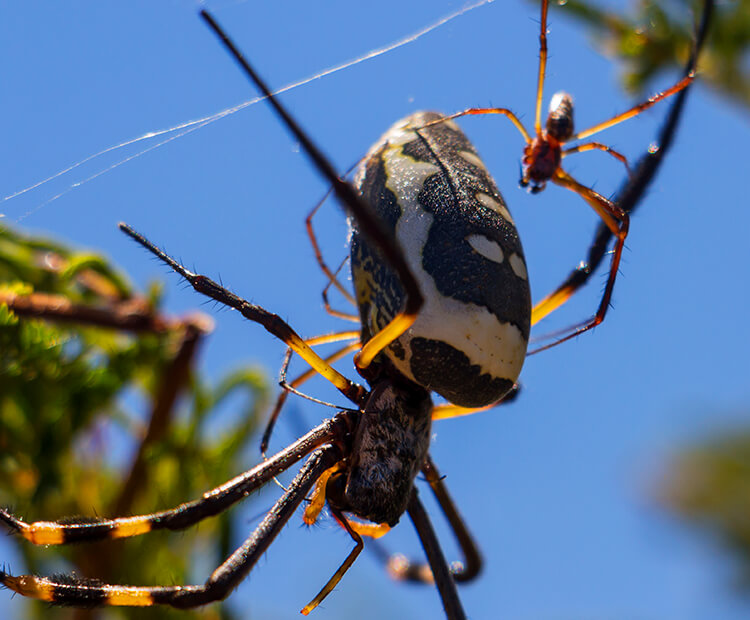
    Orb weavers are a family of spiders found all over the world. The Golden Orb Weaver is native to the Americas and is well known for its elaborate webs and is a non-venomous species. Females can get up to six inches in length and construct large, sturdy webs for their young. 

    Orb weavers are of particular interest to some genetic researchers due to their number of spidroin glands. Female orb weavers possess seven different silk-producing glands that construct different types of silk using a protein called spidroins. Spidroins have gained interest over the years as teachers are investigating their possible uses in medicine and other industries. 

    In 2017, a study was published in Nature that focused on analyzing the genomic sequence of the different silks produced by female golden orb weavers. Their aim was to create a genetic database of the spidroin protein in the variety of silks produced by female golden orb weavers. They found a variety of different genomic sequences involved in creating the different types of silk that enable female golden orb weavers to construct their large, elaborate webs for their young and to capture prey. 

Sunday, August 6, 2023

Genetics and Polycystic ovary syndrome (PCOS)


Polycystic ovary syndrome is a hormonal imbalance in women which can cause problems with the menstrual cycle and pregnancy. The genetics with PCOS is not fully understood but early diagnosis and treatment can prevent the long-term effects. There are proteins that are involved in PCOS an there are 43 proteins that are responsible for PCOS which is shown in the image above. People who have PCOS can have high levels of androgen as well as small cysts on their ovaries and can get missed or irregular periods. Each of these proteins can are located on a different locus and chromosome. 

Monday, October 28, 2019

Neural activity and human longevity are linked together?


Recently, researchers found out that the nervous system’s activity could influence the lifespan of human beings when study with protein REST. Studies show that overactivity linked with longer life, while neural excitation results in a shorter lifespan. Research led by scientists in the Blavatnik Institute at Harvard Medical School based it finding on mice, worms, and human brains from. Protein REST is the key to signaling. This protein protects the aging brain from dementia and other specific stresses that affect the brain. When blocking REST, it led to higher neural activity and caused earlier deaths. When REST increases, it did the opposite.

Image result for neural activity in the brain


This seems like great information to know about because who knows, neural activity and human longevity are linked together? The article gave an example of that stress is an example of overactivity. Now that I thought about it, stress is happening more and more nowadays, and does that mean the life expectancy will lower and lower? I mean, like, I am stressing out right now too about my schoolwork, and will that mean my life expectancy will be lower due to overactivity of thinking??

https://www.sciencedaily.com/releases/2019/10/191016131224.htm

https://www.ibtimes.com/recent-study-discovers-link-between-human-longevity-neural-activity-2855030


Sunday, September 22, 2019

Gene In Worms Promote Age and Reproduction, but Supress Immune Response

A study is being done by geneticists to see how a gene in worm DNA is affecting the worm's lives. First, they noticed that the worms were producing more offspring and were living longer unless exposed to a disease. They recognized the gene, TCER-1 as responsible for producing the protein that has this affect. At first, they though the gene would increase immune response along with reproductive capabilities. They observed the complete opposite. What was observed was that the worms with the gene produced more offspring but fought off diseases worse. When exposed to Alzheimer's disease protein, which paralyzes worms, worms with the gene survived nearly 1/3 of the time that worms with the genes did. Although, the gene made it possible for sick worms to produce healthy offspring.

protein microscopy

Recently, a similar gene was discovered in humans. While not a worry at the moment, scientists say it is a "warning bell"(Saey). Particularly this could affect anti-aging therapies as some can cause unexpected frailty. Personally, the research is important and is something humans need to keep an eye on. It is especially important now that humans are living longer and longer and as more resistant diseases are beginning to emerge.


https://www.sciencenews.org/article/gene-may-help-worms-live-longer-not-healthier
https://www.nature.com/articles/s41467-019-10759-z

Sunday, July 7, 2019

Translating Proteins into Music

Researchers at MIT have developed a model to convert proteins into sound. After, by making variations into the music and converting it back to proteins, new proteins are made that have never been seen before. Researchers were able to convert the proteins into music by sequencing a protein's amino acid sequence and translating it into a musical score. Specifically, the model converts the twenty types of amino acid into a 20-tone scale. To translate the music back into proteins, the researchers developed an AI system that could introduce variations into the musical sequence and convert it back to a new protein. For example, researchers were able to translate silk protein into music, and then the AI changed the music and presented back a new silk protein never seen before. One major drawback of the system is that it does not allow for direct modifications. The AI does its own thing, so the properties of the new proteins are completely random to the researchers.

What I find most fascinating about the researchers' methods are that the musical tones are based off of the vibrational frequencies of the amino acid sequence. We are used to looking at a textbook and seeing proteins as motionless and flat, but we have to remind ourselves that proteins are vibrant and moving. Another aspect I found interesting in the article is that the researchers were able to hear the melodies and could differentiate what the sequences were. For instance, the researcher could hear a sequence and definitively tell that he was hearing an alpha helix or a beta sheet. The method of translating proteins into music is creative, and I believe it will have major applications in the years to come.
Abstract Image

https://www.sciencedaily.com/releases/2019/06/190626125052.htm
https://pubs.acs.org/doi/10.1021/acsnano.9b02180

Thursday, July 4, 2019

Mutation Causes Protein Dysfunction Induces Migraines

Migraines are a type of recurring headache that occurs on one part of the head. There are several types of migraines ranging in severity and can cause symptoms from nausea and weakness to temporary memory loss and speech/motor function, last from an hour to weeks at a time, and cause an increased risk of strokes. Migraines are often hereditary and 15% of adults who suffer do not respond to treatments available.

Researchers at CNRS discovered a mutation that causes dysfunction in a protein which induces migraines. Migraines are related to hyperexcitability in sensory neurons. The researchers found that a mutation in the coding causes a split in the protein with one being inactive and the other targets ion channels at K2P2.1 (a protein in the potasisum channel) which stimulates neural electrical activity causing migraines.
The above picture is from a study performed on mice at the Institut de Biologie Valrose in France. The diagram shows the normal pathway and the mutated pathway of the TRESK gene. In the mice with the TRESK mutation, they exhibit TRESK-MT1 and TRESK-MT2 which in turns cause hyperexcitability instead of the normal TRESK and normal excitability.

I found this discovery very interesting because I am among the 15% of the population that does not respond to migraine medications and treatments. Medications for chronic migraines are typically anti-depressive or anti-epileptic, usually beta-blockers, calcium channel blocker, or serotonin blockers, which both can worsen migraines and cause unwanted side effects. The discovery that a mutation in the potassium channel is related to migraines allows for a further understanding of migraines and can lead to a more effective drug to be developed.

Thursday, May 2, 2019

The Medusavirus


Virologists have recently discovered a giant virus, much like the mythical monster- Medusa, that can turn amoebas into "stone". The discovery of the Medusavirus holds clues to more complex life. This virus infects a species of amoeba known as Acanthamoeba Castellanii, and causes it to develop a hard stony shell. Researchers have discovered that DNA replication occurred in the nucleus of the host amoeba and evidence of exchange of genetic information between both the host and virus was observed. It was also discovered that the Medusavirus contains some of the complex protein building blocks of eukaryotes. Scientists have even stated that, "genomics research of the giant virus indicates that there is likely a relationship between the Medusavirus and the origin of eukaryotic life." Viruses are classified based on how they generate mRNA to produce proteins and genetic material. The Medusavirus is a nucleocytoplasmic large DNA virus. Unlike most viruses, it contains genes that encode for proteins that involve DNA packaging. This virus has a full set of histones, which are proteins that help keep the DNA folded within the nucleus. This was very strange to scientists considering viruses do not contain a nucleus. This could mean the virus acquired the histones during coevolution. This could mean that the Medusa virus is a family all on its own. Overall, I think this is a beneficial discovery that can help better understand the virus genome and better equip ourselves with possible vaccines. 
A new giant virus may help scientists better understand the emergence of complex life.

Thursday, April 11, 2019

The GM chickens that lay eggs with anti-cancer drugs


Genetically modified chickens capable of laying eggs with anti-cancer drugs?


 Yes, it's a thing. In an article form BBC news, Researchers have developed GM chickens whose eggs contain drugs for arthritis and some cancers. This method of producing these drugs can range anywhere from 10-100 times cheaper than factory manufactured drugs. By adding a human gene to the chickens they have made it so that the egg whites are rich in certain proteins which the lack of is the cause of certain cancers and arthritis. One is IFNalphay2a a protein with powerful antiviral and anti-cancer effects. The other macro-phage CSF a protein being developed to help damaged tissues repair themselves. Although they are not currently producing drugs for people, they have shown that chickens are commercially suitable for producing proteins for drugs manufacturing. This method of drug production will undoubtedly lower the production cost of these expensive drugs. Thus lowering the cost to the costumer may very well be an egg that saves the lives of those who can't afford the treatment they need. 

Tuesday, December 11, 2018

Scientists direct bacteria with expanded genetic code to evolve extreme heat tolerance


In recent years, scientists have engineered bacteria with expanded genetic codes that produce proteins made from a wider range of molecular building blocks, opening up a promising front in protein engineering.

Thermophiles, or thermophilic bacteria, are a type of extreme bacteria (extremophiles) that thrive in temperatures above 131 degrees Fahrenheit (55 Celsius).

Exposing bacteria with an artificially expanded genetic code to temperatures at which they cannot normally grow, the researchers found that some of the bacteria evolved new heat-resistant proteins that remain stable at temperatures where they would typically inactivate.

The scientists started by tweaking the genome of E. coli so that the bacteria could produce the protein homoserine o-succinyltransferase (metA) using a 21 amino acid code instead of the common 20 amino acid code. Above that temperature, metA begins to inactivate and the bacteria die. At this point, they let natural selection work. Heating the bacteria to 44 degrees Celsius, which is a temperature at which this bacteria cannot survive, the scientists put selective pressure on the bacteria population. As expected, some of the mutant bacteria were able to survive beyond their typical temperature ceiling, thanks to possessing a mutant metA that was more heat stable, all other bacteria died.

The researchers then identified the specific genetic sequence change that resulted in the mutant metA and found it was due to the unique chemical properties of one of their noncanonical amino acids that laboratory evolution exploited in a clever way to stabilize the protein.

Source: 
https://www.sciencedaily.com/releases/2018/11/181128082729.htm  Science Daily 
https://sciencing.com/examples-heatresistant-bacteria-20175.html  Heat-Resistant Bacteria

Sunday, December 9, 2018

Insights to Spider Silk

https://www.sciencedaily.com/releases/2018/12/181207112741.htm
https://www.uniprot.org/uniprot/P19837
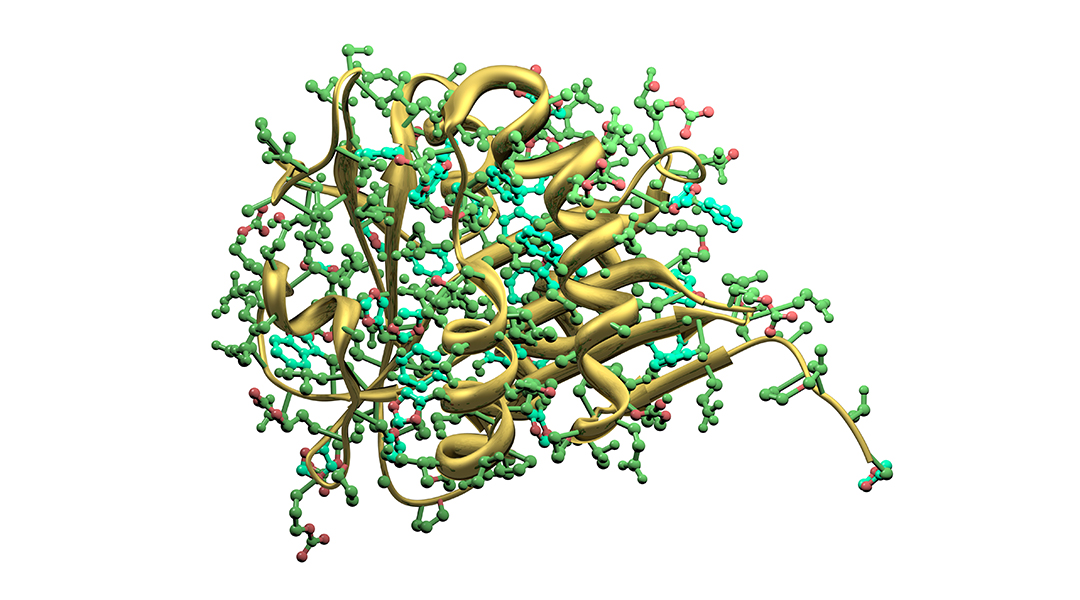
This spider silk, naturally made by the spinning gland of the spider, has incredible strength and is highly extensible. Researchers even say that its quality is on-par or even surpasses Kevlar. This silk is made of a protein called Spidroin. Spidroin connects to each other to make a polypeptide chain similarly to other proteins by connecting from the C to N terminals. Protein is one of the build blocks of our system and for them, its to create intricate webs to catch prey and provide a home. This silk is sought after by clothing companies, textile, even the aviation industry for its quality and potential use.

Thursday, December 6, 2018

Bacterial Protein promoting cancer


Researches at the University of Maryland School of Medicine, discovered that a protein interferes with the cell's ability to respond and repair DNA damage which is a known origin of cancer. The protein found is called DnaK which is a protein of mycoplasma bacteria. This was very interesting because I was unaware of the fact that bacterial infections (specifically mycoplasma bacteria) are found to cause forms of cancers. According to this article: "currently, approximately 20% of cancers are thought to be caused by infection". The researchers created a study in which they studied the effect of mycoplasma infections on the development of lymphoma. The study compared non-infected mice and how quickly they developed lymphoma to mice that were infected with mycoplasma. The study concluded that the mycoplasma infection led to an earlier development of lymphoma and that many cancer cells had the bacterial DNA of the mycoplasma, which meant that the infection did not have to persist to trigger cancer. Mycoplasma bacteria tend to be found in humans infected with HIV, meaning they are at a higher risk.


Image result for mycoplasma bacteria


References:
https://www.sciencedaily.com/releases/2018/12/181204155158.htm
https://www.webmd.com/a-to-z-guides/mycoplasma-infections#1