Showing posts with label cell signaling. Show all posts

Tuesday, November 21, 2023

Creating Synthetic Enzymes: Engineering Disease Treating Mechanisms

 A bioengineer at the University of Texas at Dallas has successfully developed synthetic enzymes that can control the behavior of Vg1, a vital signaling molecule in the embryonic development of muscle, bone, and blood in vertebrates.

In general, learning about the molecular rules governing signal formation provides better insight into how disease-treating and disease-curing mechanisms can be developed. In this case, researchers studied the formation of Vg1 in zebrafish embryos. Researchers were interested in learning about how synthetic enzymes could control natural proteins, hoping to build biological circuits that could imbue introduced cells with new functions like cancer detection or disease resolution at the molecular level. Zebrafish were found to be an ideal model organism since they have 70% similarity to the human genome and were small enough to grow and observe under a microscope. Additionally, researchers studied the molecular interactions between Vg1 and protein Nodal, finding that they could not interact with one another due to certain chaperone-like proteins that bind to and inactivate Vg1.  Developing synthetic cleaving enzymes from a family of viruses, researchers used these to cut specific Vg1 amino acids that would activate signaling on target cells.
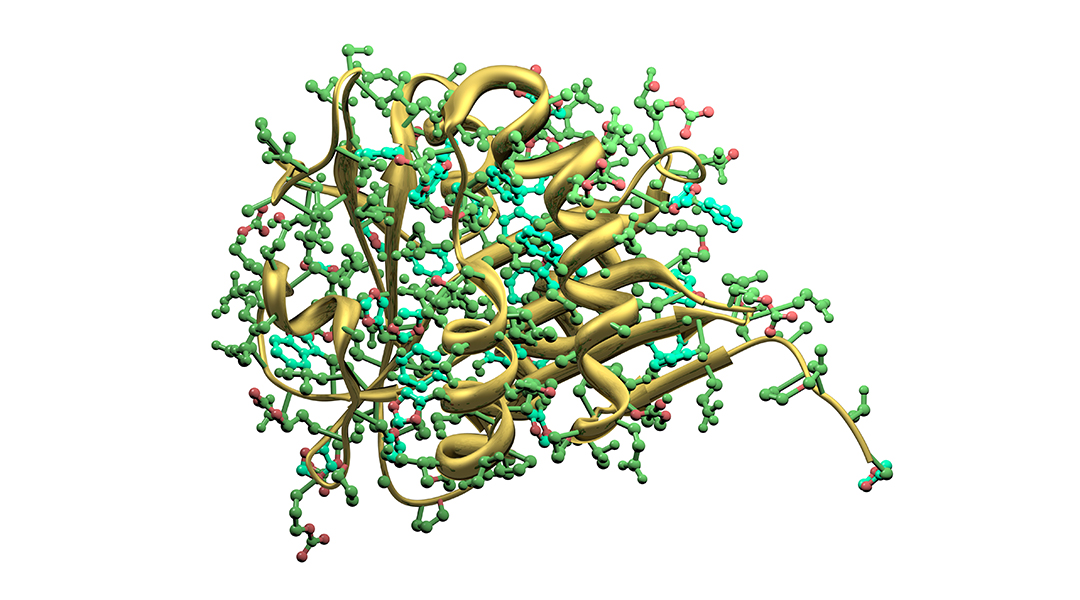

It was rather interesting to learn about how synthetic proteins (or enzymes rather) can have an influence on and control certain signaling proteins to direct a mechanism involving disease identification and treatment. Through this insightful research, it may be possible to integrate various functions related to those two concepts and make treatments much more efficient.

For more information regarding the information gathered, the article has been linked here and the published research study has been linked here.


Friday, April 23, 2021

The Protein Siglec-XII May Be Contributing to Humans' High Cancer Rates

According to an article written by Asher Jones from The Scientist, there is a protein that may be contributing to the high rates of cancer in humans. This protein is called the Siglec-XII which is possibly promoting carcinoma progression in humans. These proteins are found on innate immune cells and involved in cell signaling. Siglec-XII is encoded by the SIGLEC12 gene and in this when it is no longer binding with sialic acid, it starts to have abnormal cell signaling. Nissi Varki and Ajit Varki, researchers from UC San Diego of Medicine had stated that protein plays a role in the progression of cancer and could explain why the rate of cancer progression is high in humans. 


The researchers had found that about 30% of people that produce the Siglec-XII protein are more than twice the risk of developing a more advanced cancer compared to people who do not produce the protein. The protein is expressed on epithelial cells and has unique human features such as a fixed homozygous missense mutation which inactivates its natural ligand recognition property, and a polymorphic frameshift mutation that eliminates the full-length protein expression in approximately 60-70% of worldwide human populations, etc.  It is quite remarkable that researchers are discovering how cancer cells are being promoted and I think if they are able to figure out exactly how this is happening then they might be able to find a way to stop the protein from forming and may be able to reduce the rate of cancer in humans.