Showing posts with label embryonic research. Show all posts

Tuesday, November 21, 2023

Creating Synthetic Enzymes: Engineering Disease Treating Mechanisms

 A bioengineer at the University of Texas at Dallas has successfully developed synthetic enzymes that can control the behavior of Vg1, a vital signaling molecule in the embryonic development of muscle, bone, and blood in vertebrates.

In general, learning about the molecular rules governing signal formation provides better insight into how disease-treating and disease-curing mechanisms can be developed. In this case, researchers studied the formation of Vg1 in zebrafish embryos. Researchers were interested in learning about how synthetic enzymes could control natural proteins, hoping to build biological circuits that could imbue introduced cells with new functions like cancer detection or disease resolution at the molecular level. Zebrafish were found to be an ideal model organism since they have 70% similarity to the human genome and were small enough to grow and observe under a microscope. Additionally, researchers studied the molecular interactions between Vg1 and protein Nodal, finding that they could not interact with one another due to certain chaperone-like proteins that bind to and inactivate Vg1.  Developing synthetic cleaving enzymes from a family of viruses, researchers used these to cut specific Vg1 amino acids that would activate signaling on target cells.
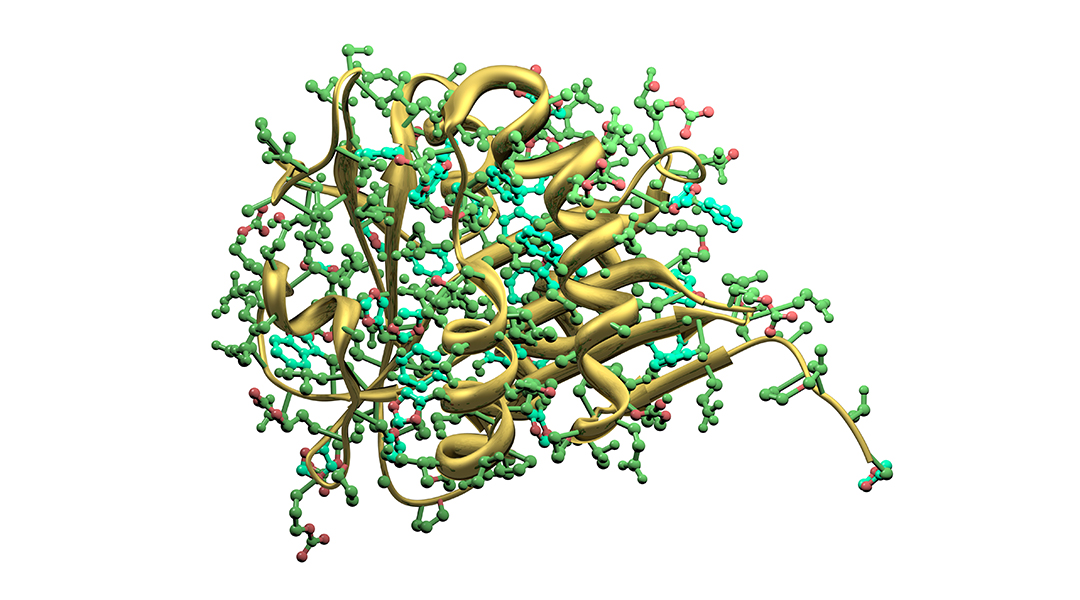

It was rather interesting to learn about how synthetic proteins (or enzymes rather) can have an influence on and control certain signaling proteins to direct a mechanism involving disease identification and treatment. Through this insightful research, it may be possible to integrate various functions related to those two concepts and make treatments much more efficient.

For more information regarding the information gathered, the article has been linked here and the published research study has been linked here.


Thursday, May 2, 2019

Embryo cells from skin cells

An article at ScienceDaily summarizes the findings of a research conducted at the Hebrew University of Jerusalem (HU). With this study, researchers have found a way of transforming skin cells into the three major stem cell types that comprise early-stage embryos, (embryo, placenta and extra-embryonic tissue), using mouse cells. This was achieved by using retroviruses to insert a series of genes into the skin cells.
In a different article, the author notes that human skin cells have already been tested, and were successfully transformed using the same techniques used in mouse cells. Although successful, the technique with retroviruses could cause tumors in the tissue. The next step is finding a way of altering or switching genes existing in the cells, instead of inserting new copies.

Scientists say that in the future, it could be possible to create whole human embryos out of skin cells. The findings are significant since embryonic cells can be used to model and study embryonic diseases and placental dysfunctions as well as other complications without using "real embryos" or oocytes; therefore escaping some of the ethical debates that surround the field. With this I think that humans are getting closer to find a way of creating life without even the need of sex cells.  

4-cell stage mouse embryos

Friday, October 13, 2017

U.S edits Embryo DNA for first time

 
In vitro fertilization, computer artwork. (Getty Images)


     Without a doubt, I found this article very interesting. Scientist have successfully edited embryos so that they could grow and develop if placed into a mother's womb. This is the first time this is happening in the U.S. The gene altering technology is referred to as CRISPR. By injecting CRISPR into the embryo about the same time that is it getting fertilized by the sperm it reduces the risk of "off target editing"(Newman). This is extremely valuable in the world of medicine. It will help correct genes that are dangerous to future generations. They could also eventually alter inherited diseases to help those. Although these are all positive factors, I do believe this technology should be evaluated to fit culture appropriation.
    Personally, I think its great to see technology improving, specifically in genetics. When thinking of this article the idea of "Designer babies" popped in my head. People may want to pay to have their embryos genes altered making the baby ideal phenotypically. Many will argue that this is morally wrong and should only be used for medical needs.  I think it may become a main focus causing a nationwide debate when the technology improves more.

Article: https://www.usnews.com/news/national-news/articles/2017-07-27/scientists-edit-the-dna-of-embryos-for-first-time-in-united-states

Monday, April 11, 2016

Ethics and Embryos


In terms of ethics, studies involving human subjects are constantly questioned. Many people fear the consequences of "designer babies" or unpredictable outcomes of altering DNA in such a complex organism at crucial stages, while others argue the benefits of eliminating dangerous heritable diseases. While the debate of ethics continues in America continues today, April 2016, scientists in China have moved past talking, and into testing the possible benefits of gene editing in human embryos. Nearly a year ago, April 2015, Protein and Cell published a controversial article about a Chinese study led by Junjiu Huang on genetic modification of human embryos. In this study, embryos were injected with an enzyme complex known as CISPR/Cas9, a tool that binds and splices DNA at specific locations. With this technique Huang and his colleagues attempted to edit the HBB gene, which may mutate to cause beta thalassemia. Unfortunately, their experiments was considered unsuccessful for many reasons. Firstly, 71 out of the original 86 embryos survived the first 48 hours after injection. Of the 71 surviving embryos, most were tested and a mere 28 had been successfully spliced. The experiment was halted with such a low success rate, and unexpectedly numerous additional mutations.

 An article published in Nature's news section noted that Huang's study was rejected for publications by both Nature and Science magazines due to the great question of ethics. Throughout the articles I have found, I am definitely curious about the ethics of this study too. While the experiment is clear, I have many questions about the before and after details of the study, as I imagine that many people within this ethical debate do. In the Nature article, there were multiple times in which the use of "abnormal" embryos and avoidance of "normal" embryos in these types of studies were mentions. What makes the embryo normal or abnormal?  Where do the embryos come from and what happens to them after the study? While I think that genetic modifications of human embryos could be an important technique to eliminating genetically coded issues such as diseases, it is a very difficult and risky task due to the numerous issues of ethics brought to light within this research. 

Monday, February 8, 2016

Britain Gives Permission for Gene Experimentation on Human Embryos

Last Monday, Britain has officially given permission to scientists to conduct gene-editing experimentation on human embryos. This landmark decision may be the beginning to what many ethicists say will lead to "designer babies." Others believe it may be the beginning of "super-soldiers."

Although researchers will not be creating human life, they will be modifying the embryos to better understand human fertility, disease and miscarriages. The human embryos are set to be destroyed seven days after modification. I believe this factor to be a mistake, because if you are to do the science you should not do it half-heartedly. How much data can you get from an embryo in seven days that takes 9 months to mature? My guess would be an insufficient amount for proper research.

The team carrying out the research will be led by Kathy Niakan, who plans to use the CRISPR-Cas9 gene-editing method, a relatively fast and cheap approach published in 2012. In short, CRISPR-Cas9 allows researchers to pinpoint a target gene and cut it using the Cas9 protein. By using this method, they will essentially begin to use a "biological cut-and-paste method," one that could bring huge benefits to research and/or unintended consequences for the future.

Sunday, December 13, 2015

Global summit reveals divergent views on human gene editing


   The International Summit of Gene Editing was held on December 1-3.  The conference consisted of over 500 scientists from 20 different countries.  At this conference the scientists discussed the ethical issues that genome alterations bring. Much of the discussion surrounded an April publication by Chinese researchers who used the gene-editing technology CRISPR–Cas9 to modify a gene in non-viable human embryos.  This is where most of the controversy normally arises, whether or not genetic changes should be done to embryos.  Most countries have some kind of limit of the research that can be done on human embryos.  Some countries ban any kind of gene-editing on human embryos.  Ethicists also brought up the point that down the round gene-editing on embryos will cause inequality and discriminations, because only wealthy parents will be able to make an alteration to their embryo if they had the choice.
      In my own opinion I feel that no matter what way you look at this topic there will always to controversial view points.  I feel like there should be more of these conferences to discuss the different viewpoints of countries around the world on gene-editing.

Original Post

Related Post


Saturday, October 3, 2015

Genetically Modified Embryos Taking Science Too Far?

          Is science leading towards genetically modified babies? Kathy Niakan, a stem cell researcher of the Francis Crick Institute in the United Kingdom, recently applied to the Human Fertilisation and Embryology Authority for a license to allow her team to genetically modify human embryos. Under the licensure, Niakan would legally need to terminate the embryo after 14 days. The United States is currently prohibits genetic modification of humans embryos. Niakan and her team intend to research gene editing to discover the cause of repeated miscarriages in some women. Similar gene-editing techniques were used earlier this year in China.
         The editing of the human genome has been debated internationally. Niakan says "It is up to society to decide what is acceptable; science will merely inform what may be possible." The United States, however, stands firmly planted against the modification of human embryo DNA, following the precedent of the Dickey-Wicker Amendment (1995) which "prohibits the use of appropriated funds...for research in which human embryos are destroyed". Approval for Niakan's licensure is still being contemplated.
          Although I believe the advancement of science is very important, this type of advancement worries me. Although the embryos are to be destroyed in 14 days, I think that the modification of human embryos is going to "open a can of worms", for lack of a better phrase. Although it begins with good intentions, there is no saying that someone can get hold of the gene-editing techniques and use it for negative purposes. I'm interested to see if Niakan's licensure is approved, although I'm not sure how I feel about this type of research. It seems like science like this is leading us more and more to a dystopian society seen in so many books from years past.

Saturday, September 26, 2015

Scientists are Now Designing Babies?


It was inevitable that the scientists in the United Kingdom would ask for permission to start to alter human embryos. China has already started doing research to alter human life to reduce a genetic blood disorder. Now it seems to be the United Kingdom's turn, more specifically the Crick Institute in London. The United Kingdom wants to genetically alter human embryos to reduce miscarriages. They would be the first to do it with the nation's approval. The team proposes that they will genetically alter embryos by using a gene-editing tool known as CRISPR/Cas9. This tool allows them to cut and paste DNA within a living cell, much like typing on a Word document. The researcher uses a particular protein to seek out a gene to cut it out of the genome and to substitute it with DNA of their choice. The gene editor will turn on or off individual genes during the early development stages so the team can study the affects those alterations have on embryonic development. 

The team will have to legally destroy the embryos within the 14-day time frame that was written in their application. The troubling part is what happens if they do not destroy the embryos? It could get extremely out of hand with laboratories having the power to "design babies" for any potential purpose. Once science figures out how to alter embryos, who knows if or when scientists will know when to stop? This is especially concerning in research laboratories that are private and not federally funded. Who knows what could be brewing in those laboratories.

Although this next step in science is exciting and could be a great thing. It is life altering, literally. The United States has banned this research for a reason. It is very dangerous for anyone to have this much power, the power to design a human being. It reminds me of when Adolf Hitler was trying to create the master race by reducing the possibilities of those with "weak" genes to reproduce. I think this is a line that once science crosses we cannot come back from it. It is a very controversial topic not only of scientific discovery but also of morals and ethics. In my opinion science is going too far. Improving or healing lives is very different from creating them. 

If you're interested in learning more about the research being conducted, you can find information here

Friday, April 24, 2015

Evolution of Ancient Viruses

 
    Research conducted at Stanford University by Doctor Joanna Wysocka, a developmental biologist suggest that ancient viruses are significantly acting on the development of human embryos. The main retrovirus tracked is called HERV-K1. This virus is made by embryonic cells only during the time prior to implantation on the wall of the uterus. The body responds with an immune defense when these new viral genes are present. Thus, the embryonic cell produces surface proteins to prevent additional viruses.

    Experiments were conducted to expose the HERV-K behavior. Scientist found the cells that contained this virus were able to better resist other dangerous viruses' such as influenza virus. In the opinion of Doctor Wysocka these viruses could be fluctuating the proteins throughout vital period of development. Another scientist, from Stephen Goff of Columbia University, recognizes the adaption to ancient viruses further explains the evolution of the human genome.

    It is nothing shy from incredible that our bodies can accept a virus and utilize in in as advantage. It is especially impressive that these retroviruses compose 8 percent of the human genome.  Unfortunately, the writer of this article appears to be presenting the fact this is only a suggestion of how our DNA reacts to ancient viruses. Therefore, the findings are still being discussed and further researched.

The scientific paper can be located in Nature magazine here.

China Genetically Alters Genes of Embryos Causing Ethically Concern


Chinese scientists report that they have conducted experimentation that was dreaded by the scientific community. They have attempted to alter the DNA of embryos and the experimentation has failed in the exact manner that gave rise to original concerns. The New York Times reports on this failed experiment, emphasizing the ethical concerns involved in genetic modifications like this.


The scientists used defective human embryos hoping to produce an embryo with a precisely altered gene in every cell with no other DNA damage. All 85 human embryos failed mostly with death or no successful alteration. Of the four embryos with successful alterations there were other complications. A significant concern is that this may be a baseline for more research, since four almost worked. The other concern is that once these genetic alterations are made, they are permanent and will be passed onto later progeny.


A few months back there was another related article in regards to heritable diseases. The method discussed in both articles was known as Crispr/Cas9, which studies how the system  bacteria use to protect themselves from viruses and allows researchers to cut out selected genes and insert new ones. More and more laboratories are using this methodology and it is alarming to see the race for man to play God regardless of the potential concerns.


In my opinion, this is a very scary place for us to be scientifically, while we could be on the brink of making huge advancements in preventing genetic problems we could also be on the brink of ultimate genetic disaster.


Wednesday, April 15, 2015

Proteins that Create the Body's Blueprint


Recently, researches have uncovered what they call "gene architects" that create the blueprints for developing embryos. According to the article in Science Daily, the two proteins MOZ and BMI1 are responsible for normal embryonic development. The researchers described developing embryos as a "cluster of cells" needing to be divided and these two proteins organize these clusters segment by segment. The MOZ protein activates the developing genes while the BMI1 protein is responsible for making sure these proteins do not activate too early or too late. The research found that if the genes activated too early, the developing embryo was negatively impacte, greatly.

I found this article to be very interesting as it uncovers more about embryonic development. It is well known that Hox genes are a major part of embryonic development -- however, this research helps to uncover more about what effects Hox gene expression. A decreased amount of MOZ or BMI1 proteins could significantly alter the Hox gene expression and have severe implications on the developing embryo.

Additional Link

Saturday, November 22, 2014

Genetics of Genitalia: he have one but lizards have two

Researchers at Harvard Medical School have been able to crucially understand why reptiles have genitalia structural different but functionally similar to that of mammals and birds. Snake and lizard genitalia are derived from tissue that gives rise to the legs while mammalian genitalia are derived form tissue that give rise to the tail bud. It turns out that the embryonic cloaca, which later becomes the urinary and digestive tract, issue molecular signals that tells neighboring cells to form the external genitalia. Since location determines which tissue receives the signal first it is different in mammal and reptiles. To confirm this the researchers grafted cloaca tissue next to the limb bud in one group of chicken embryos and next to the tail bud in another group. They found that in both cases cells closer to the grafted tissue partially converted towards a genitalia fate. Their findings confirmed their hypothesis that different populations of cells with progenitor potential are able to respond to cloaca signals and contribute to genitalia growth.

vestigial limb bud and hemipenis of an embryonic snake


The research was interesting and conclusive in showing that even though the genitalia is derived differently in mammals and reptiles, they are homologous in that they are derived from the same genetic programming.

Main article: http://www.sciencedaily.com/releases/2014/11/141105131941.htm

Related article: http://www.nature.com/nature/journal/vaop/ncurrent/full/nature13819.html

Wednesday, April 30, 2014

Babies Modified Genetically


Marcy Darnovsky in this article discusses the biological procedure of creating genetically modified human beings. The procedure is called mitochondrial manipulation by the FDA. The process of this procedure starts by surgically removing the nuclear material from the affected woman's egg or embryo of the mitochondrial disease. The egg or embryo in the woman must have the inheritable mitochondrial disease initially before the process can be done to be replaced with the new healthy egg. The mitochondrial disease affects an estimated one-thousand to four-thousand United States children. The disease is from a genetic abnormality with defects of converting food into energy, and can also be caused by exposure toxins. The disease can only be passed down from the mother of the offspring, and the procedure of manipulating the mitochondrial will potentially aid in allowing these affected women to give births to unaffected children in the future. I think that this discovery is noninvasive and can have the potential to eliminate the carriers of the mitochondrial disease throughout the generations of the future. The fact that with each procedure removes the risk of the mother's offspring from passing on the disease, this would result in the child not passing it onto their future offspring which is ideal for the elimination of the mitochondrial disease thriving.

Sunday, December 8, 2013

hESC Stem Cell


Over years, our body naturally degenerates and there is nothing stopping it. Scientist from A* Stars Genome Institute of Singapore have discovered the embryonic stem cells that are able to differentiate cells and proliferate. They refer to these cells as hESC. The researchers were finally able to take culture hESC cells and found that they are similar to blastocysts; however, problems with placing an hESC stem cell is unknown.


            I believe this regenerative embryonic stem cell could be monumental. Imagine internal organs not degenerating because of these hESC stem cells that proliferate and allow internal organs to maintain.


Tuesday, January 24, 2012

Babies With DNA From Three Parents

On January 19, 2012 Nick Collins published an article in The Telegraph suggesting that within three years babies can be born with DNA from three different parents. Many genetic diseases such as muscular dystrophy and ataxia are inherited from mitochondrial DNA. These diseases are incurable. Children tend to inherit half of the genes from their mother and half from their father. However, mitochondrial DNA is passed down from only the mother.

Scientists at Newcastle University believe they have found a way to eliminate the possibility of a child inheriting diseases from mitochondrial DNA. Mitochondrial DNA is stored within the nucleus of the egg. Scientists would take the egg of the mother, whose has the possibility of transferring a disease to the child, and replace its nucleus with a healthy nucleus from a donor egg. The egg will then be fertilized by the father's sperm and implanted back into the mother. Scientists believe that they can completely stop the transmission of these diseases in one generation. This process would mean that the child would have DNA from three individuals; the mother, father, and the mitochondrial DNA of the donor.

So far this procedure has only been used on mice and monkeys with great success. Obviously this discovery has gained the attention of many ethical groups that are against embryonic research. Researchers are waiting for approval to begin human trials.