Showing posts with label human genes. Show all posts

Friday, March 13, 2026

Genetic Mapping of Mental Health Disorders


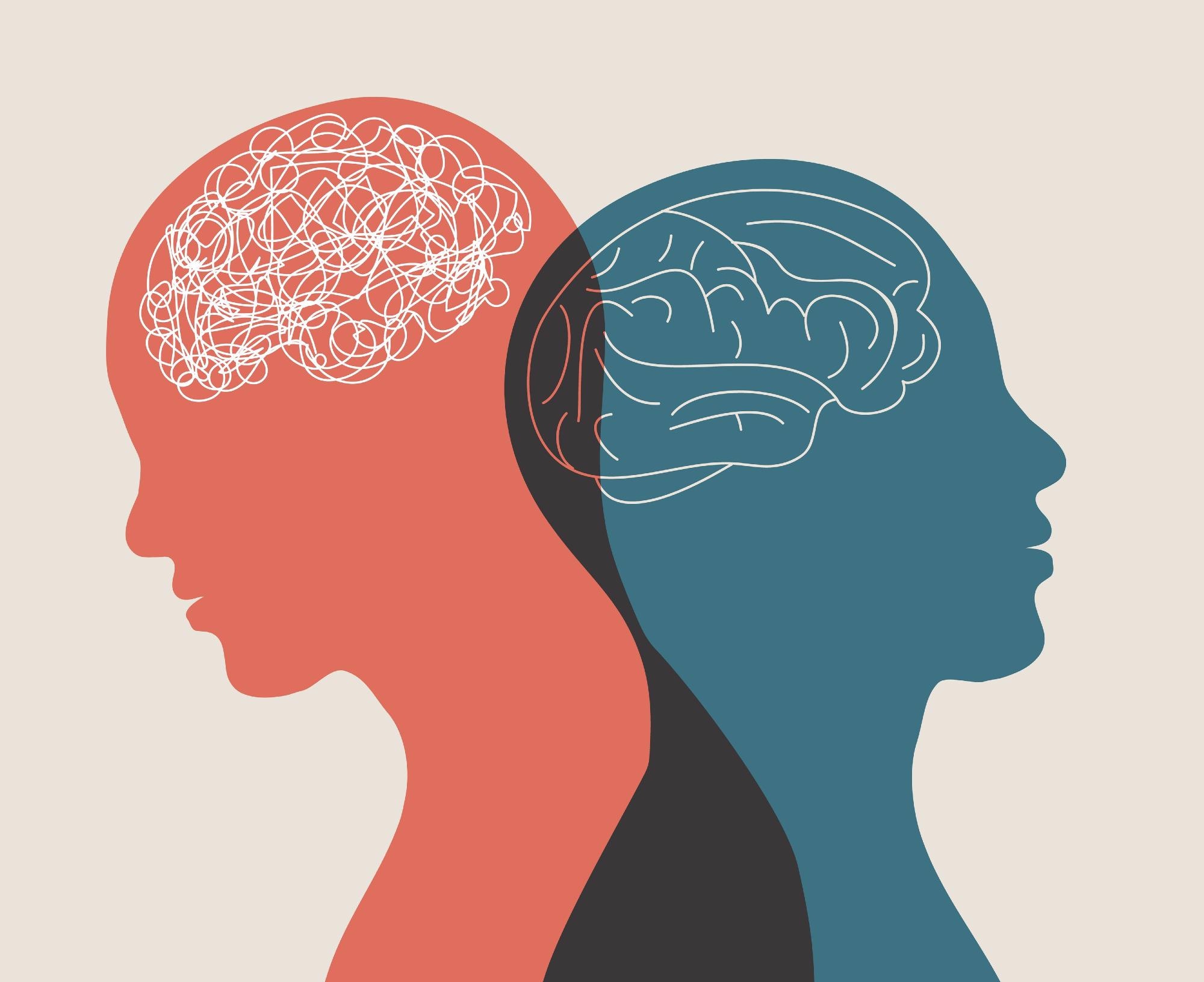
     A group of researchers has been able to identify why mental health disorders have such high rates of comorbidity. Fourteen psychiatric disorders were examined and five groups were identified, which later allowed a gene map to be created. These groups included: compulsive disorders, schizophrenia and bipolar disorder, neurodevelopmental disorders, internalizing disorders, and substance use disorders. Each of these groups has 238 pleiotropic loci, or small differences that influence the way the brain works, which can contribute to the high rates of comorbid disorders. 

    About half the population is affected by a mental health disorder at some point in their lifetime. Many psychiatrists only focus on the symptoms, not the genetics/biology. By understanding the links between disorders, it is easier to come up with treatments that can target multiple disorders in groups of people instead of each one individually. These findings also suggest a need for therapeutic development designed to treat more than one disorder in a person at a time. 

Sources: 

Tuesday, November 20, 2018

Deer Antlers Couldn't Grow So Fast Without These Genes

An interesting fact: "deer are the only mammal that is able to regrow lost body parts." Scientists have been studying this fascinating animal for possible aid in the research of human bone diseases, like osteoporosis. Antlers are mostly used as a defense mechanism and as a reproductive advantage when looking for mate. A male deer has antlers up to "50 inches long and more than 20 pounds before they shed in the winter." Researchers have identified "two genes" contributing to the formation and regrowth of antlers in specifically the fallow deer. A new study published just three weeks ago confirms that humans also contain these genes, an opened pathway to new research with degenerate bone diseases. Antlers in deer and bone growth in humans have a similar "mechanism, but deer antlers grow much faster." If humans have said bone growth gene, it could be used for treatments that work like the deer antlers: "rapid bone growth." Dr. Yang, the scientist in charge of this mission, collected samples of tissue on deer on a farm in California and after some testing of the genes for functionality, compared it human RNA. The genes thought to be involved were inserted into mice to see how the tissue growth was affected. There were two genes discovered to play a role: uhrf1 and s100a10, "both of which have been linked to bone development in humans." When the uhrf1 was deactivated, bone growth severely slowed but when s100a10 was over-activated, cells grew more rapidly. Dr. Yang "concluded that uhrf1 and s100a10 work in tandem... in deer." Although the "application" of this research being used in humans is a ways off, it is a significant discovery that has weight in the possibility of a treatment for bone diseases. 
I never realized how useful deer could be in the discovery of treatments for human diseases; their fascinating ability to be able to regrow bone, is definitely something to look at when doing research for human bone growth. Since Dr. Yang's discovery of the two genes involved, treatment seems like a much closer option that it ever was. For the sake of people with degenerate bone diseases, I hope that this research can be used for their benefit in our lifetime. 
https://www.nytimes.com/2018/10/30/science/deer-antlers-genes.html
https://www.nof.org/patients/what-is-osteoporosis/
http://med.stanford.edu/news/all-news/2018/10/genes-behind-rapid-deer-antler-growth-hardening-identified.html

Sunday, April 3, 2016

Gene Variants that could Shorten Lifespans


Researchers from the University of Edinburgh in the UK have identified two gene variants that can take up to 3 years off an individuals life. Working out everyday and eating healthy may not always guarantee a longer expected lifespan due to an individuals predetermined genome.The identified gene variants occur on genes referred to as APOE and CHRNA3/5. These gene variants are carried, at least independently, by more than 2/3 of the global population. However, only 3 out of every 1000 individuals carry both gene variants within their genomes.The presence of both these gene variants was seen in the genomes of individuals who died earlier than their calculated life expectancy.

 Although these genes have correlating effects, they are found on very separate parts of the individuals genome. 
The reasons why these genes have these effects are not yet clear, however, both genes have been linked to differing medical conditions known to shorten lifespans. CHRNA3/5 has been linked to a higher predisposition for lung cancer and severe respiratory problems. APOE has been linked with high risk of Alzheimer's disease, heart disease, and high cholesterol. All of these medical ailments alone can cause a lifespan to be shortened, so when combined the effects are more severe. The APOE variant effects more women then men, while CHRNA3/5 effects more men then women. However, when seen together these genes can effect the individuals life regardless of sex. Contrary to the appearance of this article how long you live is not solely dependent on your predetermined genetics. Lifestyle factors like environment also play a role in lifespan. The role of genetics in an individuals lifespan is very complicated, and much is still unknown. I am interested to see if the discovery of these gene variants leads to the discovery of other lifespan gene effectors. Or if more research on the determining factors of a lifetime are performed. 

Saturday, October 3, 2015

Genetically Modified Embryos Taking Science Too Far?

          Is science leading towards genetically modified babies? Kathy Niakan, a stem cell researcher of the Francis Crick Institute in the United Kingdom, recently applied to the Human Fertilisation and Embryology Authority for a license to allow her team to genetically modify human embryos. Under the licensure, Niakan would legally need to terminate the embryo after 14 days. The United States is currently prohibits genetic modification of humans embryos. Niakan and her team intend to research gene editing to discover the cause of repeated miscarriages in some women. Similar gene-editing techniques were used earlier this year in China.
         The editing of the human genome has been debated internationally. Niakan says "It is up to society to decide what is acceptable; science will merely inform what may be possible." The United States, however, stands firmly planted against the modification of human embryo DNA, following the precedent of the Dickey-Wicker Amendment (1995) which "prohibits the use of appropriated funds...for research in which human embryos are destroyed". Approval for Niakan's licensure is still being contemplated.
          Although I believe the advancement of science is very important, this type of advancement worries me. Although the embryos are to be destroyed in 14 days, I think that the modification of human embryos is going to "open a can of worms", for lack of a better phrase. Although it begins with good intentions, there is no saying that someone can get hold of the gene-editing techniques and use it for negative purposes. I'm interested to see if Niakan's licensure is approved, although I'm not sure how I feel about this type of research. It seems like science like this is leading us more and more to a dystopian society seen in so many books from years past.

Sunday, September 27, 2015

Human Genes Can Save Yeast


Human genes were found to prevent the microorganisms from dying in yeast. An experiment done showed that 400 human-to-yeast gene replacements performed found about 50 percent helped resolve a missing vital function. Baker's yeast shared a common ancestor with humans about a billion years ago. Biologist Edward Marcotte mentioned that when you read DNA and look at their genomes you can notice equivalencies. 
       The shared genes were similar and the task was to see if the human protein can replace the gene in a yeast cell. Tests were performed on whether transfer of the equivalent, or orthologous, human gene could save the yeast from dying. The experiment found that 43% of the gene replacements could save the yeast. I found this article very interesting because it shows the different ways the genes in our body can be implemented to help scientific research and learn new discoveries.

http://news.sciencemag.org/biology/2015/05/yeast-can-live-human-genes
 http://www.the-scientist.com/?articles.view/articleNo/43043/title/Human-Genes-Can-Save-Yeast

Tuesday, April 14, 2015

Genetically Speaking, You're More Like Your Dad

   
      Although you may have many traits from your mother, genetically speaking, you use more DNA passed from your father. A new study involving mice led researchers to discover this conclusion and that it likely also applies to all mammals. 
     We all receive one copy of DNA from our mother and one from our father, but that doesn't necessarily mean they both share an equal active role in creating who we are. From the thousands of mouse genes studied, many showed parent-specific effects on the offspring pointing directly to the dads. About 60% of the mouses' paternal genes were shown to be more active than those from the mother. This imbalanced gave the mice offsprings a brain more similar to their father, than their mother. 
     Researchers now believe that a gene inherited from a mother wouldn't be expressed as much as the one inherited by the father. As a result, the same bad mutation would have different consequences in disease if it were inherited from the mother or from the father. Knowing this imbalance exists in how your parents’ genes affect you, could help scientists treat and predict diseases more accurately.
     I think this study is very interesting. There have always been arguments about which parent contributes more to the offspring, but now there is concrete evidence that the fathers in fact carry that weight. This study can lead to much more involving disease research and possibly finding ways to control this inheritance through the fathers. 

Sunday, April 12, 2015

Iceland May Be the Key to Human Genome

Current research in Iceland could lead to a revolutionary look into the human genome. Four studies are currently underway that are examining the genome of Icelands human population, all four of which are funded under deCODE Genetics. Altogether, around 104,000 participants have been analyzed for their genes. Each study has examined different aspects of the human genome, such as “knockout” gene mutations and y chromosome mutation rates, but all four studies are coming together to build a bigger picture, both looking back into human evolution as well as looking forward into diagnostic and preventative care value. The studies, so far, have found links between genes that have been turned off in humans and their relation in the body, discovered that the most recent common ancestor for Y chromosomes lived 239,000 years ago (breaking from previous research estimates by a substantial 100,000 years ) , created new means to diagnosing diseases like Alzheimer’s, and even have contributed to uncovering cancerous mutations in women. Lead author of the papers and CEO/founder of deCODE has told BBC that other countries are gearing up to start this level of genome research, and that he hopes to combine global research to get a broader view of the human genome. 

Friday, April 10, 2015

Shortness Gene Discovered


     Everyone knows that height is written in our genes, but scientists were able to dig deeper and find exactly how it is relevant. A new study has found that very short people have more rare deletions of gene regions than those of more average height. This suggests that these deletions may also play a role on determining height and not just gene mutations. 

     Researchers from Boston's Children Hospital analyzed DNA from 4,400 children and found that those who were shorter had fewer copies of many genes than the ones from the average height pool. When they took 6,900 samples from adult African Americans and found that the shortest 2.5% of the population also had excess amounts of gene deletions. Lead researcher, Joel Hirschorn, said that while many of these “copy number variants” are inherited, some can arise spontaneously.

     Being from the smaller side of the spectrum, I find this article very interesting. Not only can gene mutations hinder height, but now even complete deletions of gene regions can be held responsible as well. The only thing that can question the authenticity of the study is that the children being studied were also there for developmental delays and problems such as Autism Spectrum Disorder or birth defects, possibly contributing to poor growth.

Tuesday, February 18, 2014

99 Lives?!


Besides having nine lives, cats surprisingly have some of the same diseases as humans according to recent article Feline Genetics. William Murphy, who is a professor in the Department of Veterinary Integrative Biosciences, says that studying and researching genetic diseases in cats will give a better perspective of some human diseases as well. That is why he recently started to contribute to the "99 Lives Cat Whole Genome Sequencing Initiative" project where they pounce on the genetic sequences of 99 cats to get more information on the genetics of feline diseases. What they do is take blood samples from different breeds of cats and sequences their genomes. Cat genomes are like maps which can lead to specific genes in multiple breeds, and in turn will show the genetic source of physical traits and health problems.
What the project's goal is to improve on the necessary resources to treat genetics diseases in cats and study their complex traits that may help us humans in the future, according to former UC Davis professor Leslie Lyons. Their first cat to have its genome sequenced is an Abyssinian cat (shown above) named Cinnamon and now all other cats' sequences are being compared to her genome to tidy up the project's information. But just from Cinnamon and her high quality sequence, researchers will now be able to view how cats differentiate on a genetic level and they will also be able to see mutations. Murphy even states that since some of the same diseases in cats are also conveyed in humans, it would be beneficial to study them because it will better our understanding in human diseases as well. But of course, all this research and sequencing are a heavy penny so the "99 Lives" project hopes that other research institutes and universities will put their paws out to help the cause in the future.
- - - - - - - - - -
My opinion? I love cats, even though I am slightly allergic, so this article really interested me. I also learned something new, because I had no idea that some health problems in cats were also found in humans. I wish I owned my own researching center so I can help out the "99 Lives" project, because they really have something that could help lots of lives in the future; felines AND humans. 

Link to related article featuring Cinnamon by the Genome Research: http://genome.cshlp.org/site/press/CatGenomeSequence.xhtml

Friday, November 22, 2013

The role of genetics in our social interactions and environment


Nature vs. Nurture has been constantly applied to human interactions for decades. This article provides adequate detail about just how genetics has been apart of this process. The context of this work touches on issues such as how studies of the 5-HTT mutations can affect the person's emotions, more specifically how they can regulate them. Another main concern would be how our levels of oxytocin are controlled by inheritable genes or are they? There are millions of outcomes inside the human body that result from the intermixing of our parents genes. This article takes that idea a step further to see how the outside world can too make an influence on our genotypes and phenotypes. I find it very interesting that there are so many different factors that can affect how a person acts and matures to be. 


Another useful article that can be used to further explore this side of genetics can be found : http://www.sciencedaily.com

Monday, April 15, 2013

Patenting Human Genes?

Are human genes patentable?  That is the big question that the United States Supreme Court is faced with answering.  According to Science Daily, oral arguments are beginning today on just that exact subject.  The court case is known as Association for Molecular Pathology v. Myriad. 

Back in the early '90s, Myriad Genetics made important scientific discoveries regarding two genes.  These discoveries were related to mutations found in genes BRCA 1 and BRCA 2.  These genes act as biomarkers for an increased risk of breast cancer and ovarian cancer.  Because the DNA molecules that embodied these sequences were "isolated," Myraid sought and obtained a patent over them.  Now, the validity of that patent being issued in the first place is in question.

The "Products of Nature" doctrine prevents the patenting of newly made products that do not display a "marked difference" from naturally occurring products.  The argument being issued is that because these DNA sequences were isolated, they are able to be patented and the current patents are in fact, valid.  However, it has been demonstrated many times throughout history that life cannot be patented or owned by any single individual or corporation and what are genes if not the basis of life?

Because the Supreme Court has not to date clearly offered a framework for identifying products of nature, it is difficult to predict the ruling in this case.  However, one can only imagine what the consequences could be if people become able to patent human genes.  The entire field of genetics could be decimated with the slam of a gavel.