Showing posts with label designer babies. Show all posts

Friday, February 5, 2021

When will "Designer Babies" be ready?


CRISPR technology has been the newest technology in the science world that will continue to move forward. But it is still not ready to create “designer babies” yet. Although it was recently used to create the COVID vaccine, CRISPR-Cas9 more specifically is reportedly still not ready for use, also from an ethical standpoint as well. One reason is still due to the unknown long-term effects it can have. Studies have shown that there have been still some unwanted changes occurring, even with how accurate the technology is. 

Still remembering back to the illegal experiments performed by Chinese biophysicist in 2018, He Jiankui, carried out when editing and allowing the birth of twin girls for resistance to HIV infection. HIV would enter through a protein, and Jiankui disabled this protein by editing & disabling CCR5. Many scientists disagreed with this approach and one main reason is due to the fact that is not the only way HIV can enter a cell. CRISPR-Cas9 still has a lot to prove in terms of precisely editing without causing other adverse effects as well as ethically being allowed by nations. But I also believe it will be the future of technology and hopefully help eradicate the genetic variations & diseases that cause distress to so many families. 


https://www.nature.com/articles/d41586-020-02538-4

https://www.nature.com/articles/d41586-018-07545-0

Tuesday, July 23, 2019

Third CRISPR-Cas9 Gene Edited Baby to be Born in China This Year

CRISPR-Cas9 is powerful gene editing tool that geneticist and medical researchers can use to edit portions of DNA in an organisms genome by adding, removing, or altering it. In the face of such a powerful discovery, the Second International Summit on Human Gene Editing was held in Hong Kong last November to discuss the pros and cons of technology like CRISPR-Cas9. While going over the clinical implications, ethics, and legal considerations of possibly creating genetically engineered humans, the entire summit was turned on its head when He Jiankui, a Chinese biophysicist, confessed that he had already done it.

He Jiankui the year prior had edited the genome of twin girls, who have already been born. To further the shock, at the time of his announcement a second Chinese woman was pregnant with another CRISPR baby. This fact was proven by an early pregnancy test, which brings the world total to three genetically modified humans that are known of. The child has already been born but the date will not be released due to risk of exposing the identity of the parents and child.

He Jiankui and his team used CRISPR to alter a gene called CCR5 in an attempt to make the girls immune to ever getting HIV. The scientific community was widely split upon finding out this discovery. Some condemned him for doing such a pointless procedure with such high risk, but others don't know what to feel. For better or worse, in science there is a notion of "all that ends well is well" and as of now He Jiankui claims that is experiment led to "two beautiful Chinese girls."

This immense overstep in the scientific community forces us as a human population to come to terms with the fact that for the first time in out existence, we can shape our evolution. We have the ability to cure diseases like sickle cell and HIV, but where does the line stop? CRISPR-Cas9 technology is relatively easy to use so what is stopping scientists from starting to modify hair color? eye color? Will we allow Designer Babies? Is it even ethically responsible to allow parents to make these life altering decisions on a human that isn't themselves? This is only scratching the surface of the many questions we have left to answer.
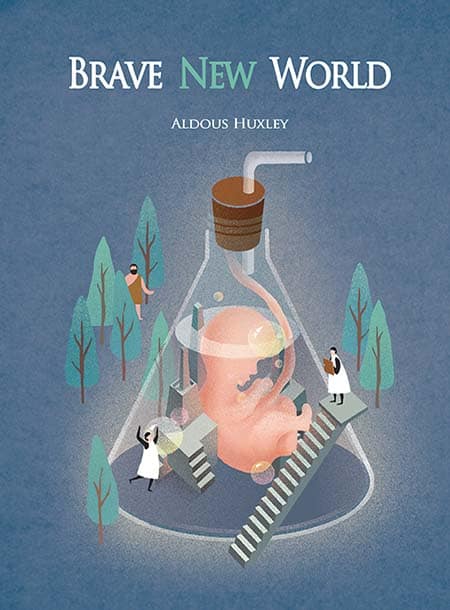
Image result for brave new world


I think that Aldous Huxley warned us best when he wrote in his novel Brave New World:
"All right then," said the savage defiantly, "I'm claiming the right to be unhappy."
"Not to mention the right to grow old and ugly and impotent; the right to have syphilis and cancer; the right to have too little to eat, the right to be lousy; the right to live in constant apprehension of what may happen tomorrow; the right to catch typhoid; the right to be tortured by unspeakable pains of every kind."
There was a long silence.
"I claim them all," said the Savage at last.



Friday, July 20, 2018

Scientists Can Design ‘Better’ Babies. Should They?

It has been a controversy whether it is right to manipulate an offspring's genes or not. Two parents, Lesley and John Brown failed to conceive a child for 9 years. They found scientists that eventually helped their daughter enter the world via vitro fertilization; which shook the world into believing that the scientist was messing with nature. Vitro fertilization is the process of fertilizing an egg and sperm outside of the body and the resulting embryo is placed into a womb. People are against it because they believe that it means playing with God's creations (God made us like this for a reason). But with new technological advances and knowledge, scientists are now able to choose what eye color, gender, and many other different traits of a baby. The product of this manipulation of genes for babies is called "designer babies." 

I personally believe that it's not a problem because it can help the offsprings have a better lives if they were to be born with genetic defects. Manipulating the fertilization process can also help women who aren't capable of giving birth. I understand that mutations in DNA are prone to happen, but if you can prevent it, why not do so?

Article Link
Related Article

Friday, October 13, 2017

U.S edits Embryo DNA for first time

 
In vitro fertilization, computer artwork. (Getty Images)


     Without a doubt, I found this article very interesting. Scientist have successfully edited embryos so that they could grow and develop if placed into a mother's womb. This is the first time this is happening in the U.S. The gene altering technology is referred to as CRISPR. By injecting CRISPR into the embryo about the same time that is it getting fertilized by the sperm it reduces the risk of "off target editing"(Newman). This is extremely valuable in the world of medicine. It will help correct genes that are dangerous to future generations. They could also eventually alter inherited diseases to help those. Although these are all positive factors, I do believe this technology should be evaluated to fit culture appropriation.
    Personally, I think its great to see technology improving, specifically in genetics. When thinking of this article the idea of "Designer babies" popped in my head. People may want to pay to have their embryos genes altered making the baby ideal phenotypically. Many will argue that this is morally wrong and should only be used for medical needs.  I think it may become a main focus causing a nationwide debate when the technology improves more.

Article: https://www.usnews.com/news/national-news/articles/2017-07-27/scientists-edit-the-dna-of-embryos-for-first-time-in-united-states

Tuesday, October 18, 2016

Mouse egg cells made entirely in the lab give rise to healthy offspring

The scientific team of Katsuhiko Hayashi of Kyoto University in Japan has successfully created live fertile offspring from completely lab made egg cells.  This is a huge achievement in the field of fertilization research and could have many possibly uses in the future. These eggs were created from stem cells entirely in a lab dish. The team made fertile egg cells from stem cells back in 2012, however to accomplish the last steps of fertilization, they had to implant the eggs into live mice. This summer, the scientists showed that they can keep developing mouse ovaries in the lab in order to make mature, fertile egg cells.  They use the stem cells to develop immature egg precursor cells, and then culture them in clusters of cells taken from fetal mouse ovaries.  The process resulted in 50 mature eggs, but the lab created cells have a higher rate of chromosome abnormalities than normal egg cells, but 75% of the lab created cells had the correct number of chromosomes. The scientists then fertilized those eggs with sperm cells in order to create 300 embryos, and then injected them into host female mice. Only 11 of them, or 3%, were able to grow and become pups.
Mice derived from lab made eggs were normal, fertile adults.

Though these techniques may one day have applicable uses for humans, they are still far away from their goal.  This process can be used to help infertile people have children. It can also be used to genetically modify eggs in order to get rid of undesired traits or harmful diseases.  It could also help women who lost eggs due to chemotherapy treatment for their cancer. Of course with most scientific discoveries, many ethical issues arise.  Movements toward a designer baby, with specific genetic alterations, could pose serious implications for our species.

Monday, February 8, 2016

Britain Gives Permission for Gene Experimentation on Human Embryos

Last Monday, Britain has officially given permission to scientists to conduct gene-editing experimentation on human embryos. This landmark decision may be the beginning to what many ethicists say will lead to "designer babies." Others believe it may be the beginning of "super-soldiers."

Although researchers will not be creating human life, they will be modifying the embryos to better understand human fertility, disease and miscarriages. The human embryos are set to be destroyed seven days after modification. I believe this factor to be a mistake, because if you are to do the science you should not do it half-heartedly. How much data can you get from an embryo in seven days that takes 9 months to mature? My guess would be an insufficient amount for proper research.

The team carrying out the research will be led by Kathy Niakan, who plans to use the CRISPR-Cas9 gene-editing method, a relatively fast and cheap approach published in 2012. In short, CRISPR-Cas9 allows researchers to pinpoint a target gene and cut it using the Cas9 protein. By using this method, they will essentially begin to use a "biological cut-and-paste method," one that could bring huge benefits to research and/or unintended consequences for the future.

Monday, April 6, 2015

Britain set to approve technique to create babies from three people


On January 27, 2015 British lawmakers voted to allow the creation from the DNA of 3 people, a new form of in vitro fertilization, making them the first country to approve the altering of a human egg before placing it in the womb.  This procedure could help to prevent the inheritance of genetic diseases.  It is very common for a mother with defected mitochondria to pass those complications onto her offspring.  Despite the vote being 382 to 128 in favor of the technique, many people argue that is just a way to create “designer babies” and ensure a “perfect child”.  But that is not the case.  This procedure will only be done in mother’s who have faulty mitochondria that do not want to risk transferring any diseases to their children, that is where the third person comes in.  All DNA besides mitochondrial DNA will come from the parents while mitochondrial will come from a donor.  All characteristics of the child will come from the parents, and only to mitochondrial DNA will come from the donor to ensure no defects will be passed on.
            Mitochondrial diseases are devastating and life threatening and there is currently no other treatment towards them.  Receiving DNA from a donor is the only option, making it very appealing to the general public.  The law has yet to be decided as the Church of England would like more time to conduct research to make sure that it will work the way it is intended to so no one is prevented from the use of this scientific advancement.
            In my opinion, this is a brilliant idea.  No parents want to hear that they have passed down a fatal trait to their newborn child, so why should they have to?  Every operation has its problems but based on this article, it seems that the pros definitely outweigh the cons.