Showing posts with label egg. Show all posts

Thursday, November 21, 2024

Advances in Understanding Miscarriages

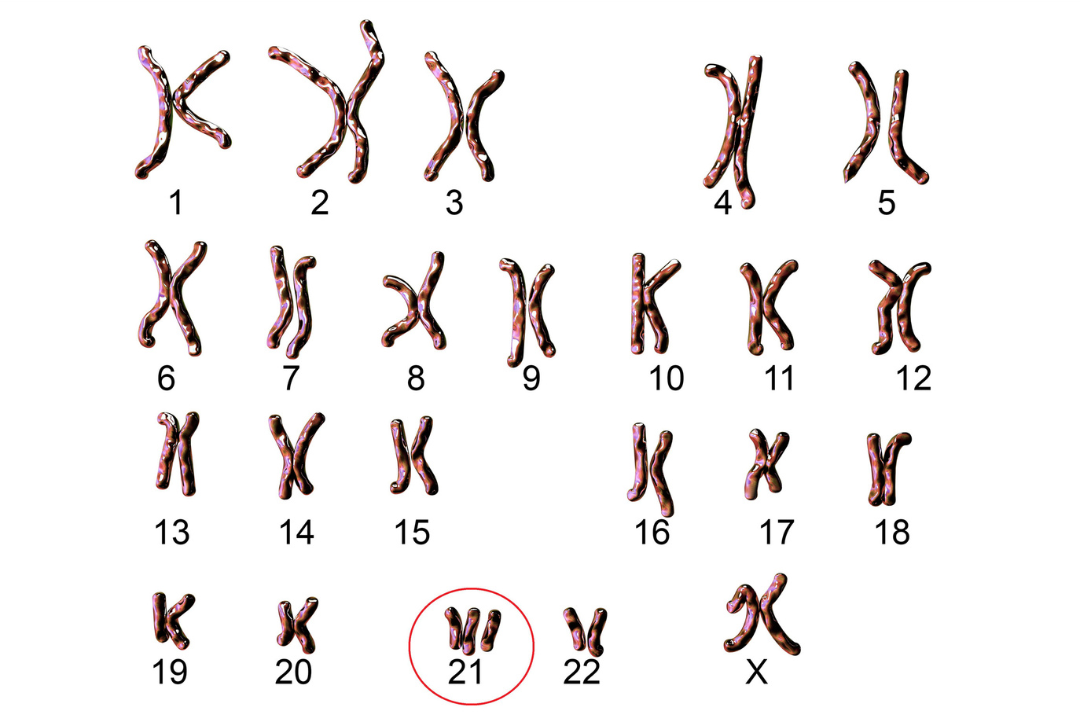
An article published by Mirage News  study done by Rutgers University recently revealed some of the genetic causes behind miscarriages. Researchers found that some women have a gene variant that causes accelerated aging of their eggs, with a difference of a single amino acid in the resultant protein. This leads to higher rates of aneuploidy, and as a result a higher chance of miscarriage. Rutgers decided to conduct a follow-up study on mice, and the results showed that the variant was indeed associated with egg abnormalities.

This new discovery may have an important impact on women's reproductive health. As the article states, it may give women who are aware of this variant more time for planning a family. Having this information might allow women to make more informed, more successful choices.

I personally thought that this was a really insightful article; the writer simplifies the full research into digestible, interesting information. As a woman myself, I do worry about my own reproductive health and fertility, so I find that this article quite helpful in explaining why things like miscarriages happen. I was very surprised to find how simple the cause was as well; everything that was written in the article were all concepts and terms that I was very familiar with. All in all, this article makes me feel less fearful and more in control about my own reproductive health.

ARTICLES
https://www.miragenews.com/researchers-target-genetic-variant-linked-to-1362336/

Saturday, November 19, 2016

Red-Eye Tree Frog Embryos Escape Danger

A trait unique to this species, red-eyed tree frog embryos can hatch in an instant to escape dangerous predators. In an article by Live Science, this frog can be seen hatching as early as four days into development. Typically, undisturbed embryos can hatch after six or seven days. An embryo can identify vibrations from their surroundings, attributing them to rain, predators, or other things in their surroundings. If it was a predator they sensed, they quickly use their unique survival trait to escape. 

While most frog embryos release an enzyme throughout development that weaken the egg membrane over time, the red-eyed tree frog is able to store this enzyme in their snouts. The embryo will quickly release it onto the piece of egg membrane directly in front of them to create a weak spot in the egg from which they can hatch and make their escape. This method allows the embryo to make a quick getaway in as little as 6 seconds. In an article by the New York Times, Dr. Warkentin explained that she did not know of any other frog with such a short speed of hatching.


An extraordinary behavior first identified in 2005, this recent discovery explains the genetics and mechanics behind the process, and is truly amazing to behold. I believe that this trait, totally unique to the red-eyed tree frog, is a trait most organisms in the animal kingdom could greatly benefit from. To be able to have control over your own birth date like that, and to be able to save your own life before it has even started is very gratifying.

Tuesday, October 18, 2016

Mouse egg cells made entirely in the lab give rise to healthy offspring

The scientific team of Katsuhiko Hayashi of Kyoto University in Japan has successfully created live fertile offspring from completely lab made egg cells.  This is a huge achievement in the field of fertilization research and could have many possibly uses in the future. These eggs were created from stem cells entirely in a lab dish. The team made fertile egg cells from stem cells back in 2012, however to accomplish the last steps of fertilization, they had to implant the eggs into live mice. This summer, the scientists showed that they can keep developing mouse ovaries in the lab in order to make mature, fertile egg cells.  They use the stem cells to develop immature egg precursor cells, and then culture them in clusters of cells taken from fetal mouse ovaries.  The process resulted in 50 mature eggs, but the lab created cells have a higher rate of chromosome abnormalities than normal egg cells, but 75% of the lab created cells had the correct number of chromosomes. The scientists then fertilized those eggs with sperm cells in order to create 300 embryos, and then injected them into host female mice. Only 11 of them, or 3%, were able to grow and become pups.
Mice derived from lab made eggs were normal, fertile adults.

Though these techniques may one day have applicable uses for humans, they are still far away from their goal.  This process can be used to help infertile people have children. It can also be used to genetically modify eggs in order to get rid of undesired traits or harmful diseases.  It could also help women who lost eggs due to chemotherapy treatment for their cancer. Of course with most scientific discoveries, many ethical issues arise.  Movements toward a designer baby, with specific genetic alterations, could pose serious implications for our species.

Tuesday, November 3, 2015

Egg Being Fertilized By More Than One Sperm In Birds?

Birds' eggs are fertilized by more than one sperm, a process called polyspermy.  Studies have shown that more sperm in an egg is correlated with more viable offspring.  In birds, when more sperm fertilize an egg, the developing chick will make it full term before hatching as opposed to eggs with less sperm that are more likely to die during development.  In humans, polyspermy is very uncommon but does occur on occasion.  Many times, in humans, polyspermy leads to the death of the developing baby due to complications during meiosis because of all the extra chromosomes that are made.  It is still unknown why birds have to have more than one sperm fertilize their eggs, but future studies may find a better understanding to explain this.  This is very interesting because of how polyspermy varies from species to species.  If humans were to survive after undergoing polyspermy in utero, how would they look, or function? 

To read the article publised by the New York Times on birds and polyspermy, click HERE

Thursday, April 17, 2014

Protein Essential for Fertilization Discovered

Fertilization occurs when an egg and a sperm recognize each other and fuse together to form an embryo. In 2005, the Izumo protein, coded by the IZUMO-1 gene, was discover as the protein displayed on the sperm that recognizes the egg. But the protein on the egg that gets recognized was never known, until now. The  is Juno protein named after the Roman Goddess of fertility and marriage. Scientist found the Juno protein by making artificial Izumo proteins and using it to find where it binds best on the egg. Then the scientists from the Wellcome Trust Sanger Institute tested the affects of the absence of these proteins in mice and saw that it made them infertile. This interaction was so hard to find because it is a very weak interaction and also once fertilization occurs, the Juno protein becomes undetectable. This explains why once the egg is fertilized by one sperm cells, it shuts down its ability to recognize other sperm.
         This new information is extremely helpful. This can broaden the treatment of infertility in women. Doctors can finally examine the eggs of infertile women to determine if it is because of the lack of the Juno protein. Also this can create new forms of birth control which could maybe deactivate the Juno protein for a period of time.