Showing posts with label Development. Show all posts

Thursday, November 18, 2021

New Study Shows That Embryos "Reset" Their Age After Taking to The Uterus

Fertilized Human Zygote

When an egg is released into the ovary, it becomes susceptible to fertilization via sperm. When this happens, the egg and sperm become a zygote, which then becomes the developing fetus. 

A new study has shown that, once an egg is fertilized and becomes a zygote, attaching itself to the uterus, all genetic signs of aging appear to "reset". In this study, mice were used. After the egg was fertilized and attached to the uterus, around 4.5-10.5 days after fertilization, biological and genetic signs of aging seemed to pause, and even reverse, for a few days. This data has been consistent with mice and humans.

This "reverse aging" of zygote development could vastly help advance the study and cure of age-related diseases such as cancer, Type 2 Diabetes, Parkinson's Disease, Dementia, and so many others. With enough time, the process of this "reverse aging" could even be used to artificially stop aging in humans later in life.

The mechanism of this reverse aging is still unknown, which opens doors to so many possibilities for further research in the future.

Monday, October 29, 2018

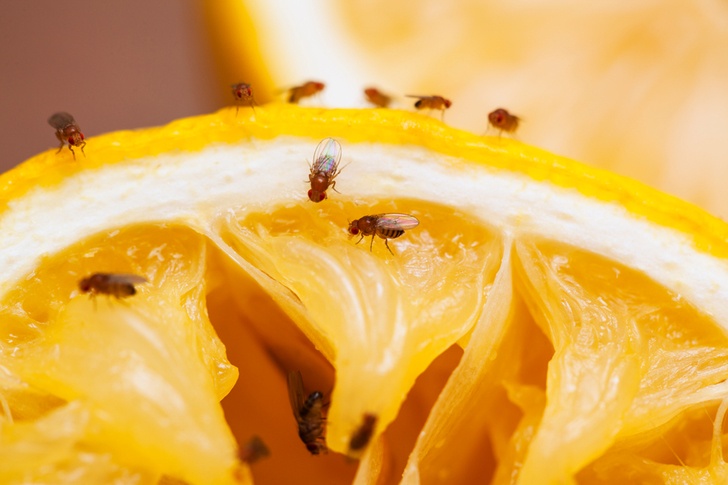
Drosophila Development in the Drink


If a fetus is exposed to alcohol in the womb, it can result in a series of problems, such as developmental problems or even fetal death. However, fruit flies (Drosophila Melanogaster) are affected in a similar manner because they frequently eat rotting fruit, which produces alcohol. Tatiana V. Morozova and her research team examined the reason behind prenatal sensitivity to alcohol in fruit flies. They created a population of 200 wild-type inbred fruit flies that had fully sequenced genomes. The flies were exposed to alcohol and their developmental time and mortality rates were recorded.

Morozova et al also examined how ethanol exposure affected the movement of the flies. They found that when the fruit flies were exposed to ethanol, their development time increased, their movement was impaired, and that more flies died. However, there was some genetic variation and variation in the results from the different lines of fruit flies. The genomes of the lines were compared to examine the genetic differences between the sensitivity of each line. It was revealed that the Cyclin E gene, which regulates the cell cycle and is present in the ovaries of fruit flies, was linked to developmental alcohol sensitivity.

I thought that this article was an interesting read because the study could provide insight into the causes of  alcohol and drug sensitivity during human development. The study could also help us look into the genetic causes of these sensitivities and might lead to the development of safer medications to use during pregnancy or effective treatments for infants who were exposed to alcohol or certain drugs during development. There might not be an identical gene that affects alcohol sensitivity during development, but this study suggests that there might be a different gene that affects developmental sensitivity in humans.

References

A Cyclin E Centered Genetic Network Contributes to Alcohol-Induced Variation in Drosophila Development

Tatiana V. Morozova, Yasmeen Hussain, Lenovia J. McCoy, Eugenea V. Zhirnov, Morgan R. Davis, Victoria A. Pray, Rachel A. Lyman, Laura H. Duncan, Anna McMillen, Aiden Jones, Trudy F. C. Mackay, R. H. Anholt

G3: GENES|GENOMES|GENETICS August 2018 8: 2643-2653;

https://doi.org/10.1534/g3.118.200260

http://www.g3journal.org/content/8/8/2643

Saturday, November 19, 2016

Red-Eye Tree Frog Embryos Escape Danger

A trait unique to this species, red-eyed tree frog embryos can hatch in an instant to escape dangerous predators. In an article by Live Science, this frog can be seen hatching as early as four days into development. Typically, undisturbed embryos can hatch after six or seven days. An embryo can identify vibrations from their surroundings, attributing them to rain, predators, or other things in their surroundings. If it was a predator they sensed, they quickly use their unique survival trait to escape. 

While most frog embryos release an enzyme throughout development that weaken the egg membrane over time, the red-eyed tree frog is able to store this enzyme in their snouts. The embryo will quickly release it onto the piece of egg membrane directly in front of them to create a weak spot in the egg from which they can hatch and make their escape. This method allows the embryo to make a quick getaway in as little as 6 seconds. In an article by the New York Times, Dr. Warkentin explained that she did not know of any other frog with such a short speed of hatching.


An extraordinary behavior first identified in 2005, this recent discovery explains the genetics and mechanics behind the process, and is truly amazing to behold. I believe that this trait, totally unique to the red-eyed tree frog, is a trait most organisms in the animal kingdom could greatly benefit from. To be able to have control over your own birth date like that, and to be able to save your own life before it has even started is very gratifying.

Saturday, October 17, 2015

Behaviors in Life May Impact Grandchildren

[A grandfather playing with his grandchild]

Research has shown that the health implications of a man's alcohol use, tobacco exposure and other behaviors can affect the health and development of offspring, even before conception. Numerous studies have indicated that a child's health may be affected by the environment and life behaviors of their father.Sarah Kimmins, of the Department of Animal Science at McGill University in Canada, notes that scientists know very little about what drives this association. Sarah Kimmins investigated whether proteins called histones - a component of sperm that is transmitted during fertilization - play a role in heritability. 

Sarah Kimmins and her team created mice in which the biochemical information on the histones was modified during the formation of sperm - a process that can occur with certain environmental exposures. The team then went on to analyze the development and survival of two generations of offspring. The team found that the offspring were not only prone to birth defects, but also they had abnormal skeletal formation and reduced survival. More importantly, these affects were seen across two generations. These findings suggest that something other than DNA - the alteration of histones - play a role in the health and development of offspring. 

I found this article very interesting because I had always thought DNA was the main source of one's development. I had no idea histones could also play a part in development. This is only one study that suggests something other DNA plays a part in development, but there will be many more that will get the same results. This article got  me thinking about other genetic materials that could have a hand in development. 

Link to article here 

Saturday, November 22, 2014

Ancient Genetic Program Employed in More Than Just Fins and Limbs: Hox Genes Provide Blueprint For a Diversity of Body Plan Features

 What are Hox genes and how are they important to the developmental process?

             
     Hox Genes are regulatory genes that determine the location and orientation of body parts in animals. These developmental genes vary from animal to animal, and are the reason why flies have two antennae and wings, whereas a fish will form fins. Hox genes do this by being expressed at different locations and times during the development of an embryo. Reversing the pattern in which Hox genes determine the locations of body parts shows a code that forms appendages separate from the body, such as fins or limbs. This information is useful in determining the exact mechanism in which fins developed into limbs over time through the evolutionary process. In addition, scientists are performing experiments to determine how important this code is in the development of specialized structures, as it has already been observed to code for the barbels in paddlefish and the claspers in skates and rays.


     I find this article to be interesting because it explains the importance of Hox genes in the developmental process. It also makes the fundamental concept of why all animals are different from one another clear, as these genes code for the differences between them. This research is also significant because it provides insight into the genetic basis of the evolutionary process.


Saturday, April 12, 2014

Genetics Could Be Causing Intellectual Disabilities

In recent studies, Dr. John Vincent has been researching the genetic causes behind intellectual disabilities.  According to this article although there may be other causes behind intellectual disabilities in children such as trauma in the womb, but genes are one of the main sources. Dr. Vincent performed these studies on families where the popular culture includes intermarriage between first cousins.  Such inbreeding could produce a larger likely hood that the children of these couples will receive defective recessive genes.  Although this decreased cognitive development is extremely common within inbreeding families, it is also found in non inbreeding situations.  This and other research has shed light on just how many genes can and do affect the inheritance of intellectual disabilities.  This supporting article discusses a study that researches the affects METTL23 gene has on cognitive development.


I think that this research will be very beneficial for scientists in the field of cognitive studies.  Research has been done to prove just how much traumatic injuries can affect brain development and functioning but more research needs to be performed to see just how genes affect the brain.  The research could open many more doors for scientists to genetically test parents prior to having children.  Since the brain development is such a vital part of growing up it is important to be aware of possible troubles. Genetic testing can help parents know the risk of their child inheriting such detrimental genes.  I am in full support of parents being pre-tested before having children in order to understand the risk of having a child.  


Friday, April 11, 2014

Next Generation of "Super Rice"

In a relatively recent article researchers from Michigan Technological University have identified genes which could possibly be the key to the development of the next generation of "super rice." Biologist Ramakrishna Wusirika and PhD student Rafi Shaik have uncovered more than 1,000 genes in rice which have key roles in responding to two different kinds of stress experienced by rice. These two different kinds of stresses are said to be biotic, which is caused by infectious organisms such as bacteria and abiotic, which is caused by nonliving factors such as nutrient deficiency and salinity. In total, 1,377 of the approximately 3,800 genes involved in stress responses of the rice, respond to both biotic and abiotic stresses. Further testing showed that a total of 196 genes showed response to picked biotic and abiotic stresses.The biotic stresses looked at by the scientists were bacteria, fungus, insect predation, weed competition, and nematodes while the abiotic stresses were drought, heavy metal contamination, salt, cold, and nutrient deprivation.

Wednesday, April 9, 2014

Cancer cells may respond to mechanical force

Researchers have now tried to understand more about cancer cells by trying to use a new method of seeing if they can respond to mechanical manipulation. two studies from researchers working at the UNC Lineberger Comprehensive Cancer Center are researching this as we speak. Keith Burridge, PhD, Kenan Professor of Cell Biology and Physiology in the UNC School of Medicine, and Richard Superfine, PhD, Taylor-Williams Distinguished Professor of Physics and Astronomy in the College of Arts and Sciences, using the new cancer equipment funded by the university, identified cellular pathways of movement, stiffen and reaction to physical stresses. This knowledge, researchers hope, will help reveal what causes cancer and better treatments. While reading works from Elizabeth Lessey-Morillion, graduate author of Journal of Immunology paper, used magnetic beads attached to the endothelial cells that line blood vessels, applying force to the cells caused them to stiffen, opening gaps between cells that white blood cells could enter. while doing this, the stiffening slowed in response. They also believe that it could work with tumor cells. Researchers have now tried to understand more about cancer cells by trying to use a new method of seeing if they can respond to mechanical manipulation. two studies from researchers working at the UNC Lineberger Comprehensive Cancer Center are researching this as we speak. I believe this research is a great move to understand cancer development in the human body. hopefully with more test, we can come closer to developing a better treatment for long term cancer people. 

Original article: http://www.sciencedaily.com/releases/2014/04/140409094332.htm
Secondary article: http://healthcare.utah.edu/huntsmancancerinstitute/research/labs/beckerle/research/cell-adhesion.php


Wednesday, November 6, 2013

Humans Develop Faster than Chimpanzees


     It is apparent that humans and primates are compared genetically. 98% of the DNA from humans and chimpanzees are the same; therefore the difference remains in the 2% left. It is thought that Alu DNA (also known as junk DNA) make up various mutations and rearrangements. Although these can be helpful in discovering new proteins, they can also be harmful in creating a cancerous tumor and other defects. A team of scientists has found 2,200 new human Alu DNA, which are not found in chimpanzees. It is due to this that the development of humans has occurred at a much faster pace than the development in chimpanzees.
     This Alu DNA has also shown that it has been written into the human chromosomes. Achilles Dugaiczyk, professor of Biochemistry at UCR, comments that it is not due to natural selection. He also comments that this expansion of DNA was due to a chemical process within the human chromosomes.
    When determining the genetic difference between humans and other animals, it is an important process because it can lead to many other things. This can enhance our knowledge base on how life began on earth. It also allows us to compare our DNA with other DNA to find a link to a possible genetic disease. 


Thursday, October 24, 2013

Gene Silencing Strategy Step Towards Chromosome Therapy

         Jeanne Lawrence, Ph.D., Professor of Cell & Developmental Biology at the University Massachusetts Medical School, provided evidence that the genetic defect causing trisomy 21 can be suppressed in laboratory stem cell cultures.  Trisomy 21 is also known as Down syndrome.  It is a genetic condition where an individual has 47 chromosomes rather than 46, the extra being located at the 21st chromosome.    


     With the use of an advanced genome editing tool extra chromosomes are neutralized by silencing the genes on the extra chromosome.  This is done on laboratory cultures from cells from individuals that have down syndrome.  Trisomic stem cells that were muted were compared to identical trisomic cells that were untreated.  Through comparative observations, researchers were able to identify defects in the rapid growth and specialization of untreated nervous system cells.  These observed defects are regressed in which the extra chromosome is muted.  The silencing of trisomy 21 by manipulation is a great step forward for the development of chromosome therapy not only for chromosome 21 but genome wide.
     The possibility that this one discovery can lead to many different paths for the discovery of new cures and use in other therapies and solutions is great! By finding new techniques for silencing abnormal chromosomes, the development of chromosome
therapy can lead to cures for other chromosomal disorders that may be fatal.  Hopefully future advancements using this discovery will not surpass the point where it is used for superficial reasons, such as creating the perfect/ideal child!


Saturday, March 31, 2012

Cured From the Inside Out

When we think about chemistry, the image that usually comes to mind is some sort of laboratory with bubbling, colorful substances in every-sized flasks over an ancient-looking Bunsen burner. We think of fume hoods with chemicals we probably shouldn’t be inhaling and little glass vials that probably should be labeled. We think of a traditional chemistry lab. However, an article recently published in ScienceDaily has a new, different image of chemistry…chemistry done within the laboratory of the human body.


A newly founded field of chemistry, by Carolyn Bertozzi, Ph.D., has started to emerge for the past decade known as bioorthogonal chemistry. First emerging from her study of viewing a virus entering a cell with fluorescent probes, its focus is a new form of drug development where chemical ingredients are added separately into the body where they eventually meet up at a designated point, create a reaction, and cure the patient. How is this different from other, pre-made oral drugs? Sometimes the oral drugs never reach the goal location strong enough to make an effect on the diseased tissue targeted. With this new method, the numerous ingredients, just like in a laboratory setting, are added separately, with each keeping their strong concentrations. Then, at a given point, they come in contact with one another, and a reaction occurs to produce the desired drug within the patient’s body.

However, as exciting as this may sound, it’s a bit trickier than it seems. In a lab, the conditions are easily controllable. (Ex. Temperature, timing, light exposure, cleanliness, etc.) In the human body, things are not quite so black and white. It’s more of all gray. There are different compounds, chemicals, and water all over the place, with little controls. Plus these chemists are restricted to reactions that can only occur in water, having the pH of 7, and at body temperature. After fighting through all of these obstacles, only then can the drugs begin to be made within the body.


Friday, November 25, 2011

Protein Enhancers and Finger Development

Human Hand

Researchers have discovered a new genetic mechanisms that influences and directs the formation of fingers in humans. As it turns out, in this case, genes only play a background role as proteins direct the formation of our digits. It was previously thought that these protein mechanisms originally did nothing, as is common within DNA. However, it was found that these genes trigger the activation of a series of proteins that then direct the formation of the fingers. These seven proteins act as enhancers which coordinate the development of the digits. In embryonic development, the gene causes the DNA strand to fold in a certain way that allows all seven of the enhancing proteins to come in contact. It is then that these proteins direct finger development. If any one of these proteins is missing, then finger development will be stunted or malformed. The more proteins that are missing, the greater the degree of malformation. The flexibility of this gene mechanism has a very wide range of implications and mutations. This same mechanism controls the formation and expression of digits in the single-toed Horse and the two-toed Ostrich as well as the human hand.

http://www.news-medical.net/news/20111124/Scientists-discover-genetic-mechanism-behind-finger-malformation.aspx (Article Link)