Showing posts with label aneuploidy. Show all posts

Thursday, November 21, 2024

Advances in Understanding Miscarriages

An article published by Mirage News  study done by Rutgers University recently revealed some of the genetic causes behind miscarriages. Researchers found that some women have a gene variant that causes accelerated aging of their eggs, with a difference of a single amino acid in the resultant protein. This leads to higher rates of aneuploidy, and as a result a higher chance of miscarriage. Rutgers decided to conduct a follow-up study on mice, and the results showed that the variant was indeed associated with egg abnormalities.

This new discovery may have an important impact on women's reproductive health. As the article states, it may give women who are aware of this variant more time for planning a family. Having this information might allow women to make more informed, more successful choices.

I personally thought that this was a really insightful article; the writer simplifies the full research into digestible, interesting information. As a woman myself, I do worry about my own reproductive health and fertility, so I find that this article quite helpful in explaining why things like miscarriages happen. I was very surprised to find how simple the cause was as well; everything that was written in the article were all concepts and terms that I was very familiar with. All in all, this article makes me feel less fearful and more in control about my own reproductive health.

ARTICLES
https://www.miragenews.com/researchers-target-genetic-variant-linked-to-1362336/

Wednesday, October 14, 2015

Common Gene Variant May Raise Miscarriage Risk, Study Finds

According to US news, scientists have found a common gene variant that may be responsible for a link between both early pregnancy loss and failed attempts at in vitro fertilization. This is caused by a variant in a female’s genome. There is an error in the replication process, which has ties with aneuploidy. This means that there are an abnormal number of chromosomes in a cell.

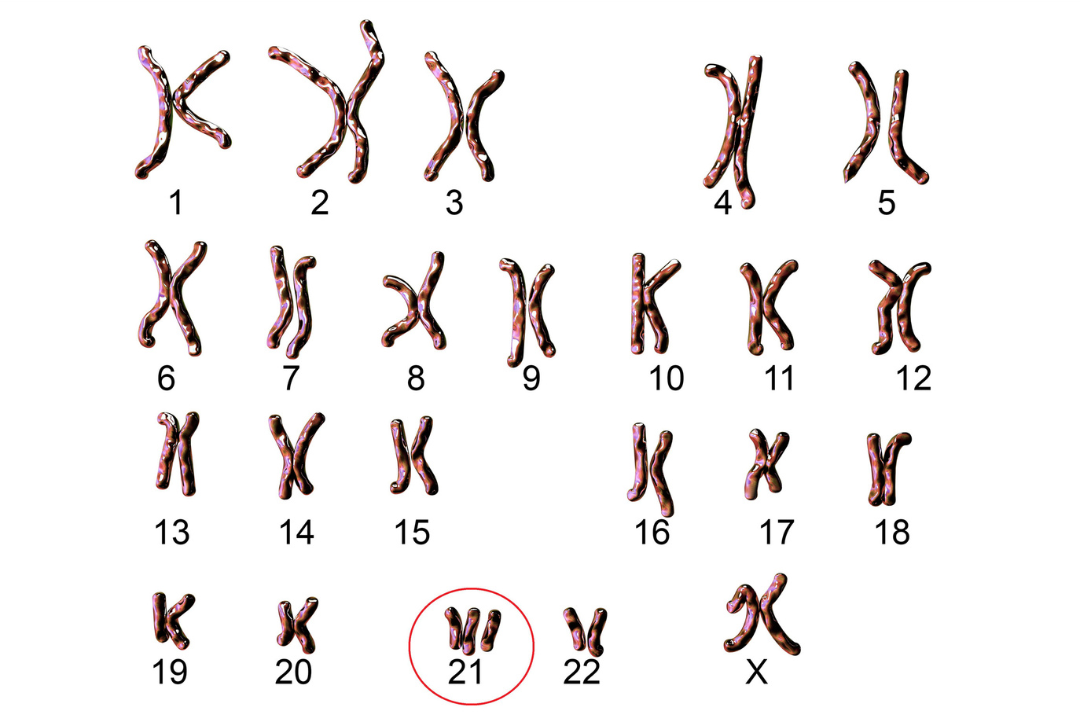
Normally human cells have 46 chromosomes, 23 pairs. Aneuploidy happens when the chromosomes distribute unevenly, which has major effects on pregnancy loss. According to Rajiv McCoy, “early in human development, this (cell replication) process is particularly error-prone, affecting as many as 75 percent of embryos and often causing pregnancy loss as soon as five days after fertilization—before the mother even knows she is pregnant.”

This test was preformed using 46,000 embryos from 2,400 in vitro fertilization patients. It was found that the gene known as rs2305957 has a strong association with the risk of aneuploidy, also age was a factor. The results showed that approximately half of the women had the genetic variant. It is suspected that PLK4, which is located nearby the rs2305957 gene and is responsible for the distribution of chromosomes as cells divide, could possibly be involved with the cause of aneuploidy.

I found this article to be very interesting. I know many women who have tried in vitro fertilization that had failed. It is interesting to now possibly know the reasons for the failure. I think further research is still required.

Tuesday, April 14, 2015

Puzzling Pregnancy Variant

A report published in Science Magazine, and reviewed on TheScientist.com suggests that there is a striking link between mitotic aneuploidy and a nucleotide variant (SNP rs2305957) of chromosome 4 of maternal genomes. What is the significance of this, and what does it all mean? Well, since aneuploidy, or having the incorrect number of chromosomes in a cell, is the most common reason for failed pregnancy, the importance of this discovery is obvious. Not so obvious, however, is the fact that the team doing the study found that this single nucleotide variant's frequency reaches up to 45% in human populations. Coupled with the fact that this variant is completely absent in Neanderthal genomes, this may suggest that positive selection in human evolution has allowed this gene to proliferate.
The question not answered by this study is the purpose of the rs2305957 variant. Dmitri Petrov, a scientific researcher at Stanford University, believes that the variant might have established paternity confusion. This hypothesis suggests that when males were unsure if a child belonged to them, they would care for all of the children equally, benefiting the group as a whole. Whether this, or the many other theories circling this new discovery are true, is unknown. But the fact that evolution allowed a gene variant that reduces the number of successful pregnancies to proliferate, is puzzling to say the least.