Showing posts with label CRISPR/Cas9. Show all posts

Tuesday, May 2, 2017

Gene editing strategy eliminates HIV-1 virus in live mammals

Scientists have made strides toward finding a cure for the HIV-1 virus by showing that it is possible to provide prophylactic treatment via CRISPR/Cas9.  Scientists used rats and mice that had HIV-1 DNA incorporated into their genome.  They utilized CRISPR to eliminate the viral DNA from their genome. This reduced the amount of RNA expression up to 95%.  The scientists in this study also studied mice that were infected with EcoHIV, which is the mouse equivalent of the human HIV-1 virus.  CRISPR was able to block viral replication and prevent further infection with an extremely high efficiency rate of 96%.

The results of this study suggest a cure for HIV is imminent.  Their strategy was efficient and they were able to demonstrate that they could treat acute infection and latent infection.  The next step is to test in primates and eventually begin human testing.
https://www.sciencedaily.com/releases/2017/05/170501112514.htm
http://www.sciencedirect.com/science/article/pii/S1525001617301107

Friday, November 25, 2016

CRISPR Gene-Editing Tested in Human Immune cells

The CRISPR/Cas9 gene-editing technology is allowing a Chinese team of scientists, lead by oncologist Lu You at Sichuan University in Chengdu, to repair genes in order to treat a disease.  As a part of a clinical trial, the Chinese team used CRISPR/Cas9 to treat a patient with non-small-cell lung cancer.  CRISPR/Cas9 has only ever been tested in lab animals, but this latest news, reported in the journal Nature, describes the researchers testing the gene-editing technique in a living person for the first time.

Dr. Lu and his team isolated immune cells from a cancer patient’s blood, and using the CRISPR/Cas9 technique, they genetically modified them to eliminate the function of the PD-1 gene which encodes for a protein that is capable of shutting down the body's natural immune response to cancer.  PD-1 was targeted because the protein allows cancer cells to proliferate.  Once the immune cells were cultured with modified genes, the modified cells were then injected back into the patient; the idea being that the modified immune cells won't be susceptible to being shut down as easily as the patients unmodified immune cells, (since the modified cells are unable to produce PD-1 protein).  Without producing PD-1 protein, the modified cells are thought to be able to combat against the cancer.
This technique is reported to allow the ability to edit any part of DNA of any organism, and it could potentially be used to cure diseases, engineer crops, and eradicate pathogens.  Jennifer Doudna, at the University of California, Berkeley, and Emmanuelle Charpentier, at the Max Planck Institute for Infection Biology in Berlin, first reported this discovery in the US back in 2012, and it was met with much controversy.  As a result, further public/private research was restricted, and it also lead some scientists to continue research in other countries.  The National Institutes of Health, (NIH), has an established Recombinant DNA Advisory Committee to review and make recommendations on any research studies that involves using gene-editing techniques on humans.  Though a conservative approach is important, I personally think it slows progress.

This could be one of the biggest biotechnology breakthroughs of our century.  It is an awesome example of personalized medicine, and I genuinely hope that China’s clinical trials are successful in providing the world insight to a completely new therapeutic approach to combat cancer.  The value of the research lies in its potential to be used in medical care to treat diseases.  I’d like to eventually see cell cultures and genetic manipulations be significantly automated/streamlined to allow them to become a mainstream option.  Similar therapies have already been shown to have amazing effects in blood-based cancers, but this is the first time that the cells were modified using the new CRISPR gene editing tool.  CRISPR/Cas9 gene-editing is described as being cost-effective and efficient, and if successful, China’s clinical studies could be very beneficial for all mankind.

Tuesday, November 22, 2016

PNA Enables Gene Editing without Exogenous Enzymes Added

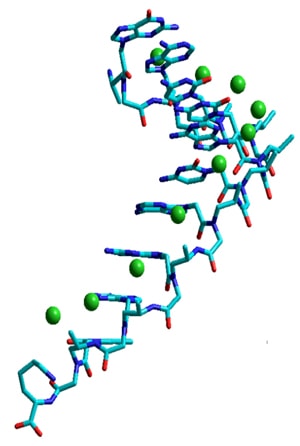
Scientists at Carnegie Mellon University and Yale University have developed a new gene editing system, consisting of synthetic, biocompatible nucleotide technology, that has cured a genetic blood disorder in living mice. The new technology, pioneered at Carnegie Mellon's Center for Nucleic Acids Science and Technology (CNAST), relies on peptide nucleic acid (PNA) molecules. Unlike the CRISPR/Cas9 gene-editing technique, this new synthetic nucleotide technology can be administered to living animals and it also significantly decreases unwanted, off-target, gene mutations. The PNA’s are fitted inside an FDA-approved nanoparticle delivery system for transportation. According to the researchers, the chemistry behind the design of the PNA molecule is innovative because it makes the PNA water-soluble and biocompatible, which means that it doesn't bind to proteins and other biomolecules in a non-specific manner, and the distinct stereochemistry of the synthetic molecule also makes it bind to DNA more easily.

The findings of this study, published in Nature Communications, are said to offer a new approach to treat genetic diseases targeting genes in hematopoietic stem cells. In their study, the researchers targeted the gene for beta-thalassemia, a blood disorder that reduces the production of hemoglobin. Beta-thalassemia is a common target for gene editing because the disease results from defective blood cells. It seems that the PNA system “tricks” the cell's normal repair machinery into chemically altering the bad gene. This is different from other gene editing strategies, (CRISPR), which involve adding an active enzyme into the cell from the outside.
"We have developed a system that uses FDA-approved nanoparticles to deliver our PNA molecule along with a donor DNA to repair a malfunctioning gene in living mice. This has not been achieved with CRISPR," said Danith Ly, professor of chemistry in Carnegie Mellon's Mellon College of Science and an expert in PNA chemistry.
CRISPR/Cas9-mediated genome editing relies on enzymes to cleave open the DNA at a target site, and it uses the cell's normal repair machinery to repair the gene. Using CRISPR, it is difficult to administer large enzymes directly to living animals, and once the enzyme is inside a cell, the enzyme may indiscriminately cut DNA at nontarget sites. As I understand it, the reliance on the enzyme and native repair systems is what leads to different efficiencies of CRISPR/Cas9 in different cell types and organisms.

The newly designed PNA molecule is designed to cleave the double-stranded DNA molecule and bind near the target site in a highly specific manner without cutting anything. PNA, "peptide nucleic acid", is a molecule with the same bases as DNA and RNA, but instead of the sugar-phosphate backbone of natural nucleic acids, the molecule has a peptide backbone, similar to proteins. This means the molecule can base-pair with standard nucleic acids, but has other properties that allow it to carry out different functions. Most notably, PNA can form triple-helix interactions with DNA, which seems to be linked to its role in gene-editing.

The lack of provided enzyme to carry out the biochemistry of this innovative gene editing technique is the really remarkable thing about this study. Gene editing as a whole has been attached to the name "CRISPR", which is only one method for gene editing, although by far the most successful.  There has been so much CRISPR-related research recently, that the fact that this gene editing technique isn’t CRISPR is noteworthy.  More proof of concept will be important before taking the new synthetic gene editing technology to patients, and if proven effective, the earliest human application of this type of technology would definitely be about a decade or more away. I think it’s awesome though, that “nanoparticle delivery”-systems are currently being developed, and it’ll be interesting to see how synthetic biocompatible techniques will shape our current understanding of the genome.

Tuesday, September 20, 2016

Order up, one CRISPR meal to go.

A professor of Plant Cell and Molecular Biology at Umea University in Sweden named Stefan Jansson served a hearty dish of pasta and "CRISPRed" vegetables. A recent breakthrough in gene editing allowed Jansson to grow mushroom and cabbage with parts of their DNA missing. Although it's the latest technology researchers are studying, CRISPR is a natural mechanism used by a wide range of bacteria. CRISPR is actually short for "clustered regularly interspaced short palindromic repeats." It is a DNA sequence that bacteria uses to detect a foreign DNA strand that a virus might have inserted. This sequence recognizes the virus' DNA and attaches itself to it. Cas9 is an enzyme that binds CRISPR and cuts the invading DNA to prevent it from replicating. The system CRISPR/Cas9 snips targeted DNA at precise locations and can be used on many genes at once. Researchers have learned that they can modified Cas9 to cut a specific sequence which gives them the ability to edit a gene on a DNA strand. This mechanism could possibly be used in drug development, agriculture and maybe human treatment. 

The concern however, is whether or not these plants can be grown without violating GMO regulations. If these plants are considered GMOs, that would prevent mass productions in many part of the world. The Swedish Board of Agriculture stated in 2015 that if only segments are removed and they are not replaced with "foreign" ones, then it does not fall under GMO legislation. The summer of 2016 was the first time plants with CRISPR/Cas9 edits were harvested outside of a lab. This could be the first "big step" into a new phase of agriculture in which science can be applied provide nutritious meals.   


Wednesday, November 25, 2015

Gene-Edited Dogs


Dogs are very unique creatures. There are many kinds that range in size and personality; and yet they have become man's closest companion. Dogs serve many purposes in society from being a close friend to someone in need to fighting alongside a warrior in battle. Today, they also serve an investigative scientific purpose.

Liangxue Lai, a researcher and Regenerative Biologist, is studying dogs for the purpose of medical research in human diseases such as Parkinson's and muscle dystrophy. Lai recently conducted an interesting experiment. He took 60 Beagle embryos, and only 27 of them were born. Two out of the 27 puppies had gene-edited DNA using the CRISPR/Cas9 mechanism, where the gene that produced myostatin was disrupted. Myostatin is a muscle growth inhibitor. Only one of those two puppies (Tiangou) exhibited the gene-editing effect though, growing twice as large in muscle mass as the others.  According to Lai, the goal of the experiment was to cause muscle diseases in these Beagles and observe the correlation to human muscular illnesses for biomedical research.

I hope Lai and his colleagues gain a greater understanding of muscular diseases through their experiments. I find this study very interesting. I do not agree with creating gene-edited species, however. I understand I am not a biomedical researcher, nor do I know of the prevalent medical issues or how they can be solved; but today I am witnessing scientists seeking to alter life from the way it was previously designed.


Main Article: Genetically Engineered Dogs

Other Article: Gene Editing from Nature

Thursday, November 19, 2015

Gene Drive Reversibility

Would it be incredible to genetically alter mosquitoes so they would not harm you? Such idea is already being tested. In 2003, Austin Burt, a leading geneticist, proposed the idea of gene drives. Gene drive is defined as the process of stimulating biased inheritance of certain genes to alter entire populations. In other words, they are genes that are inherited throughout a species almost 100% of the time. This process relies on endonucleases (restriction enzymes that cut DNA sequences) and CRISPR/Cas9, an enzyme from bacteria that can be used to alter any DNA sequence or genome. As an organism's DNA is cut, guided RNA sequences will take the place of the cut-out sequence and drive the "RNA guided gene"into an organism's genome. This imposed gene will be passed down throughout generations, altering an entire species. For example, a particular species of mosquitoes that carry malaria may not be able to carry the disease any more. 

While there are many questions and concerns about gene drives, scientists have recently made an important discovery. On November 16, 2015, a team of researchers at the Wyss Institute for Biologically Inspired Engineering at Harvard University and Harvard Medical School (HMS) experimentally showed that the effects of gene drives on populations can be reversed, and the team developed safeguards for using gene drives. First, by separating guided RNA from Cas 9 enzyme or inserting an artificial gene into an organism, gene drives could only be activated in the laboratory. This means the organism cannot survive in the wild. Also, by experimenting on yeast, gene drive traits have been reversed by reversing the gene drive machinery.  

This is a fascinating discovery. Much experimental work and research must still be accomplished, and safeguards and reversibility of using gene drives must be further explored. Gene drives could be used for great good in an ecosystem, but scientists are also tampering with an incredibly designed DNA code for life. I will choose to remain optimistic about this work. "Gene drive technology has great potential to solve global problems, such as malaria, for which we have no solutions today," says Wyss Institute Founding Director Donald Ingber, M.D., Ph.D…" 


Original Article: http://www.sciencenewsline.com/news/2015111617430047.html

Other Article: http://hplusmagazine.com/2015/03/10/gene-drives/


Scientist in China have started to genetically alter man’s best friend. These dogs have not been altered to be more fluffy or smaller. The muscle mass have been increased to improve performance. These dogs have been given an athletic edge compared to normal dogs. As expected, the genetically altered dogs have greater running ability. These dogs can be used for both military and hunting purposes.

CRISPR-Cas9 is one of the most precise and efficient methods of gene editing today. “In this case, the scientists used CRISPR to snip out a gene called myostatin in beagles, the most commonly used dog in biomedical research.” Out of the 27 puppies only 2 received the genetic altered muscle mass. It’s visibly obvious that these two pups have more muscular phenotype. Dogs, like many other species, are able to undergo mutations without serious negative effects.

Dogs have close similarities to humans when it comes to anatomical characteristics. Therefore, most of these advances in genetics can be transferred to humans with some work. Instead of muscle mass, scientist can work on curing diseases. However, genetically altering human DNA is still a touchy subject. So, I’m excited to see these advancements, but I think there is still a long ways to go before we will see them used for humans.

Saturday, October 24, 2015

Build a Bigger, Better Beagle


In China, researchers are using CRISPR/Cas9 to editing the genes of beagles to create dogs that have more muscle mass.  The altered gene, Myostatin, gives bully whippets and Belgian Blue cattle their bulky muscle without any known cause of health problems.  Liangxue Lai of the South China Institute for Stem Cell Biology and Regenerative Medicine in Guangzhou, China injected the gene editor into 35 beagles’ embryos.  27 puppies were born of which only 2, a male Hercules and a female Tiangou, had the edited genes. The female has both copies of the myostatin gene mutated in all of her cells developed bigger thigh muscles by at 4 months but Hercules didn’t have the double mutation in all of his cells and didn’t develop as much by 4 months.  He did pack on more muscle as they matured.  Even thou only a low number of the puppies were born with the mutations Lai believe the editor is not very efficient in dogs but the process just needs to be optimized.  Next Lai and colleagues hopes to make mutations that mimic genetic changes like Parkinson’s disease and hearing loss in human. They also don’t plan on making designer pets for sale using this technique; it’s for biomedical research only since beagles are very close to human in terms of metabolic, physiological and anatomical characteristics.

I think it’s amazing that China and the US use dogs for research needs; I have heard about rats and other animals but not beagles.  Instead of making designer pets my first concern is that this process will eventually be used to give humans bigger and more efficient muscles.  I can imagine the next generations of athletes trying to be larger by having their genes edited with bull genes. The research need is perfect but we do not need to make altered humans to be us stronger or to gain animalistic abilities.

Saturday, October 17, 2015

CRISPR Editing Helps in the Fight Against Cancer

Scientists at the University of California, San Francisco have found a new way of fighting cancer with the use of CRISPR gene editing in T-cells. T-cells are a big part of the immune system and help protect the body from disease. This technique is used to add or delete base pairs at a specific loci. In order to understand the technique, you must first understand what CRISPR is. CRISPR is a naturally occurring part of the immune system in many bacteria. Cas enzymes are used in conjunction with this to cut out specific parts of DNA sequences. The CRISPR DNA sequences tell the Cas enzymes (usually Cas9) where to cut. In this case, a scientist would "feed" the Cas 9 a sequence and the CRISPR would be transported into the cells through a virus.

Alexander Marson and his team have found a way to use this technique to strengthen T-cells against cancer cells. The team used an electrical field to create holes in the cell membranes of the T-cells rather than using a virus. This allowed them to forcibly insert CRISPR into the cells. They were able to alter the DNA down to individual letters rather than large chunks.

When cancer attacks T-cells, they alter a particular gene called PD-1. This tells the T-cells to stop fighting to prevent harm to normal cells, but it's really doing so to stop fighting cancer cells. The research team believes they can use the editing technique to alter the PD-1 gene to get the T-cells to fight back against the cancer cells. The issue with this technique is that there is no telling how long the T-cells will remain in the body and if they begin to attack normal cells it would be a huge issue. This must be addressed before actually being able to use this technique on people.

This technique has been controversial since it was discovered. If improved, it could provide ways of editing genes in any organism. It could provide ways of altering genes in embryos eventually, which could lead to many ethical problems. On the other side, it could help find new therapies for curing the incurable. There is no way of knowing where this technique could take us, but it definitely needs to be researched more to find out.

Friday, April 24, 2015

China Genetically Alters Genes of Embryos Causing Ethically Concern


Chinese scientists report that they have conducted experimentation that was dreaded by the scientific community. They have attempted to alter the DNA of embryos and the experimentation has failed in the exact manner that gave rise to original concerns. The New York Times reports on this failed experiment, emphasizing the ethical concerns involved in genetic modifications like this.


The scientists used defective human embryos hoping to produce an embryo with a precisely altered gene in every cell with no other DNA damage. All 85 human embryos failed mostly with death or no successful alteration. Of the four embryos with successful alterations there were other complications. A significant concern is that this may be a baseline for more research, since four almost worked. The other concern is that once these genetic alterations are made, they are permanent and will be passed onto later progeny.


A few months back there was another related article in regards to heritable diseases. The method discussed in both articles was known as Crispr/Cas9, which studies how the system  bacteria use to protect themselves from viruses and allows researchers to cut out selected genes and insert new ones. More and more laboratories are using this methodology and it is alarming to see the race for man to play God regardless of the potential concerns.


In my opinion, this is a very scary place for us to be scientifically, while we could be on the brink of making huge advancements in preventing genetic problems we could also be on the brink of ultimate genetic disaster.


Friday, March 20, 2015

The Controversial Topic of Gene Editing


The concept of editing a persons DNA for the health benefits has been rapidly approaching for decades. Now, a decision must be made regarding this controversial issue. Previously, in 1975, scientist were asked to refrain from seeking methods to alter genes. Obviously, this agreement was broached. Hence, today there is knowledge of how to edit genes for the benefit of eliminating genes from the human gene pool. These methods have already been practiced on various animals and prove to be promising.

This cartoon imagine illustrates how DNA is primed to eliminate undesired sequences. 


Accordingly, there is the ethical issue arising.  Historically, many Christians have feared for this advancement in science, mainly for the fact it may develop into a pattern of altering superficial genes. Most would agree that if this is the solution to removing cancer and other harmful genetic mutations from our society, than biologist should be advancing, however, there is the issue of where to draw the line. Consequently, this article builds up to the need for an international meeting for the National Academy of Sciences to enforce restrictions regarding human gene editing.

In my opinion, it is too late to terminate this scientific practice. As a result, guidelines need to be set in an attempt to control this experiment. Where should the line be drawn? I think this process needs to be taken one gene at a time, because it is an experiment, thus the side effects on humans, including their proceeding generations, is entirely unknown. Furthermore, laws need to be set in place to eliminate unnecessary gene editing. Where do you stand? Should scientist have stopped back in 1975 or where exactly do we draw the line, if any, today?

Thursday, February 12, 2015

Controlling genes with light: Light-activating genes might be precisely controlled and targeted

By incorporating the use of light, a bacterium's viral defense system and a plants ability to detect sunlight, scientists are now able to turn genes on and off. As explained in the article, researchers from Duke University state that this new technology will allow scientists to pick a gene on any chromosome and activate or deactivate it with light. The future outlooks for this technology can allow researchers to further their understanding of gene's functions, potentially create systems for growing tissue, and, with a great sense of optimism, even create science fiction like healing technologies. The new technology works by targeting genes using a genetic engineering system called CRISPR/Cas9. CRISPR was discovered to be the system bacteria use to identify viral invaders, and through the manipulation of researchers, CRISPR can be used to target specific genetic sequences. As mentioned above plants play a major role in this technology. Two specific proteins located in the plants lock together when photons of light are present. The scientists attached the CRISPR system to one of the proteins, and a gene activating protein to the other. While shining blue light on the cells the research team was able to turn many genes on and off. The researchers went on to explain that this new technology will allow them to target specific genes in an easy, fast, and cheap way.


I find this article to be very interesting. It amazes me that the researchers were able to mesh differing biological pathways from bacteria and plants together to work as a functional unit. Not to mention that by doing so they could target and regulate specific genes just by using light. With the possibility that this technology may one day grow human tissue it seems like it could be a bright, science fiction like future.


found at:  http://www.sciencedaily.com/releases/2015/02/150209113249.htm
original research: http://www.nature.com/nchembio/journal/vaop/ncurrent/full/nchembio.1753.html

Thursday, November 13, 2014

A New Effective Method of Genome-Editing

Research and technology in genetic modification and genome-editing is a contemporary field that is broadening its horizons at an exponential rate. Genome-editing often relies on the technique known as CRISPR/Cas9. This processes relies on two key tools of gene insertion. The first of which being an endonuclease enzyme to cut the DNA at specific points designated by the researcher. The second tool for CRISPR/Cas9 is the use of a promoter (a promoter is an on switch to turn on a designated gene). This process has been used by researchers to insert genes and to disable genes at the researcher's control. However, using this method in humans is risky. The use of a Cas9 to cut DNA at specific locations could also cut DNA at unintended locations, and the use of a promoter could also effect unintended genes.

A new method was tested and developed by the Stanford University Medical Center led by Mark Kay and Adi Barzel. The goal of their testing was to not only eliminate the use of nucleases and promoters for gene insertion, but to also cure hemophilia in mice. To do this they used a modified virus that was removed of all viral DNA and left only therapeutic DNA containing a blood clotting factor gene. This was inserted into mice and targeted the albumin gene. They then relied on genetic recombination of chromosomes to copy the genes inserted into the mice. They were able to cure hemophilia in both newborn and adult mice with the inserted blood clotting factor gene. This is revolutionary in that not only were they successful in curing a disease that effects human's worldwide, but also it eliminates the risk of the old method of gene insertion. Much more work, research, and testing must be done on the new method, but the future of gene therapy in humans is looking promising.

Article Link: http://www.sciencedaily.com/releases/2014/10/141029145444.htm
Supporting Link:http://www.nature.com/nature/journal/vaop/ncurrent/full/nature13864.html

Wednesday, November 12, 2014

On the way to Controlling Genomes

Genome editing is the control of adding, deleting, activating, or suppressing specific genes on DNA sequences.  Researchers have recently developed a new technique for genome editing.  The technique involves a system known as CRISPR-Cas (or clustered regularly interspaced short palindromic repeats-Cas).  CRISPR is a system used by bacteria to defend against viruses and other invaders; it targets and cuts DNA in a sequence-dependent manner to turn off or on genes that could harm the bacteria.

CAS9 Genome Editing


            Researchers are now utilizing this system to better understand and develop new ways to manipulate genes.  In addition to understanding and manipulating genes, the CRISPR-Cas system allows for increased accuracy and precision when targeting DNA.  This research has the potential to change the world.  Crops could be specifically altered to reduce or even grant immunity to diseases.  This could eventually be developed to work on people: genetically tailored drugs for your specific genome or changing you genome to grant immunity/resistance to disease.  One scientist, George M. Church, even predicted the possibility of de-extinction, human enhancement (develop human bodies suited for space and other hostile environments). Of course as exciting as gaining control over the human genome is, it raises the questions is it safe, effective, and morally right?  We are going to have to answer these question soon.
                

            I have always found control over the human genome to be fascinating.  The potential it has to improve the world is astronomical, which is why I thoroughly enjoyed reading this article.  It showed we are constantly advancing our techniques and approaches to handling the control of genes on DNA sequences.  When we finally gain the control over genes, we will be able to help the world and expand in all fields.