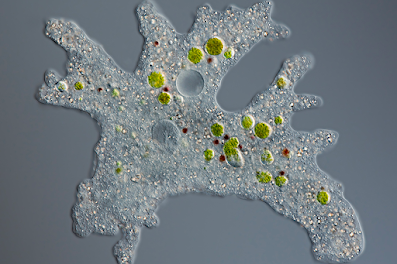
The First RNA-guided DNA-cutting enzyme found in Eukaryotes, named Fanzor, could one day be harnessed to edit DNA more precisely than CRISPR/Cas Systems
Saturday, December 2, 2023
Researchers Uncover a New CRISPR-like System in Animals That Can Edit The Human Genome
Wednesday, November 8, 2023
Thousands of DNA- Cutting Enzymes Found in Eukaryotes
Many eukaryotic organisms contain DNA cutting enzymes called Fanzors and scientists at MIT’s McGovern Institute for Brain Research have identified that there are thousands of them. Fanzors are RNA- guided enzymes that can be programmed to cut DNA at specific sites and its diversity gives scientists a large set of programmable enzymes that could be adapted into new tools for research or medicine. These enzymes are much like bacterial enzymes known as CRISPR, bacterial enzymes that power the widely used gene editing system. CRISPRS have made clear how useful RNA guided enzymes can be when used in the lab. The CRISPR-based genome editing tools were developed by MIT professors and McGovern investigators. These editing tools have changed the way scientists modify DNA, accelerating research and enabling the development of a lot of different types of gene therapies. Fanzor enzymes can be programmed to cut specific DNA sequences and it has been discovered that Fanzors can target DNA sequences in humans without optimization. Fanzors likely evolved from the RNA-guided DNA-cutting bacterial enzymes called TnpBs. The traced evolutionary connections suggest that the TnpBs probably entered the eukaryotic cells, some had likely been transmitted by viruses and some were likely introduced by symbiotic bacteria. A feature that they had developed through evolution was having a signal that allows them to enter a nucleus of a cell, where they would have access to DNA. The research team determined that Fanzors evolved a DNA-cutting active site that is distinct from their predecessors. The active site seems to allow the enzyme to cut its target sequence more precisely than the ancestors of TnpB. When the other enzymes are targeted to a DNA sequence in a test tube, they become activated and cut other sequences in the tube, which is something that the Fanzors do not do. When the researchers used an RNA guide to direct the enzymes to cut specific sites in the DNA of human cells, it was found that certain Fanzors were able to cut the target sequences with about 10% to 20% efficiency.
These new findings are very important as they could help with discovering different, sophisticated genome editing techniques. Hopefully, with the discovery of the diversity of Fanzors, enzymes naturally evolved in eukaryotes could be better suited to function safely and efficiently in other eukaryotes, including humans. This article was exciting to read because it indicates the promises of further discoveries of different editing techniques for DNA.
Sources:
https://news.mit.edu/2023/thousands-programmable-dna-cutters-found-algae-snails-other-organisms-1013
https://news.mit.edu/2023/fanzor-system-in-animals-can-edit-human-genome-0628
Monday, July 20, 2020
Exploring How a Scorpion Toxin Might Help Treat Heart Attacks

It's natural to cower away in fear when seeing or hearing about scorpions. But how would you feel if you knew that the toxins they give off may be the reason to save someone's life? Scientists are discovering life-saving medicines from the venom of scary creatures like snakes, spiders and scorpions. Scorpion venom contains a particular peptide that has extremely beneficial effects on cardiovascular systems of rats with high blood pressure. Individual venom compounds, if isolated and given at proper doses can have surprising health benefits.
Article link: https://www.sciencedaily.com/releases/2020/07/200715123145.htm
2nd link: https://www.mayoclinic.org/diseases-conditions/scorpion-stings/diagnosis-treatment/drc-20353865
Saturday, March 16, 2019
Engineering Yeast to Produce THC and CBD
Saturday, March 24, 2018
Genome Editing: A New Era in Molecular Biology

Genome editing also called gene editing is a technique that gives scientist the ability to change an organism's DNA. This method allows genetic material to be added, removed or changed at particular locations in the genome. The most recent method to gene editing is known as CRISPR-cas9 which is an acronym for clustered regularly interspaced short palindromic repeats and CRISPR- associated protein 9. In the summer of 2017 researcher at the Oregon Health and Science University succeeded in modifying a human embryo. In the modification, the team repaired and corrected an inheritable heart condition, passed down by the embryo's father, the study's lone sperm donor. This correction was completed when the embryo replaced the targeted bad gene with a healthy gene from the mother after CRISPR was introduced. If this method is proven to be save and gets FDA approval then this could be the key to prevent transmission of genetic diseases.
The CRISPR was firstly observed from a genome editing system in bacteria. The bacteria obtain small segments of DNA from viruses and use them to create DNA segments known as CRISPR arrays. The CRISPR arrays allowed the bacteria to remember the virus. If the virus attacked again, the bacteria produced RNA segments from CRISPR arrays to target the virus's DNA. Finally the bacteria would use cas9 an enzyme to cut the DNA apart which kills the virus. From this discovery it let scientist to begin developing a system in which CRISPR-cas9 could be used. Eventually, a potential technique which is still in the making was proposed. The scientist created a small piece of RNA containing a sequence that would act similar to the bacteria that would attach to a specific target sequence of DNA in a genome. The modified RNA is used to recognize the DNA sequence and the cas9 enzyme cuts the DNA at the targeted location. Once the DNA is cut the scientists manipulates the DNA by using the cells own repair machinery to add or delete pieces of genetic material or make changes to the DNA by replacing an existing segment with a customized DNA sequence. It is still being determined whether such procedure would be save and if there are any side effects that can develope from gene editing. For now, this technique is only a potential idea that could be used to treat and prevent more complex diseases.
http://discovermagazine.com/2018/janfeb/5-human-embryo-gets-crispr-treatment
https://www.neb.com/tools-and-resources/feature-articles/crispr-cas9-and-targeted-genome-editing-a-new-era-in-molecular-biology