Showing posts with label spider silk. Show all posts

Tuesday, November 28, 2023

In A First, Genetically Modified Silkworms Produced Pure Spider Silk


In A First, Genetically Modified Silkworms Produced Pure Spider Silk


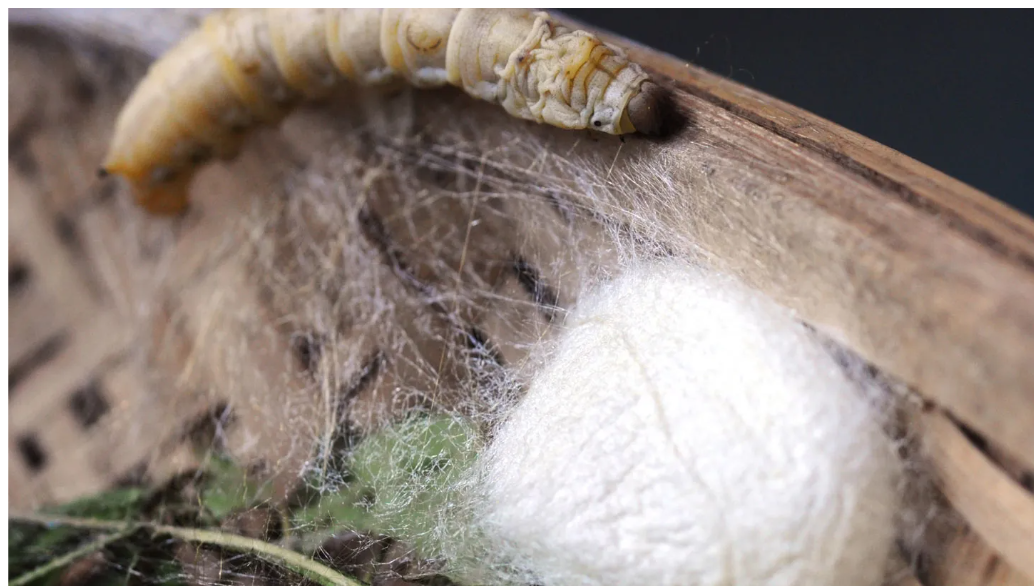
    Spider silk is known for its toughness and durability that comes from spiders. Spiders are known as territorial anthropods who use their silk for hunting/prey purposes. This is why the article explained how it wasn't easy to cause the spiders to produce silk. Spider silk is known to be tougher than steel and kevlar which is used in making bulletproof vests. Researchers from China have found to make pure spider silk using genetically modified silkworms. Even though the spider silk was made it doesn't compare to the strength of natural spider silk. These scientists tried multiple organisms before using silkworms to make modified spider silk. Silkworms are difficult organisms to work with but their body is made to create silk naturally. Although the team made this discovery their goal is to develop stronger silk that can help in the manufacture of silk fibers to improve the production of pillowcases, bandage dressings, prosthetic arteries, etc.  


Sunday, November 26, 2023

Genetically modified silkworms produced pure spider silk

 Genetically modified silkworms produced pure spider silk

        Researchers from China have successfully used CRISPR/Cas9 gene-editing to modify silkworms to produce spider silk, a material known for its strength and toughness. This breakthrough spider silk, while not as strong or stretchy as natural spider silk, is significantly tougher than Kevlar and could have applications in medical sutures and bulletproof vests. However, challenges remain in mass production, including ensuring the genetic modifications are stable over generations and maintaining the health of the silkworms, which are vulnerable to infection and produce varying quality silk. The second article confirms that the silk of spiders is composed of thousands of nanostrands, each only 20 millionths of a millimeter in diameter, which could lead to advances in creating new materials for medical (such as sutures) and engineering applications.
This article is a remarkable example of how genetic engineering can create materials with enhanced properties for practical applications. The fact that this modified silk is tougher than Kevlar yet potentially suitable for medical use like sutures demonstrates the versatility and potential of biologically engineered materials. However, the challenges in mass production and ensuring consistent quality due to silkworm vulnerability highlight the complexities involved in mass producing spider silk. Modifying the genetic structure of silkworms may result in unexpected health problems or distress since their bodies are not inherently adapted to create such material. In addition, it’s important to remember that silkworms are living organisms and while technologicalmass-producing advancements are important, we should remember the consequences of turning these organisms into such biofactories.


https://www.sciencenews.org/article/first-genetically-modified-silkworms-spider-silk

https://www.science.org/content/article/spider-silk-five-times-stronger-steel-now-scientists-know-why

Tuesday, November 14, 2023

Silkworms Have Been Genetically Modified to Produce Pure Spider Silk

Spider silk has been sought after for many applications, from surgical sutures to protective gear. However, the challenge of mass-producing this material has kept scientists stuck for years due to the territorial and cannibalistic nature of spiders. In a study, researchers from China have achieved a major milestone by coaxing pure spider silk out of genetically modified silkworms.

Using the CRISPR/Cas9 gene-editing tool, the scientists successfully inserted the complete genetic blueprint for spider silk production into silkworms. This breakthrough enabled the worm's silk-making glands to produce spider silk protein.


Despite these obstacles, silkworms emerge as prime candidates for genetic engineering due to their ability to produce silk and the limitations other modified organisms face in generating usable fiber. In the future, the research team aims to enhance the silk's strength and flexibility by incorporating artificial amino acids into the spider silk protein, potentially surpassing the natural fiber's inherent limits.

The success in modifying silkworms to manufacture spider silk opens the door to a whole new world in biomaterial engineering. As this innovative technology advances, it holds the potential to revolutionize various fields.

Links:

More information about Spidersilk

Silkworms Being Genetically Modified

m

MoreMor

Tuesday, October 24, 2023

Analysis of Genome Sequence of Spidroins in Female Golden Orb Weavers


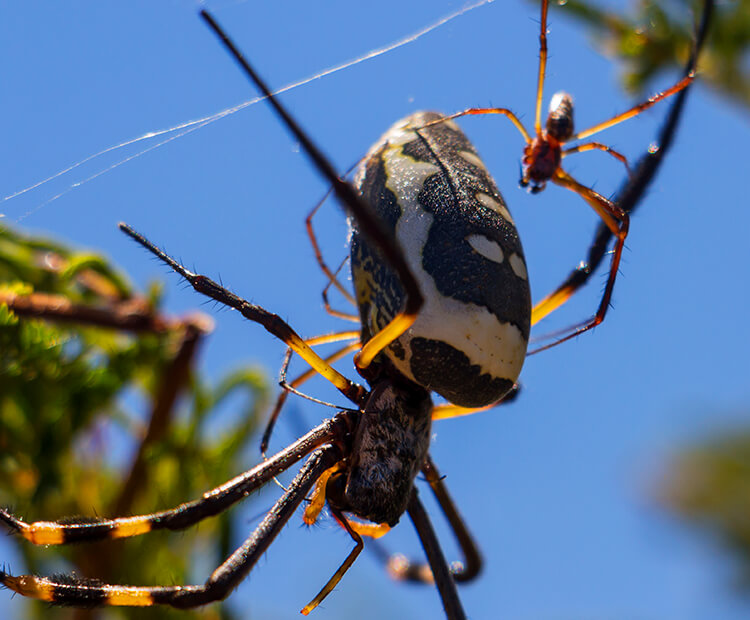
    Orb weavers are a family of spiders found all over the world. The Golden Orb Weaver is native to the Americas and is well known for its elaborate webs and is a non-venomous species. Females can get up to six inches in length and construct large, sturdy webs for their young. 

    Orb weavers are of particular interest to some genetic researchers due to their number of spidroin glands. Female orb weavers possess seven different silk-producing glands that construct different types of silk using a protein called spidroins. Spidroins have gained interest over the years as teachers are investigating their possible uses in medicine and other industries. 

    In 2017, a study was published in Nature that focused on analyzing the genomic sequence of the different silks produced by female golden orb weavers. Their aim was to create a genetic database of the spidroin protein in the variety of silks produced by female golden orb weavers. They found a variety of different genomic sequences involved in creating the different types of silk that enable female golden orb weavers to construct their large, elaborate webs for their young and to capture prey. 

Sunday, December 9, 2018

Insights to Spider Silk

https://www.sciencedaily.com/releases/2018/12/181207112741.htm
https://www.uniprot.org/uniprot/P19837
This spider silk, naturally made by the spinning gland of the spider, has incredible strength and is highly extensible. Researchers even say that its quality is on-par or even surpasses Kevlar. This silk is made of a protein called Spidroin. Spidroin connects to each other to make a polypeptide chain similarly to other proteins by connecting from the C to N terminals. Protein is one of the build blocks of our system and for them, its to create intricate webs to catch prey and provide a home. This silk is sought after by clothing companies, textile, even the aviation industry for its quality and potential use.

Tuesday, May 2, 2017

Scientists Sequence Golden Orb-Weaver Genome

This is a golden orb-weaver spider (Nephila clavipes).
Credit: Matjaz Kuntner, Slovenian Academy of Sciences and Arts

Researchers at the University of Pennsylvania have been undergoing the arduous task of sequencing the entire genome of the golden orb-weaver spider, and have finally completed it. The scientists at Perelman School of Medicine used short tandem repeats to identify 28 silk proteins that make up the orb-weaver's spider silk, including one variety that was created in the venom sack. In addition to the silk proteins, DNA sequences were found that are believed to code for strength, elasticity, and other key features of spider silk.

Spider silk contains repeats of amino acids, some of which are repeated over a hundred times, which make them easy to identify using STR. In contrast to these repeating sequences, there are non-repetitive terminal domains that are vital in the formation of fibers from silk proteins. The process of going from proteins to fibers takes place through a complicated series of events, which ultimately results in the proteins being spun through the spinning duct to form a bi-folded, tightly controlled structure. For more information on the formation and composition of spider silk, please refer to this article from the National Library of Medicine.

Monday, May 1, 2017

Is the real Spiderman among us?

Is the process of silk in spiders going to finally be discovered? Will the new spiderman be upon the human race?

Spider silk is the ultimate material as its stronger than steel but also flexible and tougher. It also does not provoke the human immune system and can block bacteria and fungus in some cases. Previously, this material has not taken off due to research not being able to pinpoint the genes in spiders that allow the special material to be made. University of Penn scientists have sequenced the golden orb-weaver spiders entire genome. They found 400 new short sequences never known before which led to determination of the components of the silk that makes it so durable, flexible, and sticky. It turned out to be almost the same size as the human genome. They are calling this spider the 'lab rat' of silk research. The production of silk turned out to be much more complex than hypothesized. In my opinion, this research should help humans create this type of material outside of the spider and help build a material that will make large advancements in the medical field. The real spiderman could soon be upon the human race!

Monday, April 7, 2014

Mysteries of Spider Silk

Spider silk its like the AK-47 of nature. One can stretch the silk, bend it, and dry it out and it will still be stronger ten steel. Silk is 5 time stronger then steel and can snap back to original form after being stretched out. Kevlar can't even compete, spider silk is stronger then that too. Old spectroscopy research has now shed light on how to get spider silk. On January 27, in apaper in the journal Nature Materials, a student at Stadford,  Kristie Koski described how she was able to non-invasively, examine the mechanical properties of an whole spider web just as it was spun by the spider that created it. She used the technique called Brillouin spectroscopy. This technique shoots lasers of light on spider silk and reflects back to the spectrometer. This sends a vibration like song back to the instrument and then the spider silk can be measured to see how much tension it can take. Using this method Koski can study complete spider webs and not just single strand. A surprising note to Koski's team is that the stiffness of the web varies among fibers, intersection points, and glue spots. The team think this is because the webs had to withstand the weather. This article explains why this might have happened in more detail. I hope with this research we can finally use the spider webs genetic design to make this word a better place.


Monday, March 26, 2012

Genetically Engineering Spider Silk with a Fireflies's Glow

A new study was performed by David Kaplan and colleagues with the modification of spider silk proteins. ScienceDaily reported about it, which originally appears in the journal Bioconjugate Chemistry put out by ACS. The proteins were used in gene therapy in an attempt to find a way to find a good way to deliver genes as treatments into the body’s cells. Since 1989, though there have been around 1,500 clinical trials, there are still no FDA-approved gene therapies.

Sunday, March 4, 2012

Spider Silk Utilized for Gene Therapy

An article on Science Daily discusses a study conducted by David Kaplan and other scientists.  It explains that the idea of gene therapy has been studied for quite some time (over 1,500 trials since 1989).  Although the idea of gene therapy is not new safety is the main concern.  The idea of utilizing genetically altered viruses to treat patients has been studied; however, it has not been approved by the FDA.  Kaplan and other scientists proposed the idea to utilize silk proteins from spiders to transport genes.  The silk proteins were modified to attach to unhealthy cells and glow(same gene as fireflies have), in order to "pinpoint" where the gene is.  An experiment involving modified silk protein took place with mice who had human breast cancer cells.  According to Science Direct as well as News-Medical.net it appeared the spider silk injected its DNA into the cancerous cells and did not harm the mice at all.  News-Medical states, "genetically-engineered spider-silk proteins represent a versatile, very highly tailorable and useful new platform polymer for non viral gene delivery".  The idea of treating cancer with silk extracted from spiders is mind blowing.  The discoveries made by scientists in gene therapy is very impressive.  Perhaps with more clinical studies Kaplan and other scientists will be able to convince the FDA that there are safe and effective.