Showing posts with label Lyme Disease. Show all posts

Wednesday, April 17, 2024

Future of Preventable Lyme Disease

 Lyme disease is a bacterial infection that is transmitted by Ticks. This disease affects half a million people in the United States per year. Although antibiotics are needed to treat the disease, many people still feel the effects after months to even years. Some researchers at MIT have found a protein in sweat that protects against Lyme disease. About 1/3 of the population in the United States have this protein in their genes. It is in the hopes of the researchers that they will be able to use the protein in order to make preventable creams or treatments for those with Lyme disease.  The researchers who found this protein in the genes of people with and without Lyme disease primarily found secretoglobin, SCGB1D2 are a family of proteins found in tissues of organs and play a role in immune responses. The researchers are using the SCGB1D2 in order to test against the disease in mice. 

Personally, I know a lot of people with Lyme disease and some of those people still have affects from the disease after taking the antibiotics. This is a groundbreaking discovery because it has the potential to help many people feel better and increase their health. 


Article Link: https://news.mit.edu/2024/protein-found-human-sweat-may-protect-against-lyme-disease-0319

Additional Link: https://www.cdc.gov/lyme/index.html#:~:text=Lyme%20disease%20is%20the%20most,bite%20of%20infected%20blacklegged%20ticks.

Tuesday, April 9, 2024

A protein found in human sweat may protect against Lyme disease


In this article written by Anne Trafton, the author discusses how researchers have discovered a protein in human sweat that can protect against Lyme disease. They hope to use this discovery to develop skin creams to prevent the disease or treat infections that don't respond to antibiotics.

The researchers ran a genome-wide association study to find genetic markers of disease susceptibility. They discovered SCGB1D2, a secretoglobin primarily produced by sweat glands. They exposed SCGB1D2 and a mutated version of the protein to the bacteria that causes Lyme disease and discovered the unmutated version significantly inhibited its growth. They then injected mice with the bacteria, along with the mutated and unmutated protein. The mice with the unmutated protein did not become infected, while the ones with the mutated proteins did.

I found this article to be quite interesting. I was exposed to Lyme disease as a kid, so seeing new research about it is intriguing. I do think the notion of a preventative cream, though interesting, is unrealistic. I'm unsure how many people would routinely use a cream whose sole purpose is to help prevent against Lyme disease. I think a better course of action would be to add it to insect repellants. I do however hope the cream will be able to help people with antibiotic-resistant bacteria. Living with Lyme disease is incredibly difficult. 


Article: A protein found in human sweat may protect against Lyme disease

Additional Link: A protein found in sweat may protect people from Lyme disease

Wednesday, March 27, 2024

Secretoglobin SCGB1D2 found in human sweat may protect against those affected by Lyme's Disease

     Lyme's disease affects more than 500,000 people a year, the disease is carried by mice, deer, and other animals and is transmitted by ticks. The disease is caused by the bacterium Borrelia Burgdorferi, which can cause symptoms like fatigue, body aches, fever, and other symptoms that can usually be cleared up but, for others, these symptoms may linger for years. Michal Caspi Tal and Hanna Ollila, researchers at MIT, ran a genome-wide association study (GWAS) with included genome sequences for 410,000 people, 7,000 of them having Lyme's disease. The article described how the GWAS revealed how the secretoglobin, a family of proteins that play a role in immune responses to infection, SCGB1D2 (mainly produced by sweat glands) may be linked to the disease. Mice injected with borrelia burgdorferi exposed to a mutant version of the protein fell victim to the disease however, mice injected with borrelia burgdorferi exposed to the normal version of the protein showed no signs or symptoms of the disease. Though researchers are not sure how the protein inhibits bacterial growth, they found that the mutated version causes a shift from the amino acid proline to leucine. 

    I found the research that was done to be potentially life changing for many people. So many people suffer from Lyme's disease and is very common around woody areas, like the pinelands. The potential that has risen from these findings, as talked about in the article, could eventually be used to make protective creams, or new medicines for people whose symptoms are still around, even after antibiotics. The new information could also potentially be applied to dogs, another species commonly affected by the bacterium. I think it's amazing what could be found using huge genome databases. 


Article: A Protein found in human sweat may protect against Lyme disease

Reference: SCGB1D2 inhibits growth of Borrelia burgdorferi and affect susceptibility to Lyme disease

Monday, October 2, 2023

Genetic study of Lyme disease bacteria offers clues to long-lasting symptoms

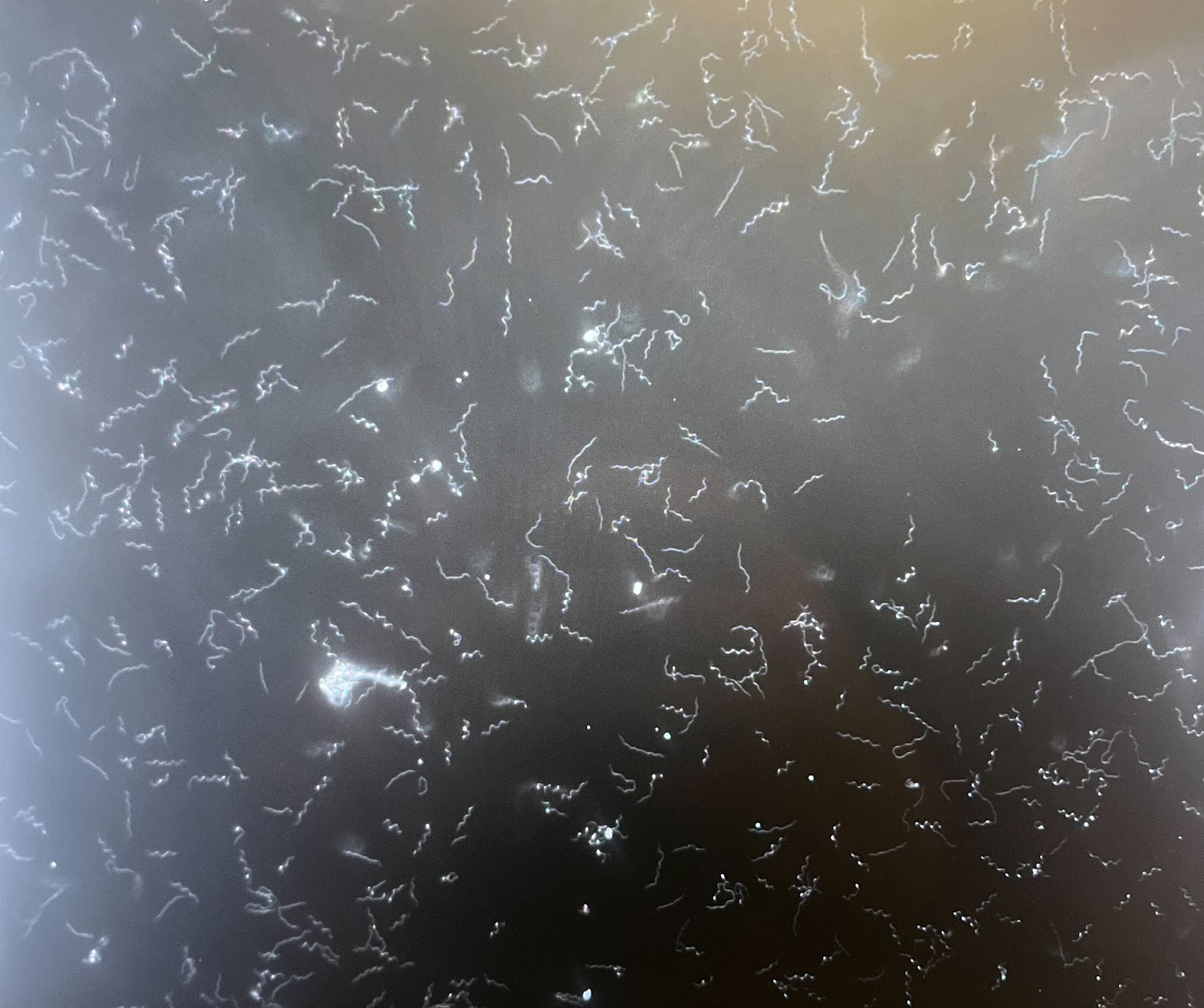
 By mapping out the genetic code of different strains of lyme disease, scientists are figuring out why some of the symptoms of lyme disease linger for extended periods of time. Certain strains of the Lyme bacteria (Borrelia burgdorferi) have a protective outer layer. This layer has a protein that is seen as the armor against the human immune system. This protein gives the bacteria a better chance of spreading, and is most likely why symptoms can persist for long periods of time. Tests for lyme disease have previously only looked at the antibodies to allow for treatment, but never the bacteria itself. After looking more into the bacteria, it was determined that if a person had lyme disease that was deemed disseminated, spread beyond the site of the original bite, this put the person at risk for developing lingering lyme disease symptoms. There are different strains of lyme disease, and while we are unsure of how many there are, there has been evidence suggesting that the type of strain will tell the severity and length of the symptoms. In addition, it is likely that other factors are building into the persistence and severity of these symptoms, and that this isn't just due to the Borrelia burgdorferi bacteria.

Borrelia burgdorferi (Jacob Lemieux)

About half a million are annually affected by lyme disease, which is identified as a vector-borne illness. Of those half a million people affected by lyme disease, a good number of those people struggle with long lasting and severe symptoms. By finding the bacteria and armored proteins, there may be a way to alleviate or shorten the symptoms of lyme disease.


Monday, December 1, 2014

Animals Steal Defenses from Bacteria


Research led by Joseph Mougous, University of Washington Department of Microbiology Associate Professor, and colleges has shown that animals can “steal” defense mechanisms from bacteria. Bacteria use deadly toxins that they can inject into rival cells when competing with other bacteria for resources in the environment. 


When going through genome databases, the team saw that toxin genes thought to only be present in bacteria were also present in several animals. Among such animals are several species of ticks and mites. The genes from bacteria had become a permanent part of the genome in certain animals through horizontal gene transfer.

The deer tick in particular is known to transmit Lyme disease, which is caused by a bacterium. The toxin in the ticks’ gut and saliva are used to control bacteria. The researchers observed that when the production of toxin was reduced in the tick, the levels of the Lyme disease bacterium rose. 

The research was published in the journal Nature under the title “Transferred interbacterial antagonism genes augment eukaryotic innateimmune function.

It is interesting how not only can horizontal gene transfer can be done not only from one bacteria to another, but now it is being seen in bacteria and other organisms. This can become a new way to manipulate the genes in organisms. And considering I live in a wooded area with plenty of ticks, I am looking forward to them understanding more about these toxins and possibly helping stop the spread of Lyme disease.

Thursday, November 21, 2013

Evolution and Evolvability


Evolution does not operate with a goal in mind. Selecting for individuals with traits advantageous for a particular environment, organisms adapt to their habitat over time by means of natural selection changing the genetic frequencies of populations over time. Researchers at the university of Pennsylvania for the first time have found evidence that organisms that have a greater capacity for changing in environments far better in rapidly changing environments; natural selection has acted on evolvability. Dustin Brisson, an assistant professor in the school of arts and sciences departments stated that "what we were asking is whether the ability of an organism to evolve is a trait that natural selection can pick." Organisms such as "pathogens face a very strong selection pressure from the hosts immune system" and will die if they do not adapt.

Using this concept the Lyme disease bacteria, Borrelia burgdorferi, was focused on. This organism possesses the protein essential for establish long term infection, VIsE. Preceded by "cassettes", normally not expressed or made into proteins, these can recombine with VIsE to alter the expressed protein and challenge host immune defenses. Diversity in "cassettes" offer a window into past natural selection for a more evolvable VIsE giving organisms with greater diversity among them a selective advantage to evolve antigenically. Researchers evaluated 12 strains of B. burgdorferi for signs that natural selection had acted to increase the diversity of the cassettes and found evidence in favor of evolution for more diversity amount the cassettes. Together with genetically diverse cassettes, leading to more genetically diverse expression of the protein VIsE, results provide evidence that evolvability was the target of natural selection. With climate change and  mass extinction in mind knowledge of evolvability that can be studied can be an asset to population management.

http://www.sciencedaily.com/releases/2013/11/131114193434.htm

http://rsbl.royalsocietypublishing.org/content/5/1/44.full