Showing posts with label "hereditary". Show all posts

Friday, February 23, 2024

Is intelligence Hereditary?

 The article " Is Intelligence Hereditary" talks about how intelligence is influenced by both environmental and hereditary factors. Although genetics explains half of the variation in IQ across people, environmental influences also have a big impact. This understanding has been helped by research on twins, adoption, and DNA analysis. For example, children who are adopted at birth typically have IQs that are comparable to those of their biological parents.

Many genes contribute to intelligence, according to recent research efforts working at identifying the genes linked to intelligence. But the current research explains only approximately 5% of the individual variation in intellect. It's interesting to point out that from 20% in infancy to 60% in adulthood, there appears to be a growing hereditary influence on intelligence. 

This article, in my opinion, highlights the complex relationships between heredity and environment and intelligence. Without a doubt, genetics is very significant, but environmental variables also matter. The complexity of the human mind is shown by ongoing studies into the genetic basis of intelligence, which also provides hopeful insights. Advances in treating cognitive problems and encouraging individual development may result from a better understanding of the interaction between genes and environment.


Sources:
https://www.sciencedaily.com/releases/2024/02/240221160425.htm
https://www.ncbi.nlm.nih.gov/pmc/articles/PMC4270739/ 

Friday, February 9, 2024

FDA Approves Cure for Sickle Cell Disease


The FDA approves a treatment for sickle cell disease. The article states that this approval marks the first of two potential breakthroughs for inherited blood disorders. 

Casgevy, a therapy from Vertex Pharmaceutical and CRISPR Therapeutics, was approved for people ages 12 and older, using CRISPR, which edits the DNA that is found in the patient's stem cells to remove the gene that causes the disease. According to the CDC, in someone who has sickle cell disease, the hemoglobin is abnormal, causing the red blood cells to look like a "C-shaped farm tool", which is called sickle. Sickle cells can travel through small blood vessels which leads to them getting stuck and clog the blood flow, which leads to health problems. Casgevy edits the DNA in patient's stem cells, which are responsible for making the body's blood cells so that they no longer produce sickle-shaped cells. This one-time treatment requires multiple steps that take months before the patient gets the modified stem cells. "It begins with a series of blood transfusions over three to four months, after which the stem cells are extracted from the patient's bone marrow and sent off to a lab where they are edited. Hannah said. Before they can be reinfused into the patient, however, doctors need to make sure no flawed stem cells remain in the body, To do so, chemotherapy is used to destroy the patient's bone marrow. Only then can be edited stem be reinfused into the patient, followed by another month or two in the hospital to allow the cells to grow and the patient to recover". The long-term effects are still unclear, but patients will be monitored for any signs for the next years. The cost of this treatment, however, is expensive and many patients are not able to afford it. 

I came across this article because I was interested to know how the treatment works and its effect on patients. I was truly amazed reading this article. The approval of this treatment brings hope to many people who have sickle cell disease. I do hope that this treatment is made affordable so that everyone can receive it. Knowing that a cure for sickle cell disease was made, also brings hope that in the future many more treatments will be approved for other genetic diseases. 

Sources:

FDA approves cure for sickle cell disease, the first treatment to use gene-editing tool CRISPR (nbcnews.com)

What is Sickle Cell Disease? | CDC

Picture: https://th.bing.com/th/id/OIP.5rg1mrmzHO4ozhoBFY2N0QHaD2?rs=1&pid=ImgDetMain


Thursday, July 4, 2019

Mutation Causes Protein Dysfunction Induces Migraines

Migraines are a type of recurring headache that occurs on one part of the head. There are several types of migraines ranging in severity and can cause symptoms from nausea and weakness to temporary memory loss and speech/motor function, last from an hour to weeks at a time, and cause an increased risk of strokes. Migraines are often hereditary and 15% of adults who suffer do not respond to treatments available.

Researchers at CNRS discovered a mutation that causes dysfunction in a protein which induces migraines. Migraines are related to hyperexcitability in sensory neurons. The researchers found that a mutation in the coding causes a split in the protein with one being inactive and the other targets ion channels at K2P2.1 (a protein in the potasisum channel) which stimulates neural electrical activity causing migraines.
The above picture is from a study performed on mice at the Institut de Biologie Valrose in France. The diagram shows the normal pathway and the mutated pathway of the TRESK gene. In the mice with the TRESK mutation, they exhibit TRESK-MT1 and TRESK-MT2 which in turns cause hyperexcitability instead of the normal TRESK and normal excitability.

I found this discovery very interesting because I am among the 15% of the population that does not respond to migraine medications and treatments. Medications for chronic migraines are typically anti-depressive or anti-epileptic, usually beta-blockers, calcium channel blocker, or serotonin blockers, which both can worsen migraines and cause unwanted side effects. The discovery that a mutation in the potassium channel is related to migraines allows for a further understanding of migraines and can lead to a more effective drug to be developed.

Tuesday, April 16, 2019

Fighting Obesity

 An article  by University of Illinois at Urbana-Champaign explains how Scientists have developed new purple corn hybrids with differing combinations of phenols in the pericarp that fight obesity, inflammation and insulin resistance, a new study in mice suggests. The pericarp also provides the food industry with a new source of colorants and farmers with a new value added product for their crops.


The National Center for Health Statistics estimates that, for 2015-2016 in the U.S., 39.8% of adults aged 20 and over were obese (including 7.6% with severe obesity) and that another 31.8% were overweight. Obesity rates have increased for all population groups in the United States over the last several decades.
More than 100 million U.S. adults are now living with diabetes or pre-diabetes, according to a new report released today by the Centers for Disease Control and Prevention (CDC). The report finds that as of 2015, 30.3 million Americans, 9.4 percent of theU.S. population have diabetes.

Saturday, April 6, 2019

The Genetics of Alcohol Use Disorder

Past research on Alcohol use disorder (AUD), the medical term for alcoholism has linked the addiction to hereditary and environmental factors. Having parents who abuse alcohol or being exposed to social factors do increase one's chances to struggle with the addiction, but ultimately the determining factor for the vulnerability to the addiction is genetic predisposition. A study investigates the genetic risk prediction and neurobiological understanding of alcoholism, provides results indicating a network of genes related to the susceptibility to the addiction. According to the study's results, genes increasing alcohol dependence vulnerability such as, SNCA involved in modulating brain plasticity and neurotransmission, CFG involved in neuron-astrocyte interaction, GRM3 involved in neurotransmitter signaling, and others are decreased in expression prior to alcoholism.


Alcoholism is a serious disease affecting many people, and their families. Understanding the genetic mechanism of our bodies making some more susceptible to the addiction gives us clearer view to the actual cause of the disease. Being genetically predisposed does not mean that one will become dependent, since the disease can not be initiated without the external component (alcohol),but makes us understand  why while a lot of people drink some become more easily dependent  than others? According to a  publication from the American Addiction Center genetics are 50 percent of the underlying reason for AUD. Those people when consuming alcohol experience more  pleasurable emotions.


Sunday, March 31, 2019

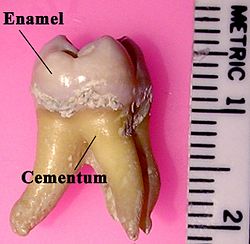
Genetics behind defects of Canine Enamel

A study from the University of Helinski determined that humans and dogs share the same two genes that may be the cause of their enamel issues. Two genes, ENAM and ACP4, were previously linked in humans for their cause in enamel disorders were also found in multiple types of dogs. The disorder, Amelogenisis imperfect (AI), is what is known in humans to cause the hereditary disorders of the enamel. This disorder is linked with 10 genes including ACP4 and ENAM. The disorder can cause physical and dental harm to both dogs and humans. Mutations or defects in these two genes can cause  developmental issues in the thickness of the enamel, quality or even absence of it entirely. The ENAM mutation controls the protein, Enamelin, which controls whether the teeth receive the correct amount of thickness of enamel. The ACP4 mutation is controlled by the phosphatase enzyme which we think controls cellular differentiation and mineralisation however this data is not fully clear yet.
Dogs with the ACP4 mutation did show thin enamel and a slight mineralisation disorder. 

Due to dogs having the same primary and permanent types of teeth and similar numbers of teeth I think this is a very useful study to conduct. Previously, most of these cases remained undiagnosed but now we have a chance to learn more about the causes of these mutations and exactly what they control. This is both great for the human as well as there best friend, the dog for there overall health.


Tuesday, March 26, 2019

Is your physique not quite summer ready? You can blame your genes.


In January 2019, while most Americans are fulfilling their new year resolutions, U.S. News & World Report published an article which was originally composed by HealthDay News that may relieve some pressure to have that perfect beach body this summer. Robert Preidt wrote this article based on a study performed by Wellcome-MRC Institute of Metabolic Science at the University of Cambridge. Sadaf Farooqi lead the study which debunked the myth that all people who are overweight are lazy and do not care about their health. There have been similar studies done in the past which focused on obese people and how their genes may be effecting their weight. This new study differs by focusing on a broader scope of individuals and comparing their genetic make up. The group of people being analyzed included those who are underweight, healthy weight and obese. Genetic variants were discovered present in each weight category. This data was calculated to determine what impact ones genes has on the outcome of their physique. It was concluded that the individuals with specific genetic variants had a higher chance of being obese. Accordingly, thinner people showed an absence of those same genes.

We are often quick to judge others for anything and everything but most commonly their weight. People who are "too skinny" must have an eating disorder or self image issues. Those who are "overweight" must have no self control and never exercise. These thoughts are not only offensive but simply incorrect. I believe the media should focus on increasing awareness of these types of studies. This does not mean that your physique is out of your control. It just means that we all need to be a little more gracious towards one another and realize we are not all cut from the same mold.

Wednesday, November 21, 2018

Ancient DNA Maps Early American Migrations in New Detail

Hereditary data from many people living 700 to 10,000 years prior uncovers associations among Clovis and Native Americans and South Americans.
Image result for DNA map USA
Early populaces of people in the Americas had indistinguishable family line from present day Native Americans, as per considers distributed today (November 8) in Cell and Science. The information disperse any thoughts dependent on the skull states of a couple of antiquated remains that early populaces were not identified with present day Native Americans and give more intimations about the influxes of individuals who moved from North America to South America a huge number of years back.

The two examinations consolidated broke down the genomic information of in excess of 60 people who lived in the terrains among Alaska and Patagonia 700 to 10,000 years prior. In view of the restricted information preceding this work, "the [genetic] models that we've been utilizing to clarify the peopling of the Americas have dependably been distorted," Jennifer Raff, an anthropological geneticist at the University of Kansas in Lawrence who was not engaged with the examinations, tells Science. Be that as it may, adding genomes to the dataset permitted two groups, one driven by Eske Willerslev, a transformative geneticist at the University of Copenhagen, and another by populace geneticist David Reich of Harvard Medical School, to elucidate the image of how human populaces moved about the Americas centuries prior.

Willerslev's information, detailed in Science, demonstrate that "this is our country, these are our precursors," Rochanne Downs, the social facilitator of the Fallon Paiute-Shoshone Tribe in Nevada, where the group gathered a portion of the information, tells Science. Willerslev's group analyzed the hereditary information of 10,700-year-old stays from the Spirit Cave, which the Fallon Paiute-Shoshone Tribe had been endeavoring to repatriate, to that of 12,700-year-old stays from an Anzick tyke from Montana and found a related family line.

Read the full articles by clicking the links below:
Link 1
Link 2

Monday, September 17, 2018

Is Genetic Testing a Good Thing?


The New York Times article, “Employees Jump at Genetic Testing. Is That a Good Thing?” explains that the Levi Strauss & Company began offering free genetic screening through Color Genomics to their employees. The company claimed to offer it to 1,100 of their employees, and about half of them agreed to the testing to find out if they had any genetic diseases. Doctors usually suggest genetic screening to high-risk patients, or patients whose family members have had diseases that can be detected. Now, however, they are arguing that that testing the public for genetic diseases could cause harm because people who doesn’t have a disease in their family could have some mutations that lead to diseases in other people but won’t in them. Screening the public for different mutations could cause false alarms more often and could lead to drastic outcomes and unnecessary medical procedures for the patient. Experts also warn against these screenings based on fear that people will use these tests to substitute visiting a physician for their concerns.
I agree with the physicians and other experts. If people don’t have a reason to be genetically tested, then the tests will either show that they are healthy or will cause anxiety and cause them to stress about what was found. Genetic screening could obviously prove successful for high risk patients, but those regarded as low risk patients, or patients without a family history of the disease, could have multiple mutations that will not actually cause harm. There are many mutations that occur in our DNA that don’t affect anything in our bodies, but the genetic screening will still detect them and could cause people to freak out for no reason. In my opinion, I think people should be able to use the genetic screening if they choose to but should also see a physician to go over their results. This way they can find out if they are at risk, and then can also discuss what the next step should be with a professional.


article: https://www.nytimes.com/2018/04/15/technology/genetic-testing-employee-benefit.html