Showing posts with label #science. Show all posts

Tuesday, October 21, 2025

Walking Through Evolution: The Genes That Help us Walk


Walking Through Evolution?

Kylee French
BIOL-2110-001 - GENETICS Professor Guy F. Barbato October 21, 2025

     Humans are closely related to apes, but one of the biggest changes that happened during our evolution was learning to walk upright, which is a skill known as bipedalism. This ability is something that truly sets us apart, and scientists have always been fascinated by how it developed. Genetics plays a major role in this story, though researchers are still uncovering exactly how our genes helped shape the way we move. One key part of that puzzle is the ilium, a large bone in the pelvis that’s essential for walking. In an article titled, "Uncovering the Genes That Let Our Ancestors Walk Upright", a quote presents, “Many of the leg muscles we use in walking are anchored to the ilium. The bone also supports the pelvic floor, a network of muscles that acts like a basket for our inner organs when we stand up” 
(
Zimmer 2025). This shows how important the ilium is to our ability to stay upright and balanced. Yet despite its importance, scientists have only recently begun to understand how this bone, and the genes behind it, evolved to make walking possible.

    To better understand how humans evolved to walk, Dr. Gayani Senevirathne and her team studied the development of the ilium in both humans and other animals. They compared embryos from mice and 18 different primate species to look for patterns in how the bone forms. As the article explains, “Dr. Senevirathne and her colleagues found that primates develop the ilium in much the same way mice do. Two tiny rods of cartilage take shape on either side of the spine and parallel to it. The rods grow and fuse to the spine, and bone cells replace the cartilage” (Zimmer 2025). This research connects directly to genetics because it shows how the same sets of genes can be used in similar ways across species. However, in humans, these genes behave differently. In human embryos, ilium cells turn the genes on and off in a new pattern in response to signals from nearby cells. This unique change causes the cartilage to form in a new direction, giving humans the pelvis shape needed to walk upright. This discovery helps explains one of the biggest genetic steps in our evolution. Small changes in when and where genes turn on completely reshaped the human pelvis, allowing us to stand and walk on two feet. It’s a reminder of how powerful genetics can be and scientists want to keep learning more about this. 

References

Zimmer, C. (2025, August 27). Uncovering the Genes That Let Our Ancestors Walk Upright. New York Times. Retrieved October 21, 2025, from https://www.nytimes.com/2025/08/27/science/human-evolution-ilium-bipedal.html?searchResultPosition=5

Friday, November 17, 2023

Mutation in Cells Linked to Alzheimer's Risk

     There is a rare but potent genetic mutation that causes a protein located in the brain's immune cells, which are called microglia. This mutation can give individuals up to three times of a greater risk of acquiring or developing Alzheimer's disease. They label this mutation as TREM2 R47H/+ and study it further. They found that TREM2 R47H/+ has a proinflammatory gene expression signature, can cause impairments in the movements of microglia and the uptake of various substrates, and rendering microglia hyper responsive to inflammatory stimuli. They further studied this one mice by implanting them with the TREM2 R47H/+. After their findings a number of detrimental effects from the TREM2 R47H/+ mutation on microglial gene and function are most likely to underlie the mutation's association with Alzheimer's Disease. 


Sources:

https://neurosciencenews.com/microglia-alzheimers-genetics-25230/

https://alzres.biomedcentral.com/articles/10.1186/s13195-020-00709-z#:~:text=TREM2%20is%20a%20microglial%20cell,changes%20to%20microglial%20activation%20state.

https://www.cdc.gov/aging/aginginfo/alzheimers.htm#:~:text=Alzheimer's%20disease%20is%20the%20most,thought%2C%20memory%2C%20and%20language.


Friday, November 29, 2019

New study looks to biological enzymes as source of hydrogen fuel


Links:
Article : https://www.sciencedaily.com/releases/2019/11/191125120936.htm
Related Article: https://www.chemeurope.com/en/news/1163900/biological-enzymes-as-source-of-hydrogen-fuel.html

Biological enzymes, called hydrogenases, are nature's machinery for making and burning hydrogen gas. These enzymes come in two varieties, iron-iron and nickel-iron -- named for the elements responsible for driving the chemical reactions. The new study focuses on the iron-iron variety because it does the job faster, the researchers said.

Research from the University of Illinois and the University of California, Davis has chemists one step closer to recreating nature's most efficient machinery for generating hydrogen gas. This new development may help clear the path for the hydrogen fuel industry to move into a larger role in the global push toward more environmentally friendly energy sources.


This was an interesting article to read. Currently, hydrogen gas is produced using a very complex industrial process that limits its attractiveness to the green fuel market, the researchers said. In response, scientists are looking toward biologically synthesized hydrogen, which is far more efficient than the current human-made process, said chemistry professor and study co-author Thomas Rauchfuss.

Tuesday, December 4, 2018

Inosine could be a potential route to the first RNA and the origin of life on Earth

Image result for earth picsIt's alluring to pursue our inception story. However, this interest can bring something other than excite. Learning of how Earth assembled its first cells could illuminate our look for extraterrestrial life. In the event that we distinguish the fixings and condition required to start unconstrained life, we could look for comparable conditions on planets over our universe.

Today, a great part of the cause of-life explore centers around one explicit building square: RNA. While a few researchers trust that life framed from more straightforward particles and just later developed RNA, others search for proof to demonstrate (or discredit) that RNA shaped first. A complex yet flexible particle, RNA stores and transmits hereditary data and incorporates proteins, making it a competent possibility for the foundation of the principal cells.

Image result for RNATo check this "RNA World Hypothesis," specialists confront two difficulties. In the first place, they have to distinguish which fixings responded to make RNA's four nucleotides - adenine, guanine, cytosine, and uracil (A, G, C, and U). What's more, second, they have to decide how RNA put away and duplicated hereditary data with the end goal to repeat itself.

Up until this point, researchers have gained critical ground discovering antecedents to C and U. However, An and G stay slippery. Presently, in a paper distributed in PNAS, Jack W. Szostak, Professor of Chemistry and Chemical Biology at Harvard University, alongside first-creator and graduate understudy Seohyun (Chris) Kim propose that RNA could have begun with an alternate arrangement of nucleotide bases. Instead of guanine, RNA could have depended on a surrogate - inosine.


Link 1
Link 2

Wednesday, November 21, 2018

Ancient DNA Maps Early American Migrations in New Detail

Hereditary data from many people living 700 to 10,000 years prior uncovers associations among Clovis and Native Americans and South Americans.
Image result for DNA map USA
Early populaces of people in the Americas had indistinguishable family line from present day Native Americans, as per considers distributed today (November 8) in Cell and Science. The information disperse any thoughts dependent on the skull states of a couple of antiquated remains that early populaces were not identified with present day Native Americans and give more intimations about the influxes of individuals who moved from North America to South America a huge number of years back.

The two examinations consolidated broke down the genomic information of in excess of 60 people who lived in the terrains among Alaska and Patagonia 700 to 10,000 years prior. In view of the restricted information preceding this work, "the [genetic] models that we've been utilizing to clarify the peopling of the Americas have dependably been distorted," Jennifer Raff, an anthropological geneticist at the University of Kansas in Lawrence who was not engaged with the examinations, tells Science. Be that as it may, adding genomes to the dataset permitted two groups, one driven by Eske Willerslev, a transformative geneticist at the University of Copenhagen, and another by populace geneticist David Reich of Harvard Medical School, to elucidate the image of how human populaces moved about the Americas centuries prior.

Willerslev's information, detailed in Science, demonstrate that "this is our country, these are our precursors," Rochanne Downs, the social facilitator of the Fallon Paiute-Shoshone Tribe in Nevada, where the group gathered a portion of the information, tells Science. Willerslev's group analyzed the hereditary information of 10,700-year-old stays from the Spirit Cave, which the Fallon Paiute-Shoshone Tribe had been endeavoring to repatriate, to that of 12,700-year-old stays from an Anzick tyke from Montana and found a related family line.

Read the full articles by clicking the links below:
Link 1
Link 2

Tuesday, November 20, 2018

Suicide: Study finds 4 genes that may raise risk

New research discovers four genetic variations that may raise the danger of passing on by suicide, paying little mind to ecological elements. The examination likewise recognizes several different qualities that require further investigation and that may likewise raise the probability that a man kicks the bucket by suicide.

As per the World Health Organization (WHO), nearly 800,000 individuals bite the dust by suicide consistently.

Image result for world health organizationIn the United States, nearly 45,000 individuals bite the dust because of suicide consistently, making suicide the tenth driving reason for death among people everything being equal.

Men who are white and moderately aged, in any case, are at the most elevated danger of passing on by suicide.

In spite of the fact that nature affects the frequency of suicide, a few investigations have called attention to that hereditary factors likewise assume a key job. Indeed, more established examinations have assessed the heritability of suicide at 50 percent.

New research that shows up in the diary Molecular Psychiatry utilizes current genomic sequencing procedures to discover particular hereditary elements that may raise the danger of suicide.

Dr. Douglas Gray, who is an educator of psychiatry at the University of Utah (U of U) Health in Salt Lake City, is the senior creator on the paper.

Full Articles Linked HERE and  HERE

Sunday, November 18, 2018

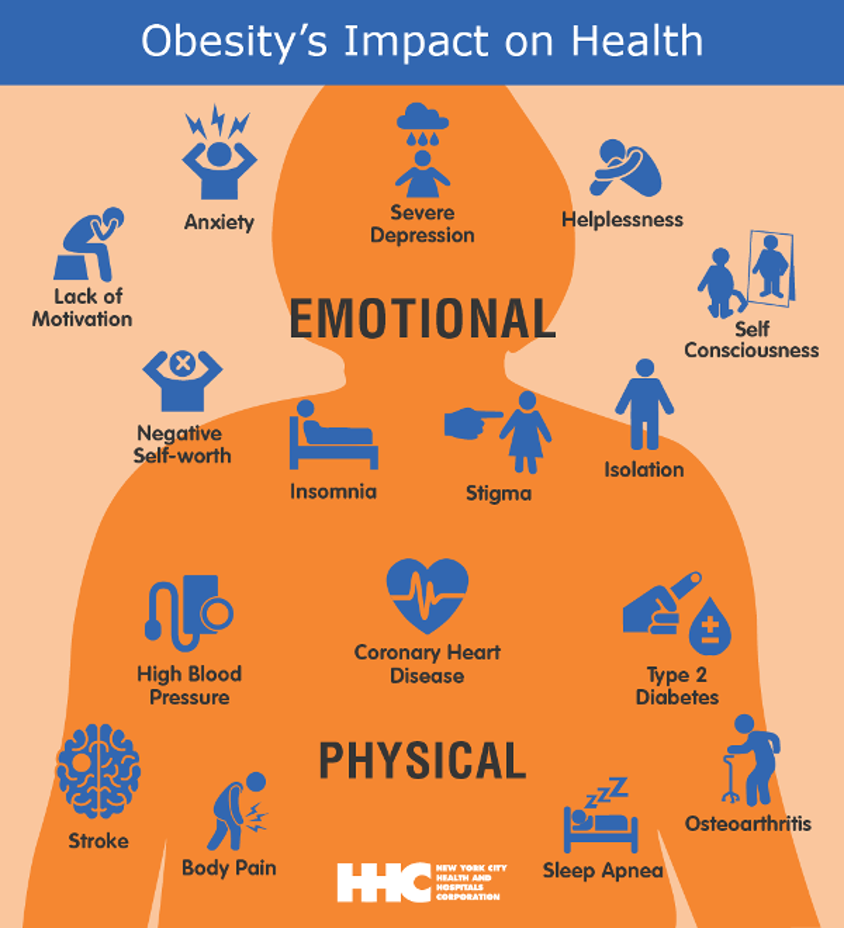
Genetic Predisposition to Obesity Linked with Depression

Read the full articles by clicking on the links below!
Link 1
Link 2


Being overweight can cause depression, specialists say, with the impacts thought to be to a great extent mental.

Image result for obesityWhile past investigations have discovered that individuals who are corpulent will probably have discouragement, it has been hazy whether that is down to melancholy driving weight changes or the turn around.

Presently, in the biggest investigation of its sort, specialists say having hereditary variations connected to a high weight record (BMI) can prompt misery, with a more grounded impact in ladies than men. Additionally, they say the examination recommends the impact could be down to variables, for example, self-perception.

"Individuals who are more overweight in a populace are more discouraged, and that is probably going to be in any event halfway [a] causal impact of BMI [on] melancholy," said Prof Tim Frayling, a co-creator of the investigation, from the University of Exeter therapeutic school.

Image result for obesity and depressionWriting in the International Journal of Epidemiology, the analysts from the UK and Australia portray how they utilized information from the UK Biobank, an exploration try including 500,000 members matured somewhere in the range of 37 and 73 who were enlisted in 2006-10.

The scientists took a gander at 73 hereditary variations connected to a high BMI that are likewise connected with a higher danger of ailments such diabetes and coronary illness. They likewise took a gander at 14 hereditary variations connected to a high level of muscle versus fat however which were related with a lower danger of such medical issues. While the previous gathering could be connected to gloom through natural or mental systems, the last would just be required to have a mental impact.

The group at that point took a gander at members' doctor's facility information and answers from a large group of surveys – including self-reports of seeing a GP or specialist for nervousness or sadness. The group recognized around 49,000 members whom they were sure had discouragement.

Generally speaking, the group discovered that individuals with a higher BMI will probably be discouraged.

Saturday, November 17, 2018

Coffee or tea? Your preference may be written in your DNA

Complete articles are here: Link 1 & Link 2

Individuals with a form of a quality that builds affectability to the harsh kind of caffeine will in general be espresso consumers, analysts report online November 15 in Scientific Reports. Tea consumers would in general be less delicate to caffeine's harsh taste, however have variants of qualities that expansion affectability to the harshness of different synthetic substances, the scientists found.

Image result for coffeeIt's for quite some time been believed that individuals abstain from eating harsh sustenances since harshness is a pointer of toxic substance, says John Hayes, a taste scientist at Penn State who was not engaged with the investigation. The espresso and tea discoveries help test that "excessively oversimplified 'severe is in every case terrible, how about we keep away from it'" see, he says.


Image result for teaIn the new examination, specialists analyzed DNA variations of qualities engaged with identifying the unpleasant taste of the synthetic concoctions, caffeine, quinine — that severe preference for tonic water — and propylthiouracil (PROP), an engineered compound not normally found in sustenance or drink. Other severe segments normally in espresso and tea may trigger a similar taste reactions as quinine and PROP do, Hayes says.

Specialists in Australia, the United States and England analyzed DNA from in excess of 400,000 members in the UK Biobank, an archive of hereditary information for restorative research. Members additionally announced other data about their wellbeing and way of life, including how much tea or espresso they drink every day.

The group included every individual's variations in the taste qualities, making a hereditary score for how seriously the individual tastes every one of the severe synthetics. The scientists at that point contrasted those scores with the general population's accounted for drink decisions.

Thursday, April 26, 2018

How Gene Editing Could Save Coral Reefs


The intense quality altering device CRISPR-Cas9 is surprising the logical world. It gives analysts phenomenal power and accuracy in making changes to for all intents and purposes any quality in a plant or creature — and coral reefs could turn into its next recipient. 
Image result for coral reef
In a paper distributed in the Proceedings of the National Academy of Sciences, analysts drove by Phillip Cleves at Stanford University utilized CRISPR to alter three qualities in corals developing in Australia's Great Barrier Reef. Cleves controlled the qualities right on time in the coral's life cycle — soon after treatment of egg and sperm, when the coral is only one cell. That guaranteed that the hereditary change was as across the board in the subsequent coral's genome as could reasonably be expected. Two of the qualities were in charge of the reef's shading — coding for red and green fluorescent proteins — and one was engaged with directing how new coral settles and develops in a reef.

Cleves and his group upset the qualities utilizing CRISPR and showed that the subsequent fetuses contained the transformed qualities. Making the alters wasn't simple, notwithstanding, since coral just bring forth on more than one occasion a year amid an exceptionally constrained window. Cleves teamed up with Great Barrier Reef coral specialists at the Australian Institute of Marine Science to consummately time the bringing forth, which is synchronized to the full moon. They needed to utilize CRISPR in coral developing lives since a greater amount of the coral's cells would demonstrate the impact of the hereditary alters as it developed.

The outcomes propose that CRISPR could be utilized to take in more about what particular coral qualities do, and in the end, to enable researchers to control them so they may turn out to be stronger to blanching caused by natural anxieties like a dangerous atmospheric devation and contamination. For the time being, Cleves says the innovation won't be utilized to hereditarily design blanch evidence coral, yet to assemble a truly necessary database on coral qualities and their capacities to better comprehend coral science. By disturbing particular qualities and considering which coral capacities are traded off because of the CRISPR mediation, researchers can take in more about the coral's life cycle. They could discover, for instance, that there are a few qualities that assistance coral to withstand the hotter temperatures related with environmental change. “It would be nice to know if there were genes to make corals more or less susceptible to global warming,” says Cleves. “It could be that there are natural populations of coral that are more likely to survive and could help focus conservation efforts.”


Read the complete article by clicking the links below:

Wednesday, April 25, 2018

Killer Whale Genetics Raise Inbreeding Questions

Another hereditary investigation of Southern Resident executioner whales found that two male whales fathered the greater part of the calves conceived since 1990 that researchers have tests from, an indication of inbreeding in the little executioner whale populace that frequents Washington's Salish Sea and Puget Sound.

Just around 26 of the 76 imperiled whales in the Southern Resident populace are right now reproducing, as per the examination distributed for the current week in Animal Conservation. The predetermined number of reproducing whales lessens the powerful size of the populace, abandoning it less flexible to change and perhaps trading off the survival of individual creatures, said lead creator Michael Ford, a preservation scientist at NOAA Fisheries Northwest Fisheries Science Center in Seattle.
Creators of the exploration additionally incorporate researchers from the North Gulf Oceanic Society and Center for Whale Research. While the new paper expands on prior hereditary examinations, it likewise brings up new issues about in the case of inbreeding might add to the populace's battles. Southern Resident numbers have tumbled to their least point in 30 years.

Image result for orca family
The investigation recognized four whales as profoundly innate, including posterity of a father-little girl and mother-child match, yet noticed that each of the four are as yet alive. Numerous extra whales might be ingrained to a lesser degree. Different examinations have evaluated that the greater part of Southern Resident calves kick the bucket previously or soon after birth, and the new investigation proposes that inbreeding could be a contributing component.

Read the full articles here by clicking the links below:
LINK 1 & LINK 2

Monday, April 16, 2018

Mutant ferrets' shine a light on human brain evolution

People are honored with moderately expansive brains. What's more, amid the previous 7 million years; a brief span traverse in trans-formative terms — the measure of our brains has tripled.

The cerebral cortex, the convoluted and collapsed external layer, is especially so in people. Precisely why and how our brains turned out to be so darned extravagant is a state of much level headed discussion and the confirmation is as of now sparse.

Discovering intimations as to hereditary and organic moves that happened a huge number of years back is like searching for a needle in a bundle on the opposite side of the universe. From time to time, be that as it may, Lady Serendipity favors researchers.


As of late, analysts from various establishments, including the Howard Hughes Medical Institute in Chevy Chase, MD, Yale University in New Haven, CT, and Boston Children's Hospital in Massachusetts, directed a progression of concentrates taking a gander at microcephaly.

Image result for mouse brainTheir examinations were productive and assist our comprehension of microcephaly, yet they additionally crawled us nearer to that needle in the far off bundle. Their discoveries were as of late distributed in the diary Nature.

Mouse brains are, as you may expect, minor. Likewise, mice despise an indistinguishable different determination of mind cells from people, and their cortex is much smoother.

Image result for ferrets vs miceThe quality most usually engaged with microcephaly is one that codes for a protein known as Aspm. At the point when this quality is changed, a human's mind will associate with a large portion of the typical size.

Notwithstanding, in mice without the quality — called Aspm knockout mice — their brains shrivel by only one tenth. This scarcely perceivable change is of little use to researchers.

On the chase for a superior model of microcephaly, the specialists — who were driven by Dr. Walsh and Byoung-Il Bae, from Yale University — swung to ferrets.

Sunday, April 15, 2018

Genetic Screening Tool Identifies How the Flu Infiltrates Cells


Han and Balaji Manicassamy, PhD, associate teacher of microbiology at UChicago and senior creator of the examination, utilized CRISPR/Cas9 quality altering devices that enable researchers to specifically thump out, or kill, particular qualities. They made a library of adjusted human epithelial lung cells, the cells that line the aviation routes and are the first to be tainted by the influenza infection. Every cell was feeling the loss of an alternate quality, making about 19,000 diverse hereditary varieties of the cell. 

Scientists at the University of Chicago have built up a hereditary screening device that recognized two key factors that enable the flu infection to contaminate human lung cells. The method utilizes new quality altering instruments to make a library of adjusted cells, each missing an alternate quality, enabling researchers to see which changes affect their reaction to influenza. This thus could distinguish potential focuses for antiviral medications.
Image result for flu getting into cell

The scientists at that point presented the cells to the H5N1 influenza strain, a sort of flu An infection usually known as the winged animal influenza. On the off chance that the infection could taint and murder one of the host cells, that implies the quality and the proteins it produces didn't assume a part in the infection's capacity to duplicate. On the off chance that the cell survived, that implies its adjusted genome by one means or another made it impervious to the infection - it was currently missing a pathway that the infection depended on to imitate and do its grimy work.

After five rounds of presenting the cells to the H5N1 infection, Han and Manicassamy were left with an arrangement of cells that were truly impervious to this season's cold virus. When they analyzed what these tough survivors had in like manner, two qualities emerged. One, SLC35A1, encodes a protein that makes a receptor for this season's cold virus on the surface of the cell. This bodes well - on the off chance that you thump out SLC35A1, there's nothing for the infection to lock onto and contaminate the host.

Image result for flu getting into cell

Links are attached below to read the full article.
Link One
Link Two

Friday, April 13, 2018

Cure for Fission Yeast Genes Could Have Bigger Things Ahead

Image result for fission yeast

Links: 12 & 3 are available if you'd like to read the entire report!


Rapamycin is as of now in like manner use all through the therapeutic world as an immunosuppressant - halting the capacity of the invulnerable framework. In that capacity it is usually recommended to patients experiencing kidney transplants to forestall dismissal of the new organs. It is additionally routinely utilized for disease medications, and also to coat coronary stents. Rapamycin has additionally created sharp consideration because of investigations that indicated broadened life expectancy in mouse cells.

The OIST team has uncovered a new side to rapamycin, paving the way to new medical therapies for genetic diseases. Rapamycin represses cell development and division - known as multiplication - by controlling the capacity of TOR Kinase, a primary flagging compound that passes on data to the cell about nourishing conditions around it. The group theorized that if rapamycin could reestablish ordinary expansion in cells with transformed DNA, it was conceivable that the influenced qualities saved in people in charge of hereditary infections could possibly be dealt with by rapamycin.


The group contrived an investigation utilizing splitting yeast cells, every one of which had a particular transformation in their DNA that made cell division absconds when presented to raised temperatures of 36°C. Testing a library of 1014 mutant strains of yeast. 45 of the mutants were "safeguarded" by rapamycin expansion and started to isolate regularly by and by.


Image result for yeast science


Examining the hereditary cosmetics of the saved yeast cells, the lab group recognized 12 distinct qualities that were in charge of the temperature-activated deformities. With the source distinguished, the group now knew where to search for the solution to rapamycin's therapeutic properties.

Diabetes: Belly Fat Gene Increases Risk


Image result for fat and genetics

Overabundance weight is a known hazard factor for diabetes. Nonetheless, the most recent investigation finds that where and how that fat is put away is similarly as essential. The analysts distinguish and examine a critical fat-controlling quality.

As indicated by the Centers for Disease Control and Prevention (CDC), in excess of 30 million individuals in the United States have diabetes. That is just about 1 of every 10 individuals.

This is no little issue and, all things considered, a lot of research exertion is spent endeavoring to comprehend who is destined to build up the condition, and also why.

Certain hazard factors for type 2 diabetes are as of now known. For example, being 45 or more established and having hypertension, gloom, coronary illness, or a family history of diabetes are altogether liable to raise a man's hazard.

As interesting as this is, and with the risk of diabetes growing, check out to links attached to read the full articles!

Link 1
Link 2

Saturday, July 29, 2017

Infinite sunscreen made from DNA.


A news article from Popular Science gives credit to a group of scientist in discovering a transforming way to stop skin cancer. Their report is featured in Science Reports and found that DNA crystals helps in absorbing heavy amounts of UV light. This finding could open eyes towards the skincare culture and also the prevention of skin cancer. When DNA film is coated on to the skin, it hydrates skin cells for a very long time by slowing the cell's water evaporation. The sun has exposed human skin to great amounts of carcinogen for awhile which unfortunately leads to massive amounts of skin cancer patients . But Popular Science suggest maybe a sunscreen could be created after all of this. The report give due to the DNA's "optical, novel electrical, and biosensing properties". Could the ending of skin cancer be coming soon? Hopefully a revolutionary sunscreen could be hitting stores in the near future.