Showing posts with label microcephaly. Show all posts

Monday, April 16, 2018

Mutant ferrets' shine a light on human brain evolution

People are honored with moderately expansive brains. What's more, amid the previous 7 million years; a brief span traverse in trans-formative terms — the measure of our brains has tripled.

The cerebral cortex, the convoluted and collapsed external layer, is especially so in people. Precisely why and how our brains turned out to be so darned extravagant is a state of much level headed discussion and the confirmation is as of now sparse.

Discovering intimations as to hereditary and organic moves that happened a huge number of years back is like searching for a needle in a bundle on the opposite side of the universe. From time to time, be that as it may, Lady Serendipity favors researchers.


As of late, analysts from various establishments, including the Howard Hughes Medical Institute in Chevy Chase, MD, Yale University in New Haven, CT, and Boston Children's Hospital in Massachusetts, directed a progression of concentrates taking a gander at microcephaly.

Image result for mouse brainTheir examinations were productive and assist our comprehension of microcephaly, yet they additionally crawled us nearer to that needle in the far off bundle. Their discoveries were as of late distributed in the diary Nature.

Mouse brains are, as you may expect, minor. Likewise, mice despise an indistinguishable different determination of mind cells from people, and their cortex is much smoother.

Image result for ferrets vs miceThe quality most usually engaged with microcephaly is one that codes for a protein known as Aspm. At the point when this quality is changed, a human's mind will associate with a large portion of the typical size.

Notwithstanding, in mice without the quality — called Aspm knockout mice — their brains shrivel by only one tenth. This scarcely perceivable change is of little use to researchers.

On the chase for a superior model of microcephaly, the specialists — who were driven by Dr. Walsh and Byoung-Il Bae, from Yale University — swung to ferrets.

'Mutant ferrets' shine a light on human brain evolution


In the past 7 million years human brain size has tripled.  Recently a group of researchers from several different institutions have began studies looking at microcephaly. Microcephaly is the "abnormal smallness of the head, a congenital condition associated with incomplete brain development." It is often genetic and has recently been linked to the Zika virus. There is little known about how and why the incomplete brain development occurs. This is due to the fact that there has not been a good model to explore these questions.


The gene involved in microcephaly codes for a protein called Aspm. When the gene is mutated it results in a humans brain being half the size of what is normal. Mice could not be a model for this study because when mutating the gene their brains only decrease by one tenth, which is not comparable with the effects it has on humans. The researchers then tried using ferrets as a model.


With Aspm knockout ferrets' it resulted in their brain size decreasing by 40 percent. This result was much closer to how humans are affected and the results were able to be compared for further questions. Such as back to the main question, why do humans have such large brains. They found that when Aspm is not present it results in the radial glial cells to detach from the ventricles more readily and then they migrated early. Because of this the timing changed and lead to fewer nerve cells in the cortex. Since Aspm regulates the number of cortical neurons it alters brain development by not allowing centrioles to do their job in cell division.


The result of altering this gene is that the "radial glial cells' migration can be altered and the cortex can grow larger." The results from these studies are that they discovered a new model organism for microcephaly, ferrets. As well as that it provided insight into the origin of the brain bulging. In my opinion these findings are important. Now they can find more answers to questions other researchers may have about microcephaly. Before there were many unanswered questions regarding the disorder because of the lack of a model. Finding out more about disorders that cause incomplete brain development could possibly come from using ferrets as models, since the effects they had were very similar to those of humans. This study was interesting and showed the importance of taking the time to find a good model for scientific studies.
Link to Article:
https://www.medicalnewstoday.com/articles/321488.php
Link to more information
https://www.nature.com/articles/s41586-018-0035-0
https://www.medicalnewstoday.com/articles/305880.php

Monday, November 14, 2016

A DNA-based Vaccine for the Zika Virus

The infamous Zika Virus has been on the rise ever since the recent outbreak which began in 2015. Ever since, it has spread around the globe through Africa, Asia, South America, and North America. The Zika Virus is transmitted by mosquito bites. Further, the virus is sexuallytransmitted. The symptoms of the Zika Virus are headaches, fever, bloodshot eyes, rashes, muscle pain, and joint pain. In pregnant women, the child can be born with an abnormally small-sized head and will show the same symptoms previously listed. The infant can be tested for Zika using reverse-transcriptase polymerase chain reaction or serologic testing. Serologic testing is a method that looks to see if there are antibodies present in the blood.

Primarily, scientists studied animals that were naturally resistant to the virus. Then, they decided to work with animals that were susceptible to the virus. Scientists first injected these animals with the virus to ensure they were infected.  Next, the scientists gave the animals a synthetic, DNA-based vaccine that they developed. The vaccine has shown to produce antigen-specific antibodies and T cell responses that prevented the virus from infecting the organism. The virus was neutralized by the vaccine and caused no damage to the organism. Through this vaccine, the virus was unable to spread to the animal’s brain. This is what causes the abnormally small-sized head in infants infected with Zika. These animals were then injected with the virus again and still no change was observed. This result was seen in one hundred percent of the animals used in the study.


Currently, the DNA-based vaccine is being administered in two human clinical studies. It is so great to see what the power of genetic engineering can accomplish. The scientists were able to produce a synthetic strain of DNA to use in the vaccine produced. It is very interesting to me how they knew which base pairs to use and what DNA sequence would fight against the virus. Additionally, I am curious if they used a desired DNA sequence that codes for a specific protein needed to inhibit the virus from attacking the organism. Zika has, and still is, affecting so much of the population around the world. Scientists being successful with the vaccine on the human studies will help many individuals to be safe from the destructive disease. 


Tuesday, October 18, 2016

One Family's Struggle With Microcephaly

In 2006, Christine Grounds gave birth to a child with microcephaly, the birth defect caused by the Zika virus that causes malformed heads and stunted brain development in children. The doctors were not entirely sure what this meant for the newborn, Nicholas Mir. This was much before the Zika outbreak that occurred this year that had spread from Brazil. Since the outbreak, the CDC estimates that there are over 2,600 pregnant women who have tested positive for Zika in the US and its territories, along with thousands more around the world. All these women may potentially give birth to children with microcephaly. The severity of microcephaly varies greatly, but one of the most difficult parts of this disorder is that is very difficult to identify until late in the pregnancy, leaving thousands of women with the agonizing choice of waiting anxiously and hoping for the best or abortion. Mrs. Grounds offered to share her experience raising Nicholas when the outbreak occurred. She describes how difficult it was in the beginning, but that Nick progressed quickly once he reached age eight. However, unlike many, Nicholas is fortunate to be able to attend an excellent private school on the Upper West Side that provides great care and has helped him get to where he is today.


Dr. Wendy K. Chung is a director of the clinical genetics program at Columbia University Medical School and she met Nicholas for testing when he was a baby, as his parents were hoping to find answers in his genetic makeup. At first, the tests were not successful because there were not enough facts and developed science, but about three years ago, Dr. Chung finally had an answer. Nicholas was autosomal recessive for the microcephaly gene, meaning both of his parents carried the recessive gene for the disorder. They had a second child before these results were discovered, assuming that it was highly unlikely for their second child to have microcephaly as well, but as it turns out, the odds were one in four.
I thought it was incredibly helpful that Christine Grounds chose to share her story about Nicholas to help others dealing with microcephaly or facing the possibility of having a child being born with microcephaly. Because is an autosomal recessive disease, pregnant parents with the Zika virus can have the genome of the father mapped out in order to see if he carries the recessive gene to further evaluate the odds of having an affected child.

Sunday, October 9, 2016

Understanding The Zika Virus Through Genome Sequencing

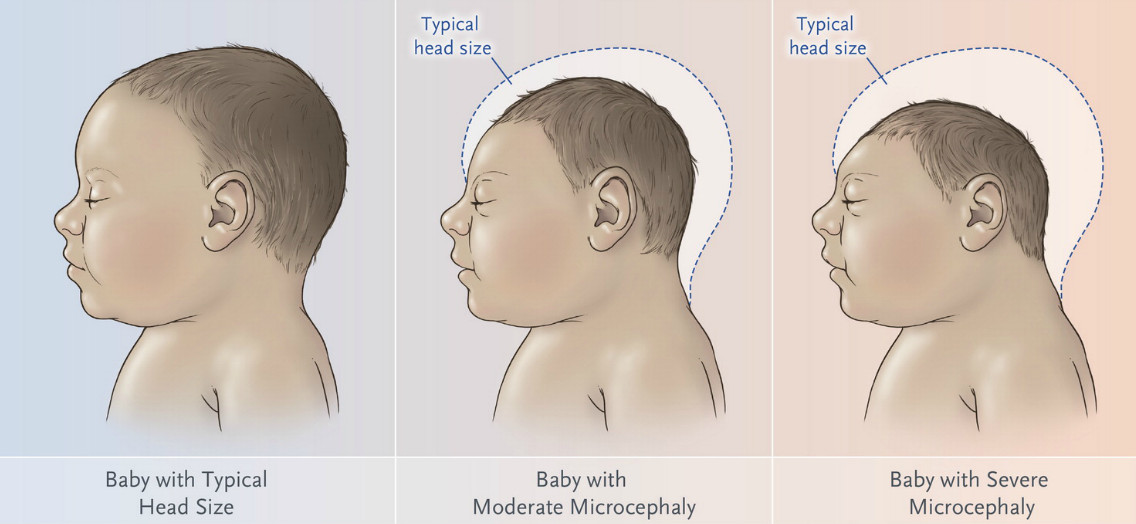
The Zika virus is actually not a new virus at all. Humans have known about the existence of the Zika virus dating all the way back to World War II. The virus was first discovered in monkeys but then later discovered in some humans living in Africa. It wasn't until recently that we have understood what the Zika virus is capable of. Over the past few months the Zika virus has become more and more prevalent posing a threat on society. With advancements in technology we now know that the Zika virus can lead to devastating birth defects. These include microcephaly and Guillain-Barre syndrome. Microcephaly is a birth defect in which the baby's head is much smaller than expected. Microcephaly restricts the brain from developing properly in fetal growth. Microcephaly can lead to a series of major health problems depending on how severe the condition is. One of the major questions regarding the Zika virus is how does it cause these conditions to occur in fetal development?


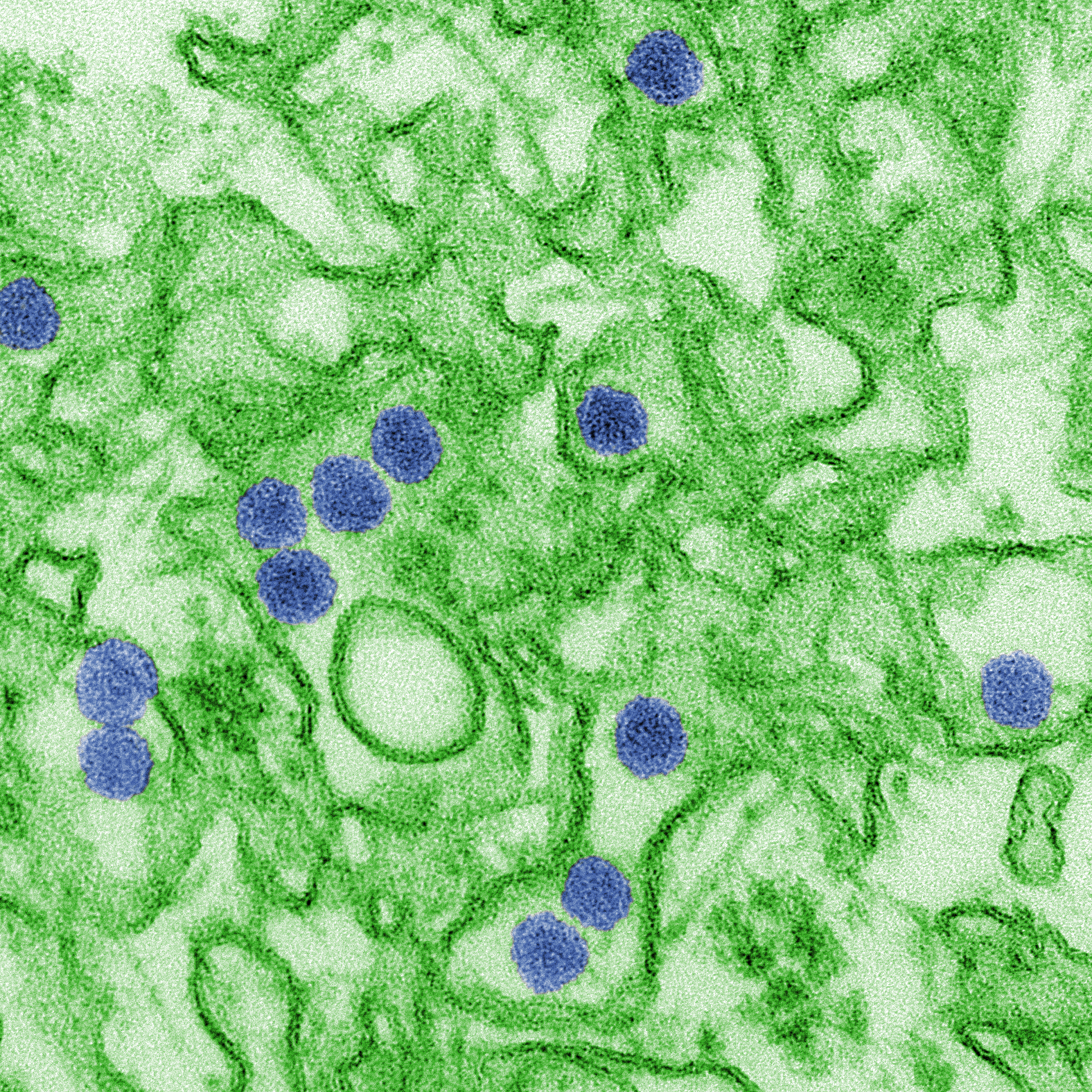
Zika virus

Recently an international team of researches have been sequencing the entire genome of the Zika virus. By sequencing the whole genome the coding regions of the viral genome are being sequenced as well as the non coding regions. The coding region is the part that makes proteins. By studying the genome researches have discovered that Zika contains a molecule that seems to block a part of the host's immune system.
The molecule called subgenomic flavivirus RNA (sfRNA) has "antagonist activity against RIG-I-induced type 1 interferon induction with a lesser effect on MDA-5 mediation action.
With this information researches can move to trying to find a possible vaccine for the Zika virus to protect women who are pregnant. Also by studying the Zika virus' genome it can help with finding a cure to prevent microcephaly from occurring.

Friday, April 8, 2016

Microcephaly Cases Over Estimated...


Since October of last year, 4,783 cases of babies born with microcephaly have been reported by national hospitals in Brazil. Hospital numbers reporting cases of babies with microcephaly have increased ever since the Zika epidemic became known. In fact, before anyone had even heard about the virus, only 150 cases of babies with microcephaly were reported annually. Due to the impacting increase, Brazil’s government is now considering the guidelines they gave doctors, hospitals and health officials to report these type of cases. They intend to reduce the amount of false alarms and misdiagnosed cases. At this time, many cases remain under investigation to further deduce how many microcephaly cases were not really microcephaly victims.


Out of all of the reported cases and the ones that have been examined, only 404 have been official microcephaly suffering babies. However, of these only 17 of the tested positive for the Zika virus. In fact, 709 babies have been determined to not have microcephaly at all misguiding the epidemic numbers and increasing the alarm of society. Though the Zika virus is a very serious virus that can affect many newborn babies, it is important to make sure that health care officials or hospitals are really certain that a child has microcephaly before it is reported as another case. 

Saturday, April 2, 2016

5 reasons to think the Zika Virus causes Microcephaly

The World Health Organization believes that the Zika virus is a cause of microcephaly and other neurological disorders. Microcephaly is an abnormal smallness of the head, a congenital condition associated with incomplete brain development in infants. Scientist are currently conducting a study with 5,000 pregnant women that have been infected with Zika previously and women who have not. There goal is to see if the pregnant women have more children with microcephaly. Scientist have evidence that can link the Zika virus to microcephaly. First, in Brazil there have been cases of infants born with microcephaly. As early as August the numbers have been going up from the usual one or two babies with it to now five or more. Many of these mothers previously had the Zika infection. In Brazil theres normally an average of 163 cases and now there are 944 cases. Second, French Polynesia is now experiencing an increase in microcephaly cases. Third, the virus crosses the placenta and can reach the fetus. Zika virus has been found in amniotic fluid surrounding microcephalic babies and it has been found in the brain of fetuses that died in the womb. Fourth, it also attacks the brain cells. Studies have shown that the virus is neurotropic, targeting nerve cells, including the ones that eventually become the baby's brain. Lastly, a small study found a big difference in birth defects. The outcomes included fetal death, tiny heads, shrunken placentas, and fetal nerve damage that suggested blindness. 

Its great that scientists are beginning to discover the effects of the zika virus and the damage it can cause to not only the individual but also to a child given birth by someone who has had it. This virus needs all the research that can possibly be done for it. It is now affecting infants and that is scary because it is presenting to their life a lot of abnormalities as well as multiple disorders. This study demonstrates evidence that Zika virus is in fact a cause of microcephaly in infants.

Original Article

Thursday, October 16, 2014

Using Zebrafish to Provide Genetic Answers

Susan Brooks, a medical geneticist of the Rutgers Robert Wood Johnson Medical School used zebrafish as a model organism to help identify the cause of a rare genetic disorder affecting a boy and his two uncles.  The boy suffered from seizures, fevers, slow growth, and poor head growth resulting in microcephaly.  Susan Brooks discovered that the peculiar disorder was most likely caused by a recessive mutation on the X-chromosome, as the boy's uncles shared similar symptoms.   These X-linked mutations can be carried by both males and females, but cause symptoms only in males with very few exceptions.

Scientists found a mutation carried by the affected males and their mothers, within a gene known as RPL 10.  It is located on the X-chromosome and encodes part of the ribosome, which is a vital piece of molecular equipment that is responsible for translating genetic code into proteins.  Scientists used zebrafish to test the effect of the mutation.  Duke University researchers led by Erica Davis from the Center for Human Disease Modeling displayed that the diminishing expression of the RPL 10 gene caused organisms to develop notably smaller heads, or the fish version of microcephaly.

The image above displays the effect of the expression of the RPL 10 gene (top), 
versus the suppressed expression of the RPL 10 gene (bottom) in the heads of zebrafish.

Unfortunately, identifying the likely cause of the disorder does not ensure a cure for the boy and his two uncles, but it is the first step for future research in developing treatments.  Erica Davis stated, "This was a one-of-a-kind family affected by a disorder that no one had ever seen before, but they are not alone.  The best way of finding answers for these families is for clinicians and model organism researchers to join forces."  Zebrafish and humans share approximately 70% of protein-coding genes, and 84% when the genes known to be associated with disease are considered.  Zebrafish are a very important model organism in genetics.  They are cheaper to maintain and grow faster than mice.

This article caught my eye immediately, as I conducted research with Dr. Brian Rogerson last semester using zebrafish.  We analyzed AICD (Activation-induced cytidine deaminase) levels in young and old zebrafish, which is an enzyme known to be responsible for the mutation of antibody genes.  Due to being familiar with the use of zebrafish as a model organism, I am very interested in learning about how they are being used in other studies.  I find it fascinating that the diminished expression of the RPL 10 gene had a very similar impact on zebrafish, as it did on humans.  It opens up an unlimited number of possibilities in the future regarding the use of zebrafish in studying human disease.

Article [1]: http://medicalxpress.com/news/2014-10-family-zebrafish-genetic.html 
Related Article: http://www.genetics-gsa.org/news/templates/?a=210&z=1