Showing posts with label zika. Show all posts

Sunday, September 15, 2019

New Software to "CATCH" Virus Strains in Samples

A new software, called CATCH, has been developed by scientists at Broad Institute to help identify any known virus strain in any sample. CATCH stands for "Compact Aggregation of Targets for Comprehensive Hybridization" and uses a method with "baits" to identify a virus strain, including those that affect humans. The genetic "baits" are short strands of DNA or RNA that bind to the target's genetic material. When the sample and bait bind, the strain is immobilized and the rest of the sample can be washed away. CATCH applies the bait mechanism to a larger scale, allowing for custom designed sets to "fish" for any combination of microbial species. To accomplish this, the team drew on genomes uploaded to the National Center for Biotechnology Information's GenBank sequence database. The technology determines the best set of probes to detect the microbial strain based on the genome, with the probes then being synthesized by a third party. Enrichment of viruses help increase the sample almost 18-fold, making hard-to-find viruses like Zika and Chikungunya more detectable and easily sampled. Previously, viral strains were found using a method called "metagenomic" sequencing. The genetic material was extracted and then sifted through to find a particular viral strand. However, the viral material often gets lost among the other genes in the sample (whether it's from other microbes or the patient's DNA) making viruses in the sample hard to identify and sample.


This technology also aids in improving viral detection in samples with unknown content in both humans and mosquitoes. Genetic data retrieved from CATCH has indicated the Zika virus has been introduced to the geographic regions months before scientists were able to detect it. The team hopes that by using the CATCH method, viral outbreaks can be detected before they occur, especially in West Africa where these outbreaks are more prevalent. CATCH is also a versatile technology, with new strains being able to be identified, sequenced and added to the public database. Users can also re-design probes when necessary to match the microbial strain they are attempting to identify.

I believe CATCH is an important new tool that can be used to identify any microbial strain, especially viral ones, with any sample collected. All that is needed is some genetic material and a set of probes to attach to that genetic material. The viral material in question then can increase with CATCH and be more easily identifiable and testable. This technology also has little to no errors, with viral samples being able to collected each time during the testing period. CATCH will help identify viral strains more quickly, especially in unknown material, and can prevent outbreaks from taking the lives of thousands of people. I look forward to seeing how CATCH will be used within the next few years, especially on mosquitoes, in areas that are afflicted with viral outbreaks often.

Links:
https://www.zmescience.com/science/virus-sequence-catch-tool-925265434/
https://www.sciencedaily.com/releases/2019/02/190204124157.htm

Saturday, November 25, 2017

GM Mosquitoes Closer to Release in U.S.


Recently, the FDA has granted permission to the EPA to take responsibility for overseeing the approval of genetically altered mosquitoes. These mosquitoes could be released to the wild as early as next year in the US. The intent is to stop the transfer of disease such as Zika and other viral diseases. The mosquitoes are modified with a gene that is self limiting, meaning it will kill the insects at a young age before they are able to reproduce. They will release males to mate with wild females in hopes that the gene will spread quickly. One proposed release site is in the Florida Keys which spends 1.1 million dollars a year to control mosquito populations using conventional insecticides. The Florida Keys Mosquito Control District has already partnered with the parent company that created the genetically modified mosquitoes and is awaiting regulatory approval. Hopefully the goal of this operation can be obtained without any environmental ramifications.


https://www.the-scientist.com/?articles.view/articleNo/50636/title/GM-Mosquitoes-Closer-to-Release-in-U-S-/

https://www.npr.org/sections/health-shots/2016/11/20/502717253/florida-keys-approves-trial-of-genetically-modified-mosquitoes-to-fight-zika


Saturday, April 15, 2017

Here's Another Way CRISPR Is Change Medicine


CRISPR, an enzyme that can edit the genome, is now being used to diagnose the presence of cancer and test for infections such as the Zika virus. Feng Zhang an associate professor at MIT and colleagues changed the way the system works in order for it to detect active infections. They modified this enzyme to recognize specific substances made by bacteria and viruses. SHERLOCK, the name of this modified system can tell the difference between the Zika and Dengue viruses through presented samples of blood, urine, and saliva. This new system is a major break for doctors because it works faster than current test. Based on their data, SHERLOCK can identify the infection within 30 minutes to an hour, versus a few days for a current test. Aside from this, Professor Zhang was also able to determine that this system can tell doctors how involved the infection is based on how much is present within the body, and it can pick up mutations such as tumors through blood samples. Professor Zhang is confident that this new technology will also help to fight again antibiotic-resistant infections because it can detect if an infection is becoming resistant to a drug.
I found this article interesting because it has the possibility to save the lives of many patients, and makes it easier for doctors and other healthcare professionals to properly treat and care for patients. 
This is also interesting because it goes to show how gene editing technology can change the way healthcare professionals and scientist look at solving issues related to bacterial and viral infections. 
article  

Monday, December 12, 2016

Experimental insecticide explodes mosquitoes

In a new study, Vanderbilt pharmacologist Jerod Denton, Ph.D., Ohio State entomologist Peter Piermarini, Ph.D., and colleagues report an experimental molecule that inhibits kidney function in mosquitoes. What is interesting is that the molecule only affects the kidney function in mosquitoes, and not in other insects. The researchers used the mosquito Anopheles gambiae , which is the leading vector for both malaria and the Zika virus.

Over the past few decades, mosquitoes have evolved genetic resistances to different types of pesticides, making them harder to eliminate. Most of these pesticides target the nervous system, so Jerod Denton, Ph.D decided to try a different approach which target the kidneys. Essentially, the researchers are preventing mosquitoes from producing urine after they take a blood meal. The waste backs up and has no where to go, killing the mosquito. In order to do this, they have the inhibitor known as inhibitor VU041. VU041 to be effective when applied topically, which indicates that it potentially could be adapted as a sprayed insecticide.


The most important part of VU041 is that it is not detrimental to important species in the environment, such as honeybees.

https://www.sciencedaily.com/releases/2016/12/161206111712.htm
https://news.vanderbilt.edu/2016/12/01/investigators-explore-new-way-to-control-mosquitoes/

Tuesday, November 22, 2016

The Race for a Zika Vaccine

A vaccine for the Zika virus is much closer than anyone would anticipate. Scientists and researchers everywhere are working tirelessly to develop a vaccine from scratch that could stop Zika and its birth defects. Typically, vaccines take ten years to make, but a Zika vaccine could be available as soon as 2018, which would be a remarkable two years compared to the typical amount of time it takes to develop a vaccine. There are more than a dozen pharmaceutical and government companies working on this vaccine. Some companies are working on using DNA splicing, which has never before been approved for use in human vaccines. The motives of saving lives, along with the opportunity to make huge profits as the virus is in countries like Brazil and the US - places which can pay for public vaccination campaigns - are what is keeping this hunt for a vaccine going. Timing is crucial for the development of the vaccine. Clinical trials in South America will be done within the next few months as infection rates are expected to be high. However, if the window is missed there may be a year or longer delay as vaccines are preventative and thus will only perform as expected during a certain time frame after an outbreak.


Immunologist Dr. Fauci has led the National Institute of Allergy and Infectious Diseases for over 30 years and has played a role in every infectious outbreak since then. He is confident that a vaccine will be created for a number of reasons. The economic motivation is clear, being that the first team to create an effective vaccine will likely reap billions in profit from governments trying to eliminate the virus. Zika also belongs to a family of viruses called flaviviruses, which scientists having been fighting for years and years, and of which many vaccines already exist. Some teams went with the basic killed vaccine approach, the same one that is used for polio and the flu. It is reliable but can take decades to develop. Dr. Fauci and his team took a different approach which involves inserting a harmless part of the virus's DNA into humans which will then form Zika proteins in the body and lead the body to creating antibodies against the Zika virus in case it arrives. However, this technology has only been approved for animals, not humans. Clinical trials are starting throughout Central and South America, along with at a clinic in the University of Maryland School of Medicine. Dozens of people around the world have received potential vaccines for the virus thus far, so hopefully one will be successful. I believe that there is a very high amount of motivation around the world to form a successful vaccination for Zika, especially money. With all the new technology and techniques being tested by several different companies, at least one of them is bound to be effective very soon. This vaccine will be a huge breakthrough, considering how many people the Zika virus has already afflicted.

Monday, November 21, 2016

Researchers Race for a Zika Vaccine


As the Zika virus continues to alarm the public, government organizations from around the world race to create a vaccine. Although it is primarily in South America, the virus is quickly spreading to other regions of America. With no treatment available, it is unknown how far it could spread. Scientists are trying a number of methods to create an effective vaccine. One innovative method is DNA splicing, a method that has potential to be game-changing but has never been approved for use in humans. The most reliable method is injecting a dead virus into the body and allowing it to build immunity. The only problem with this method is that is takes time. Generally, vaccines take about a decade to make, but some researchers say one could be available as soon as 2018. We can only hope that the outbreak is brought under control in the meantime. In September, President Obama approved a package which would allocate $400 million towards vaccine research so hopefully significant progress is made soon.

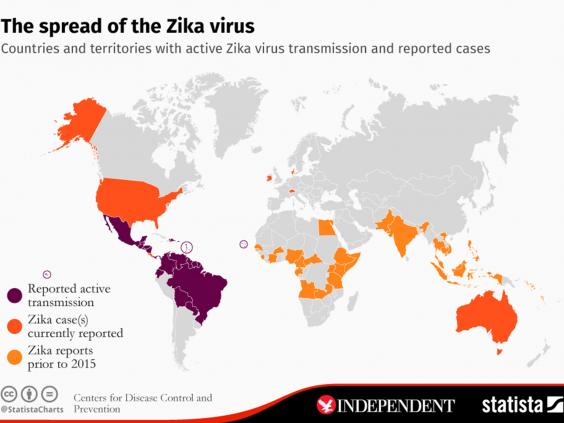
The Zika virus has spread quickly across the world. It has led to serious birth defects in infected fetuses. It is spread predominantly by mosquitoes, but can also be passed from person to person through sexual intercourse and pregnancy. The virus is in mostly warm-weather places, but it has reached the United States. Several cases have been reported in Florida. Our nation needs to be prepared to stop the virus if it reaches the rest of the country. A vaccine must be made as soon as possible.

The Race for a Zika Vaccine

The Zika virus has spread very rapidly in South America and now has said to be found in over 70 countries around the world. The Zika virus comes from mosquitos. It is a virus that effects the immune system, adult bodies are able to fight off the virus where as children and especially infants can not and the virus can kill them if they are affected. In this article they talk about how the race to who can find a vaccine to the virus has become very serious.  Many researchers all over the world mentioned that many of the companies trying to find a vaccine for the zika virus are trying to do it as quick as possible because of how fast the virus spread. There is also a lot of money involved for the first company that finds a cure. Although many of these companies  want to be the first to find the vaccination that cures zika, researchers were saying that it is more important to find a vaccine for it but it is MORE important that researchers take their time and make sure they do a good job rather then rushing the process. I completely agree with this notation because it is important that they make a product that will be effective. They are also trying to make the process quicker by trying to make the vaccine go through RNA rather then DNA because RNA is more flexible. Researchers think that they might be able to find a vaccine by 2018 but nothing is absolute, it could maybe take decades.

Zika: Researchers create powerful tool for vaccine, antiviral development

The Zika virus is a mosquito-borne member of the genus flavivirus, which includes dengue fever, yellow fever, West Nile virus, and other viruses that cause significant human diseases. The symptoms include but are not limited to: fever, rash, joint pain, muscle pain, red eyes and headache. Although not particularly deadly in most adults, the virus is extremely deadly to pregnant woman. The virus is known to cause severe birth defects. Zika reportedly causes microcephaly, and other problems that affect the eyes, hearing, and growth. Areas that are affected with Zika also have higher rates of Guillain-BarrĂ© syndrome, a rare and serious disorder of the nervous system.
Image result for where zika is most prevalentFuture Zika vaccine

Researchers from University of Texas Medical Branch (UTMB) in Galveston, Southwest University in Chongqing, China, and the University of Leuven in Belgium have come up with a powerful new tool for studying the Zika virus, as well as creating vaccines and antiviral drugs. This tool is known as a "replicon system". The replicon system creates versions of the virus that are stripped of genes that make them infectious, making them safer to work with. Replicons are portions of the viral genome that can replicate on their own, without relying on the machinery of the host cell. Thus, the replicons can be used to locate portions of the viral molecule that block production, becoming extremely effective in vaccine development.

http://www.medicalnewstoday.com/articles/314237.php
https://www.cdc.gov/zika/about/

Monday, October 31, 2016

Zika causes changes within male mice reproduction

The Zika virus has now been shown to have reproductive consequences.  The study has only been performed within mice, but researchers believe that it could correlate to humans.  After injecting the Zika virus within male mice, a week later their testes began to shrink and many of the cells were dying.  After three more weeks, many cells were dead and the testes had shrunken to 1/10 their size. This can be seen within the picture below.
Even after six weeks, the testes stayed the same and did not return to their original size.  Because of this, there was a large decrease in the amount of sperm and the levels of testosterone being produced. With less sperm, male mice that had been affected with the Zika virus in the past or present, were less likely to impregnate a female.  
After the male mice no longer contained the virus within their bloodstream, the consequences remained.  Researchers believe that this damage is irreversible.  The virus destroys the Sertoli cells, which are used to nourish the sperm cells and act as a barrier.  Unfortunately, these cells are not capable of regenerating.  
Human males that have had the Zika virus did not report any decrease in testosterone, sperm, or smaller testes, but that does not mean that it is not happening within their bodies.  Men will not realize their decrease in reproduction rates until they want to have children, and that could be years.  Also, the shrinkage in size of their testes may be so small that it is not noticeable to themselves.  This reproductive affect from Zika could be a major problem within the future.  More research needs to be performed on how Zika affects males, not just pregnant females.  

Tuesday, October 18, 2016

One Family's Struggle With Microcephaly

In 2006, Christine Grounds gave birth to a child with microcephaly, the birth defect caused by the Zika virus that causes malformed heads and stunted brain development in children. The doctors were not entirely sure what this meant for the newborn, Nicholas Mir. This was much before the Zika outbreak that occurred this year that had spread from Brazil. Since the outbreak, the CDC estimates that there are over 2,600 pregnant women who have tested positive for Zika in the US and its territories, along with thousands more around the world. All these women may potentially give birth to children with microcephaly. The severity of microcephaly varies greatly, but one of the most difficult parts of this disorder is that is very difficult to identify until late in the pregnancy, leaving thousands of women with the agonizing choice of waiting anxiously and hoping for the best or abortion. Mrs. Grounds offered to share her experience raising Nicholas when the outbreak occurred. She describes how difficult it was in the beginning, but that Nick progressed quickly once he reached age eight. However, unlike many, Nicholas is fortunate to be able to attend an excellent private school on the Upper West Side that provides great care and has helped him get to where he is today.


Dr. Wendy K. Chung is a director of the clinical genetics program at Columbia University Medical School and she met Nicholas for testing when he was a baby, as his parents were hoping to find answers in his genetic makeup. At first, the tests were not successful because there were not enough facts and developed science, but about three years ago, Dr. Chung finally had an answer. Nicholas was autosomal recessive for the microcephaly gene, meaning both of his parents carried the recessive gene for the disorder. They had a second child before these results were discovered, assuming that it was highly unlikely for their second child to have microcephaly as well, but as it turns out, the odds were one in four.
I thought it was incredibly helpful that Christine Grounds chose to share her story about Nicholas to help others dealing with microcephaly or facing the possibility of having a child being born with microcephaly. Because is an autosomal recessive disease, pregnant parents with the Zika virus can have the genome of the father mapped out in order to see if he carries the recessive gene to further evaluate the odds of having an affected child.