Showing posts with label fungi. Show all posts

Wednesday, November 20, 2024

Drug resistant fungi tracked by new molecular detection

 A yeast fungus by the name of Candida parapsilosis has been on an outbreak in Berlin, Germany. The fungus can colonize the skin and digestive tract of humans. This is typically harmless but it can cause severe wound and tissue infections like life threatening septicemia in immunocompromised individuals. The fungus is typically treated with antifungal agents but new strains are appearing which are resistant to these typical drugs and it is becoming more difficult to treat. Dr. Amelia Barber from Friedrich Schiller University Jena and Dr. Grit Walther from the National Reference Centre for Invasive Fungal Infections (NRZMyk) are investigating the outbreak of the drug resistant fungus. The team discovered the genetic relationships and transmission dynamics of the C. parapsilosis strains and developed a new identification (typing) strategy for it called Multilocus Sequence Typing (MLST).


MLST sequences multiple short DNA regions to genetically distinguish the different strains of the C. parapsilosis. It is a cheap and faster alternative to whole genome sequencing which normally takes a long time and makes it difficult to follow the outbreak. The new method differentiates and tracks the fungi strains in order to react quickly to new outbreaks and effectively subdue the, more often than not, drug resistant strains.

While I’m not affected by the fungi itself, this new method of short DNA sequencing can be important for other outbreaks that may arise which affect my livelihood. Bacteria and fungi are becoming increasingly resistant to our modern cures, and it makes it hard to track the outbreak. An example is our covid outbreak in which new strains would arise frequently. It was hard to follow and distinguish these new strains but this method could be useful for doing just that if another pandemic arises again.


Links:

https://medicalxpress.com/news/2024-11-molecular-method-tracks-outbreak-drug.html

https://my.clevelandclinic.org/health/diseases/25154-candida-parapsilosis


Friday, February 2, 2024

Is Ocean Fungi the Source of the Next Penicillin-like Drug?


After the largest recorded study of ocean DNA was conducted, its results revealed interesting secrets and an abundance of possibilities about fungi living in the twilight zone of the ocean. This article published by Frontier Scientific Publishing has released powerful information that might blow the door right open for the pathway of new drugs.

The twilight zone is between 200 meters and 1,000 meters below the surface of the ocean and is a host for a variety of unique organisms and animals. One of the researchers stated "Penicillin is an antibiotic that originally came from a fungus called Penicillium so we might find something like that from these ocean fungi" suggesting that there might be another resource for Penicillin living within the twilight zone. The environment of the twilight zone consists of extreme pressure, cold temperatures, and no light which might cause fungi to exhibit unique adaptations much like the fish that also live in the environment which have come to develop bioluminescent skin and large eyes. With these possible peculiar traits might come special biochemical properties. 

I believe that this is a critical discovery to the medical field as the discovery of all of the fungi living in the twilight zone of the ocean could contribute massively to the drug department. The development of new drugs similar to Penicillin could have a massive impact on our economy as well as the people who use these types of drugs. Another thing is that along with possibly creating a drug similar to Penicillin there could also be other new drugs formulated to help with other issues people and doctors face daily. 


Sources:

(news article): https://www.theguardian.com/environment/2024/jan/16/ocean-fungi-from-twilight-zone-could-be-source-of-next-penicillin-like-drug

(scientific article): https://www.frontiersin.org/journals/science/articles/10.3389/fsci.2023.1038696/full

(image): https://www.calacademy.org/exhibits/twilight-zone

Friday, December 1, 2023

Tiny Beads Protect Enzymes from Damaging Effects of Plasma Co-substrate

A biology research team from the Ruhr University Bochum found that immobilization protects enzymes from plasma-mediated inactivation.


In general, the researchers aimed to use plasmas (charged gas particles that produce reactive species) to drive enzymes using hydrogen peroxide to actually convert substrates into more valuable products. However, enzymes are sensitive to this treatment and are inactivated briefly. This issue was interestingly resolved with enzyme immobilization by attaching tiny beads with porous surfaces to them. Creating a protective zone between the plasma phase at the top (via buffer solution at the enzyme’s top) and the enzyme below (via beads lying at the sample’s bottom), enzymes had varying survival rates through different immobilization methods. Considering this, the discussed study aimed to study the effects of various methods on plasma stability using a larger set of enzymes among which some convert hydrogen peroxide. Additionally, various types of beads were tested. Following immobilization and the subsequent plasma treatment, the research study found that beads with resin surfaces performed the best, forming the strongest covalent bonds with the enzymes that couldn’t be disassociated. 


It was rather interesting to learn that immobilization allows for enzymes to be vastly more protected from the damaging effects of plasma treatment and the reactive species it produces, allowing the enzyme to be infinitesimally more stable and less susceptive to plasma-mediated deactivation. Through this knowledge, it makes it possible for various enzymes to be treated to produce more valuable substances industrially for consumer culture (i.e. the fragrance (R)-1-phenylethanol) and various other applications.

For more information regarding the study, view the news article linked here and the published journal article linked here.

Monday, November 20, 2023

Feasible or Fluke? Debate Ensues Amidst Revelation of Cancer Microbes

 Studies worldwide have been finding microbes within tumors. If true, this could potentially create a whole new way to fight against cancer. The very implication shows how important this is for those affected by such diseases. End of story, right? If only it were that simple. Inevitably, other research teams would attempt to follow the experiments themselves, yet this is where the problem occurred. Other teams weren't able to procure similar results no matter how closely they followed the other teams’ methods (even with little experimental procedures to go off of), writing off the studies as insufficient. Meanwhile, researchers who worked on these studies adamantly defended and continue to defend their work.

  So, which is it? An extraordinary discovery which may lead to beneficial medical breakthroughs or simply sullied data? It can certainly be both, or at least the latter which may lead up to the former. Although, this is something that may take some time. The research teams of the original studies need to go back and try their experiments many more times, tweaking their methodologies until they are able to reproduce their results reliably. Until then, the critics of their studies will continue to push them and that should be expected. Progress can only be made by questioning whether claims have a foundation to stand upon. As stated by Dr. Casadevall (microbiologist) from within the article, "This is a story of the scientific process at work." 

Links

- https://www.nytimes.com/2023/08/25/health/cancer-microbes-debate.html

- https://www.cell.com/trends/microbiology/fulltext/S0966-842X(23)00030-6

Tuesday, August 1, 2023

Deleting a Gene Quells a Pesky Cheese-destroying Fungus

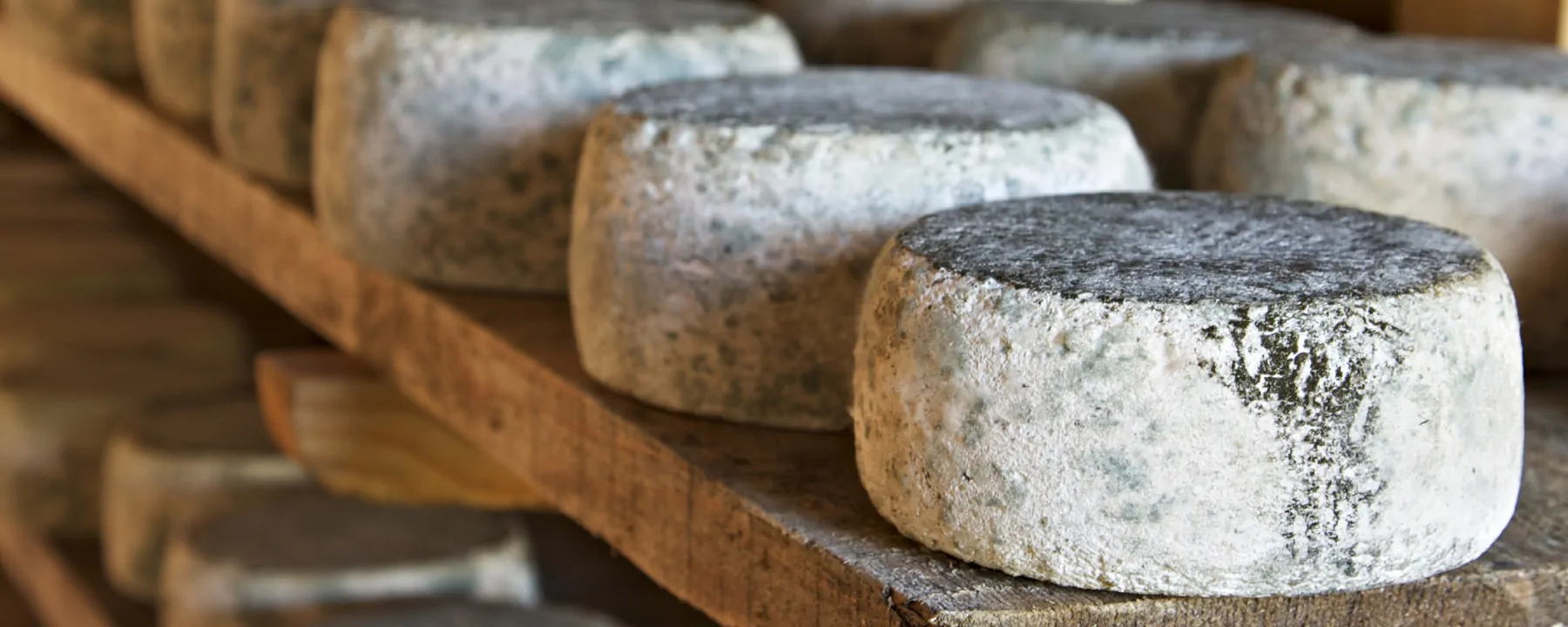
In naturally aged cheeses like brie and some varieties of cheddar, the production of the rind is interfered with by an antibiotic produced by a mold gene, according to research. Using antimicrobial compounds, the mold, a wild Penicillium species, outcompetes the bacterial colonies on the cheese rind. This finding sheds light on how fungi might influence the microbiome of cheese and raises the possibility that using scientific knowledge could aid cheese-making artists in preserving their goods by reducing unwelcome mold disturbances. The study emphasizes the complex interactions between microorganisms during cheese production and how they affect the flavor of the finished product.

The creation of secondary metabolites is regulated by a gene known as laeA, which was found by researchers. They were able to restore normal bacterial development on the cheese rind by developing a mutant fungus deficient in laeA, demonstrating that the disruptive effects of the mold were reduced. According to further research, laeA is required for the production of the psoA gene, which produces the antibiotic-like secondary metabolite known as pseurotin. The scientists showed that the germs continued to grow unhindered after pseurotin was removed. This research sheds light on how mold affects the microbiome of cheese and makes suggestions for potential strategies to prevent mold growth and aid cheese producers in maintaining the quality of their products.

The mold is thought to penetrate the microbial population on the cheese rind through the production of a secondary metabolite called pseurotin. With this discovery, the makeup of a microbiome has for the first time been demonstrated to be mediated by a fungal natural product, highlighting the potent impact of fungal chemicals on the development of diverse species. The work provides insight into a topic that has only recently received a limited amount of attention: how fungus interact with bacterial ecosystems. New avenues for preventing undesired mold infestations in the cheese-making process have been made possible by this research. Cheese manufacturers may be able to stop fungus from taking over and protect the caliber of their goods by detecting those with possible negative impacts on bacterial populations. The relevance of comprehending these fungal-bacterial interactions and their prospective uses in the cheese-making industry are emphasized by the study.


Tuesday, November 26, 2019

Increasing efficacy of insecticides using genetic engineering

An interesting development in genetic engineering involves fungi and insecticides. Recently, some fungi have been genetically modified to produce certain toxins, similar to how E. coli cells can be modified to express genes that make them glow and resist antibiotics. The toxins that were selected target certain insects, allowing for a more natural and effective insecticide. The fact that this possibility has begun to be explored opens many new doors for targeted insecticides. For example, certain fungi may be able to be modified to produce a toxin that kills an invasive species of insects while leaving the other existing populations unharmed.

In the first article the peptide scorpine is discussed, which has a very unique amino acid sequence and can specifically target a parasite that causes malaria in rodents. Since scorpine has a specific amino acid sequence, it may be possible to insert a gene that codes specifically for that peptide into a fungus. If that is successful, there is the potential that the fungus could be used to eliminate the parasites carrying malaria and possibly even mosquitoes carrying malaria as well.

I think this could be very useful in coming years. If fungi can be modified to produce certain toxins that are not harmful to humans, but will wipe out some invasive species, there is the potential for a more natural option for insecticides. This could allow farmers to reap more viable product out of every harvest, increasing their yield and income. The produce also wouldn't have to be coated in harmful chemicals that could potentially lead to cancer or other health issues. I believe this would be a very important field to keep studying and experimenting with because it could dramatically increase people's quality of life by keeping them out of harms way from chemical insecticides as well as diseases carried by small organisms (like parasites and insects).

Links:

Scorpine, an anti-malaria and anti-bacterial agent purified from scorpion venom:
https://febs.onlinelibrary.wiley.com/doi/epdf/10.1016/S0014-5793%2800%2901384-3

Enhancing the utilization of host trehalose by fungal trehalase improves the virulence of fungal insecticide: 
https://link-springer-com.ezproxy.stockton.edu/content/pdf/10.1007%2Fs00253-015-6767-y.pdf

Wednesday, July 3, 2019

The End of the Cavendish Banana


Tropical Race 4 (TR4) is a strain of the fungus Fusarium oxysporum cubense which kills banana plants by infesting the soil and robbing the bananas of necessary nutrients and water. TR4 is resistant to pesticides and primarily affects the Cavendish banana, a fruit that accounts for more than 40% of the world's banana exports and is the banana that is the most available at grocery stores.

The destruction of common banana species to fungi is nothing new. The Gros Michel banana was once the favored banana amongst Western households due to its sweet taste and creamy texture. However, the Gros Michel succumbed to Tropical Race 1 (TR1), another strain of the Fusarium fungus. When the fungus destroyed the plantations of powerful companies such as the United Fruit Company and the Standard Fruit Company, they switched to Cavendish bananas since they were resistant to TR1. Half a century later, we see history repeat itself with the TR4. The downside is that there is no readily available commercial banana to replace the Cavendish.

Methods to rid of the fungus have proven ineffective since TR4 is spreading in many countries. One solution to save the Cavendish is genetic modification. By isolating a TR4 resistance gene (RGA2) from Musa acuminata malacensis and transferring it to the Cavendish through transgenic bacterial mediums, researchers were able to find a single plant line that had total resistance to the TR4. The other four plant lines were mostly resistant and had low rates of infection. To get the new genetically-modified banana to the market poses another challenge. There are many legislative restrictions on GMO products, and consumers tend to be afraid of GMO products. However, without these genetically modified bananas, the Cavendish banana will share the same history as the Gros Michel.

As an avid banana eater, I don't want to see bananas disappear from grocery shelves. We should change our perspective on GMOs because genetic modification techniques can help solve nutritional deficiencies in many regions and save small family banana farms. Chiquita (United Fruit Company) and Dole (Standard Fruit Company) should have seen this coming and properly prepared for it since they have gone through this before in the 1960s. On a positive note, hopefully GMO techniques can be useful tools in bringing other banana subspecies to the forefront. Personally, I would love to try Blue Java bananas which are blue and taste like vanilla ice cream.

Image result for cavendish bananaImage result for gros michel bananasImage result for blue java banana
                Cavendish                                       Gros Michel                                Blue Java

https://www.wired.co.uk/article/cavendish-banana-extinction-gene-editing
https://www.nature.com/articles/s41467-017-01670-6

Thursday, January 24, 2019

Little Known about Fungi Defense


A New York Times article discussed about how little is known concerning fungi's defense system. Humans are capable of sending and receiving nerve impulses and plants have the vascular system; fungi lack these processes. In a recent study, scientists gave mushrooms to nematodes who digest fungi. Unknowingly, the mushroom sensed the presence of invaders and sent signals throughout the body. Under a microscope, researchers added a dye, which exhibited genes that turned on as the signal traveled through the mushroom. Gene activation enabled the mushrooms to produce poison for the foreigner. There is sparse insight about fungi defense mechanism and some scientists predict there may be some chemical signaling distinct from animals or plants.


It is truly baffling that in this day and age with technology booming at a fast pace, there is still so many unanswered questions. Fungi are quite distinct eukaryotic cells that share a closer relation to animals than plants. Their primary role is to decompose and recycle material in the environment. I agree that further scientific investigations should continue in order to properly acknowledge how the defense system of fungi work. It is quite exciting when new information is uncovered and shows how biology evolves.    

Monday, May 1, 2017

The elucidation of fungal bioluminescence


Recent work has led to the understanding of the chemical pathway of light production in bioluminescent fungi. Science has uncovered the processes in bioluminescent insects, bacteria, and marine animals but until now, have yet to reveal the pathway in fungal bioluminescence. There are approximately 80 species of fungi that express bioluminescence. This work has detailed the luciferin substrate, the luciferase enzyme, and the light emission by oxidation into oxyluciferin. Because of the scientific importance of bioluminescence application in the study of biology, this work can help to elucidate other biological processes. Fungi play an important role in the biogeochemical processes on earth and investigations such as this may lead to a better understanding with the applied use of possible biotechnology. With genetic sequencing of these fungi, the biochemical pathway may be used for other purposes yet to be revealed.


Article:


Popular News Article:


Video:


Saturday, November 12, 2016

Why are bananas so susceptible to diseases?

One of the most delicious fruits, specifically Cavendish bananas, is at risk. A fungus is spreading and it is out to get the Cavendish banana that is sold in North America and Europe. This disease is known as the Panama disease. Although this disease spreads slowly, it completely wipes out bananas where ever it goes. It is known as Tropical Race 4 or TR4 and it has been spread to China, Indonesia ,Southern Africa, and Asian countries such as Pakistan and Lebanon. Gert Kema examined the fungi from each of the locations where it had spread in order to identify strains of TR4 that infected the plants.


When cells copy, small variations in DNA occur as they reproduce and after a period of time it all adds up. Comparatively, TR4 works differently and does not produce these variations. As Kema gathered DNA samples from each of these locations, he found that each DNA sample was an exact match of each other. Surprisingly, he found that this is because each spore is a clone of the original fungus that invaded Taiwan. This study shows that each fungus is genetically identical. Some bananas could have resisted the fungi if small variations in the DNA occurred. But since the genes in all of the bananas and the disease were very similar, they could not resist the fungi. Cavendish bananas lack any diversity and are all planted together which is what sparked the disease to spread very easily. Scientist have tried to figure out how to stop the disease from spreading, but it is very difficult to do so. TR4 starts from the soil and grows long hyphae after attacking the plants roots. The long hyphae blocks the plants vascular system which reduces the amount of water it receives, eventually causing it to wilt. The fungus than continues to release spores into the soil, which is a main contributor to causing a wide variety of bananas to die as they are planted because once a plantation is infected, it will stay infected for decades. 
For now, scientists hope that they can develop bananas that are resistant to the fungus. But since bananas and TR4 lack genetic diversity on a tremendous scale, it will be very difficult to decrease the amount of bananas that are vulnerable to TR4.

Wednesday, April 13, 2016

Fungicides Trigger Autism-Related Gene Expression Changes in Mice


       A study was conducted by senior author Mark Zylka, PhD, associate professor of cell biology and physiology at UNC and his colleagues. The study involved exposing brain cells, or neurons, of mice to around 300 chemicals, including a variety of fungicides. Fungicides are chemicals that can prevent or kill the growth of fungi, protecting plants and crops from fungi-relate damage. Using RNA sequencing on the mouse neurons were performed in order to pick out which genes will be affected by the exposure to the chemicals. Results were confirmed by comparing the exposed neurons to chemicals to the non exposed neurons. With the use of computer programs, the scientists were able to determine which chemicals trigger similar changes in gene expression. There were six identified groups of chemicals which alter the gene expression within mouse neurons; rotenone, pyridaben, fenpyroximate, and strobilurins, chemicals in the strobilurins include pyraclostrobin, trifloxystrobin, fenamidone, and famoxadone.

       Results concluded that the chemicals reduced the expression of the genes that play an important role in brain communication, which interferes with brain functioning that leads to delays and decreased skills. The chemicals also increased the expression of genes associated with the nervous system and caused inflammation, which is most commonly seen in autism and neurodegenerative disorders. Researchers also found the chemicals can result in cell damage which can lead to interfered brain cells. Researchers can not confirm the effects from strobilurins will have the same effect on human brains, only with further research can this be truly confirmed.


       Since being a vegetarian for almost ten years, this study has shocked me. When living a healthy lifestyle and staying free of added hormones and antibiotics from animal protein, only to discover that there are terrible effects of maintaining a strict-plant based diet is meaningless for individuals who follow a vegetarian lifestyle. I hope further research will be conducted to truly determine whether or not these fungicides are related to autism. In the future if this study is confirmed to be true then hopefully, there can be a prevented measure or even the ending the use of these certain fungicides do decrease the rates or autism and neurodegenerative disorders.

Click here for original source :http://www.medicalnewstoday.com/articles/308432.php