Showing posts with label extinction. Show all posts

Tuesday, November 14, 2023

The Return of American Chestnuts, A Triumph of GMOs

 The American Chestnut Castanea dentata used to be a critical component of the North American Eastern Forests for centuries, what happened to them? At the turn of the 20th Century, a fatal fungal blight was introduced from Asian Chestnut Trees. By the 1950s, around four billion American Chestnut trees were dead, with only100 individuals persisting in isolated geographic areas.

Historic Range of the American Chestnut

With such few individuals and no viable means to reliably pollinate them to produce new offspring across such broad geographic areas, the American Chestnut seemed destined to extinction. This imminent extinction prompted a concerted effort by botanists, foresters, and geneticists to save the species. Through a combination of identifying American Chestnuts that survived the blight naturally and genetic modification blight resistant cultivars were developed and planted. One such blight resistant cultivar was developed at Salt Air Farm in Long Island NY. In 1998 a single resistant individual was planted on the property, with six more planted since then. The largest individual of the Long Island population has produced nuts as well highlighting the success of these conservation projects.
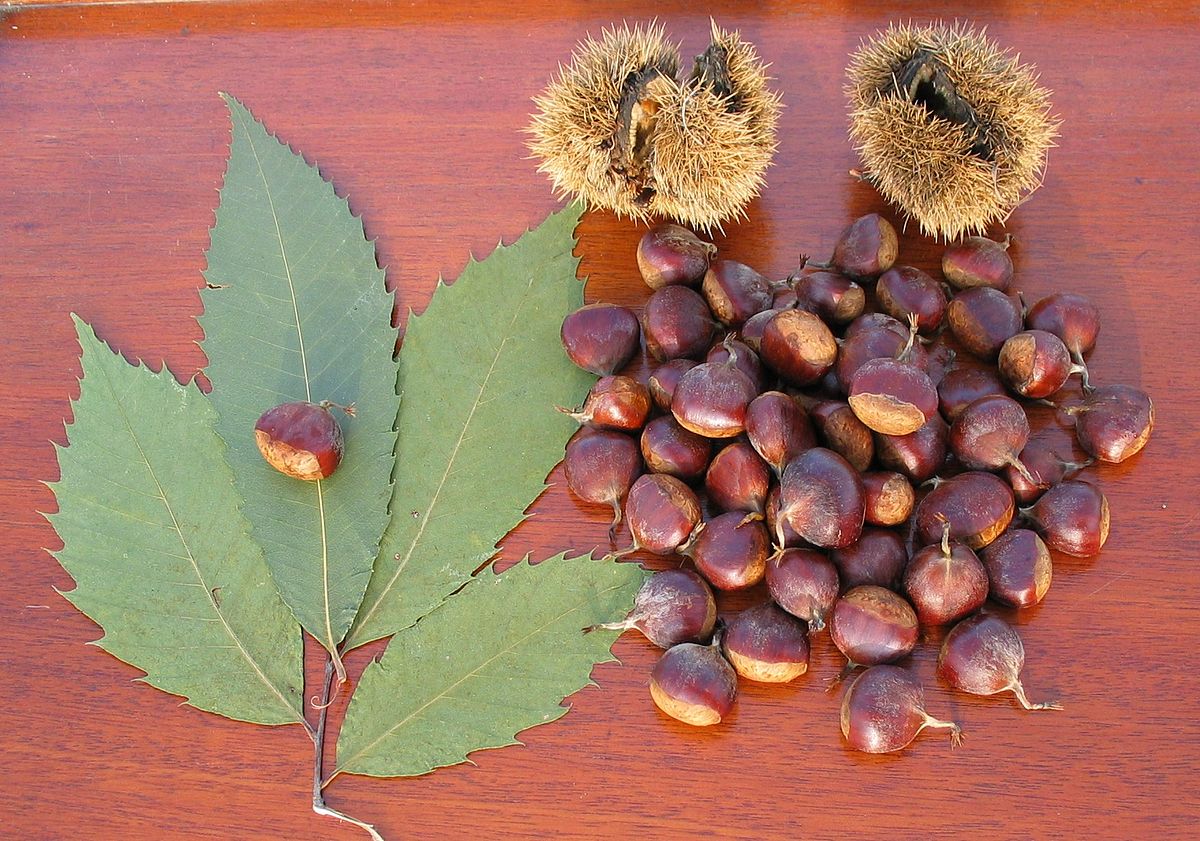
The leaves and nuts of the American Chestnut 

Another blight resistant cultivar, Darling 58, was developed at SUNY ESF by inserting a gene named Oxalate Oxidase (OxO). OxO is found naturally in wheat and helps to break down the acidic byproducts of the blight fungus' lifecycle. This allows Darling 58 Chestnuts to be infected by the blight fungus without suffering the ill effects, a sort of win-win scenario for both the American Chestnut and the fungal blight. Darling 58 is unlikely to hit the public market until after 2025 but the hope this additional cultivar brings to conservationists cannot be understated. 

A historic photo of a massive old growth American Chestnut


It cannot be understated how wonderful this effort is as it could very well bring back a species from the brink in a thunderous fashion. It is far from perfect though as with such few individuals to pull from, the genetic composition of future American Chestnuts will likely be bottlenecked, making them potentially more susceptible/sensitive to novel diseases or climate changes. This worry at this stage is only hypothetical however, and this news should be celebrated at this point with a grain of salt. 


Friday, October 13, 2023

Did Cetothere Whales Go Extinct?

 The evolutionary history and relationships of whales has long fascinated scientists for decades. The fossil record of whales is deep and expansive with many bizarre bauplans (body-plans) that are unlike anything alive today. Presently whales can be divided into two broad taxonomic groups, the odontocetes (toothed whales, dolphins, and porpoises) and the mysticetes (baleen whales). The extant  mysticetes are traditionally divided into the following three taxonomic families, Balaenopteridae, Balaenidae, and Eschrichtiidae. Two additional families within the mysticeti clade are recognized, Eomystecidae and Cetotheriidae but both of these families are extinct and represented solely by fossils... Or are they?


Illustration of a Pygmy Right Whale Source: Wikipedia Commons

The Pygmy Right Whale Carpera marginata is an elusive mysticete found throughout the world's southern oceans. As the common name would imply, it was traditionally thought to be closely related to Right Whales (Balaena spp.), which belong to the family Balaenidae. Superficially Pygmy Right Whales do appear to be a Right Whale that decided to stop growing halfway through their pubescence. Looks however can be deceiving and the apparent relationship between the full-sized and the pygmy right whales is quite literally skin-deep. Ewan Fordyce and Felix Marx published a paper in 2013 re-assessing the skeletal morphology and taxonomy of Pygmy Right Whales and found something interesting. By comparing the skull and ear-bones of fossilized Cetotheres to those of Pygmy Right Whales they concluded that the Pygmy Right Whales were Cetotheres. 

Phylogenetic Tree of Extant Mysticetes. Note how the Pygmy Right Whale is the sister group to Balaenopteroidea and only distantly related to the true Right Whales (Balaenidae).
 Source: Wikipedia (note this phylogeny was made four years prior to this study and is subject to change)

While the shape and position of bony features is highly revealing of evolutionary relationships, morphology alone is an incomplete dataset. Genetic material such as DNA or other related proteins provide clearer and far more complete pictures of an organisms taxonomy. Luckily for fans of Cetotheres, genetic studies published this year provide further lines of evidence that their lineage may still persist to this day in the form of Pygmy Right Whales. 

It is incredibly important to note that the debate itself is still not settled as to whether or not Pygmy Right Whales are true Cetotheres or a lineage that diverged early during the evolution of  Balaenopteroidea and is nested within that clade instead. The Phys.org article presents this evidence as "Putting the Debate to Rest" whereas the study it draws from is far more tentative in its conclusion as to whether or not Pygmy Right Whales represent the last of the Cetotheres or are a strange, persistent, and early offshoot of Balaenopteroidea. This kind of scientific journalism that presents phylogenetic datasets as solved/absolute disservice the public in two ways. Firstly, it is outright dishonest and misrepresents the work of the authors, giving the general population an overconfidence in our understanding of complex evolutionary relationships. It also harms the publics' understanding of the scientific process of developing taxonomic as these models of relationships are constantly changing with new data points and new statistical computational models.


Sunday, August 8, 2021

First US Case of Human-Led Insect Extinction Confirmed by DNA From 93-Year-Old Butterfly

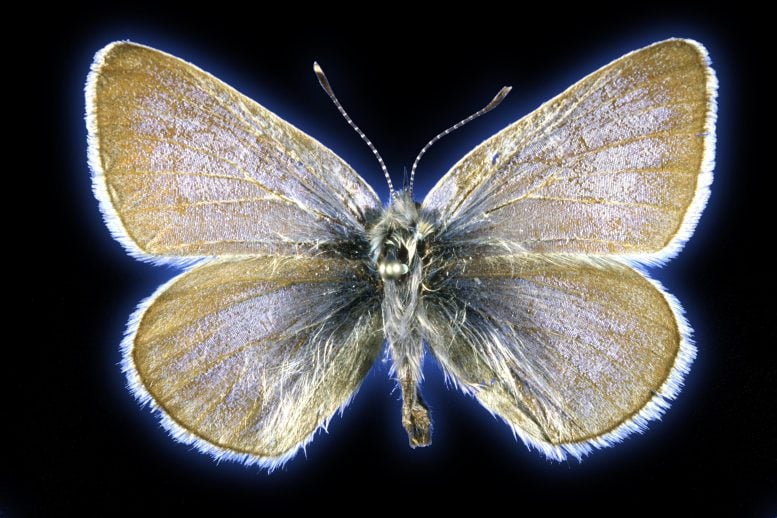
 93-Year-Old Xerces Blue Butterfly Specimen

 The Xerces blue butterfly (Glaucopsyche xerces) is thought of to be the first insect species being drove to extinction by humans, with the rapid urbanization in the San Francisco area in the 1940s playing a role. There has been a lot of question over if this butterfly was in fact a separate species or just a sub-population of a common butterfly but researchers have taken a specimen from a museum collection and analyzed its DNA and found that is was, in fact, its own species. Researchers were able to extract a piece of a specimen's body and sample and treat the tissues in order to separate the DNA and analyze it. While the specimen was over ninety three years old and DNA does degrade over time, its stability helps slow down the degradation. 


Researchers continue to analyze DNA of extinct species when possible for a multitude of reasons. The first is the possibility of bringing extinct species back to life. While this seems like a good reverse of damage that was done, they do argue conservation of still living species should be the focus. Another is to see what we can learn from them to further our current conservation efforts. This study specifically shows the relationship between humans and insects, the latter of which is experiencing a high level of extinction which could affect all ecosystems severely. This also shows the importance of museum collections and other specimens for future use and study.


 https://scitechdaily.com/first-us-case-of-human-led-insect-extinction-confirmed-by-dna-from-93-year-old-butterfly/

  https://royalsocietypublishing.org/doi/10.1098/rsbl.2021.0123


Thursday, April 15, 2021

Cloning and Conservation


Cloning has been a very controversial topic in the genetic community for some time. Whether it's due to the animal not being fit for the time period or for it being ethically wrong, there have always been questions surrounding cloning. But some good can come from cloning, in this case it is bringing back a species that became extinct. A Colorado Facility cloned a black footed ferret and it was born on 12/10/2020. This ferret was known to become extinct in the 1980’s and the reason they were able to successfully clone one was since one of the ferrets were kept frozen after they died.


The purpose of cloning this ferret was to bring more genetic diversity to the ferret community. "Advanced reproductive technologies, including cloning, can save species by allowing us to restore genetic diversity that would have otherwise been lost to time,” says Ryan Phelan, executive director of Revive & Restore. This successful clone has caused conservations to second guess cloning. While this is a very expensive practice, it does work in bringing back endangered/extinct species. Some people feel that the best fit animals should remain on Earth and others think that extinct species should come back. I think the point of this argument is that cloning can save endangered species, but it would be at an extremely high cost.


How can cloning help conservationists save extinct species? | Living (euronews.com)


What is Cloning (utah.edu)

Tuesday, February 9, 2021

Climate Change Drove Woolly Rhinoceros to Extinction: DNA Study


Researchers have analyzed a complete nuclear genome and mitochondrial genomes from Coelodonta antiquitatis otherwise known as the extinct woolly rhinoceros. Their findings concluded that the population of the woolly rhinoceros remained stable until temperatures began to rise too high for the cold adapted species. This species first appeared 350,000 years ago and became extinct 14,000 years ago. Initially it was thought that humans were the cause of the woolly rhinoceros disappearance because data showed that humans first appeared in Siberia right around the time the population went extinct. Recently several discoveries showed much older human occupation sites. So the decline of woolly rhinoceros doesn't coincide with humans appearance. Professor Dalen and his colleagues wanted to investigate the woolly rhinoceros demographic history so they studied DNA from 14 individuals. 

By looking at the genetic diversity of the genomes, they were able to estimate the woolly rhino populations before their extinction. The population began to increase at the start of a cold period 29,000 years ago and remained constant. The population remained constant long after humans began living in Siberia and didn't start to decline until 4,500 years before their extinction. Researchers also found a genetic mutation in the DNA that helped the animals adapt to the cold weather. They believe the adaption may have declined due to a brief warming period known as the Bolling- Allerod which happened during their extinction. I do believe that climate change and global warming may have had a hand in the extinction of the woolly rhinoceros and that humans may not 100% at fault. I hope that more research is done on this subject.

Links:

http://www.sci-news.com/paleontology/climate-change-woolly-rhinoceros-extinction-08745.html

https://dnascience.plos.org/2020/09/03/extinction-of-the-woolly-rhino-ancient-genomes-point-to-climate-change-not-overhunting/

Wednesday, July 3, 2019

The End of the Cavendish Banana


Tropical Race 4 (TR4) is a strain of the fungus Fusarium oxysporum cubense which kills banana plants by infesting the soil and robbing the bananas of necessary nutrients and water. TR4 is resistant to pesticides and primarily affects the Cavendish banana, a fruit that accounts for more than 40% of the world's banana exports and is the banana that is the most available at grocery stores.

The destruction of common banana species to fungi is nothing new. The Gros Michel banana was once the favored banana amongst Western households due to its sweet taste and creamy texture. However, the Gros Michel succumbed to Tropical Race 1 (TR1), another strain of the Fusarium fungus. When the fungus destroyed the plantations of powerful companies such as the United Fruit Company and the Standard Fruit Company, they switched to Cavendish bananas since they were resistant to TR1. Half a century later, we see history repeat itself with the TR4. The downside is that there is no readily available commercial banana to replace the Cavendish.

Methods to rid of the fungus have proven ineffective since TR4 is spreading in many countries. One solution to save the Cavendish is genetic modification. By isolating a TR4 resistance gene (RGA2) from Musa acuminata malacensis and transferring it to the Cavendish through transgenic bacterial mediums, researchers were able to find a single plant line that had total resistance to the TR4. The other four plant lines were mostly resistant and had low rates of infection. To get the new genetically-modified banana to the market poses another challenge. There are many legislative restrictions on GMO products, and consumers tend to be afraid of GMO products. However, without these genetically modified bananas, the Cavendish banana will share the same history as the Gros Michel.

As an avid banana eater, I don't want to see bananas disappear from grocery shelves. We should change our perspective on GMOs because genetic modification techniques can help solve nutritional deficiencies in many regions and save small family banana farms. Chiquita (United Fruit Company) and Dole (Standard Fruit Company) should have seen this coming and properly prepared for it since they have gone through this before in the 1960s. On a positive note, hopefully GMO techniques can be useful tools in bringing other banana subspecies to the forefront. Personally, I would love to try Blue Java bananas which are blue and taste like vanilla ice cream.

Image result for cavendish bananaImage result for gros michel bananasImage result for blue java banana
                Cavendish                                       Gros Michel                                Blue Java

https://www.wired.co.uk/article/cavendish-banana-extinction-gene-editing
https://www.nature.com/articles/s41467-017-01670-6

Sunday, July 29, 2018

Australia’s Endangered Quolls Get Genetic Boost From Scientists

In northern Australia, quolls' (squirrel sized marsupials that eat any animal smaller than them) population is dying. Their diet of cane toads (a poisonous species) nearly led them to extinction. But in Queensland, scientists found that the quolls there did not feed on cane toads and had successful populations. This was because they had a gene that prevented them from eating toads. Scientists found that if you bred the Northern Australia's quoll with the Queensland's quoll, their offspring had the toad-aversion gene and used this to increase their population. Scientists believe that this method can help increase declining populations of any endangered species.

While some argue that it is "unnatural" to mess with nature this way, I think that it is a great way to keep everything balanced. Science was discovered to help living things thrive, so it only makes sense that we use this knowledge wisely.

Article Link
Related Article

Tuesday, December 12, 2017

Tasmanian tigers were in 'bad genetic shape' long before extinction, DNA analysis shows


Tasmanian Tigers were in poor genetic long before human drove them into extinction. A new DNA study  shows how and why. Biologist began by starting with the source, the genetic history the Tasmanian tiger. The biologist then extracted and analyzed the DNA of a pup that has been perceived for more than  a  century. The genome reported as one of the DNA of any extinct animal. It was not easy for the biologist to piece this together for DNA has a habit for falling apart.  
The preserved DNA of the pup  was stored in ethanol reasons why it did not degrade as much as other preserving fluids. From the analysis  of the genome it showed that even before  the human arrived  there was  lack of variation in the genetic  of those Tasmanian tigers. When it comes to evolution genetic variation and diversity plays a very important role in a specie;s survival Since there was a lack of variation the tigers declined in their history.  I found this article very interesting because I learned and always heard about how the lack of genetic variation leads to extinction but after reading this article I now have evidence that it is true, you need to be in a good genetic shape to evolve not go into a demography of an extinct animal.

Monday, April 3, 2017

The Curse of the Labrador Duck


https://blogger.googleusercontent.com/img/b/R29vZ2xl/AVvXsEiurJfrOxPbdfQ1mg9yZdYR3EeveDojcMb-G72q75N5k9N-PCzP6n9DZQ3UXxzzwfKExP9k3Poc-0bGcdkuLAa-PTZE2LaduMLnf_0ldHYEJLdo3ZICtr8vm7hC49bHu0EW4SHSKLpG3y8/s1600/Labrador-Duck.jpg


The Curse of the Labrador Duck is a book about the quest of Glen Chilton, who is bound to discover the genome of the Labrador duck. The Labrador duck is North America's first bird species to go extinct after the European migration in the 1800's. The last specimen was harvested in 1875 and the last Labrador duck was reportedly seen in December of 1878. Chilton runs into many problems on his quest for the genome, mainly the lack of DNA. There is only 55 specimens known left in existence, all of which are taxidermy, which leaves nothing but feathers and skin to study. He searched the globe to find other forms to study the ducks, but nothing's true. All of the eggs that were thought to be Labrador ducks turn out to be other species of duck, mostly mallard and red breasted merganser. Today no one knows much about the Labrador duck let alone the genome, without further investigation and DNA to examine, the mystery of the Labrador duck may remain a mystery forever.

This is a fascinating book that covers mystery behind a species that very little is known. With minimal specimens to look at and no quality DNA samples to study the mystery will not be resolved. Some biologists hypothesize about the duck not being its own true species, saying it is simply a cross between a Steller's eider and a common eider. This is a valid hypothesis, except that the two species have completely different ranges and are only found on opposite sides of the nation. The truth behind the Labrador duck may be never known, but it is a mystery that will capture the minds of many biologists and water fowlers alike.


Monday, March 27, 2017

A Very Mammoth Project


If movies like Jurassic Park have taught us anything, it’s that it is not a good idea to bring extinct animals back to life. However, an article was written about a project called “Woolly Mammoth Revival” led by Harvard geneticist George Church didn’t seem to get the hint. Research on de-extinction, the science of bringing extinct animals back to life, has been progressing significantly in recent years and the woolly mammoth may be the next animal to be brought back to life from extinction. Church’s work so far only focuses on single cells, but the team has been carefully placing mammoth genes into these cells belonging to their closest living relative, the Asian elephant. This will create a sort of hybrid animal that will be comprised mostly of Asian elephant DNA incorporated with mammoth DNA to give it the characteristics of a mammoth.
The rest of the article has a lot more information, more than most people will care to read, but over-all, while I do not agree with reviving the woolly mammoth, I do fully support the processes associated with this project because of the benefits these genetic techniques will have towards living endangered species. Using gene manipulation and “test tube” embryos, science has made great strides in conserving endangered species and further enhancement of such techniques will prove invaluable to these animals’ genetic diversity.

Thursday, March 2, 2017

The Woolly Mammoth's Last Stand

https://www.nytimes.com/2017/03/02/science/woolly-mammoth-extinct-genetics.html?rref=collection%2Fsectioncollection%2Fscience&_r=0
http://www.livescience.com/58088-woolly-mammoths-doomed-by-dna-mutations.html

In a remote island off of Siberia, geneticist discovered the tooth of a male woolly mammoth which decodes the probable cause of the population's extinction. This revelation supports the idea that as a population dwindles, natural selection becomes less efficient at deleting bad mutations, and leads to a loss of genes and slowly meltdown the genome. Once numbers fall below a certain level, genetic decline is irreversible and the species will go extinct. The first woolly mammoth's to go extinct were from the mainland due to climate change and hunting, but other populations lived on for thousands of years on remote islands (St. Paul and Wrangel). 
The genomes of the 45,000 year extinct mainland mammoth and the 4,300 extinct Wrangel mammoth were analyzed and geneticist were also able to identify the population size. The population size of the Wrangel was 300 and the mainland had 13000. During the period in between the extinction of both mammoth populations, the species size decreased tremendously and the genetic diversity reduced by 20 percent. This means the lesser fit of the Wrangel mammoths contributed to the extinction.
The Wrangel mammoth's genome detected many deleterious genes and mutations which lead to the population to a genetic meltdown. Many of these genes halted the synthesis of proteins, and damaged olfactory genes as well as receptors which detect pheromones, The two snapshots of the woolly mammoth genome, support the idea that there is genomic meltdown in small populations which contributes to extinction.The discovery that individual genes were deleted in the Wrangel mammoth’s genome is a “very novel result,” and if confirmed, “will have very important implications for conservation biology,” Dr. Dalen said.

I found this article very interesting in many ways. Genetic technologies have become so advanced in analyzing genomes, that the tools can get results from hundreds of thousands of years ago. I also always believed the woolly mammoth's extinction resulted from climate changes, but never thought of mutations being the cause. The mutations found on the genome of the Wrangel mammoth proved to be the final blow to the extinction of the species. The mammoth's were unable to use special senses for survival as well as not being able to socialize with the other sex due to damaged receptors of pheromones. It seems that over time, the mutations weeded out vital genes until there was nothing left to salvage.The mutations were the ultimate destruction of the mammoth species and is important information for conserving endangered species today. 

Wednesday, November 23, 2016

Big Cat DNA Is The Reason For Their Brink Of Extinction


Many "big cat" species of cheetahs, lions, tigers, and leopards have a conservation status of endangered all around the world. There are few of these big cat species or sub-species that are not at the very least vulnerable on the International Union for Conservation of Nature's Red List for Endangered Species. Scientists believe that their genetic make-up is to blame for these big cats on the bring of extinction. In a recent study done by a group of international researchers, the Amur leopard's entire genome sequence has been discovered giving insight on one of the most critically endangered of the big cats species. There are only forty Amur leopards left in the wild. This study of the Amur leopard's genome has led scientists to theorize that the reason behind the endangered conservation status of this species and so many other big scat species is due to their strict carnivore diet. Cats require the highest concentration of protein of any carnivore. They can not get their nutrients from plants, nor have their digestive systems ever adapted to process and digest plants. Their carnivore diet has led to much of their genetic code to change. Some of the changes are shortened digestive tracts, and digestive enzymes. Through evolution, big cats have become the most genetically optimized hunter. They have strong limbs, fast reflexes, night vision, flexible bodies, and the ability to run at high speeds. However, their genetic specialization has become a problem because it is too specialized to the point where it has become a disadvantage. According to the fossil record, specialization in carnivores has always led to shorter than normal extinction. Diet flexibility is important for an animal to have environmental adaptability. Herbivores and omnivores are able to change diets because their genes aren't as specialized as carnivores. Wildlife is diminishing on this Earth due to habitat destruction and pollution. When wildlife is at a rapid decline, big cats such as the Amur leopard do not have as many options for their prey anymore. Carnivores are at the top of the food chain which leads to smaller populations as well. Their specialized genes give them low genetic diversity and their small population sizes give them even more of a smaller gene pool. 


My favorite animals on Earth are all of the big ca variety. The realization that their carnivore diets have effected their genome sequence can possibly lead to realistic conservation solutions. Their specialized genes due to their diet and small population sizes have targeted them to only be able to live life a certain way that is not as possible because of humans effect on the earth. Humans are responsible for causing changes in the environment that hurt animals. However, with knowledge from this study and scientists working on using the information from the genome sequence there is a possibility that diet adaptability may be a conservational effort attempt in big cats. The genetic alterations of diet effects most of their genetic material. The most powerful animals on Earth are carnivores, but because of their inability to adapt, they are the most vulnerable in an ever-changing environment. I suppose the survival of the fittest is truly based on adaptability after all.

Sources:
Kim, Soonok, Yun Sung Cho, and Hak-Min Kim. "Comparison of Carnivore, Omnivore, and Herbivore Mammalian Genomes with a New Leopard Assembly." Genome Biology. BioMed Central, 2 Nov. 2016. Web. 22 Nov. 2016. <https://genomebiology.biomedcentral.com/articles/10.1186/s13059-016-1071-4>. 
Linderman, Raymond. The Trophic-Dynamic Aspect of Ecology. 23rd ed. Vol. 4. Hoboken: Wiley, 1942. Print. 399-417. 
Nature Works. "Natural and Human Impacts on Wildlife." Nature Works. New Hampshire Public Television, 2016. Web. 23 Nov. 2016. <http://www.nhptv.org/natureworks/nwep16b.htm>. 
Wilkins, Alasdair. "Big Cats' Meat-Eating Diets Push Them To Brink Of Extinction." Vocativ Animal News. Vocativ, 02 Nov. 2016. Web. 23 Nov. 2016. <http://www.vocativ.com/372344/big-cats-meat-eating-diets-extinction/>. 
World Wildlife Fund. "Impact of Habitat Loss on Species." Species Threats. WWF, 2016. Web. 23 Nov. 2016. <http://wwf.panda.org/about_our_earth/species/problems/habitat_loss_degradation/>.


Tuesday, May 3, 2016

Saving The White Rhino


The White Rhinoceros is in immediate danger of going extinct.  There are only three individuals of this species left on the planet.  In an attempt to try and keep the white rhino from disappearing, scientists are working together and using cellular techniques to save them.  Of the existing rhinos, they are no longer able to breed naturally.   What these experts are doing is basically creating lab-grown embryos from frozen genetic tissue and harvesting them into surrogate mothers.  An issue could arise while trying to get the embryo harvested; considering no one has ever done it before and the rhino is said to have a highly convoluted and impenetrable cervix.


Some people are against this and think that more money should be used to prevent poachers from driving the animals to extinction.  That's a good idea, except this could lead to other possibilities of saving endangered species where preventing poachers isn't an issue.  Some people fail to take into account that they are driving other species to extinction, assuming they all have very large carbon footprints.  I personally am very excited to hear how this experiment goes.  It would be incredible to know they have the ability to save a species from extinction and also making advances in reproductive technology. So many other advances in science will be made possible if this works smoothly! 

Friday, April 22, 2016

Low Genetic Diversity in Island Fox

Recently it has been discovered by a group of geneticists at the University of California that one fox species has a surprisingly low genetic diversity. The species looked at are referred to as the island fox and can be found on The Channel Islands. According to studies in the past, these fox share an ancestor with the gray fox that was brought over by Native Americans about 13,000 years ago. Scientists are still unsure of exactly how island fox appeared on the islands. The island foxes are even smaller than a house cat and can weigh only 3.25 pounds.


Normally it is common for species that lack genetic diversity to be at risk for extinction, but this does not seem to be the case with the island fox. Dr. Robert K. Wayne has been studying island foxes since the 1990s, but has had to wait for the technology to sequence their entire genomes. He sequenced the genome of one fox from each of the six subspecies and found little difference in the DNA the foxes inherited. This phenomenon is called genetic flatlining which usually poses a threat to the species survival , except in this case.

Researchers have looked into why the island fox is able to live on and came up with a few theories. The first reason could be that they are one of the top predators on a small island and may have even had the help of humans on the island. Secondly, they may experience epigenetics which can cause genes to switch on and off. This would mean that even if they all have the same genes different ones are expressed. The third possible but unlikely way is if the gene pool had added variation if a different species had come to the islands. Researchers are still unsure of why the island fox did not become extinct years ago.

Although island fox studies may seem insignificant it actually could be helpful in years to come. Studies in this area does not only help to make sure that the island fox continues to reproduce, but also other species. Researchers believe that persistence of small populations goes hand in hand with the concern of low genetic variation.   As more research is done in this area hopefully a solution will be made to prevent extinction of other species.

Friday, December 4, 2015


Genetically Modified Salmon

On November 19th, 2015 the Food and Drug Administration (FDA) approved the first genetically modified (gmo) animal cleared for human consumption.  AquaBounty initially approached the FDA in the 1900s with no luck. Once approved AquaBounty stated that the fish were safe and ready to eat more than five years ago. Immediately after approval some consumers and environmental groups fiercely opposed to the gmo salmon. Fearing the safety of other species if the engineered fish were to escape into the ocean and rivers. The salmon is expected to grow full size in half the time of a wild salmon. Although it grows very fast it would take approximately two years before it can reach the local supermarkets.

I completely disagree with the approval of gmo salmon. It’s devastating to the population of wild salmon if an engineered salmon were to escape. It will out compete the wild salmon thus eliminating their existence. So what would happen to the people that want to eat wild salmon? There is no way of ever retrieving a species once its outcompeted and extinct. Its also devastating how slowly we’re killing our environment just for the profit. So at the end what is there left if we have destroyed our earth and its species? 

Sunday, March 22, 2015

Studying the DNA of Tigers

     Stephen O'Brien a researcher at Nova Southeastern University and his team have been looking at the genetic make-up of tigers.  The study has been ongoing for 10 years which will appear in print May 1, 2015.  The journal article will discuss DNA signatures from 145 individual tigers.  Also including tigers from verified geographic origins which represented extinct subspecies.
     In 2004 the studies first results displayed that the Malayan tigers were splitting from its Indochinese counterparts creating a distinct, new fifth-living tiger subspecies.  The teams most recent findings have found that the extinct Javan and Bali tigers were almost indistinguishable from a molecular view in comparison to the Sumatran tigers.  Just as the extinct Caspian tigers are almost identical to the surviving Amur tigers.  O'Brien states that the results are important because it will help manage and protect each surviving subspecies.  It will stabilize the rate of extinction that the tigers are on.  O'Brien also believes the discovery can be a powerful took to help with forensic identification of subspecies in captive populations.  Even taking a role in trafficked bone and skins in illegal trades.
    I am rather shocked at how long this research has been taking.  I would have assumed that this information was already known.  It is amazing to see how these finds using DNA can completely change the game of genetics and animal research.  Hopefully these findings will aid in the protection of the tigers and other endangered species currently.

Original Article

Sunday, March 30, 2014

Western Black Rhino are Declared Extinct

I know this was a while ago but I thought it was an interesting topic and a tragic one at that. The western black rhino are declared extinct. As of November 13, 2013 the world has lost a subspecies of black rhino. The western black rhino had one of the biggest across central and western Africa. Because of the industrial and agriculture lifestyle in the 20th century; farmers and ranchers in Africa were killing these black rhinos to save their crops. The Chinese came up with a medicine that they say could cure fevers and cancer, of course this was during the 1950's. Then poaching became a really big problem in the 1980's-1990's, the black rhino population was reduced to 10 subspecies at this point. In 2001 WWF did a survey and found that there were only five surviving western black rhinos. The articles that are linked to this blog talked about how the black rhinos have been extinct for 10 years now. But until November 13, 2013 everyone now knows that the western black rhinos are extinct, and can now help towards the repopulation of the rest of the rhino species.

With reading these articles and anyone who also reads these I hope that people can know how important species around the world are. From reading this article and others about different species dying off many children will never see as many animals and plants as I have seen. Hopefully people now realize animals, plants, and humans have to live together in harmony.

Sunday, April 21, 2013

Cute and Cuddly Koalas- Dead from Chlamydia


Researchers have been pondering the question “Why do some koalas die from Chlamydia and an AIDs-like retrovirus where as others manage to avid contracting the sexually transmitted diseases?” Well the use of condoms were obviously not the reason, it seems the answer lies rather with genetics. Unfortunately public health officials will not be able to claim responsibility for the decrease in STD’s in Koalas. Scientists based in Australia have found a gene they call the “interferon gamma (IFN-g) gene” that appears to help boost koala immune systems.


While koalas contracting Chlamydia seems to be rather comical, it is actually leading the population towards extinction at an alarming rate. Over half of the koalas in nature have Chlamydia. Chlamydia can lead to infertility, infections, blindness and death. The infection with Chlamydia also opens the door for an AID’s-like retrovirus called immunity-compromising koala retrovirus (KoRV). This combination is proving especially dangerous to these cute and cuddly animals, which actually smell surprisingly good. Koalas have now been placed on the threatened species list. Populations have dropped by at least forty percent, as high as eighty percent in some areas.


Scientists were surprised to find that the koalas in the state of Victoria seemed to be rather unaffected by these diseases. Recent research has reveled that these koalas have the IFN-g gene that allows them to have a much higher natural immunity to these infections. It is possible that this gene may be able to be developed into a vaccination. Researchers hope to be able to develop an effective vaccination or treatment within a few years in hopes of saving koalas.


Original Article- http://blogs.scientificamerican.com/extinction-countdown/2013/04/16/chlamydia-killing-koalas-genetics-cure/


Additional Article- http://www.guardian.co.uk/environment/2013/apr/21/koala-deaths-chlamydia-retrovirus-vaccine-genome

Monday, November 19, 2012

Polar bears' ancient roots pushed way back

New analysis of polar bear DNA suggests that they branched off from brown bears much earlier than previously thought.  The new study dates the split back to the formation of the thick sea ice in the Arctic between 4 and 5 million years ago.  This new date of origin suggests that the polar bears were exposed to extremely variable weather and suffered a genetic bottleneck during the warm period 420 thousand years ago.  Today we are again facing a warm period in the earth’s history and it is questionable as to whether or not the polar bear will be able to survive it.


Charlotte Lindqvist and her colleagues at the University of Buffalo developed genetic blueprints of 23 modern polar bears.  However, they used the rate of mutation appearance in the DNA of primates to calibrate the polar bear DNA and come up with a date of origin.  This assumes that polar bears evolve at the same pace as primates, which could prove false.  There is also evidence of polar bears mating with brown bears, most likely during warm periods.  This hybridization is potentially dangerous for the continued separation of bear species.

This article was very interesting given its present implications regarding our warming environment.  Polar bears are a species of concern due to the reduction of their natural habitat.  I have heard of polar bears and brown bears mating as their environments begin to merge and am curious as to what would happen when this occurs.  Obviously the interbreeding would be detrimental to both species specific genetic uniqueness, but to what extent?  I hope scientists will be able to determine the answer to this question before the polar bear becomes extinct.