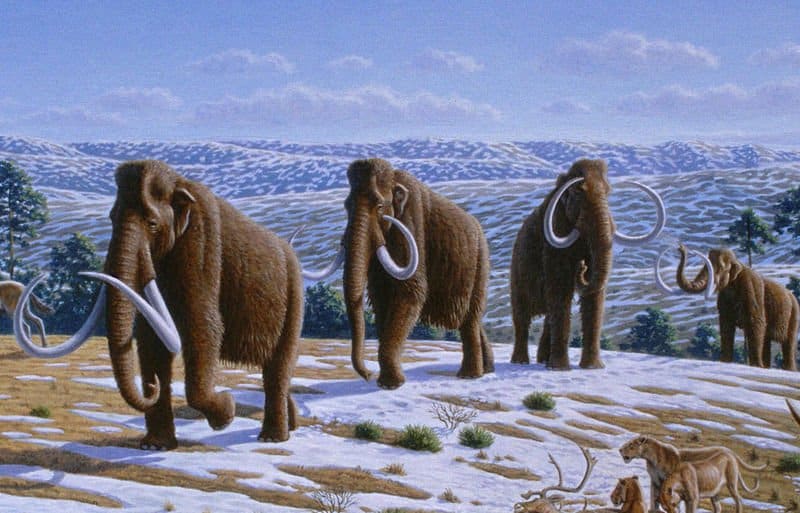
Showing posts with label woolly mammoth. Show all posts

Sunday, November 16, 2025

Exploring RNA molecules in Ancient Woolly Mammoths

 Exploring RNA molecules in Ancient Woolly Mammoths

Benjamin Pruss
BIOL-2110-001 GENETICS
Professor Guy F. Barbato
November 11th, 2025

by Cyclonaut
published on 


    In a recently published study, DNA and RNA from several preserved woolly mammoths that were preserved in the Siberian permafrost were analyzed by Mármol-Sánchez, Dalén, and their colleagues. In a juvenile woolly mammoth that lived 40,000 years ago in the group called Yuka, the tissues were examined by the scientists. They found that there was molecular stress in the muscles of the mammoth's hind legs, as well as scratches, leading to the idea that she was trying to outrun a predator. 

    RNA, or ribonucleic acid, transmits genetic information from DNA in cells and can be used to understand what a cell was doing at a specific time. Generally, RNA breaks down very quickly after death; however, in the permafrost where Yuka was found, the RNA was preserved. 

    The scientists examined the RNA of Yuka as well as several others in an attempt to look beyond DNA, which is more commonly studied. The goal was to expand past what was previously thought to be the limits of ancient RNA analysis.

Sources

Friday, April 18, 2025

Woolly mammoth chromosomes reconstructed using fossilized sample


Woolly mammoth chromosomes reconstructed using fossilized sample:


    A team of international scientists assembled the woolly mammoths genetic code using fossilized chromosomes. The chromosomes came from a 52,000 year old carcass that was discovered in Siberian permafrost. The animal was freeze-dried on death, which essentially preserved the 3D structure of ancient chromosomes. Which are thread-like structures containing DNA. Since the scientists show the shape of the animals chromosomes, it then allows them to assemble the DNA sequence of the extinct creatures. The researches then use computer modeling to reconstruct the full 3D chromosome structure from the fossilized data. The team saw that the woolly mammoth had 28 pairs of chromosomes and saw what key genes were responsible for hair follicle development and could help explain why mammoths are woolly and elephants now a days are not. 


    In my opinion, I think all of this research these scientists have found is very fascinating and crazy to think about. As it would be cool to have a once extinct animal to be here again blows my mind. How technology has changed, and the many advancements that were made benefits all of this newly found research. I don't exactly know how I would feel if a woolly mammoth would be alive, and put on this earth again. This feels like the movie "Jurassic Park."


Sources:


Saturday, September 28, 2024

Freeze-Dried Woolly Mammoth DNA Reveals Ancient Genetic Secrets

Recently, a team of geneticist researchers discovered that freeze-drying a specimen turns its genetic material into a glassy 3D structure called "chromoglass." More specifically, the team gained samples from a woolly mammoth from 52,000 years ago in Siberia that was freeze-dried and preserved in permafrost. The discovery was made using a method called "Hi-C", which allows researchers to closely examine the 3D structure of ancient mammoth's DNA. On top of seeing the DNA's chromoglass structure, the team was also able to unveil other remarkable findings in the DNA, such as genes that were turned on and off before death. Knowing data like this allows researchers to further understand how the woolly mammoth functioned.

This advancement opens new possibilities for genetic research on a molecular level. Using the chromoglass structure, the research team was able to uncover that the woolly mammoth had 28 pairs of chromosomes, which is very similar to modern elephants. There were also specific genes found in the mammoth's DNA like Egfr, which is known for regulation of skin and hair growth. When this gene is turned off it is linked to excessive hair growth. In the woolly mammoth, the gene was found to be turned off, while in elephants the gene is activated. This is likely a sign of adaptation where when the long fur of the woolly mammoth was no longer required due to the environmental conditions of the ice age, the gene likely activated leading to what we see in modern elephants.

As a whole using the Hi-C technique after freeze-drying a specimen to obtain a well-preserved chromoglass is likely a revolution in how geneticists will approach studying ancient DNA. Since using this technique allows for a deeper examination of the genes and DNA of ancient species, it is only a matter of time before the technique becomes common practice on all ancient species, not just woolly mammoths.


https://www.sciencenews.org/article/drying-woolly-mammoth-dna-3d-glass

https://pubmed.ncbi.nlm.nih.gov/22652625/

https://www.ncbi.nlm.nih.gov/gene/1956

Friday, April 12, 2019

Genetic Evolutionary Similarities Between The Neanderthals and Wooly Mammoths


A recent experiment that is being performed at Tel Aviv University, proposed the possibility that the genetic background of the wooly mammoth and the Neanderthals could share similar molecular characteristics that help them to adapt to cold environments. Both the Neanderthals and wooly mammoth are mammals who are known to be extinct and from an African ancestry. The reason that led scientists to think about this possibility is that they believed in the saying, “you are what you eat.” The two mammals lived during the same period of time during the ice age in Europe. Data demonstrates that the Neanderthals hunted and consumed mammoths for over ten thousand years. Then Neanderthals were basically depending on the large animal in order to survive. In order to prove that they shared similar genes, archeologists examined important alleles and variations found in the genomes of both of them and that had to do with cold adaptation. As a result, it was first discovered that they shared the LEPAR gene. LEPR gene is in charge of the fat storage and regulation of adipose tissue all through the body. The genes that have to do with keratin protein activity were also located in both. They also both had the same hair pigmentation variants and types of skin. Professor Barkai stated that currently, it is possible to try to answer the question that nobody had thought about before- “Are there genetic similarities between the evolutionary adaptation paths in Neanderthals and mammoths? The answer is yes. This idea has opened many doors for new research in evolution, archeology, and other disciplines.


Monday, April 17, 2017

DNA Mutations May Have Doomed the Woolly Mammoth 

DNA Mutations May Have Doomed the Woolly Mammoth

In the article "DNA Mutations May Have Doomed the Woolly Mammoth" the author explained how scientists found evidence of a large number of genetic mutations in woolly mammoths that most likely led to their extinction. A study done at the University of California, Berkeley, compared two mammoths DNA. The first was a 45,000 year old woolly mammoth from northeastern Siberia and the second was 4,300 years old from Wrangel Island. Both of the mammoths DNA were examined and researchers found that the mammoths most likely lost the sense of their olfactory bulbs which detect smell resulting in poor mate choice. This led to inbreeding and increased genetic mutations. This study now allows scientists to monitor gene mutation in small populations of animals before they go extinct. Also, they are trying to breed mammoths by making a mammoth elephant hybrid with these genes. The researchers now take closer looks at the genes before trying to breed them. This is interesting because if mammoths become "de-extinct" everything will change.


http://www.livescience.com/58088-woolly-mammoths-doomed-by-dna-mutations.html

http://www.history.com/news/scientists-say-they-could-bring-back-woolly-mammoths-within-two-years

Monday, March 27, 2017

A Very Mammoth Project


If movies like Jurassic Park have taught us anything, it’s that it is not a good idea to bring extinct animals back to life. However, an article was written about a project called “Woolly Mammoth Revival” led by Harvard geneticist George Church didn’t seem to get the hint. Research on de-extinction, the science of bringing extinct animals back to life, has been progressing significantly in recent years and the woolly mammoth may be the next animal to be brought back to life from extinction. Church’s work so far only focuses on single cells, but the team has been carefully placing mammoth genes into these cells belonging to their closest living relative, the Asian elephant. This will create a sort of hybrid animal that will be comprised mostly of Asian elephant DNA incorporated with mammoth DNA to give it the characteristics of a mammoth.
The rest of the article has a lot more information, more than most people will care to read, but over-all, while I do not agree with reviving the woolly mammoth, I do fully support the processes associated with this project because of the benefits these genetic techniques will have towards living endangered species. Using gene manipulation and “test tube” embryos, science has made great strides in conserving endangered species and further enhancement of such techniques will prove invaluable to these animals’ genetic diversity.

Friday, March 24, 2017

Mammoth Meltdown!

(Wooly mammoths near the Somme River, AMNH mural. Credit: Charles R. Knight, Public Domain, Wikimedia Commons)


In a previous lecture, we examined the dangers of inbreeding and the potential for the accumulation of detrimental and lethal alleles. Here is an example of this.


In a study conducted by Rebekah Rogers and Montgomery Slatkin of the University of California, Berkeley, the genomes of two different mammoths were analyzed. One sample was taken from a mammoth who lived 45, 000 years ago to one that lived 4, 300 years ago. What they found was shocking. It’s important to note that 45, 000 years ago, mammoths were plentiful. This abundance translated to genetic diversity within this species. The more recent sample, however, came from a mammoth who lived on an isolated island with about 300 other mammoths; they constituted one of the last surviving members of this species. Thus, by comparing the two genomes, the younger mammoth was found to have a significant number of harmful mutations, including a loss of olfactory receptors, urine proteins used in social status and mating, and a translucent coat. It was concluded that inbreeding amongst this small population led to an accumulation of these lethal alleles that mathematical models suggested were too extreme to have arose from other sources. 

Among the main takeaways from this article was validation of the negative effects of consanguineous mating, dangers of using small isolated samples in conservation efforts, and a warning for researchers trying to bring back the woolly mammoth to watch out for an accumulation of harmful mutations in their samples. I particularly was intrigued by the insight into the challenges faced by conversationalists working with dwindling populations. 

Here is the article, which contains a link to the article (which includes a link to the actual paper it was based on): 


Tuesday, March 14, 2017

DNA Mutations May Have Doomed the Woolly Mammoth

In this article explain another reason for the extinction of the Woolly Mammoth. In the past the extinction of the Woolly Mammoth was thought to be due to the climate change and human hunters. However, recent research has introduced a possible other reason for the extinction of this animal. Researchers from the University of California, Berkley, compared two different genomes of two different mammoths.  The first mammoth was 45,000 years old from northeastern Siberia, while the other was the most recent only being 4,300 years old from Wrangel Island. When looking at Wrangel mammoths, researchers identified that there were a lot of bad genetic mutations and deletions of large chunks of DNA in comparison to the northeastern Siberia.
It was hypothesized that the Wrangel mammoths must of had a small population of matting that had to occur in order for the genes to be so highly mutated. Researches suggested that when sea levels rose and cut off the Wrangel mammoths from other populations to create genetic variance, instead they had to resort in inbreeding in order to reproduce. This type of small population inbreeding would result in mutated DNA and not allowing them to evolve. This genetic meltdown could be the reason why Woolly Mammoths are now extinct.
I found this article very interesting because it goes back to what we have been learning in class when it comes to heredity and consanguineous mating. I personally would of never thought of the possibility that this animal went extinct due to not having genetic variation, but it is interesting to see how environmental changes can influence genetic variation so much that is could cause extinctions.

Wednesday, March 8, 2017

Why did Woolly Mammoths Go Extinct?

https://www.nytimes.com/2017/03/02/science/woolly-mammoth-extinct-genetics.html?

Geneticists have recently been able to sequence the genome of ancient woolly mammoths in order to determine the factors that may have led to the species extinction. Previously, the factors of predation or changing climate were able to ruled out, leaving many scientists to speculate about the cause of the their extinction. The genomes of two isolated populations were compared to each other and it was determined that the one population was about 13,000 while the other was only 300. The two genomes different greatly from one another, and it was discovered that the mammoth in the smaller population experienced many genetic mutations that halted the synthesis of proteins, caused them to lose sense of smell, become unable to detect pheromones, and have thin hair that could not protect them from the cold. This was referred to as a "genetic meltdown" and can be attributed to the small population. It is speculated that the small population was due a to lack of water. This evidence supports theories from biologists that small populations lead to a lack of natural selection, so harmful mutations/genes are inherited, leading to the eventual extinction of a species.

Thursday, March 2, 2017

The Woolly Mammoth's Last Stand

https://www.nytimes.com/2017/03/02/science/woolly-mammoth-extinct-genetics.html?rref=collection%2Fsectioncollection%2Fscience&_r=0
http://www.livescience.com/58088-woolly-mammoths-doomed-by-dna-mutations.html

In a remote island off of Siberia, geneticist discovered the tooth of a male woolly mammoth which decodes the probable cause of the population's extinction. This revelation supports the idea that as a population dwindles, natural selection becomes less efficient at deleting bad mutations, and leads to a loss of genes and slowly meltdown the genome. Once numbers fall below a certain level, genetic decline is irreversible and the species will go extinct. The first woolly mammoth's to go extinct were from the mainland due to climate change and hunting, but other populations lived on for thousands of years on remote islands (St. Paul and Wrangel). 
The genomes of the 45,000 year extinct mainland mammoth and the 4,300 extinct Wrangel mammoth were analyzed and geneticist were also able to identify the population size. The population size of the Wrangel was 300 and the mainland had 13000. During the period in between the extinction of both mammoth populations, the species size decreased tremendously and the genetic diversity reduced by 20 percent. This means the lesser fit of the Wrangel mammoths contributed to the extinction.
The Wrangel mammoth's genome detected many deleterious genes and mutations which lead to the population to a genetic meltdown. Many of these genes halted the synthesis of proteins, and damaged olfactory genes as well as receptors which detect pheromones, The two snapshots of the woolly mammoth genome, support the idea that there is genomic meltdown in small populations which contributes to extinction.The discovery that individual genes were deleted in the Wrangel mammoth’s genome is a “very novel result,” and if confirmed, “will have very important implications for conservation biology,” Dr. Dalen said.

I found this article very interesting in many ways. Genetic technologies have become so advanced in analyzing genomes, that the tools can get results from hundreds of thousands of years ago. I also always believed the woolly mammoth's extinction resulted from climate changes, but never thought of mutations being the cause. The mutations found on the genome of the Wrangel mammoth proved to be the final blow to the extinction of the species. The mammoth's were unable to use special senses for survival as well as not being able to socialize with the other sex due to damaged receptors of pheromones. It seems that over time, the mutations weeded out vital genes until there was nothing left to salvage.The mutations were the ultimate destruction of the mammoth species and is important information for conserving endangered species today. 

Tuesday, October 4, 2016

Should we bring extinct species back from the dead?

Extinction has been happening for millions of years, and happens almost every single day. Whether it be a mass extinction of many different species, or a small extinction of just one small group of a species. These extinctions have a huge impact on our ecosystem and environment, so extinctions are not a positive event. Most of the time, it is us, humans, who are causing these extinctions to happen.


"De-extinction" is the process of bringing back an extinct species. For many years scientists have been wondering and working towards the de-extinction of certain species. Two of the species they feel would be very important are the woolly mammoth and the passenger pigeon. These two species had a very important impact on our environments and the food chain. If scientists really believe these species could better our environment, and only do this for environmental reasons; I think they should do it. 

Since there have been many great advances in genetic engineering scientists truly think this is something that could happen sooner, rather than later. There are quite a few methods they have in mind in order to de-extinct an animal. The first option is back-breeding; they would try to selectively breed until they come up with a species as closely similar to the extinct species. The second option is cloning; this process is done by taking a preserved cell from the extinct species, extracting that nucleus, and implanting that nucleus into an egg cell of a living, common species. A third and newest option is genetic engineering. This involves using the CRISPR and gene-editing tools to ultimately swap genes between the extinct species and living species. 


Friday, September 4, 2015

WOOLLY MAMMOTH DNA SUCCESSFULLY SPLICED INTO ELEPHANT CELLS


In effort to bring back woolly mammoths (a process called de-extinction), geneticists at Harvard used a tool called CRISPR to splice certain woolly mammoth genes and put them in an Asian elephant’s genome. It worked and the mammoth’s genes were functional in the elephant. The team’s next goal is to make elephant/mammoth hybrid embryos and grow them in artificial wombs (because having an elephant give birth to it is not as ethical). Then, if the creature survives, they want to make it so it can survive in cold temperatures. Although it will not purely be a woolly mammoth, it will look very similar and have the same ecological niches as they do, which is close enough.

I find all of this good and bad. It is good in the way that mammoths live in cold climates while elephants live in hot. Because there are so many people where elephants live, there are many problems that elephants today face, including extinction. There are not as many humans in the colder areas, so they would be safer there. However, ecosystems in colder climates have adapted to life without mammoths a long time ago. If they were brought back, how would the rest of the organisms be affected? Would there be enough food for the mammoths and competing predators?


Thursday, April 9, 2015

Woolly Mammoth's DNA


Image result for woolly mammoths


Blood was recovered from a frozen Woolly Mammoth and they want to make a hybrid elephant using the Mammoth's DNA. Also it might be used to help patients lower their body temperature if needed.
 
"Chien Ho and colleagues note that woolly mammoth ancestors initially evolved in warm climates, where African and Asian elephants live now, but migrated to the cold regions of Eurasia 1.2-2.0 million years ago in the Pleistocene ice age. They adapted to their new environment by growing thick, "woolly" fur and smaller ears, which helped conserve heat, and possibly by changing their DNA. In previous research, Ho and colleagues discovered that a blood protein (hemoglobin) that carries oxygen from the lungs to the rest of the body in the woolly mammoth has mutations in its DNA that make it different from that of its cousin, the Asian elephant. The scientists turned to the mutations that helped woolly mammoths survive freezing temperatures, and carefully analyzed hemoglobin from the ancient animal." (Yue Yuan, Tong-Jian Shen, Priyamvada Gupta, Nancy T. Ho, Virgil Simplaceanu, Tsuey Chyi S. Tam, Michael Hofreiter, Alan Cooper, Kevin L. Campbell, Chien Ho. A Biochemical–Biophysical Study of Hemoglobins from Woolly Mammoth, Asian Elephant, and Humans. Biochemistry, 2011; 50 (34): 7350 DOI: 10.1021/bi200777j)
 
The understanding of this will allow scientists to come up with medicines that can save people during procedures when their body temperatures drop too low. Although the body temperatures will still drop they will still get the oxygen supply that they need.
 
Source:

Saturday, March 28, 2015

Woolly Mammoths: a Step Closer to Jurassic-Park-Like Recreation

A recent posting from the popular science website IFLScience  entitled  "Scientists Successfully Insert Woolly Mammoth DNA into Elephant Genome" has allowed for Jurassic Park dreams to come to life. Recently, a team of Harvard geneticists lead by George Church have been able to successfully implant Woolly Mammoths genes into the elephant genome. Woolly Mammoths, one of the more well-known extinct species, appeared around 2 million years ago and went extinct around 4,000 years ago after the last surviving population died out on an Island in the Arctic Ocean about 6,000 years after the majority of their species. Because Woolly Mammoths lived primarily in tundra landscapes, many of their carcasses have been discovered in excellent condition due to the protection the permafrost offered them from decomposition. While their bodies remained fairly intact, their DNA was not as lasting. DNA degrades over time, icy preservation or not, thus leading to mere shards of the Mammoth genome being discovered with the carcasses. While this seems like a discouraging issue, Church’s team as well as others, have been looking to merge some of the fragmented bits of genetic material found with the genome of the Woolly Mammoths most closely related living species, the Asian elephant. Using relatively new techniques to carefully cut at the elephant genome, Church’s team was able to successfully insert 14 Woolly Mammoth genes into the DNA of living elephant cells, focusing on genes associated with surviving in frigid landscapes. The Mammoth DNA shreds were extracted from some of latest surviving Woolly Mammoths, those that had survived past most of their species on Wrangle Island in the Arctic Ocean. The elephant cells with inserted Mammoth DNA have been successfully functioning, Church reported to the Sunday Times . While this experiment is certainly revolutionary, Church and his team have yet to publish their work in any science journal because, as Church says, “there is more work to do”. As in the case of Jurassic Park, this work brings up the ethics behind recreating an extinct species. While Church believes the reintroduction of Woolly Mammoths may help the declining Siberian permafrost , there is also debate against recreating this ancient species and the ethics of “playing God” (the irony of Church’s last name really adds to this argument, in my opinion).

Thursday, November 20, 2014

Ethics of Cloning a Woolly Mammoth

Full Article

Tens of thousands of years ago the now iconic woolly mammoth roamed the ice covered land. Now we have only the specimens preserved in ice of these magnificent creatures but with the discovery of a new extremely well preserved woolly mammoth, an adult nicknamed buttercup, Korean scientists are looking to try cloning her. They believe that as long as they can properly care for the animal and give it a healthy life, they should clone her for the sake of learning more about these animals. However there is some strong opposition from the scientific community. The process of cloning would require an Asian elephant surrogate mother. This means there would be experiments done on the mothers and there's no guarantee they would come out of the pregnancy unharmed and may even die from it. Woolly mammoths, like elephants today, were social creatures and the cloned baby would have to live out a very lonely life. Woolly mammoths also live during a totally different time with drastically different climates. This animal would have to cope with that in addition to living in captivity.

As the saying goes, "just because you can do something doesn't mean you should." Yes we have the technology to perform cloning, and we have a beautiful specimen that may yield the necessary DNA to perform it but that does not no out weigh the reasons we should not perform this experiment. I am personally against this. I believe that no true good would come of it and to be honest there are more recently extinct animals that could be brought back without the same repercussions. The Thylacine might be a better starting point if there should be a starting point at all. Bringing back any extinct animal has its issues. I don't think it is worth the lives of Asian elephants (a species with problems of its own) to bring back an animal that, in all likelihood would not thrive.

(Also see the two Jurassic Park books and the three movies on why this might be a bad idea...)