Showing posts with label de-extinction. Show all posts

Tuesday, April 22, 2025

The First Step Towards De-Extinction

In a recent article, scientists have been experimenting with "woolly mice", to help with the progression of bringing back the woolly mammoth. Obviously a mouse and an elephant are nowhere close to being the same animal, but scientists have been altering mice genes to include genes of a woolly mammoth. Such as the gene to enhance hair growth, and the gene responsible for the golden color that mammoths had. Scientists acquired the specific genes they needed, from 121 mammoth and elephant samples. They managed to create 32 different woolly mice, all varying slightly in appearance. 

It will be many more years, until we might see the return of woolly mammoths. However we could see the return of the dodo bird much sooner, according to Beth Shapiro. She explains that it will be much easier to alter the genetics of an animal that comes from an egg, rather than an animal that requires a surrogate mother, like an elephant.

   
I thought that this article was very interesting, because it talks about the idea of de-extinction. I feel like for as long as I can remember, the idea of bringing back extinct animals was always so unobtainable. Now, with the creation of woolly mice, we see that this is not the case, and in the next couple of years, we might even start seeing the return of animals that have been extinct for many years.

Sunday, March 20, 2022


    An article written for Science news by Anna Gibbs discusses the use of genetic engineering in place of cloning to bring back extinct species. Geneticists hope to accomplish this feat by utilizing gene-editing technology such as CRISPER. The largest drawback to this method is that the species being "resurrected" will only be a close replicant to the extinct species, and not genetically identical. The new species would only resemble its extinct counterpart as closely as scientifically possible. The exact genome would be necessary to create a perfect replicant of the extinct species, but that may be an impossible task as geneticists can only sequence what they can find from what is still preserved from possibly ancient samples if the species went extinct long ago. 

    Opinion: The article mentions bringing back the woolly mammoth. The implications of bringing back such a large animal into the ecosystem may be detrimental. It may be more practical if this technique were used only to stop the extinction of existing endangered species.

Friday, April 26, 2019

cloning long-dead species

An article published in NewScientist magazine in 2008 illustrates the findings of a study that successfully cloned dead mice. The research team utilized the nucleus from cells and were injected into eggs that'd had the nucleus removed. The fact that the cells utilized were from tissue that had been frozen for over 15 years, woke up the idea that extinct species frozen in permafrost can be "resurrected".

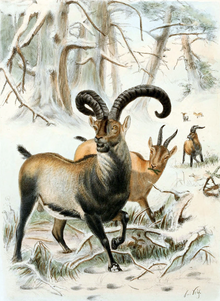
In 2009 a publication in the NatGeo site, pointed the findings of a process where the pyrenean ibex was the first extincted animal to be brought back from extinction, though it died two days after being born, (dead of organisms is common in cloning experiments). This news produced mixed feelings, since it was the first animal to survive de-extinction passed birth but also the first one to be extincted two times.
Like most genetic topics, there is controversy surrounding this one. Opposers say that people should try to find ways of preserving existing species, instead of trying to bring back extincted ones. The truth is, that up to 0.1% of the total species go extinct each year, mostly due to humans. Every species an important part of the ecosystem, and bringing them back will cause mostly a positive impact in the ecosystem they left behind; but it is also true that we have try harder at protecting the species that remain alive.

Tuesday, October 4, 2016

Should we bring extinct species back from the dead?

Extinction has been happening for millions of years, and happens almost every single day. Whether it be a mass extinction of many different species, or a small extinction of just one small group of a species. These extinctions have a huge impact on our ecosystem and environment, so extinctions are not a positive event. Most of the time, it is us, humans, who are causing these extinctions to happen.


"De-extinction" is the process of bringing back an extinct species. For many years scientists have been wondering and working towards the de-extinction of certain species. Two of the species they feel would be very important are the woolly mammoth and the passenger pigeon. These two species had a very important impact on our environments and the food chain. If scientists really believe these species could better our environment, and only do this for environmental reasons; I think they should do it. 

Since there have been many great advances in genetic engineering scientists truly think this is something that could happen sooner, rather than later. There are quite a few methods they have in mind in order to de-extinct an animal. The first option is back-breeding; they would try to selectively breed until they come up with a species as closely similar to the extinct species. The second option is cloning; this process is done by taking a preserved cell from the extinct species, extracting that nucleus, and implanting that nucleus into an egg cell of a living, common species. A third and newest option is genetic engineering. This involves using the CRISPR and gene-editing tools to ultimately swap genes between the extinct species and living species. 


Friday, September 4, 2015

WOOLLY MAMMOTH DNA SUCCESSFULLY SPLICED INTO ELEPHANT CELLS


In effort to bring back woolly mammoths (a process called de-extinction), geneticists at Harvard used a tool called CRISPR to splice certain woolly mammoth genes and put them in an Asian elephant’s genome. It worked and the mammoth’s genes were functional in the elephant. The team’s next goal is to make elephant/mammoth hybrid embryos and grow them in artificial wombs (because having an elephant give birth to it is not as ethical). Then, if the creature survives, they want to make it so it can survive in cold temperatures. Although it will not purely be a woolly mammoth, it will look very similar and have the same ecological niches as they do, which is close enough.

I find all of this good and bad. It is good in the way that mammoths live in cold climates while elephants live in hot. Because there are so many people where elephants live, there are many problems that elephants today face, including extinction. There are not as many humans in the colder areas, so they would be safer there. However, ecosystems in colder climates have adapted to life without mammoths a long time ago. If they were brought back, how would the rest of the organisms be affected? Would there be enough food for the mammoths and competing predators?