Showing posts with label Extinct Species. Show all posts

Wednesday, November 20, 2024

How did the Wrangel Island Mammoths become extinct?

A recent study published in Cell Press challenges the central hypothesis of what caused the woolly mammoth extinction on Wrangel Island around 4,000 years ago. The research team, led by evolutionary geneticist  Love DalĂ©n, studied 21 wooly mammoth genomes that spanned throughout the 50,000 years of their existence, including when they resided on Wrangel Island. These mammoth genomes were collected from mammoth bone fragments, tusks, and teeth found in Siberia and Wrangel Island to extract the DNA for their analysis. The findings showed that despite being a small population of at most eight mammoths, the population still grew to about 200-300 individuals and remained stable until their extinction. The population would then continue to live for thousands of more years, which contradicts the idea that the population of the mammoths on Wrangel Island was always on a decline.
Contrary to the earlier hypothesis, which suggested that inbreeding and genetic mutations caused the mammoth's extinction, the analysis presented that the most harmful genetic mutations in the mammoth population became less frequent over time, most likely due to natural selection wiping out the carries of the harmful genetic mutations. This indicates that the Wrangel Island mammoths were not genetically doomed from the start but were wiped out by a significant event like a disease outbreak or a sudden environmental change that led to the mammoth's extinction. Using computer modeling, the research team compared the genomes of the found woolly mammoths to the genomes of modern elephants and humans to determine the impact of genetic mutations over time. The research team concluded that while some detrimental mutations did appear, the overall genetic health of the population remained stable. This discovery challenges the original hypothesis of "mutational meltdown" for the extinction of wooly mammoths on Wrangel Island. This hypothesis believed that the small isolated population of wooly mammoths had gone extinct due to an accumulation of harmful mutations during inbreeding, leading to the extinction of the woolly mammoths on the island. This study now proposes that the Wrangel Island mammoths were genetically equipped to survive for much longer if external factors had not intervened, leading to the extinction of the population.
I believe it was an excellent original hypothesis about the extinction of the Wrangel Island mammoths, as it makes sense that too many gene mutations occurred during inbreeding. However, with this new evidence proving the original hypothesis wrong, how many other hypotheses about how certain species went extinct are accurate? Understanding these reasons for extinction allows us to understand past ecosystems that used to exist and how they worked; it also allows us to plan accordingly as a species to ensure we are wiped out the same way as other species. So, as we further our research into the extinct species, we should consider multiple factors for the reason for extinction rather than assuming only one genetic factor.
https://www.sciencenews.org/article/last-woolly-mammoths-species-extinct
https://www.snexplores.org/article/why-woolly-mammoths-died-out

Monday, November 6, 2023

A New Hope in Restoring Extinct Species


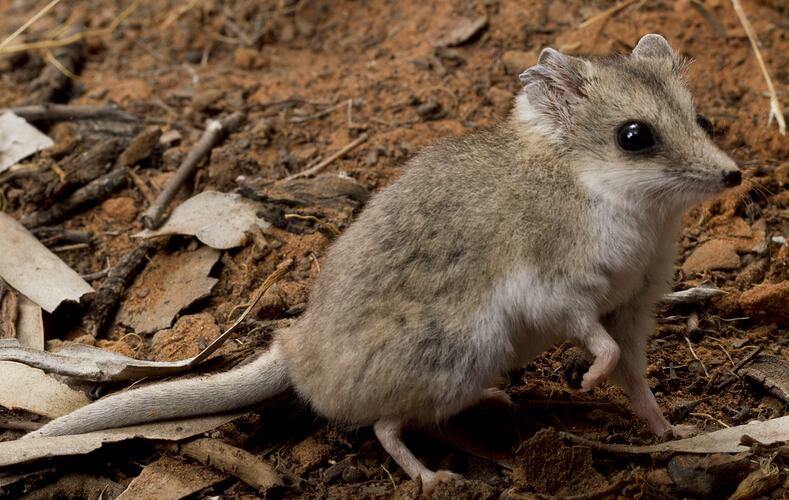
Researchers have successfully extracted and decoded RNA from an extinct animal for the first time. Past researchers have mapped out the thylacine genetic blueprint, in addition to the genomes of other extinct animals; however, these past researches were all focused on DNA, but only RNA can reveal how an organism’s cells actually functioned. The past research mostly focused on DNA because RNA is a relatively fragile molecule, but it is responsible for turning DNA’s genetic instructions into cellular functions and thus must be used to reveal a cell's true biology. The specimen they retrieved the RNA from was a roughly 130 year old Tasmanian tiger, often referred to as a thylacine. Skin and muscle were taken from the desiccated thylacine, then ground into a powder. Chemicals were  then added to isolate nucleotides, the building blocks of RNA. A computer algorithm compared the nucleotide sequences, with a database containing the genomes of thousands of organisms across numerous kingdoms. The results from this research provide new insights on what genes control certain attributes of the organism, for instance, researchers pinpointed RNA molecules that coded cells to make slow-twitch muscle fiber, which helps with endurance. Researchers also found over 250 thylacine-specific short RNA molecules that have sequences that regulate cell functioning. Some scientists  are hopeful that the decoded RNA could aid efforts in bringing this carnivorous marsupial back from extinction. The plan for bringing this species back would involve modifying the genes of one of the thylacine’s closest living relatives, the fat-tailed dunnart. 

I find this research interesting because it can lead to the revival of an extinct species, but after looking at one of the closest living relatives to a carnivore with a mouth that can open over 80 degrees I have my doubts. I find the prospect of learning how extinct animals' genes work interesting, but I feel like this might not be the animal to start with. A species that would be more realistic to bring back would be time better spent in my opinion, but the research had to start somewhere and I suppose that the Tasmanian tiger is just as extinct as any other species that's been wiped out. The thylacine specimen that had the samples taken from it was improperly stored for long term storage. It was just thrown in a cabinet in a bag for over 100 years, so if nothing else this makes me more hopeful that there will be specimens that exist that can lead to the recreation of extinct species.


https://www.sciencenews.org/article/first-time-decode-rna-extinct-animal-tasmanian

https://www.nature.com/articles/s41559-017-0417-y%20

http://m.genome.cshlp.org/content/early/2023/07/18/gr.277663.123.abstract

Tuesday, November 19, 2019

Extinct Ancestor to Orangutan Opens up Doors for Further Human Evolution Research

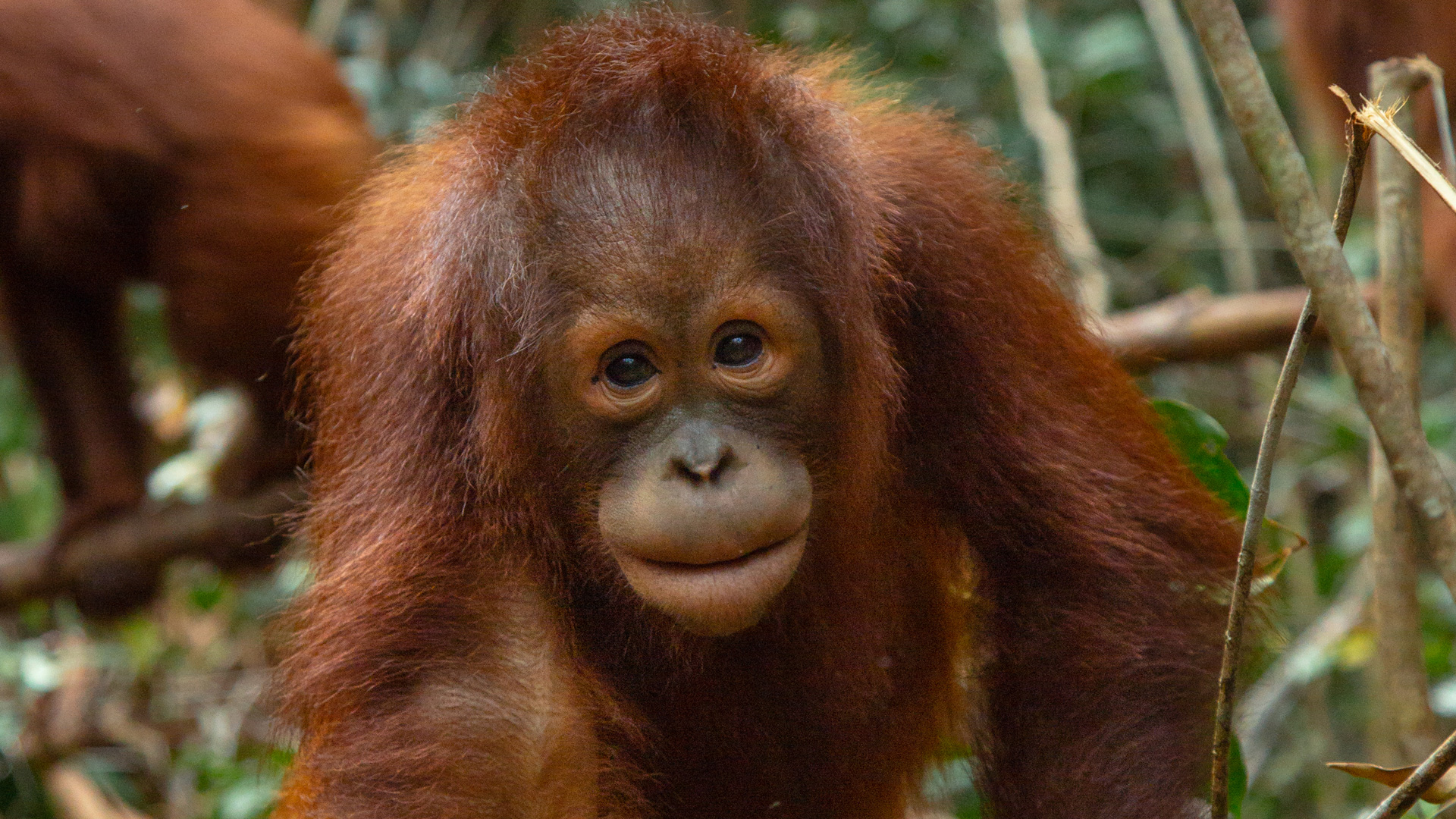
Ancient protein sequencing has been used to determine the genetic position of the Gigantopithecus blacki. It revealed that the orangutan is its closest living relative. This is the first time that genetic information this old has been able to be used from such a warm, damp environment. This is important because primates are closely related to humans, meaning it may be possible to retrieve similar information on the evolutionary line leading to humans. We used to only be able to go back about 400,000 years, but now it may be possible to trace human evolution as far back as two million years. The sequencing of proteins from dental enamel also proved to be useful when studying lineage of species, when there is no surviving DNA. Only a few jaws, but a lot of teeth were found from this species. This protein sequencing of the enamal showed that the orangutan and Gigantopithecus blacki split up about 12 million years ago. Mass spectrometry was used to analyze these protein sequences. Because there are not a lot of fossils found from Gigantopithecus blacki, a lot of speculation surrounds what its physical characteristics may have been.

Image result for orangutan

A lot is already known about the evolution of a lot of animals and of humans, but there is still so much missing. When new fossils are found and they are sequenced to find out which species they are closest related to, a whole new door is opened. From there other lineages can be mapped out and we can get a clearer understanding of how evolution occurred. What's even more interesting about this case, is that the way these fossils were sequenced opened up new possibilities for the sequencing of future fossils from extinct human species. Now more questions about the evolution of humans can be answered.

Link:
https://www.sciencedaily.com/releases/2019/11/191113153053.htm

Related Article:
https://healthsciences.ku.dk/newsfaculty-news/2019/11/extinct-giant-ape-directly-linked-to-the-living-orangutan/

Friday, April 26, 2019

cloning long-dead species

An article published in NewScientist magazine in 2008 illustrates the findings of a study that successfully cloned dead mice. The research team utilized the nucleus from cells and were injected into eggs that'd had the nucleus removed. The fact that the cells utilized were from tissue that had been frozen for over 15 years, woke up the idea that extinct species frozen in permafrost can be "resurrected".

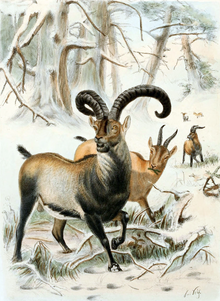
In 2009 a publication in the NatGeo site, pointed the findings of a process where the pyrenean ibex was the first extincted animal to be brought back from extinction, though it died two days after being born, (dead of organisms is common in cloning experiments). This news produced mixed feelings, since it was the first animal to survive de-extinction passed birth but also the first one to be extincted two times.
Like most genetic topics, there is controversy surrounding this one. Opposers say that people should try to find ways of preserving existing species, instead of trying to bring back extincted ones. The truth is, that up to 0.1% of the total species go extinct each year, mostly due to humans. Every species an important part of the ecosystem, and bringing them back will cause mostly a positive impact in the ecosystem they left behind; but it is also true that we have try harder at protecting the species that remain alive.

Wednesday, March 30, 2016

Ancestors of Modern Humans Interbred With Extinct Hominins, Study Finds


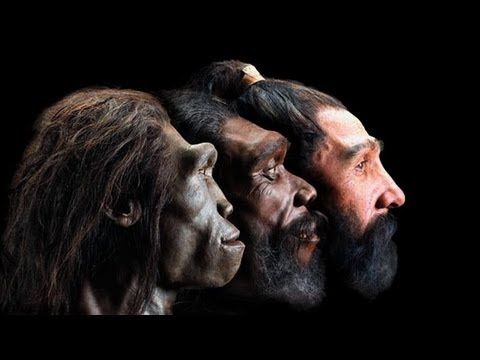
The new study expands on a series of findings in recent years showing that the ancestors of modern humans once shared the planet with a surprising number of near relatives — lineages like the Neanderthals and Denisovans that became extinct tens of thousands years ago.
Research later indicated that all three groups — modern humans, Neanderthals and Denisovans — shared a common ancestor who lived roughly 600,000 years ago. And, perhaps no surprise, some ancestors of modern humans also interbred with Denisovans.
The best explanation for these patterns, the scientists concluded, was that the ancestors of modern humans acquired Neanderthal DNA on three occasions.
Original Article:http://www.nytimes.com/2016/03/22/science/neanderthals-interbred-with-humans-denisovans.html?rref=collection%2Fsectioncollection%2Fscience&action=click&contentCollection=science&region=stream&module=stream_unit&version=search&contentPlacement=3&pgtype=sectionfront

Friday, December 4, 2015


Genetically Modified Salmon

On November 19th, 2015 the Food and Drug Administration (FDA) approved the first genetically modified (gmo) animal cleared for human consumption.  AquaBounty initially approached the FDA in the 1900s with no luck. Once approved AquaBounty stated that the fish were safe and ready to eat more than five years ago. Immediately after approval some consumers and environmental groups fiercely opposed to the gmo salmon. Fearing the safety of other species if the engineered fish were to escape into the ocean and rivers. The salmon is expected to grow full size in half the time of a wild salmon. Although it grows very fast it would take approximately two years before it can reach the local supermarkets.

I completely disagree with the approval of gmo salmon. It’s devastating to the population of wild salmon if an engineered salmon were to escape. It will out compete the wild salmon thus eliminating their existence. So what would happen to the people that want to eat wild salmon? There is no way of ever retrieving a species once its outcompeted and extinct. Its also devastating how slowly we’re killing our environment just for the profit. So at the end what is there left if we have destroyed our earth and its species? 

Friday, March 13, 2015

Resurrection Biology: Is It Possible to Bring Them Back?

       Extinct animals have always been an interest of biologists all over the world and the mystery behind them raises a lot of questions.  Recently there have been a lot of ideas about bringing extinct animals back to life, namely animals as small as passenger pigeons to the extreme woolly mammoths.  The ideas are here, but the technology to pull this off is years, even decades away.  There are a couple large issues with bringing these animals back to life.  Some include how will we be able to birth them and how will we make it so that cells in the lab can read the DNA we want them to read.

       DNA is very complicated and it has to be very carefully handled in a lab.  Scientists don't have too much of a problem finding or reading the DNA, or even making DNA.  A full length of mammoth DNA can be made with a lot of time, effort, and money but it's not impossible with what we have today.  The real problem, as previously mentioned, is getting a living cell to read the DNA made in the lab.  Folding the DNA into chromosomes is an arduous task and it has to be done so precisely that it's near impossible to get perfect.  The only thing that can fold DNA perfectly every time is a cell and until we can somehow get man-made DNA into a cell and have the cell fold it for us, we need properly preserved cells with intact chromosomes.  Another obstacle is developing the embryo.  Scientists are going to need a lot of surrogate mothers and having animals give birth to sick or dead babies can be physically and emotionally draining for them, especially elephants that would be surrogate mothers for potential mammoths.  

       I personally do not think the 'bringing extinct species back to life' thing is a good idea.  The process is elaborate and expensive as it is, and then once the animal is brought back, then what?  How will it survive?  How will it reproduce?  I don't think there is any way that a mammoth could live on the planet anymore given the environmental conditions, let alone have a mammoth live where elephants currently live.  There must be some animals that could thrive in certain locations and I do think bringing animals back that humans killed off would be interesting in theory, but in practice I don't think it's worth it for humans, animals, or Mother Nature.

Monday, December 2, 2013

Scientists Plan to Clone Cells of Extinct Mountain Goat


A recent article posted on Popular Science discusses the possibility of cloning the cells of a bucardo, an animal which is now extinct. In 2000, the last living bucardo, a Pyrenean sub-species of mountain goat, was killed by a falling tree. A batch of cells from the extinct animal has been frozen in liquid nitrogen. Recently, researchers have received funding in order to check whether or not the cells will be able to withstand being cloned. If scientists find that the cells can be cloned, they will created embryonic clones of the extinct animal’s cells and then implant them into female goats. The goats will then give birth to a new generation of bucardos. The article continues to explain how a previous attempt to clone the bucardo was both successful and unsuccessful. A viable bucardo clone was born in 2003, but despite this triumph, the animal died only a few minutes after it was born. While there is no set plan to definitely clone the cells of the bucardo, scientists are incredibly hopeful.

The last living bucardo was killed by a falling tree in 2000; many have referred to the failed cloning of the animal in 2003 "re-extinction"

Cloning is an extremely slippery slope; once we master cloning, we essentially become all-powerful. It is frightening to think what could happen if that power were to fall into the wrong hands. Although cloning is dangerous, it can be the answer to many problems faced by scientists. Not only would we have the power to bring back populations of animals that have gone extinct, but cloning also enables us to save those animals that are on the verge of extinction. Cloning can be used to either do a world of good, or the exact opposite. Cloning techniques are far from being perfected, but the science will definitely become a major area of discussion and research in years to come.

Monday, April 8, 2013

Duck Fathers a Chicken

Mother Nature Network posted an article about a duck who was genetically modified and mated with a female chicken to produce a baby chicken.  It started by injecting the duck embryo with chicken germ cells then as the duck matured it was able to chicken sperm instead of duck sperm. This allowed the duck to mate with a chicken and father  baby chicken.  Scientist are hopefully genetic modification will help endangered species and even bring back extinct species. I think this discovery is very interesting and may possibly benifit species on the brink of extinction but I think it may eventually lead to issues. For example does the baby chicken have duck genes and chicken genes, will it be able to reproduce with a chicken, a duck, both or maybe it will be sterile.  I would assume you can consider these animals hybrids so what kind of impact would these hybrid animals cause to pure lines in the wild? This sounds to me like it would have more negative impacts then good.

The article: http://www.mnn.com/earth-matters/animals/stories/duck-successfully-fathers-a-chicken

Another article: http://grist.org/list/baby-chicken-whose-father-is-a-duck-is-either-a-new-hope-for-extinct-species-or-a-sign-of-the-end-times/

[caption id="attachment_7585" align="alignnone" width="470" caption="Duck Fathers Baby Chicken"][/caption]

Monday, November 26, 2012

Franciscan Manzanita

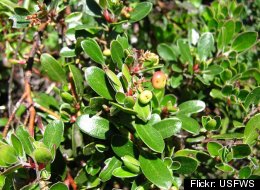
Franciscan Manzanita, a  flowering California pant, was thought to be extinct in the wild many years ago. According to a CNN news article, Coastal plant thought extinct for 65 years discovered , this accusation had been disproved when Daniel Gluesenkamp, a biologist, spotted the plant on Highway 101 coming off the Golden Gate Bridge. Gluesenkamp confirmed the plant's identity a few days later. This was an exciting find because the last known wild plant was found in 1947. The plant was relocated to a new area and is now doing very well. It has grown and it has bright green leaves.
Between the months of January to April it displays pinkish flowers. It has even began to reproduce.


I find this to be very interesting. How many other species could still be around today that we think are extinct?

Sunday, October 21, 2012

Ancient DNA Research Revolutionizes Scientists’ Understanding of Extinct Animals

This article detailed current research which has the potential to shatter the very foundation of scientists’ current understanding of extinct animals. Such current understanding of ancient animals has, for centuries, been based upon reconstruction of skeletons of fossilized bones and teeth. Thus, through this work, scientists were able to discover much about the “physical characteristics” of these ancient animals, however next to nothing is known about the actual “physiological processes” that sustained them. By this new biotechnology, experts are able to decode ancient genes and reproduce proteins that the genes code for, delving deeper into the physiology of these extinct animals. This field of “paleophysiology” is brimming with potential, however true strides are notably several years off. It should be noted that the process of cloning in “Jurassic Park-esqe” methods is far out of reach, however such research is continuing to discover invaluable information about the physiology of the organisms of the ancient world.


I really enjoyed this article, but as I was reading it, I could not help but to have flashbacks of the iconic Jurassic Park movies and novels. Though I am sure necessary precautions would be taken while working with such technology, it is inevitable that some undesirable repercussion might come of working with this technology. I also question the ethical code which binds experts working in this field, what, if any, limitations would need to be put upon such exploitation? I also questioned how long it would be until such experimentation with extinct proteins would have an adverse effect on some aspect of the modern world.