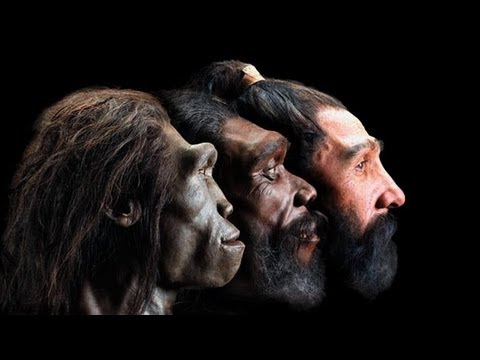
About 500,000 years ago, neanderthals and modern humans diverged from a modern ancestor. Neanderthals lived throughout much of Eurasia while modern humans lived in Africa. Modern humans developed the features we have today while Neanderthals developed characteristics for living in much rougher conditions. About 50,000 years go humans and Neanderthals encountered each other and interbred. Today, about 4% of modern human genes is Neanderthal. The question is, "why did Neanderthal-human hybrid not prevail?"
A recent study was done and it suggests that because Neanderthals were less in population, natural selection was less effective. They have always lived in smaller populations because of the extreme conditions they lived in. Because of the small population size, inbreeding was frequent. Because of this inbreeding mutations were more adverse, such as greater risks for disease, but it did not prevent reproduction, therefore massing these adverse mutations to the next generation.
In 2014, a study lead by David Reich, a genetics professor at Harvard University, found that Neanderthal DNA tended to be located far away from important genes in the human genome. This was one of the first clues that natural selection was working against Neanderthal DNA. It is possible this could be due to infertility, but it could not fully explain the pattern. It was found that the most likely reason was population size. It was found that weak natural selection due to population size differences between Neanderthals and humans could explain the distance between Neanderthal DNA and genes in the human genome today.
Showing posts with label modern humans. Show all posts
Wednesday, November 9, 2016
Humans Have Little Neanderthal DNA
Labels:
disease,
DNA,
genes,
modern humans,
mutations,
neanderthals
Wednesday, March 30, 2016
Ancestors of Modern Humans Interbred With Extinct Hominins, Study Finds
The new study expands on a series
of findings in recent years showing that the ancestors of modern humans once
shared the planet with a surprising number of near relatives — lineages like
the Neanderthals and Denisovans that became extinct tens of thousands years
ago.
Research later indicated that all
three groups — modern humans, Neanderthals and Denisovans — shared a common
ancestor who lived roughly 600,000 years ago. And, perhaps no surprise, some
ancestors of modern humans also interbred with Denisovans.
The best explanation for these
patterns, the scientists concluded, was that the ancestors of modern humans acquired
Neanderthal DNA on three occasions.
Original Article:http://www.nytimes.com/2016/03/22/science/neanderthals-interbred-with-humans-denisovans.html?rref=collection%2Fsectioncollection%2Fscience&action=click&contentCollection=science®ion=stream&module=stream_unit&version=search&contentPlacement=3&pgtype=sectionfront
Labels:
denisovans,
DNA,
Extinct Species,
modern humans,
neanderthals
Wednesday, April 16, 2014
Link Between Neanderthals and Humans
How modern humans have evolved overtime is constantly been researched, to find out what exactly did happen. Well there is good news as a new study has come out claiming to prove the relations between humans and neanderthals.
Neanderthals are an extinct species of human that are said to have very similar genetic make-ups. The Neanderthal genome project results were published in 2010, so this information has been readily available for some time. In fact, our DNA sequences are different by 0.3%, which makes everything very interesting. The original article, that influenced me to delve deeper into this topic, goes on to claim that they have proven sexual relations between our ancestors and Neanderthals. The study being written about was mainly based on a new genome analysis process that can detect the genetic signatures of interbreeding. This is an astounding step into the field of genetics, and really is helping further our knowledge. How they generally sum up their conclusions is that some Neanderthals were recruited into certain human populations and shared in their daily lives. Thus, there would've been opportunities to interbreed which would explain our genetic similarities. The evolution of humans is much more complex than we previously thought.
Labels:
Genome Project,
interbreeding,
modern humans,
Neanderthal
Tuesday, November 20, 2012
Is There a Denisovan in Your Family Tree?
Very few remains of Denisovans have been discovered. Two Denisovan teeth and one finger bone were discovered in a Siberian cave. Although there is not much DNA in the finger bone, a new method – one that uses single-stranded DNA instead of the traditional double-stranded DNA – was used to sequence the DNA. Dr. Svante Pääbo of the M.P.I. said that he and his research team were able to sequence the DNA within the finger bone 30 times.
These Denisovan samples, however, are not the only ancient samples to be sequenced. Researchers plan to use this technology on older samples in hopes of making new discoveries. Hopefully, findings from future research will give more of an insight into human evolutionary history.
Studying human evolutionary history is interesting because it tells a story that all people share. In a society that often focuses on dividing people into groups, it is amazing to hear stories about a common history.
Monday, November 12, 2012
Dating Between Modern Humans and Neanderthals
Harvard and Max Planck Institute scientists have estimated the date when Neanderthals and modern Europeans last shared ancestors to discover why Neanderthals are most closely related to people outside of Africa. The research, published in the journal PLoS Genetics, provides a historical context for the interbreeding between Neanderthals and modern Europeans. The research suggests modern humans encountered Neanderthals as the modern human expanded out of Africa.
[caption id="" align="aligncenter" width="300" caption="Gene flow less than 100,000 years ago."]
[/caption]
When the Neanderthal genome was sequenced in 2010, it revealed that people outside of Africa share more genetic variants with the Neanderthals than Africans. To explain this occurrence, they believe modern humans mixed with Neanderthals when they came out of Africa. Another possibility is that the African populations ancestral to both Neanderthals and modern humans remained subdivided over a few hundred thousand years. Subsequently, those more related to Neanderthals left Africa.
Dr. Sriram Sankararaman and colleagues measured the length of DNA pieces in the genomes of Europeans that are similar to Neanderthals. The Neanderthal-related pieces should be smaller the longer they have spent in the genomes of present-day people. They believe the last exchange between modern humans and Neanderthals was between 37,000 and 86,000 years ago. This is well after modern humans appeared outside Africa, but before they started spreading across Eurasia. The findings suggest that Neanderthals had children with the direct ancestors of present-day people outside of Africa. While looking up information of the breeding of modern humans and Neanderthals, I came across various sources that conflicted with this study. Other studies believe this mating between modern humans and Neanderthals happened very rarely, at most at a rate of 2%. There is still more research that has to be done regarding this subject. This study will open up new areas of research. Hopefully, we will get a definite answer regarding the interbreeding between modern humans and neanderthals.
[caption id="" align="aligncenter" width="300" caption="Gene flow less than 100,000 years ago."]
When the Neanderthal genome was sequenced in 2010, it revealed that people outside of Africa share more genetic variants with the Neanderthals than Africans. To explain this occurrence, they believe modern humans mixed with Neanderthals when they came out of Africa. Another possibility is that the African populations ancestral to both Neanderthals and modern humans remained subdivided over a few hundred thousand years. Subsequently, those more related to Neanderthals left Africa.
Dr. Sriram Sankararaman and colleagues measured the length of DNA pieces in the genomes of Europeans that are similar to Neanderthals. The Neanderthal-related pieces should be smaller the longer they have spent in the genomes of present-day people. They believe the last exchange between modern humans and Neanderthals was between 37,000 and 86,000 years ago. This is well after modern humans appeared outside Africa, but before they started spreading across Eurasia. The findings suggest that Neanderthals had children with the direct ancestors of present-day people outside of Africa. While looking up information of the breeding of modern humans and Neanderthals, I came across various sources that conflicted with this study. Other studies believe this mating between modern humans and Neanderthals happened very rarely, at most at a rate of 2%. There is still more research that has to be done regarding this subject. This study will open up new areas of research. Hopefully, we will get a definite answer regarding the interbreeding between modern humans and neanderthals.
Subscribe to:
Posts (Atom)