Showing posts with label variation. Show all posts

Tuesday, March 14, 2017

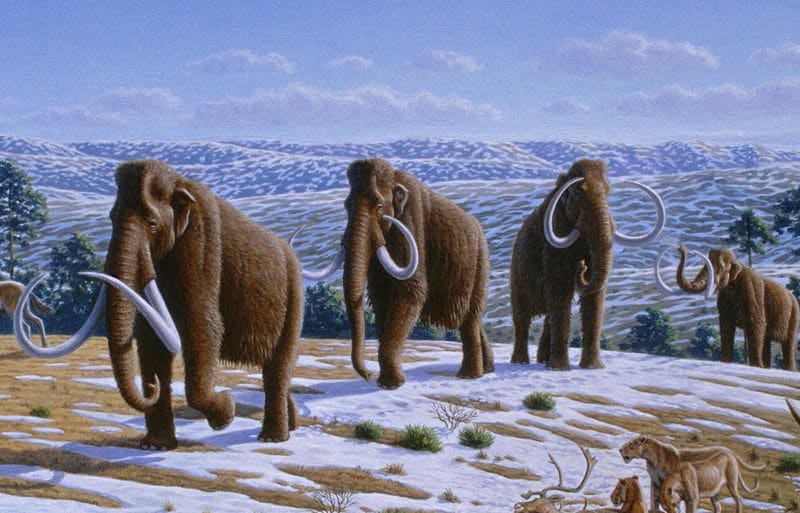
DNA Mutations May Have Doomed the Woolly Mammoth

In this article explain another reason for the extinction of the Woolly Mammoth. In the past the extinction of the Woolly Mammoth was thought to be due to the climate change and human hunters. However, recent research has introduced a possible other reason for the extinction of this animal. Researchers from the University of California, Berkley, compared two different genomes of two different mammoths.  The first mammoth was 45,000 years old from northeastern Siberia, while the other was the most recent only being 4,300 years old from Wrangel Island. When looking at Wrangel mammoths, researchers identified that there were a lot of bad genetic mutations and deletions of large chunks of DNA in comparison to the northeastern Siberia.
It was hypothesized that the Wrangel mammoths must of had a small population of matting that had to occur in order for the genes to be so highly mutated. Researches suggested that when sea levels rose and cut off the Wrangel mammoths from other populations to create genetic variance, instead they had to resort in inbreeding in order to reproduce. This type of small population inbreeding would result in mutated DNA and not allowing them to evolve. This genetic meltdown could be the reason why Woolly Mammoths are now extinct.
I found this article very interesting because it goes back to what we have been learning in class when it comes to heredity and consanguineous mating. I personally would of never thought of the possibility that this animal went extinct due to not having genetic variation, but it is interesting to see how environmental changes can influence genetic variation so much that is could cause extinctions.

Saturday, April 9, 2016

My Genome, Myself: Seeking Clues in DNA

In this article, the author talks about a company called 23andMe that has developed a DNA testing service. Customers can create an account on their website and learn about their biological codes and search for explanations about why they are a certain way, or even see their likelihoods of developing certain diseases. The author, Amy Harmon, was asked to be one of the early participants to test out the service. The service costs $1,000 and they only have to take a saliva sample. The author found herself searching everything up in the “Genome Explorer” on the site. She found that she was in good health, besides the fact that she had a higher than average chance of getting heart disease. She also found that has a poor verbal memory as well as the ability to taste certain bitter flavors, such as in brussels sprouts due the fact that she has a G on her 7th chromosome rather than a C. The company was reluctant to release such information out to the public out of concern that people would be alarmed and upset about what they found. For this reason, one of the companies called Navigenics will be providing customers with a phone consultation to discuss the results with a genetic counselor, so that they could explain everything to them, to ensure that customers are more at ease when searching for all of this information about their genome.

It is interesting as well as pretty amazing that these services are beginning to become available to the public. If I had the money to participate in this, I think I might out of pure curiosity. However, I do believe that I would be scared to search for my likelihood of getting certain diseases like heart disease and Alzheimer’s disease. I think that providing genetic counselors is a good idea, but they would go for around an additional $2,500. Rather than having to pay extra, I think that it would be beneficial to provide this service when creating the account. Otherwise, people will be living their lives in fear and they will be paranoid about all of their choices in life. I think that this is an incredible service and can be useful so that people can learn how to prevent the diseases they may have a higher risk of getting. However, I do think that genetic counselors should be provided when creating an account with 23andMe.


Thursday, December 4, 2014

The African Genome Variation Project

Through the African Genome Variation Project, scientists have completed a comprehensive study of genetic diversity in Sub-Saharan Africa. This project analyzed the DNA of 1,800 people living across Africa for genetic risk factors for disease. Most of these types of projects and research have been done in Europe while little has been known about Africa, the most genetically diverse region in the world.
http://25.media.tumblr.com/tumblr_loa5m3vYuO1qbh26io1_1280.jpg

The researchers were curious to understand if there was underlying genetic susceptibility that caused some diseases. They were not able to get the information they needed since Africa has a large variation in genomes and has barely been genetically studied. This lead to UK and US researchers collecting genetic material from people in Africa and the researchers found some different variations with region. For example, South African people are less likely to carry a genetic mutation that protects from malaria. Also Africans are more likely to have a greater risk of high blood pressure compared to Europeans.
The most surprising thing that researchers learned was that Africans are not as diverse as researchers expected. This is a good thing because it means large scale trials can be used to understand disease susceptibility. This project will also be able to help scientists more clearly understand diseases and why people are more likely to get certain diseases. Scientists will also be able to learn about more ancient migration patterns in early humans.
I found it surprising that not much genetic information has been gathered in Africa. There should be projects like this all around the world to help understand more about humans. It will also be extremely interesting if links are found been certain genes and diseases since everyone was panicking over ebola 2 weeks ago. This type of project will be helpful in the medical and genetic field.

Article: http://www.bbc.com/news/science-environment-30318291