Showing posts with label polar bears. Show all posts

Monday, December 15, 2025

Polar Bears Have the answer to Climate Change

Zaneyah Hughes

Genetics 

Dr. Barbato 

15 Dec 2025

Polar Bears Have the Answer To Climate Change

This article says that polar bears in a region of Greenland are showing DNA changes connected to rising temperatures, thanks to research from the University of East Anglia. This is significant since this marks the first connection between climate change and genetic change in wild mammals. Additionally, scientists discovered that gene activity related to things like metabolism, ageing, and heat stress increased in bears from warmer regions. This suggests that the polar bears are adapting to warmer regions, and thus adapting to climate change.

I like how the article shows that the way the scientists know this adaptation is occurring is through jumping genes, or segments of DNA that can move or jump to different locations within a genome. Additionally, I think its really cool how the polar bears are starting to rewrite their DNA as a survival mechanism since reducing the burning of fossil fuels doesn’t seem to be happening as urgently as wildlife needs it. Although this is a great adaption and its wonderful that the polar bears are able to developing a survival mechanism, we should still discourage the use of green emissions to try to save their habitat.


Source: https://www.theguardian.com/environment/2025/dec/12/changes-to-polar-bear-dna-could-help-them-adapt-to-global-heating-study-finds

Extra Source: https://www.nbcnewyork.com/news/national-international/polar-bears-rewiring-genetics-survive-warming-climate/6429583/

Friday, December 12, 2025

Polar bears are rewiring their own genetics to survive a warming climate

         Reading the title of this article confused me at first but after going through it I am more invested in polar bears than I was when I was 10. With warming climates worldwide, polar bears are being forced to adapt, and this is showing in their DNA. This is believed to be the first documented case of environmental change driving genetic change (note for my answer on the final). 


        Researchers say that this is because warming sea temperatures reduce the amount of ice flows that polar bears can hunt off of, causing their need to diversify. 

        Even though polar bears are adapting to the world around them, they are still projected to go extinct within the next century. This is truly upsetting to me as polar bears are some of my favorite animals in the world. I will be doing my part and donating to  conservation funds and hoping that it is not too late. 

Dawson Fournier

Source: https://www.nbcnews.com/world/greenland/polar-bears-adapting-survive-warming-climate-rcna248805

Secondary: https://abcnews.go.com/International/polar-bears-rewriting-dna-survive-warming-arctic-study/story?id=128278604 

Tuesday, February 25, 2014

Do You Know Why Polar Bears Can Stay Warm?

Ever wonder how Polar Bears stay warm in such frigid temperatures? Well with recent research it has proven that not only have polar bears been able to adapt to their environment, but so has their genes. In this news article, genomic researcher Charlotte Lindqvist, found that polar bears have a gene function which produces Nitric Oxide. For those of you that do not know the role of nitric oxide production, it is a very good signalling molecule. It allows for the cells of the polar bears to convert their food source into energy. For these polar bears, the energy source that they get from Nitric Oxide is heat. According to Charlotte Lindqvist , this is known as adaptive thermogenisis, and it is very useful to these animals. This mechanism is great for the harsh and cold wintry conditions in which these animals have to withstand. Research proved that the genes in brown and black bears differ from the genes of a Polar Bears, and that is why brown and black bears have to hibernate during the winter months. They differ from all the other bear species because this Nitric Oxide production gene that allows the polar bears to undergo adaptive thermogenisis, lacks in brown and black bears.There are a great amount of genes that can convert food source into energy,but to be able to produce heat as their main energy source is what makes theses polar bears so different and interesting.This genetic discovery in polar bears is fascinating to me , and it answers the question, as to why polar bears can stay warm. With that said, I can conclude that polar bears have gone through adaptation, specifically genetic adaptation. Genetic adaption can be defined as a mechanism that changes so that it is more suitable for the subject of interest, and that is exactly what happened to the polar bears. Adaption is key to all living things, and these Polar Bears have seemed to have mastered it!
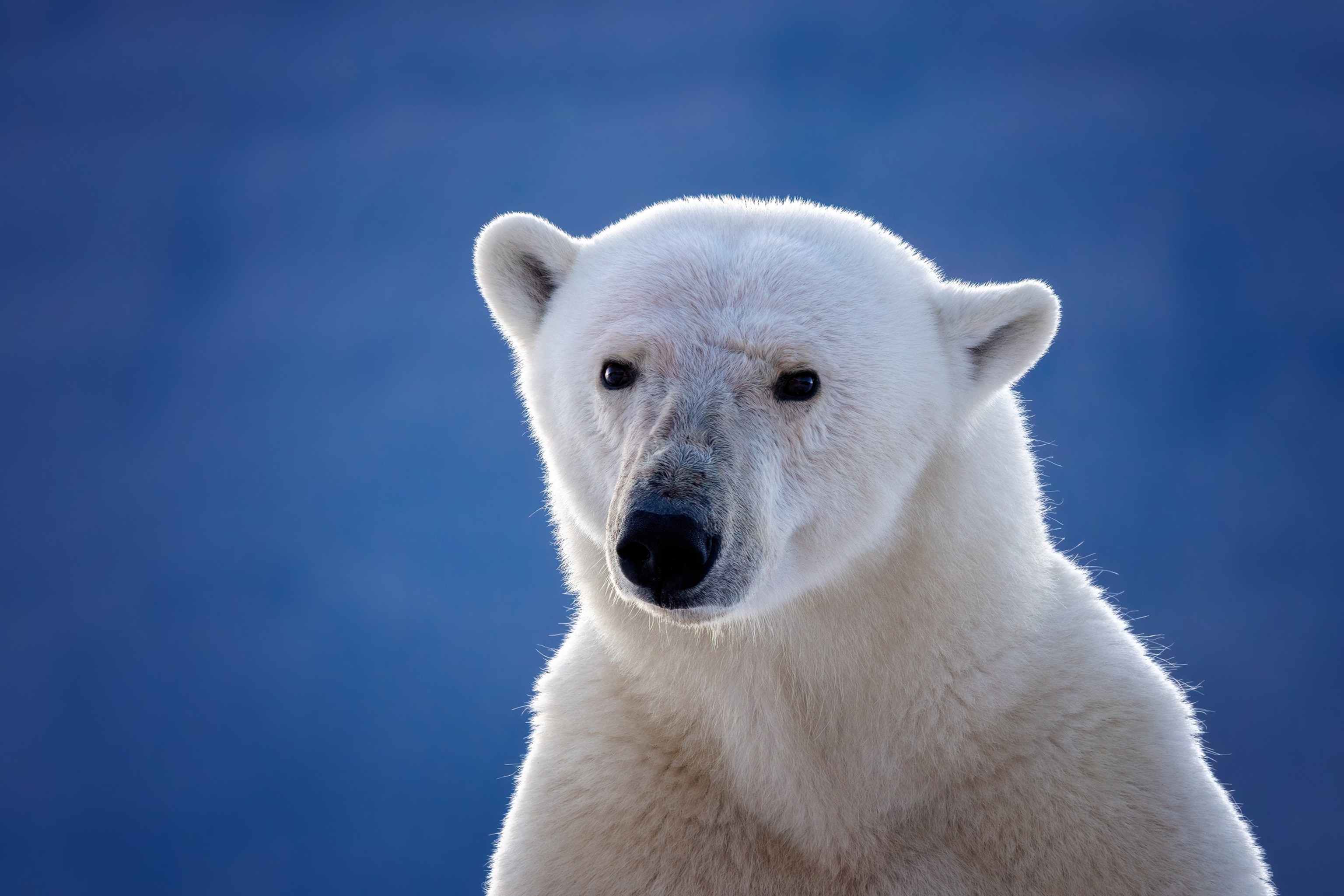
polar bear looking straight at camera

Monday, November 19, 2012

Polar bears' ancient roots pushed way back

New analysis of polar bear DNA suggests that they branched off from brown bears much earlier than previously thought.  The new study dates the split back to the formation of the thick sea ice in the Arctic between 4 and 5 million years ago.  This new date of origin suggests that the polar bears were exposed to extremely variable weather and suffered a genetic bottleneck during the warm period 420 thousand years ago.  Today we are again facing a warm period in the earth’s history and it is questionable as to whether or not the polar bear will be able to survive it.


Charlotte Lindqvist and her colleagues at the University of Buffalo developed genetic blueprints of 23 modern polar bears.  However, they used the rate of mutation appearance in the DNA of primates to calibrate the polar bear DNA and come up with a date of origin.  This assumes that polar bears evolve at the same pace as primates, which could prove false.  There is also evidence of polar bears mating with brown bears, most likely during warm periods.  This hybridization is potentially dangerous for the continued separation of bear species.

This article was very interesting given its present implications regarding our warming environment.  Polar bears are a species of concern due to the reduction of their natural habitat.  I have heard of polar bears and brown bears mating as their environments begin to merge and am curious as to what would happen when this occurs.  Obviously the interbreeding would be detrimental to both species specific genetic uniqueness, but to what extent?  I hope scientists will be able to determine the answer to this question before the polar bear becomes extinct.