The American Chestnut Castanea dentata used to be a critical component of the North American Eastern Forests for centuries, what happened to them? At the turn of the 20th Century, a fatal fungal blight was introduced from Asian Chestnut Trees. By the 1950s, around four billion American Chestnut trees were dead, with only100 individuals persisting in isolated geographic areas.
Historic Range of the American Chestnut
With such few individuals and no viable means to reliably pollinate them to produce new offspring across such broad geographic areas, the American Chestnut seemed destined to extinction. This imminent extinction prompted a concerted effort by botanists, foresters, and geneticists to save the species. Through a combination of identifying American Chestnuts that survived the blight naturally and genetic modification blight resistant cultivars were developed and planted. One such blight resistant cultivar was developed at Salt Air Farm in Long Island NY. In 1998 a single resistant individual was planted on the property, with six more planted since then. The largest individual of the Long Island population has produced nuts as well highlighting the success of these conservation projects.
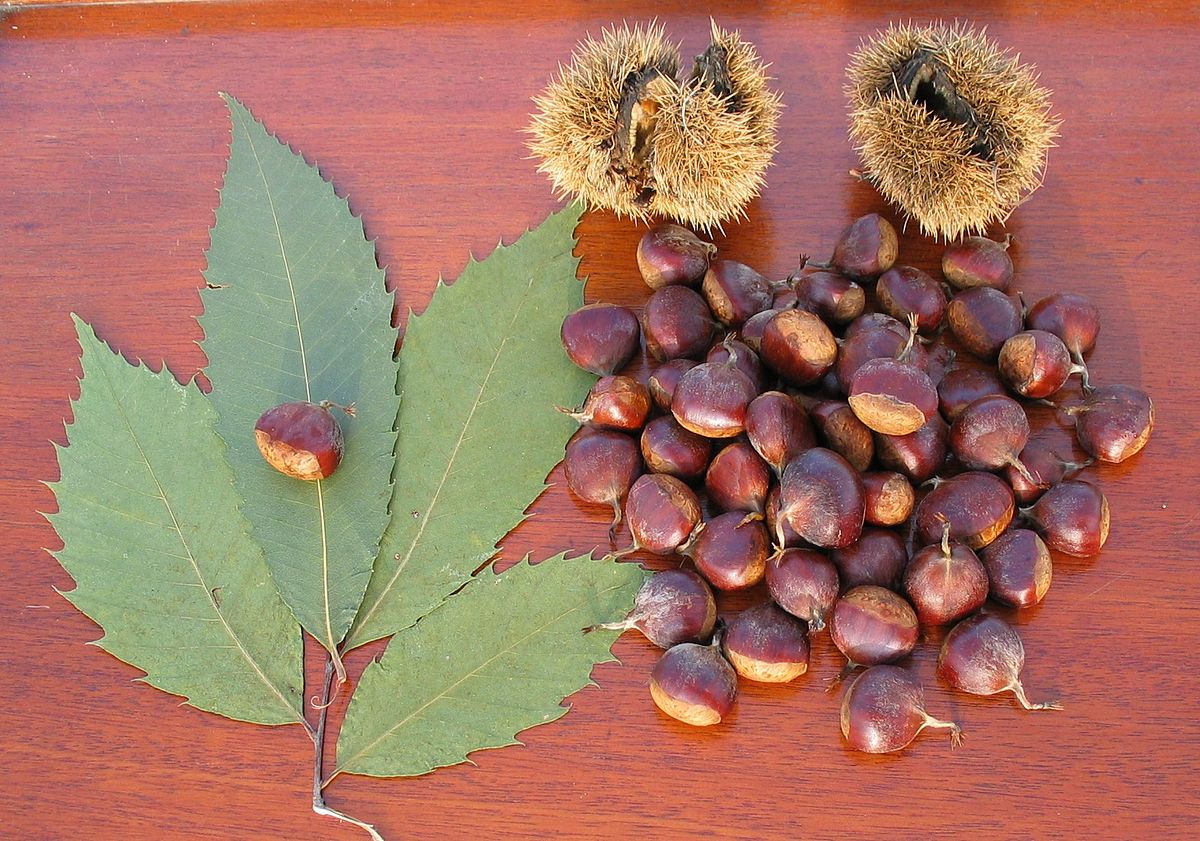
The leaves and nuts of the American Chestnut
Another blight resistant cultivar, Darling 58, was developed at SUNY ESF by inserting a gene named Oxalate Oxidase (OxO). OxO is found naturally in wheat and helps to break down the acidic byproducts of the blight fungus' lifecycle. This allows Darling 58 Chestnuts to be infected by the blight fungus without suffering the ill effects, a sort of win-win scenario for both the American Chestnut and the fungal blight. Darling 58 is unlikely to hit the public market until after 2025 but the hope this additional cultivar brings to conservationists cannot be understated.
A historic photo of a massive old growth American Chestnut
It cannot be understated how wonderful this effort is as it could very well bring back a species from the brink in a thunderous fashion. It is far from perfect though as with such few individuals to pull from, the genetic composition of future American Chestnuts will likely be bottlenecked, making them potentially more susceptible/sensitive to novel diseases or climate changes. This worry at this stage is only hypothetical however, and this news should be celebrated at this point with a grain of salt.