Showing posts with label botany. Show all posts

Tuesday, November 14, 2023

The Return of American Chestnuts, A Triumph of GMOs

 The American Chestnut Castanea dentata used to be a critical component of the North American Eastern Forests for centuries, what happened to them? At the turn of the 20th Century, a fatal fungal blight was introduced from Asian Chestnut Trees. By the 1950s, around four billion American Chestnut trees were dead, with only100 individuals persisting in isolated geographic areas.

Historic Range of the American Chestnut

With such few individuals and no viable means to reliably pollinate them to produce new offspring across such broad geographic areas, the American Chestnut seemed destined to extinction. This imminent extinction prompted a concerted effort by botanists, foresters, and geneticists to save the species. Through a combination of identifying American Chestnuts that survived the blight naturally and genetic modification blight resistant cultivars were developed and planted. One such blight resistant cultivar was developed at Salt Air Farm in Long Island NY. In 1998 a single resistant individual was planted on the property, with six more planted since then. The largest individual of the Long Island population has produced nuts as well highlighting the success of these conservation projects.
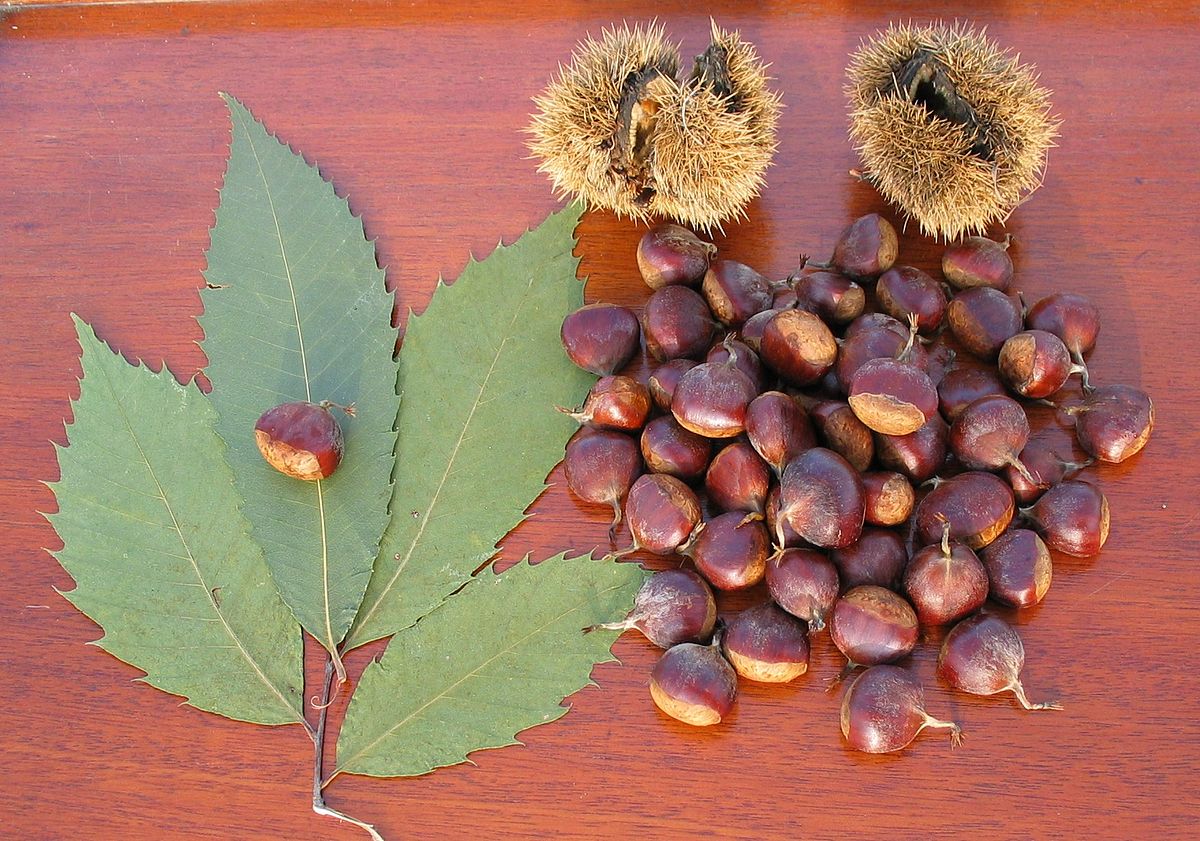
The leaves and nuts of the American Chestnut 

Another blight resistant cultivar, Darling 58, was developed at SUNY ESF by inserting a gene named Oxalate Oxidase (OxO). OxO is found naturally in wheat and helps to break down the acidic byproducts of the blight fungus' lifecycle. This allows Darling 58 Chestnuts to be infected by the blight fungus without suffering the ill effects, a sort of win-win scenario for both the American Chestnut and the fungal blight. Darling 58 is unlikely to hit the public market until after 2025 but the hope this additional cultivar brings to conservationists cannot be understated. 

A historic photo of a massive old growth American Chestnut


It cannot be understated how wonderful this effort is as it could very well bring back a species from the brink in a thunderous fashion. It is far from perfect though as with such few individuals to pull from, the genetic composition of future American Chestnuts will likely be bottlenecked, making them potentially more susceptible/sensitive to novel diseases or climate changes. This worry at this stage is only hypothetical however, and this news should be celebrated at this point with a grain of salt. 


Friday, November 4, 2016

How do Plants Respond to Drought? The answer is on the Molecular Level


How can you tell that a plant needs water? The answer to this question goes to down to the molecular level. The answer can also help agriculture adapt to drought and the climate related stressors.

Studies have shown that plants cope with environmental hardship by employing proteins that act as conductors to keep their responses to stress manageable. The results from this study can help enhance water use in plants when in a drought.

Plants have key hormones that allow them to cope with environmental stressors. One of these hormones is abscisic acid (ABA). ABA aids in seed development and water optimization and it is released when water is scarce or salinity is high. What happens after this hormone is released?

Salk Institue conducted a study in which they tracked the plants genetic activity in response to ABA and a handful of master proteins were identified. These proteins dictated how a plant responds t environmental stressors including drought. The team conducting the study also mapped the location where the proteins bind to DNA. This helped the team define keep factors the coordinate gene expression , which can allow the plants to have an efficient response to changing climate conditions.

The Salk team put the focus of the study toward proteins that respond to ABA. Three day-old seedings of the plant Arabidopsis Thaliana were exposed to ABA and their gene expressions were check regularly for 60 hours. During the study, the team places 33,602 genes into 122 datasets. The data proved that gene expression has a hierarchy of control. Some regulatory proteins contribute the most to gene expression. Also, snapshots of protein binding patterns at a particular time can explain more about gene expression then a wide range of times.

Both of these dynamics can explain that plants responses to environmental triggers is from coordinated genomes.

The biggest struggle of being a plant is coping with environmental stressors. I never would have thought that plants had proteins already inside of them to be able to tolerate harsh conditions. It's important to learn as much as we can about the genetics of plants because these discoveries can assist in plants having the ability to prosper, which can then lead to more people being fed. This study could be the first in a long line of agricultural breakthroughs which will eventually help a lot of people.

Saturday, November 21, 2015

Agronomist explores the genetics that allow hybrid plants to perform better than parents


    Jianming Yu of Iowa State University has helped recover the unknown mechanism behind heterosis. Which explains why some hybrids of sorghum plants out grow and out perform their parents.  For years agronomists and botanists were not sure why this occurred, the phenomenon was only partially understood.  The study focused on the link between a dominant allele of one gene with recessive allele of another.  Yu went out to answer the question:  "Where does that extra height come from if not from either parent?"
          Through research Yu explained that because most of sorghum plants are the offspring from a inbred fertilization that sometimes this causes genes to "cancel" each other out.  Yu also goes onto explain that multiple genes makeup up the height trait.   One could be responsible for base length, one responsible for stem length, therefore a different combinations from both parents could result in a taller plant.
          I feel like this article is one of more relevant articles to our class.  Specifically the first half of the semester where we studied more classical genetics.  I was impressed to fine that theories are still being put to use for further research purposes.

Original Post

Related Post

Monday, November 24, 2014

Genetic resistance agains budworm in spruce

A gene for the natural resistance to budworm, a common pest, has been identified in white spruce trees by scientists at Universite Laval, the University of British Columbia, and the University of Oxford.

The research consisted of the professors, students, and postdocs comparing the genomes of the resistant trees versus those of the spruces that suffered significant damage. The gene, betaglucosidase-1, was expressed up to 1,000 times more in resistant trees than in non-resistant trees. The gene produces a natural insecticide in the spruce's needles. The degree of the expression varies by the individual.

The discovery of this gene is of great significance to forestry. For example, planting saplings from particularly resistant lineages would produce a forest full of resistant spruces.

link: http://www.sciencedaily.com/releases/2014/11/141121102920.htm

Sunday, November 9, 2014

SPACE PLANTS RETURN TO EARTH

       The University of Wisconsin-Madison's Department of Botany welcomed a truck full of 1000 frozen plants that germinated and were grown in the international space station. The results showed numerous plants actually growing in an weightless environment. It is important to note that these plants are currently deep frozen and will take time to thaw. However, it is said that after they thaw, more than 30,000 genes can be studied by scientists. 


                                                          From: http://www.sciencedaily.com/releases/2014/11/141106165145.htm

      Astronaut Reid Wiseman injected various fixative solutions into the plants as a precautionary measure so the plant does not rupture in the new environment. The effects of gravity on plants is the main focus of these germinating plants. Because of the weightlessness of space, the plants grow long and thin, and as a result, do not produce strong material. NASA is also attempting a new idea that is said to benefit all researchers that are interested. NASA will make all data available (regarding the space plants) to any and all researchers that want to analyze it. 

      The genetic control of proteins when the plant is in zero gravity was also studied. this action directly affects RNA production and eventually protein production. The experiment by NASA, called the geneLAB, will study one of four variants of Arabidopsis called ecotypes. There will be so much transcription data that many researchers will be needed to encode the numerous plants. The plants can subsequently provide food and oxygen on long trips in space which could be the difference in life and death. I thoroughly enjoyed this article because it is something out of the ordinary. Botany is finally taking off and providing information on plants from out of space. This could potentially lead to research involving migrating to a different planet for example. The possibilities are endless.