Showing posts with label breeding. Show all posts

Tuesday, April 9, 2024

Maize Plant Genetics Shape Root Health and Growth

Rodielon Putol, an Earth.com staff writer, writes that maize genetics plays an important role in determining the health and efficiency of plant roots. There is a connection between the genetic makeup of maize plants and the composition of microorganisms surrounding their roots. The roots are an important for of plants because they are their lifelines. Roots anchor an enable nutrient & water absorption. They also have a tiny microbial layer that is vital for plant health. The microorganisms are crucial for the health and fitness of plants. This research takes a Segway from the original belief that only soil influences the root microbiome. It shoes that maize genetics are equally important in determining which microorganisms surround the roots. 


Since maize has been cultivated through selective breeding in diverse climates over centuries, researchers decided they would harness its genetic diversity. Specific genes were studied to see how the plant interacts with bacteria which could enhance the plant’s resilience to environmental challenges. Massilia bacteria was found around maize roots that helped improve nutrient and water absorption. We can use the findings in this study to breed maize to be more resilient when it comes to droughts and food shortages. This plant is known to be a big food sources for the locals and it would be greatly beneficial to genetically modify them be resilient to certain bacteria. We can develop tougher maize varieties which can also lead to significant advancements towards sustainable agriculture. I’m glad that we are finding ways of making maize plants last longer in their life spans as it will help feed a lot of people who depend on it as their food source. 


Tuesday, November 28, 2023

Genetics and Dog Breeds


    Humans have placed artificial selective pressures on dogs for centuries. People have bred them for their temperament, size, and other physical features. These selections have made the dog breeds we know today. I chose an article written by Jill Adams that was published in Nature in 2008. The article highlights a variety of studies performed by researchers about the genetic factors involved in dog breeding. 

    Adams delves into the possible deleterious effects of dog breeding for specific physical characteristics. I found this to be particularly interesting because many brachycephalic dog breeds experience difficulties breathing. While the breathing difficulty is not a deleterious genetic defect, Adams mentions that some of the effects may not be known and that some have affected the mitochondrial genome in many dog breeds. 

Thursday, August 5, 2021

Hemp May Exceed THC Test Limits Due to Genetics, Not Environmental Stress


    The industry of growing hemp for CBD is a growing business that has seen much increase over the past few years. This compound is useful in treating pain, anxiety, depression, and even easing cancer-related symptoms. When hemp contains more than 0.3% THC, the psychoactive ingredient in cannabis that gets you high, state and federal regulations are crossed and therefore the plant is considered marijuana and not hemp- therefore, illegal. A new Cornell study proves that genetics, rather than environment, is the determining factor of THC content and CBD to THC ratios in hemp, according to Larry Smart, senior author of the study and professor in the horticulture section of the School of Integrative Plant Science in the College of Agricultural and Life Sciences. More research and breeding is required in order to select appropriate genetics that lead to high CBD and low THC. Growers should also be sure they get genetically high-quality CBD-producing seeds as opposed to varieties with THC producing genes. The USDA decision to raise the THC limit for what is considered a ‘negligent crop’ from 0.5% to 1% THC lowers the legal risk for growers. Overall, these recent studies at Cornell show that hemp can have increased percentages of THC as a result of genetics, and not environmental stress.


Link to Study: https://onlinelibrary.wiley.com/doi/10.1111/gcbb.12880

Link to Article: https://phys.org/news/2021-07-hemp-hot-due-genetics-environmental.html


Monday, September 16, 2019

Harnessing tomato jumping genes could help speed-breed drought-resistant crops

Researchers from the University of Cambridge's Sainsbury Laboratory and Department of Plant Sciences have discovered that drought stress activates the activity of a family of jumping genes (Rider retrotransposons) previously known to generate fruit’s shape and color in tomatoes. Transposons or jumping genes are capable of changing their location within a genome, creating or reversing mutations, or having no effect at all. Transposons carry huge potential for crop improvement and are not junk at all but play an important role in the evolutionary process. 

“Using the jumping genes already present in plants to generate new characteristics would be a significant leap forward from traditional breeding techniques,
making it possible to rapidly generate new traits in crops that have traditionally been bred to produce uniform shapes, colors, and sizes to make harvesting more efficient and maximize yield. They would enable the production of an enormous diversity of new traits, which could then be refined and optimized by gene targeting technologies.” (University of Cambridge, 2019).

Rider is present in several plant species, including economically important crops such as rapeseed, beetroot, and quinoa. If Rider can be controlled in such a way, plants that currently have mute Rider elements can regain their potential by reactivating or re-introducing those genes to them. This is significant because of its potential to reduce breeding time compared to traditional methods and help to reduce global warming. 


Wednesday, April 10, 2019

Cotton Candy Grapes

Dr. David Cain, who is a fruit breeder and former scientist at the UD Department of Agriculture, has a new invention called the Cotton Candy Grape. His main goal is to breed a grape that tastes just like cotton candy, this way he can easily capture consumers. He wants to win over the stomachs and wallets of grocery shoppers.


In order to get the grapes sweeter, cross breeding techniques are being used. Specifically, in the case of these grapes, the pollen from a male’s flower is extracted and then brushed onto the female’s clusters of the target plan with precaution. Later, the scientists wait until they are able to replant. The process is then repeated multiple times.


Even though certain grapes have been bred to have a higher levels of sugar in them, neurologists are not very concerned or bothered about this experiment. I was very interested while reading this article, I hope that one day these grapes are widely known because it would be like having a candy bar but in reality one is having a healthy snack. 

Thursday, February 7, 2019


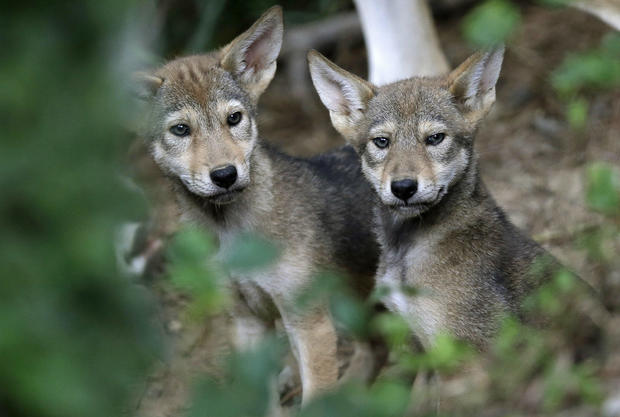
Red wolf DNA is still preserved in some coyote species
The Science News Magazine provided an article about a discovery related to red coated wolves. The physical appearance of the red coated coyotes in Texas brought up an interesting debate of how genes from extinct species of red wolves might still be preserved. Ron Wooten, a wildlife biologist believed that their appearance was strange. Their DNA was tested and the hypotheses were considerable true as the evidence showed that the Texas coyotes could be descendants of red wolves. It is necessary to take into consideration that these species were declared extinct from the wild almost forty years ago. This was not enough evidence to support their experiment. There is only a small population of red wolves in North Carolina which belong to a captive breeding. But this did not make a difference in the research because these wolves do not have any contact with other canids at all. Texas coyotes were to be tested and even though pictures showed  reddish coats and their heads being broader than regular coyotes, once again, this was not enough evidence. Tissue samples were obtained from coyotes that haven been killed in roads by cars driving by. Such samples were tested and at least two of the samples carried red wolf DNA. Another biologist, Elizabeth Heppenheimer from Princeton University was also very surprised that these were still present in these species.

I think this was a very interesting article because I did not think that species that are mostly extinct will leave their DNA behind, and this would be preserved for a few decades in other species. But, if we analyze the situation, if the DNA from humans can be passed through different generations why cannot animals go through the same process? 

Pair of 7 weeks old red wolf pups at a Museum in North Caroline
A pair of 7 weeks old red wolf pups at a Museum of  Life and Science in North Carolina


Tuesday, August 8, 2017

Make Tomatoes Great Again

Studies have shown that over the last few decades, the taste of supermarket tomatoes has changed and become less flavorful.  Professor Harry Klee has been doing research on tomatoes for years to try and fix the problem, which he foresees happening within a few years.  Tomatoes are chemically made up of three primary components: sugars, acids, and volatile chemicals.  On average, people prefer sweeter fruit; farmer's prefer bug fruit because they get paid by the pound.  This has become a dilemma because a tomato plant can only produce a certain amount of sugar through photosynthesis.  The sweetness also depends on other chemicals as well; researchers have identified 26 genes involved in producing flavorful volatiles.  They found that modern tomato varieties had versions of the genes that produced smaller amounts of the volatiles.  They have already begun working to breed a hybrid that restores flavor and retains the traits for a large size.  Although genetically modifying the tomatoes would be quicker, researches have chosen to take a natural route since most people fear the words "genetically modified organism." For people who garden at home, in exchange for a ten dollar or more donation, Dr. Klee will send a packet of these seeds.  Taste-testing is hard because everyone has different preferences; however, Klee believes they are making progress.

Wednesday, November 23, 2016

DNA Shows That Dogs Were Domesticated More Than Once

Scientists have recently discovered that it may have been possible that dogs were domesticated not only once but twice. This quite possibly could have occurred in East Asia and Europe. Two specific breeds scientists think were found and domesticated at different times are the German Shepard and the Chinese Shar-pei. The scientists have continued to use DNA to find when and where these different dog breeds came from. It is believed that dogs were domesticated well before the time of herding and farming, which help lead other animals into being domesticated. The scientists believe that many of the breeds originally came from wolves.


Scientists recently dug up a dog thousands of years old in Ireland. The Irish dog still had well conserved DNA in the head behind the temporal lobe. This allowed scientists to extract the DNA and test it. From the DNA the scientists could tell the dog did not have white or black fur, or even spots, but probably fur similar to a wolf. The domesticated Irish Wolfhound today is still very large and does most definitely resemble a wolf. But what is truly interesting is that from the DNA scientists found the dog had enigmatic DNA, meaning the dog did not have any DNA found in other dogs or wolves. By using mitochondrial DNA scientists have also discovered quite possibly how old dogs are.

I find this so interesting because I love dogs and I love to learn about where they came from. I have a pug and I know that he is from China. It's just very cool to see how different dogs are from different areas of the world. Yet, humans can all be traced by to Africa. German shepherds are great for training and it is known that they are used in the police forces and military. On the other hand, dogs like shar-peis (I have a mix) and pugs are not exactly the same and used for other talents. It makes me wonder if it is because of where they were domesticated. I also found it amazing that scientists could take DNA from a dog that was almost five thousand years old! I just find it fascinating that we have the technology and knowledge to continue to learn about evolution and how we got to where we are.


Tuesday, November 15, 2016

Farming and its Effect on Dogs

Dogs were domesticated around 15,000 years ago, and as companions to hunter-gatherers ate a lot of meat and extra food not eaten by the humans that they traveled with. As farming emerged in human culture, the genome of the dog began to be transformed. More starch-filled foods were integrated into the human diet, prompting a demand for adaptations in both humans and dogs in the digestion of foods containing starchy grains like wheat and millet. 

Eric Axelsson, an evolutionary geneticist, and his colleagues discovered that domesticated dogs have four to thirty copies of the Amy2B gene, a gene that helps digest starch. Wolves and wild dogs only have two of the Amy2B gene, suggesting that the change in the dogs genome had to do with starch consumption. To further study this discovery, scientists such as Morgane Ollivier and Ecole Normale Supeieure de Lyon collaborated with Axelsson to study DNA extracted from the bones of dogs and wolves from 7000 and 5000 year old archaeological sites. They discovered that these domestic dogs also had many of the Amy2B gene; they had eight compared to the much lower number of the Amy2B found in non-domesticated dogs and wild wolves. This indicated that the increase in the Amy2B gene was not just due to modern dog-breeding, but to the effects of farming. More recent research conducted this year also supports this research. This adaptation has allowed dogs to continue to be a big part of human life.

Thursday, December 3, 2015

Gene Editing Animals

Scientists at a company called Recombinetics have recently edited genes in dairy cattle calves in Sioux Center, Iowa in order for them to have no horns. By doing so, their new genetic code will be passed on to future generations through DNA replication. This was done while they were single cells in a petri dish, where the part of their genetic codes that code for horns in dairy cattle like themselves were taken out and the ones for no horns like in Angus beef cattle were put in their place.

Gene editing has helped achieve many goals by being fast and cheap. Pieces of an animal's genetic code are replaced by other pieces by enzymes being directed to cut DNA at specific locations. Dehorning is one of the many reasons why these scientists believe it is in the best interests of the calves in order to edit their genetic codes, since the procedure is painful.

Not only are the genes in dairy cows being edited, but also in other animals including salmon, mosquitoes, pigs, goats, and dogs. The mosquitoes that have undergone gene editing do not carry the parasite that causes malaria anymore, and the domestic pigs that have also undergone the procedure now resemble wild pigs that are resistant to swine fever.

Gene editing in animals has its risks and benefits while also causing some controversy. Even genetically modified food causes controversy that is always on the news since it impacts human health and the environment.  Dog breeding for certain characteristics is another huge controversy, where the dog does not benefit since the humans who breed them just want them to have certain characteristics they feel is suitable for them. I thought this article was intriguing by seeing how many animals and even insects undergo gene editing and are bred to have certain characteristics. No matter what, it is always going to causes some sort of controversy with humans since it sometimes challenges ethics.

Full article


Saturday, November 21, 2015

Agronomist explores the genetics that allow hybrid plants to perform better than parents


    Jianming Yu of Iowa State University has helped recover the unknown mechanism behind heterosis. Which explains why some hybrids of sorghum plants out grow and out perform their parents.  For years agronomists and botanists were not sure why this occurred, the phenomenon was only partially understood.  The study focused on the link between a dominant allele of one gene with recessive allele of another.  Yu went out to answer the question:  "Where does that extra height come from if not from either parent?"
          Through research Yu explained that because most of sorghum plants are the offspring from a inbred fertilization that sometimes this causes genes to "cancel" each other out.  Yu also goes onto explain that multiple genes makeup up the height trait.   One could be responsible for base length, one responsible for stem length, therefore a different combinations from both parents could result in a taller plant.
          I feel like this article is one of more relevant articles to our class.  Specifically the first half of the semester where we studied more classical genetics.  I was impressed to fine that theories are still being put to use for further research purposes.

Original Post

Related Post

Thursday, November 19, 2015

Breeding Behavior Patterns Determined by a Supergene

You wouldn't generally think that the way in which a male attracts a female is predisposed, would you?  Well according to researchers from the University of Sheffield this behavior is determined by a specific gene sequence in the wading bird, referred to as ruff.  They have identified the genes that determine the behavior patterns in this specific animal.
There behavior can follow one of three patterns: territorial males, non-territorial (satellite) males, or the "cross-dresser" males.  The study shows that these breeding behaviors are encoded by a "supergene", which is defined in the article as a "section of a chromosome containing a hundred or more genes".  It apparently started off as allowing males to mimic females in order to coexist with territorial males.
The author of the study says that this supergene process is "similar to the one that led to the evolution of separate sex chromosome, and indeed the alternative forms of the supergene combined to create the third type of bird personality" (the satellite male).


I found this article very intriguing, as a psychology major, learning about behaviors and patterns of behavior within individuals whether human or not, I have never heard of a specific breeding behavior being genetically determined.  Also, the concept of a "supergene" is quite interesting, and how researchers say that this is the same process that occurred when the two separate sex chromosomes were established.

Original Article

Thursday, October 29, 2015

Detroit Zoo Saves Cash by Breeding Own Crickets


Crickets contains many of the important dietary needs for amphibians, reptiles, birds and mammals. They are an excellent source of protein for them and as much as they probably taste so good---they are expensive! According to the article crickets cost more than all the other food sources at the zoo, including meat, fish and produce, at more than 98,000 per year.

Officials have created a new program that will make it easier and cheaper to feed their thousands of amphibians, reptiles, birds and mammals and that is by simply breeding crickets. The workers at the Detroit Zoo changed an unused area into breeding room to produce crickets. 

Since this new program has been created, hundred-thousand of crickets have been produced every week. Scott Carter, the Detroit Zoo's chief life science officer, said that this will save about $225,000 in the first three years.

"In my opinion, this is a little surprising that someone did not think of this a lot sooner. Your saving less than half a million dollars by just breeding crickets. I would have came up with solution a long time ago. From what I am aware of, breeding, specifically, selective breeding, has been going since Mendel started breeding pea plants. Or it may have been used before Mendel. But my point is, is that since the officials did not think of this solution a lot sooner, they ended up spending a lot of money that could have went towards something else. It makes me think if there are other places that are doing the same thing and should be taught this technique."

Here is the link for the ARTICLE!
Look here to watch the video too!