Showing posts with label "Transposons". Show all posts

Monday, September 16, 2019

Harnessing tomato jumping genes could help speed-breed drought-resistant crops

Researchers from the University of Cambridge's Sainsbury Laboratory and Department of Plant Sciences have discovered that drought stress activates the activity of a family of jumping genes (Rider retrotransposons) previously known to generate fruit’s shape and color in tomatoes. Transposons or jumping genes are capable of changing their location within a genome, creating or reversing mutations, or having no effect at all. Transposons carry huge potential for crop improvement and are not junk at all but play an important role in the evolutionary process. 

“Using the jumping genes already present in plants to generate new characteristics would be a significant leap forward from traditional breeding techniques,
making it possible to rapidly generate new traits in crops that have traditionally been bred to produce uniform shapes, colors, and sizes to make harvesting more efficient and maximize yield. They would enable the production of an enormous diversity of new traits, which could then be refined and optimized by gene targeting technologies.” (University of Cambridge, 2019).

Rider is present in several plant species, including economically important crops such as rapeseed, beetroot, and quinoa. If Rider can be controlled in such a way, plants that currently have mute Rider elements can regain their potential by reactivating or re-introducing those genes to them. This is significant because of its potential to reduce breeding time compared to traditional methods and help to reduce global warming. 


Sunday, April 21, 2019

Pollen Grain Mutations

In an article published by Science Daily, it introduces how scientists from Rutgers University and Montclair state teamed together and looked at pollen gene mutations in corn. At first, it states how the U.S is the worlds largest corn producer with 90 million acres in fiscal according to the U.S Department of Agriculture. Then it states that the Rutgers-led team that mutations in pollen are caused by mobile retrotransposons which are comparable to retroviruses in mammals. A scientist from Waksmin Institute of Microbiology states his findings saying, "we found that spontaneous mutations in corn genes arise relatively frequently in the pollen of some but not all lines," (Dooner)


Pollen grains are the male gametes (reproductive cells) and have an estimate of several mutations per gene per million pollen grains according to the study in the journal Proceedings of the National Academy of Sciences. However the female gametes on corn ears had no detachable mutations The next step in this study is to monitor whether retrotransposon-induced mutations cause genetic instability in corn lines that have been previously reported by breeders. This study may lead to more successful breeding of corn and other crop.

Photo credit: Integrated Pest Management - Mizzou

Thursday, April 11, 2019

Scientists Discover 'on and off Switch' genes that Promote Tumor Growth

Scientists at the Washington University School of Medicine discovered that there are 'jumping' genes that are found in cancer that force the genes that produce the promotion of cancer to stay on. This is a new breakthrough because when looking for cancer traditionally, scientists and doctors would look for mutations or altered sequences in the DNA. These jumping genes would be overlooked and not focused on for signs of tumor growth. This new breakthrough can now lead scientists in a new and fresh direction on the never ending quest to understand how and why cancer occurs and ultimately finding a way to cure cancer growth.
WHAT ARE JUMPING GENES? | Daily Mail Onlinechapter 13 at University of North Carolina - Chapel Hill ...   

Article
Website


Wednesday, April 10, 2019

Are We Part Insect?


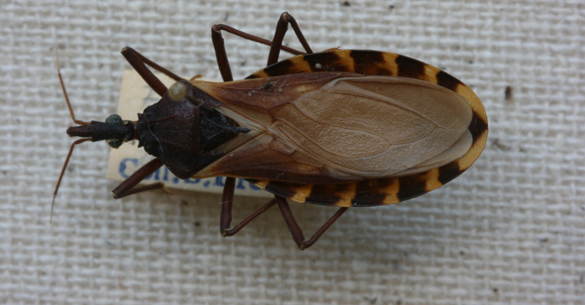
              The most readily accepted theory of evolution states that organisms have inherited their genes from their ancestors, but that isn’t the whole story. Scientists have discovered horizontal gene transfer between insects and humans. They have found evidence of transposons that have been passed to us through parasitic protozoa which live inside blood sucking insects. These transposons are able to cause mutations to the genome by changing the structure and function of the affected DNA.
               

             These transposons have been making their way into multicellular organism’s DNA for millions of years, including mammals. In fact, it is said that half of the human genome is made up of transposons. This type of evolution is very common in bacteria. However, this radically changes our view of eukaryotic organism evolution, as it demonstrates how genes were attained laterally from a variety of different organisms as well. The frequency of change to the genome is likely to be much higher in areas of dense insect population, such as South America. In areas such as these there is a lot of biodiversity and a plethora of biting insects that carry the protozoa that have the possibly of changing our genes forever.

Monday, March 19, 2018

The War Against Antibiotic Resistant Bacteria


The War Against Antibiotic-Resistant  Bacteria


Antibiotic medications are used to kill bacteria, which can cause illness and disease. They have made a major contribution to human health. Many diseases that once killed people can now be treated effectively with antibiotics. However, some bacteria have become resistant to commonly used antibiotics. Antibiotic-resistant bacteria are bacteria that cannot be killed by antibiotics and are able to survive and multiply in the presence of an antibiotic. This issue has become one of the current threats to global health. Some bacteria that have developed resistance to antibiotics are MRSA (methicillin-resistant Staphylococcus aureus), VRE (vancomycin-resistant enterococcus), and ESBL (extended spectrum beta-lactamase) producing Enterobacteriaceae.

One of the key factors that aids resistance spreading between bacteria is transposons. Transposons have the ability to switch locations in the genome autonomously. When transferred between bacteria transposons can carry antibiotic resistance genes within them. Due to this threat, EMBL researchers are in the process of stopping this crisis. Throughout their study, the research team has proposed a molecular structure of transposons that can provide an explanation to the protein-DNA mechanism that inserts the transposons, including the resistance they carry, in recipient bacteria. This mechanism is possible because of the unusual shape of the transposase protein.  This lets it to bind to the DNA in an inactive state, which prevents cleavage and destruction of the transposon until it can paste the antibiotic resistance gene in the new host genome. The protein's special shape also forces the transposon DNA to unwind and open up allowing it to insert its antibiotic resistance lineage at many places in an extremely diverse range of bacteria.


Based on the proposed structure and understanding of the mechanism the EMBL researchers have developed molecules that would block the transposons movement. In theory, these molecules would be able to prevent the development of antibiotic-resistant bacteria. The EMBL researchers proposed two methods, one stops the transposase protein from going to its activated conformation by blocking its architecture with a newly designed peptide, a short chain of amino acids. The second method is a DNA-mimic that binds to the open site within the transposon, thus blocking the DNA strand replacement that is needed for resistance transfer. Of course, these two methods are only potential strategies. Therefore, there is still much more work to be done in the lab before these molecules are classified as being safe to the public.